Tashkent, the capital that rewrote its past to build anew
In 1966, a massive earthquake flattened most of Tashkent's historic center. What could have been a permanent tragedy turned into a massive urban rebuilding project. Architects from across the Soviet Union redesigned the city with wide avenues, fountains, and monumental mosaics.
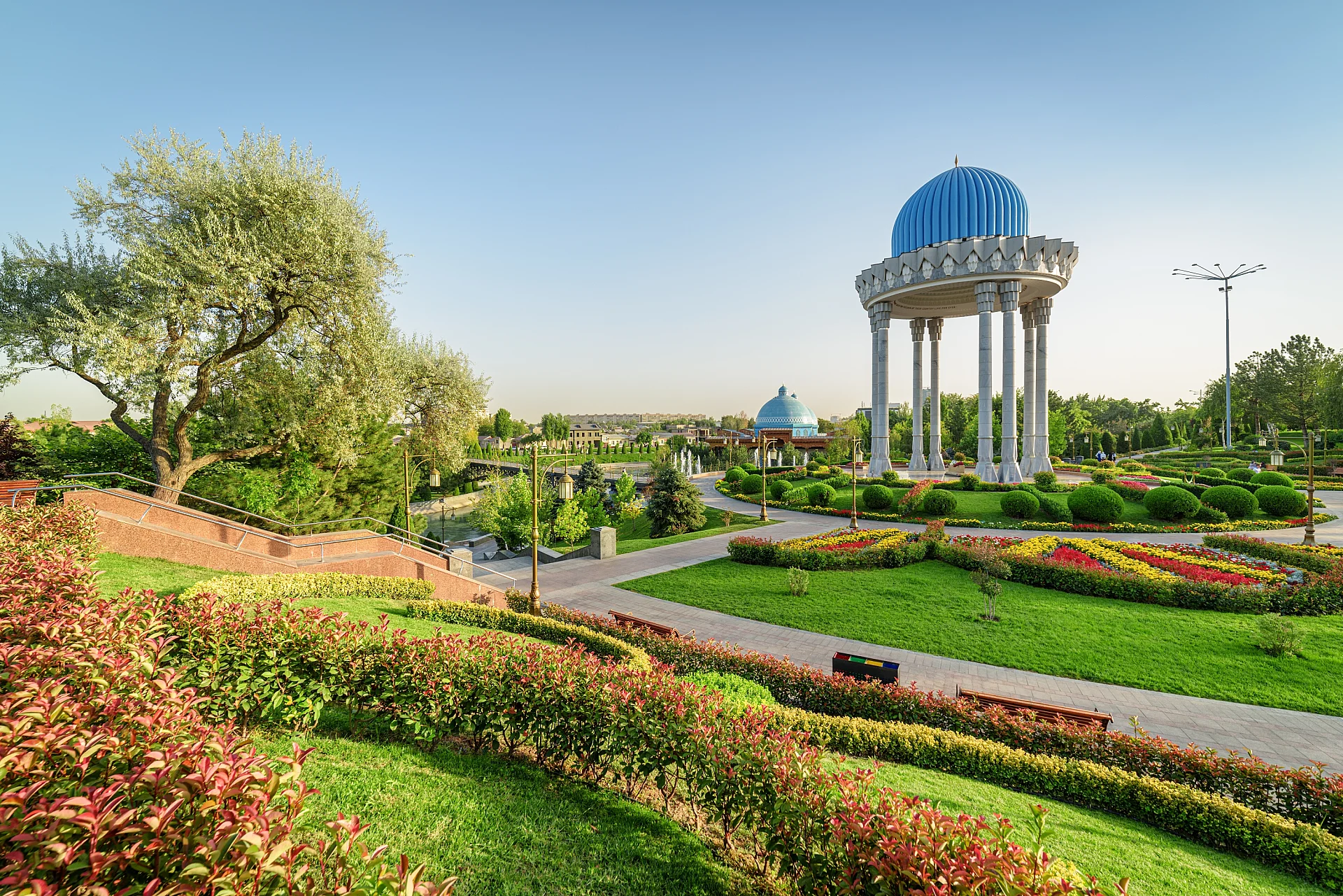
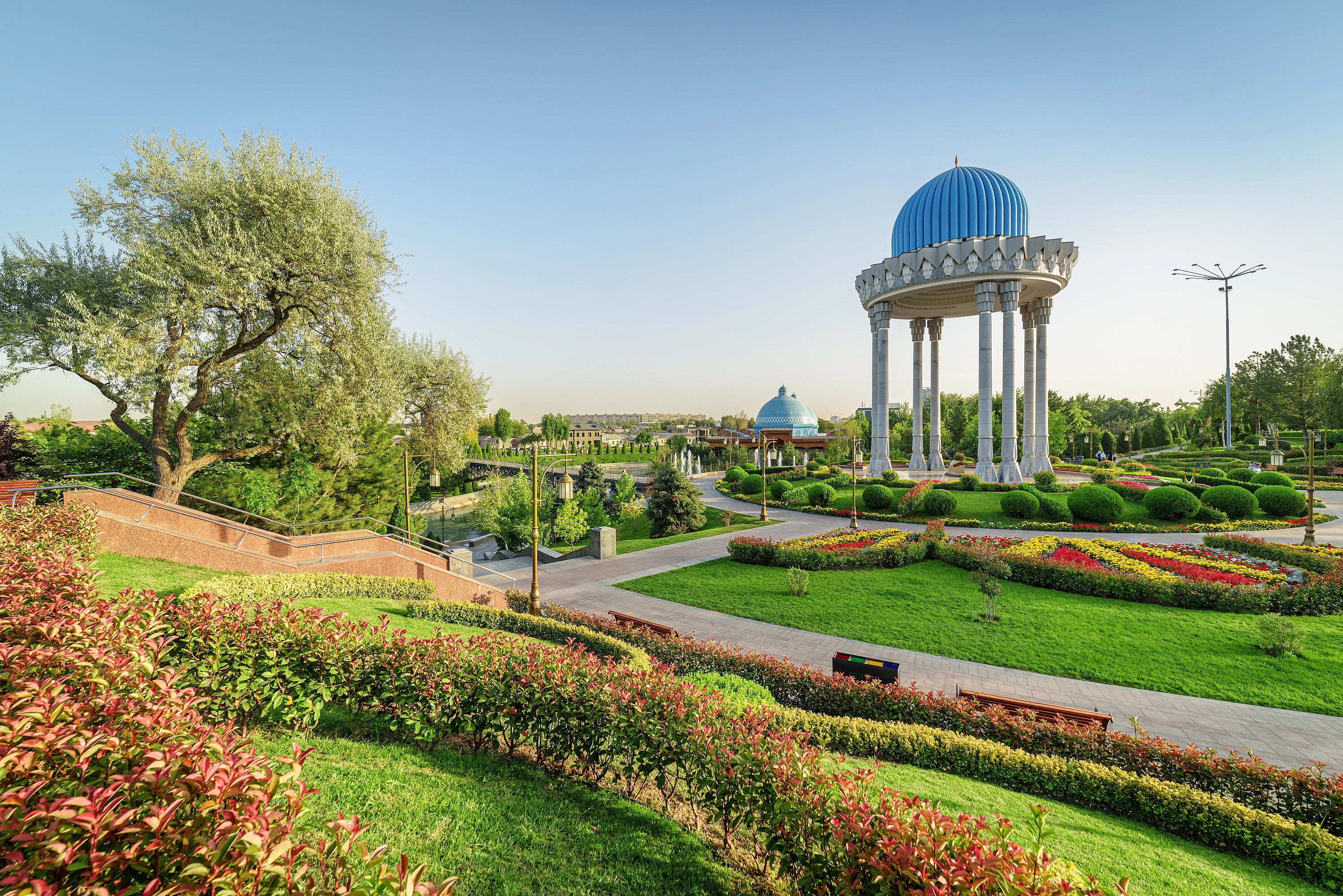
The result is a capital unlike any other in Central Asia, where turquoise domes sit alongside the most photogenic subway system on the planet.
Is this destination right for you?
Do you love cities that tell a story through architecture, from the Chorsu Bazaar to palace-worthy subway stations? Are you curious about a country that only recently reopened to tourism and still holds onto that unpredictable edge? Tashkent will surprise you.
On the flip side, if you are looking for postcard-perfect Samarkand or Bukhara with minarets and madrasas on every corner, prepare for a bit of a culture shock. Tashkent is a modern, Soviet-planned city first and a Silk Road destination second.
Great for:
- Fans of Soviet architecture and Central Asian mosaics
- Travelers looking for a comfortable stopover before heading to Samarkand or Bukhara
- Curious explorers seeking a country largely untouched by mass tourism
- Food lovers ready to try plov and street-side samsas
Not ideal for:
- Those seeking an intact, ancient medina atmosphere
- Rushed travelers (the city's charm unfolds over several days)
- Anyone who dislikes long distances between points of interest
A budget that still goes far
Compared to traveling in the US or Western Europe, Tashkent remains an accessible destination, though prices have crept up recently with the surge in tourism.
| Expense | Range |
|---|---|
| Hostel / budget hotel night | $12 to $23* |
| Comfortable hotel night | $45 to $90* |
| Quick bite (samsa, plov) | $1.20 to $3.40* |
| Sit-down restaurant meal | $9 to $17* |
| Backpacker daily total | $23 to $34* |
| Comfort daily total | $68 to $113* |
Estimates subject to change
Practical realities: What to expect on the ground
The city is sprawling, and distances between neighborhoods often measure in miles. The Tashkent metro remains your best bet, as it is fast, clean, and remarkably inexpensive.
As for language, Russian is widely spoken alongside Uzbek, but English is limited outside tourist areas. Pack a few basic phrases or a translation app.
Can a woman travel solo in Tashkent?
Yes, Uzbekistan is generally considered a safe destination for solo female travelers, including walking around the center at night. Local curiosity usually translates into friendly requests for photos or chats rather than any genuine feeling of insecurity.
Amir Timur Square and the monumental center
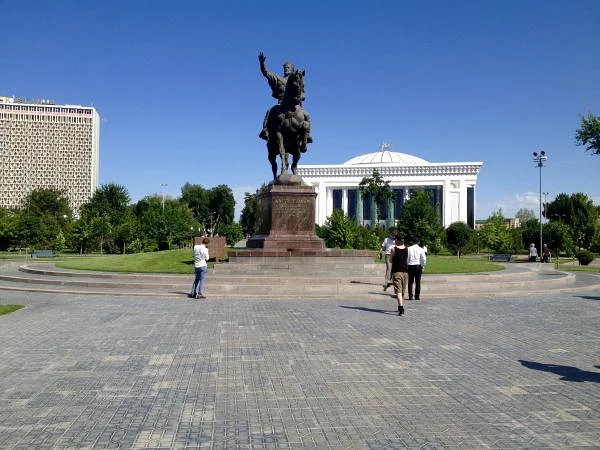
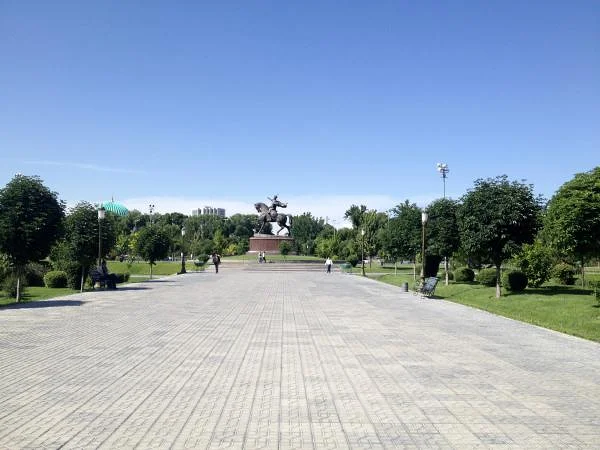
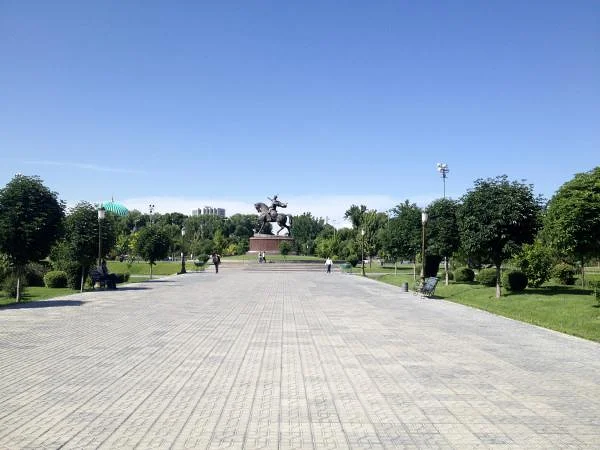
The symbolic heart of the city centers around Amir Timur Square, featuring an equestrian statue of the conqueror who gives his name to an entire urban aesthetic. Surrounding it, administrative buildings and manicured gardens create an atmosphere entirely distinct from the rest of Central Asia.
Nearby, Mustaqillik Square (Independence Square) brings together a monumental arch, fountains, and a memorial dedicated to World War II victims. It is the ideal spot to see how Tashkent balances its Soviet heritage with a rediscovered Uzbek identity.
Old Tashkent around Chorsu Bazaar
Beneath its iconic turquoise dome, the Chorsu Bazaar concentrates the most authentic energy in the city: spices stacked in colorful pyramids, dried fruit vendors haggling at high volume, and the scent of fresh tandoor bread.
Right next door, the neighborhood houses the Kukeldash Madrasah and the Khast Imam Mosque, home to one of the oldest Qurans in the world, the 7th-century Uthman Quran.
Friendly tip: Head to Chorsu Bazaar early in the morning around 8 AM, before the tour groups arrive. The low-angle light on the dome and the quiet morning atmosphere make the early alarm clock worthwhile.
The Tashkent Metro, a free underground museum
Opened in 1977 on the model of the Moscow metro, each station tells a different story through mosaics, bronze chandeliers, and marble bas-reliefs. The Kosmonavtlar station pays tribute to Soviet space travelers with medallions featuring Gagarin and Tsiolkovsky.
Photography has been officially allowed here since 2018, making it a free, must-see activity for understanding the architectural ambition of the Soviet era.
Good to know:
- Single ticket valid for any journey, regardless of distance
- Must-see stations: Kosmonavtlar, Alisher Navoi, Mustaqillik Maydoni
- Photography allowed without a tripod
- Simple network to navigate even if you cannot read Cyrillic
The modern neighborhood around Tashkent City
To feel the pulse of contemporary Tashkent, head to the Tashkent City complex, featuring glass towers, shopping malls, and landscaped parks that contrast sharply with the old bazaar. This is where the capital puts its regional economic ambitions on display.
Where to eat and drink in Tashkent?
Plov, rice cooked with lamb, carrots, and caramelized onions, is the national dish best enjoyed on Friday or Sunday mornings at popular local eateries during the traditional mass-cooking ritual.
Tandoor-baked samsas, flaky pastries stuffed with meat, are available on nearly every corner for pocket change. Do not leave without trying non, the traditional round bread that accompanies every single meal.
Where to stay in Tashkent and the surrounding areas?
The neighborhood around Amir Timur Square and downtown concentrates most of the comfortable hotels, making it easy to get around on foot or by subway. For a more authentic and budget-friendly stay, the guesthouses near Chorsu Bazaar offer total immersion in old Tashkent.
How to get to Tashkent?
Tashkent International Airport (TAS) receives direct flights from several major hubs, with travel times typically ranging between 6 and 7 hours from European connecting points. Expect to pay several hundred dollars for a round-trip ticket depending on the season and how far in advance you book.
How to get around Tashkent?
The subway remains the fastest and most economical way to cross the city, using a single ticket valid across the entire network. For short trips or late evenings, local rideshare apps work well and eliminate the need to negotiate fares with traditional street taxis.
When to go?
Spring (April to May) and autumn (September to October) offer the most pleasant temperatures, hovering between 68 and 82°F, far from the crushing summer heat that can top 104°F in July and August. Winter is cold but entirely manageable, offering the distinct advantage of virtually zero tourist crowds.