
Jaipur, the City That Chose Pink
Back in 1876, Maharaja Ram Singh ordered the entire old city painted in an ocher-pink sandstone to welcome the Prince of Wales, since pink is traditionally the color of hospitality in Rajasthan. Nearly 150 years later, keeping those facades pink remains a municipal law. Stand in front of them at midday, and the buildings seem to radiate in the sun.
As the capital of Rajasthan and the western anchor of the famous Golden Triangle along with Delhi and Agra, the city is home to over 3.6 million residents. Laid out in 1727 by astronomer Vidyadhar Bhattacharya following the principles of Vastu Shastra, it was India's first planned city, featuring a geometric grid layout that is rare for the subcontinent. Palaces, hilltop forts, and sprawling bazaars make this a stop few visitors second-guess.
An Introduction to India, and Then Some
Let's be direct: traveling in Jaipur is intense. The noise is constant, the heat can be brutal, and street vendors or touts will test your patience. Yet that is precisely what makes the experience stick. If you want a first taste of India without diving headfirst into the sensory overload of Delhi, the Pink City strikes a functional balance.
Ideal destination for:
- Aficionados of Mughal and Rajput architecture and history
- Travelers looking for deep cultural immersion on a modest budget
- Fans of street food and spiced regional cooking
- Photographers who find a frame around every corner
- Shoppers hunting for textiles, jewelry, and traditional crafts
Not recommended for:
- Anyone sensitive to intense heat, heavy crowds, and nonstop noise
- Travelers looking for wilderness or beach lounging
- Sensitive stomachs, as the culinary transition takes a few days
- Anyone with zero tolerance for haggling and constant sales pitches
One of the Most Accessible Budgets on Earth
Your money goes a long way here. On a tight budget of $17 to $29*, you can eat well, sleep comfortably, and tour the main monuments. Staying in a haveli, which is a traditional Rajasthani mansion with an interior courtyard, delivers palace-style character at a fraction of Western hotel rates.
| Expense Category | Price Range |
|---|---|
| Night in a hostel or basic guesthouse | $5.70 to $17* |
| Night in a comfortable hotel or boutique haveli | $29 to $68* |
| Quick bite: street food, dhaba | $0.57 to $2.30* |
| Sit-down restaurant meal: full thali or specialties | $3.40 to $12* |
| Transport plus one major monument entry per day | $5.70 to $14* |
| Backpacker daily budget | $17 to $29* |
| Comfortable daily budget | $57 to $90* |
What to Know Before You Go
The climate is semi-arid. From May through June, temperatures regularly climb past 40 °C. The monsoon season runs from July to September, bringing occasional torrential downpours alongside welcome relief from the heat. Your best window is October through March, featuring mild, dry days. By December and January, nighttime temperatures can dip below 5 °C.
Hindi is the primary language, supplemented by Rajasthani. English is widely understood in tourist zones and hotels. Learning a few words of Hindi goes a long way: namaste for hello, dhanyavad for thank you, and kitna for how much. The daily rhythm starts earlier than in Europe, with forts often opening at 8 AM and markets coming alive at dawn.
Is Jaipur Safe for Travelers?
The city does not pose a major threat of violent crime against tourists. The real hazards are scams. Rickshaw drivers refusing to use the meter, fake guides lingering outside monuments, and touts steering you toward commission-based shops follow a well-worn script. Use ride-hailing apps like Uber or Ola for transit, and never follow a stranger who approaches you on the street.
Can Solo Women Travel to Jaipur?
Yes, but with heightened awareness. Rajasthan remains one of India's more conservative states. Stares from locals are common and can feel uncomfortable. Dress modestly by keeping your shoulders, legs, and chest covered. The neighborhoods of C-Scheme and Bani Park are the most secure areas for lodging. Avoid isolated alleys after dark, and rely on app-based transport.
The Pink Old City: From City Palace to Hawa Mahal
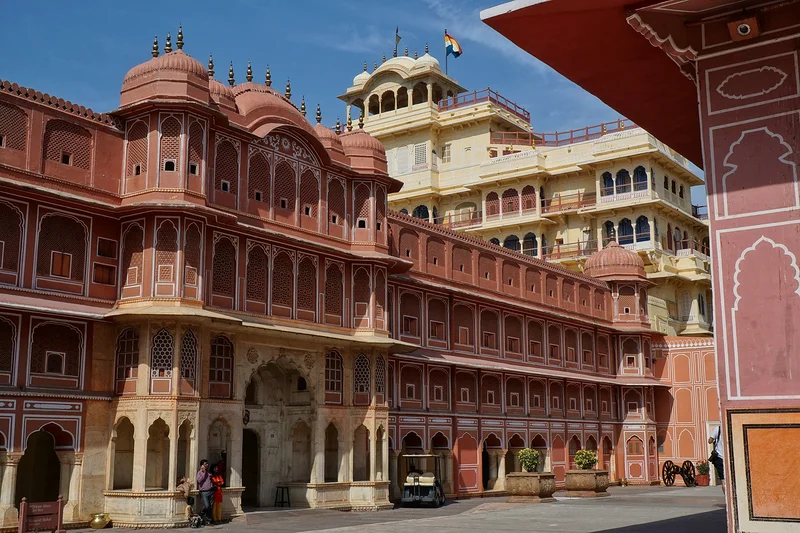
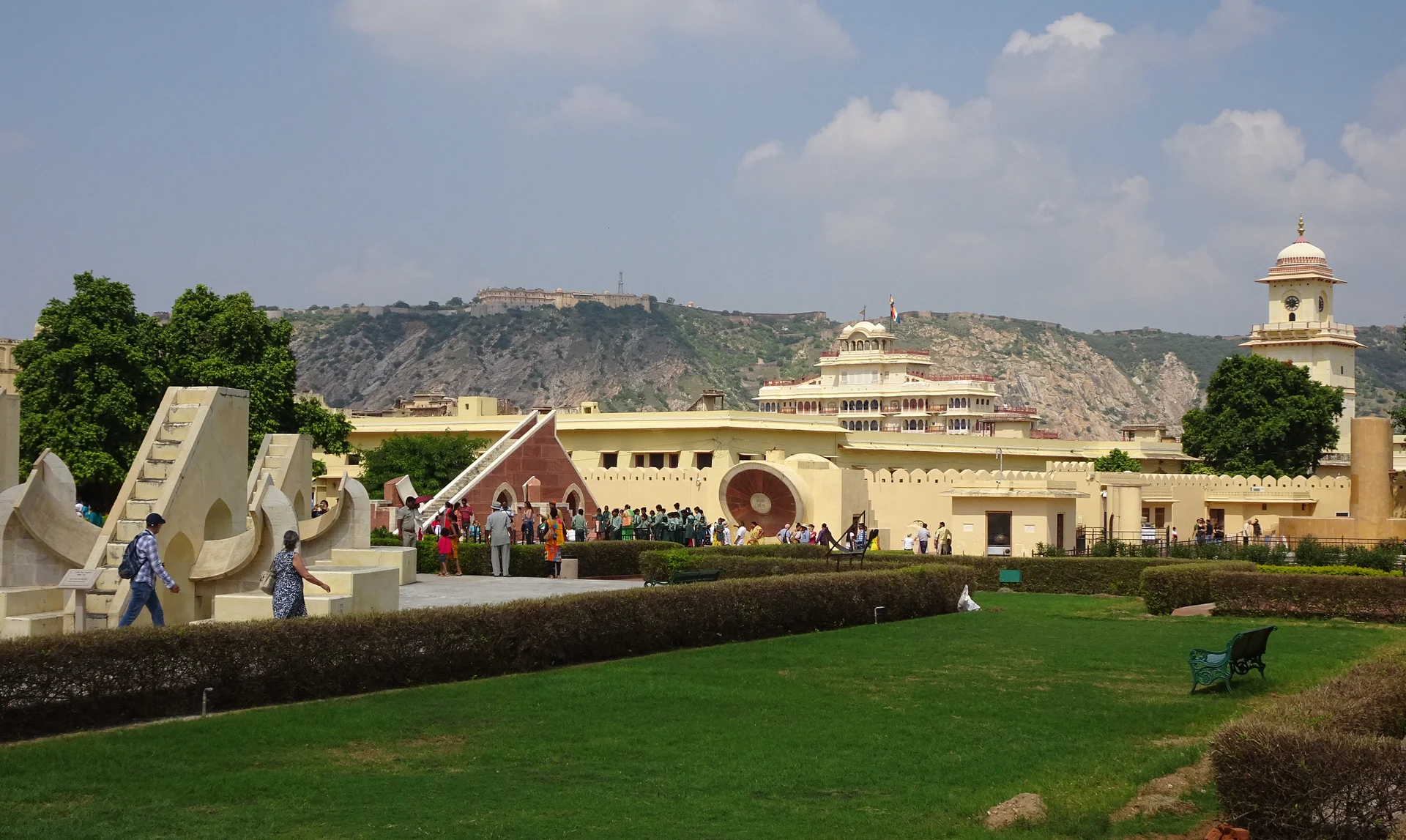
The City Palace is a sprawling complex of courtyards, pavilions, and gardens blending Rajput architecture with Mughal details. The royal family still occupies a portion of it. Rooms open to the public display historical textiles, weaponry, and miniature paintings. Right next door, the UNESCO-listed Jantar Mantar serves up an 18th-century outdoor astronomical observatory where giant instruments once tracked time and predicted eclipses.
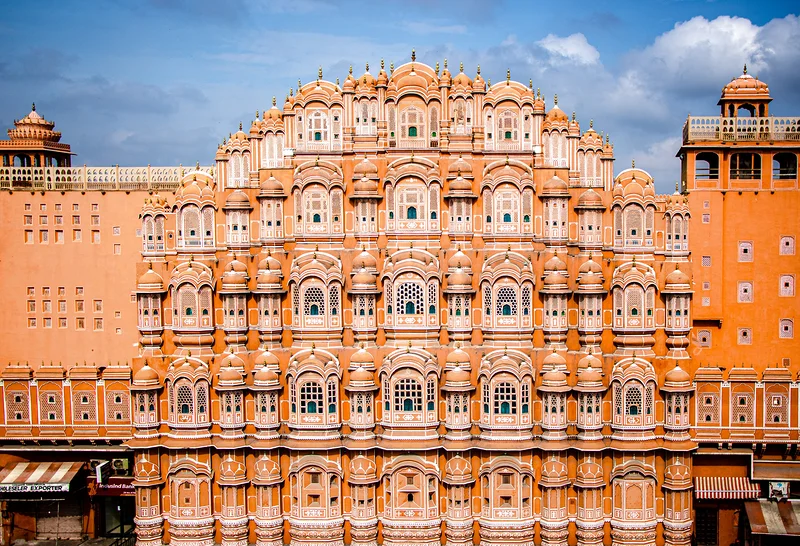
The Hawa Mahal, known as the Palace of Winds with its 953 honeycomb windows, is the city's most photographed facade. Built in 1799, it allowed court women to watch street life unfold unseen. Capture your best shot from the rooftop cafe across the street early in the morning when the sun catches the pink stone.
Friendly tip: A composite ticket covers multiple old city monuments and saves you money compared to buying individual entries. You can grab it at the ticket windows of the Hawa Mahal or Jantar Mantar. Foreign tourist ticket prices are significantly higher than local rates, which is standard practice across India.
The Forts of Amber, Jaigarh, and Nahargarh
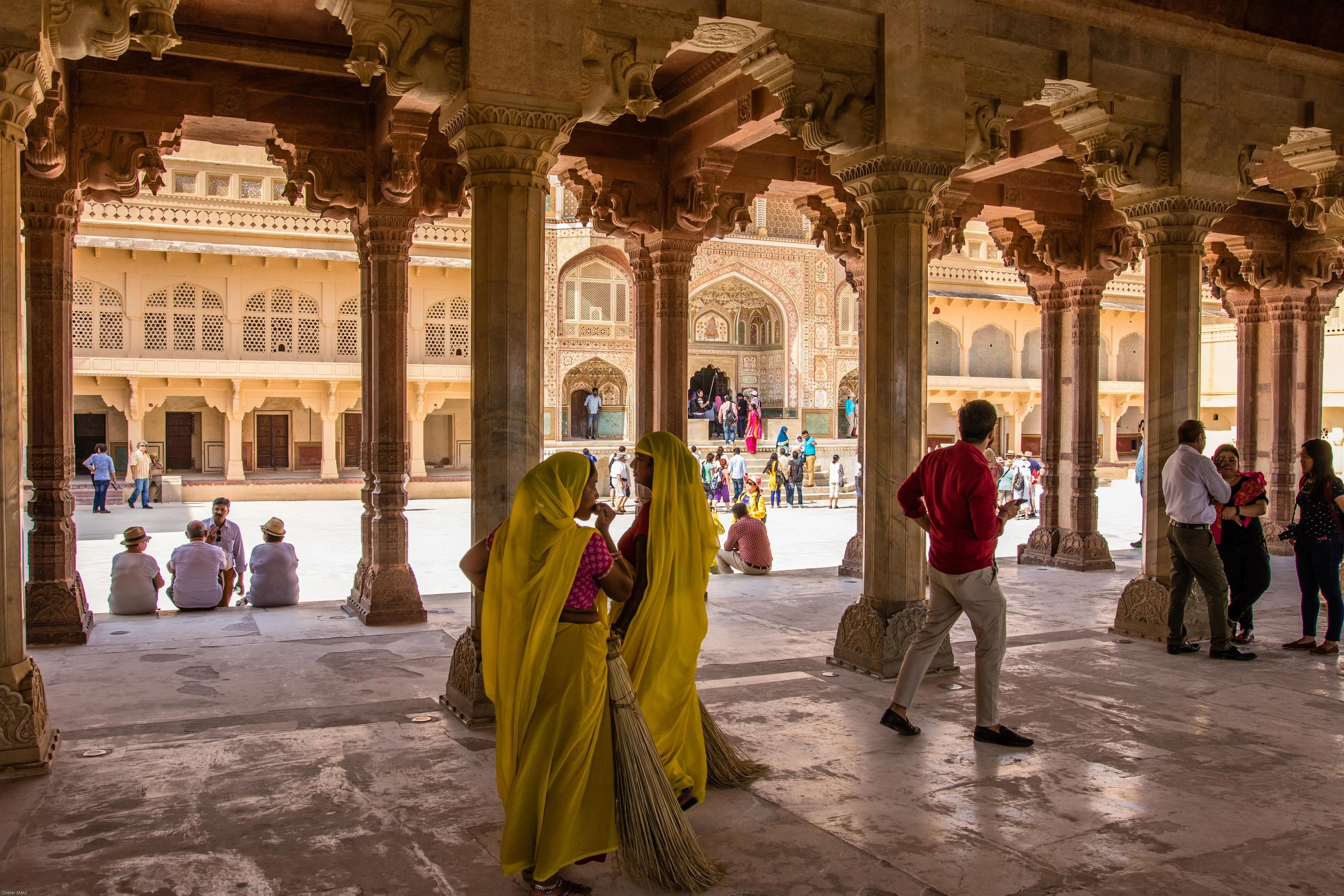
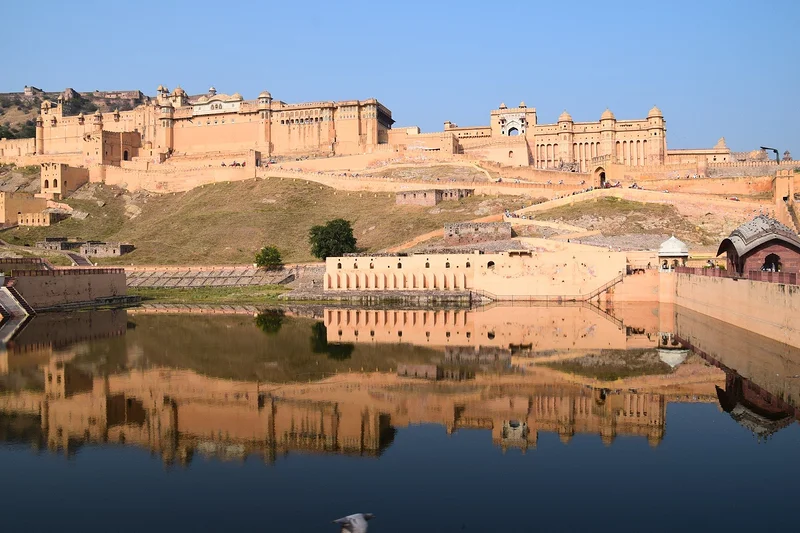
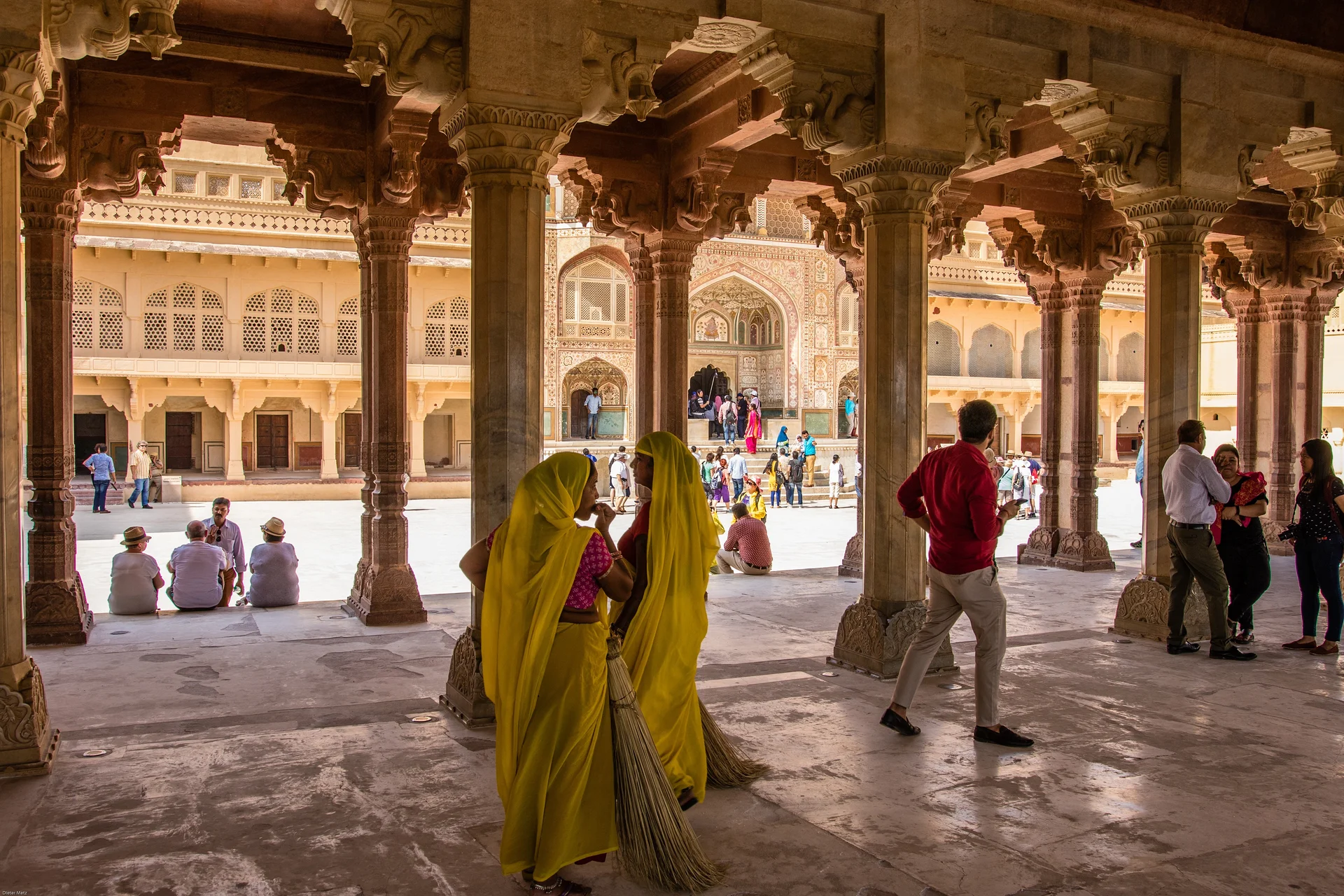
Amber Fort sits 11 km from the center on a hill overlooking a lake. This 16th-century palace complex combines Hindu and Mughal architecture. Expect mirror rooms, ornate courtyards, and secret passageways, and plan for at least two hours to see it all.
Touts will try to sell you an elephant ride up the hill. Skip it, as the treatment conditions for these working animals are deeply problematic. Walking up takes five minutes.
From Amber, a footpath connects to Jaigarh Fort, a military fortress housing the Jaivana, which is one of the largest wheeled cannons ever built. The views over Amber and the valley below make the trek worthwhile. Further south, Nahargarh Fort delivers panoramic vistas over the entire city, particularly at sunset. Head up there late in the day.
Friendly tip: Arrive at Amber Fort right when it opens at 8 AM. After 10 AM, the heat and tour groups make the visit exhausting. Hiring a local guide on-site is often worth it for catching historical details you would otherwise miss.
The Bazaars and Crafts: Where India Hums
The old city operates as a massive open-air market. Johari Bazaar is the kingdom of jewelers and gemstone dealers. Tripolia Bazaar overflows with block-printed textiles, utilizing Rajasthan's traditional wooden stamp-printing technique. Bapu Bazaar is the spot for sarees, embroidered leather shoes, and miscellaneous souvenirs.
Haggling is expected. Cut the initial quoted price in half or thirds, and do not feel pressured to buy if the negotiation stalls. For top-tier artisanal gifts, Gem Palace, run by jewelers from nine generations of the Kasliwal family, is a recognized institution. Prices are fixed and steep, but the craftsmanship is peerless.
Off the Beaten Path
A few quieter spots are worth hunting down. Panna Meena Ka Kund, a 16th-century stepwell located ten minutes from Amber, mesmerizes visitors with the precise geometry of its zigzagging stairs. Royal Gaitor, featuring royal cenotaphs carved from white marble, attracts few crowds despite its striking beauty.
The Anokhi Museum of Hand Printing, housed in a restored haveli near Amber, charts the history of block printing with live demonstrations. It makes for a refreshing break from the larger forts and palaces.
Galta Ji and the Jal Mahal: monkeys and a palace on the water
Galta Ji temple sits tucked away in a gorge within the Aravalli hills east of the city and is commonly known as the monkey temple. Hundreds of macaques rule the grounds around natural spring-fed water tanks. The site is sacred, mesmerizing, and chaotic. Keep your bags zipped tightly because these monkeys are professional thieves.
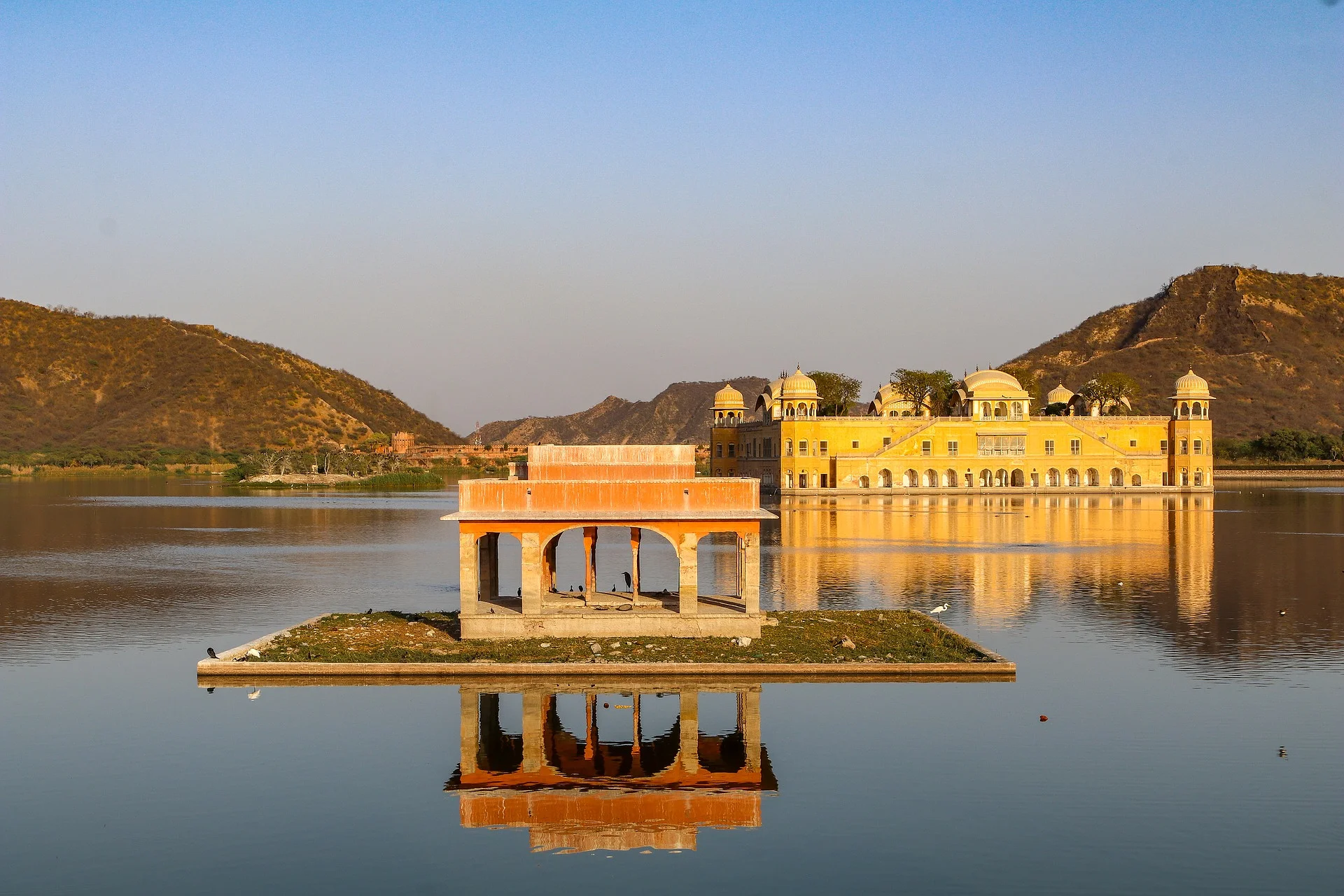
Jal Mahal floats in the middle of Man Sagar Lake as the ultimate postcard image. You cannot go inside, but viewing it from the shoreline at sunset when the palace appears to glide across golden water justifies the detour. The Albert Hall Museum, Rajasthan's oldest museum, also merits a stop for its craft collections and Buddhist murals.
Friendly tip: If you have time, catch a movie at Raj Mandir Cinema, the largest movie theater in Rajasthan. The Art Deco auditorium is spectacular, and the audience energy during a Bollywood screening is an experience unto itself. Book tickets online since screenings sell out regularly.
Where to Eat and Drink in Jaipur?
Rajasthan is roughly 70% vegetarian. It is paradise for plant-based eaters and a challenge for carnivores. Rajasthani cooking relies on hearty, spiced dishes built for desert life: minimal fresh greens, plenty of legumes, clarified butter, and heavy spices.
Specialties to Taste
- dal baati churma: spiced lentils served with wood-fired dough balls and a sweet mix of flour and ghee, forming Rajasthan's signature dish.
- pyaaz kachori: crispy fried pastry stuffed with seasoned onions. The best version comes from Rawat Mishtan Bhandar on Station Road for under 50 rupees.
- lassi flavored with saffron or rose: the Jaipur version is thick, creamy, and served in an unglazed terracotta cup you smash on the ground after finishing.
- ghevar: honeycomb pastry soaked in sugar syrup, traditionally enjoyed during Rajasthani festivals.
For a heavy, complete meal, order a Rajasthani thali featuring an all-you-can-eat spread of dal, curry, chapati, rice, pickles, and dessert starting around 200 rupees at a local spot. Peacock Rooftop, perched atop the Pearl Palace, draws travelers for its terrace seating, live music, and diverse menu. The Handi restaurant on M.I. Road is the go-to spot for tandoori grilled meats.
How to Get to Jaipur?
The airport handles domestic flights from Delhi, Mumbai, and Bangalore, along with select international routes to Dubai and Southeast Asian hubs. From the US, expect at least one layover in Europe or the Middle East before catching a connection through Delhi or Mumbai. The flight from Paris to Delhi takes roughly 8 hours, followed by a one-hour domestic flight or a train ride.
Taking the train provides the most memorable arrival. From Delhi, the journey takes 4 to 5 hours depending on the train class. Booking online through the IRCTC website ahead of time is essential because tickets sell out fast. Buses take 5 to 6 hours from Delhi or 6 hours from Agra, but comfort levels vary widely, and Indian highway driving is intense.
How to Get Around Jaipur?
The main attractions scatter across a 10 to 15 km radius. Rickshaws, both motorized and electric, are the standard mode of transport. A full-day tuk-tuk rental runs about 500 to 800 rupees, or $5.20 to $8.40*. Ride-hailing apps like Uber and Ola operate smoothly and save you from haggling every time you need a ride.
The city is expanding its metro network, though lines remain limited. Walking through the old city works, but it wears you down quickly due to traffic, noise, and heat. Renting a car with a driver costs around $45 to $68* a day and provides a comfortable way to reach the forts and outlying sites. Self-driving is strongly discouraged.
When to go?
The prime season runs from October through March, bringing clear skies, manageable warmth, and golden light bouncing off the pink facades. In January, the Makar Sankranti kite festival fills the sky with thousands of colored kites. If your trip lines up with Diwali, the festival of lights, the experience is unforgettable with candles on every balcony, fireworks overhead, and buzzing energy.
Skip May and June unless you love extreme heat, as temperatures routinely blow past 45 °C. The monsoon season from July through September brings mixed opinions. Some travelers appreciate the rain-washed city streets and lower prices, but sudden downpours can snarl transit.
I was pleasantly surprised by my visit to Jaipur. I found the city very pretty with all its facades painted pink. The buildings are pretty well preserved, which is rare enough in India to be worth noting. The Hawa Mahal is an absolute must-see if you visit the city, as is the fort.