
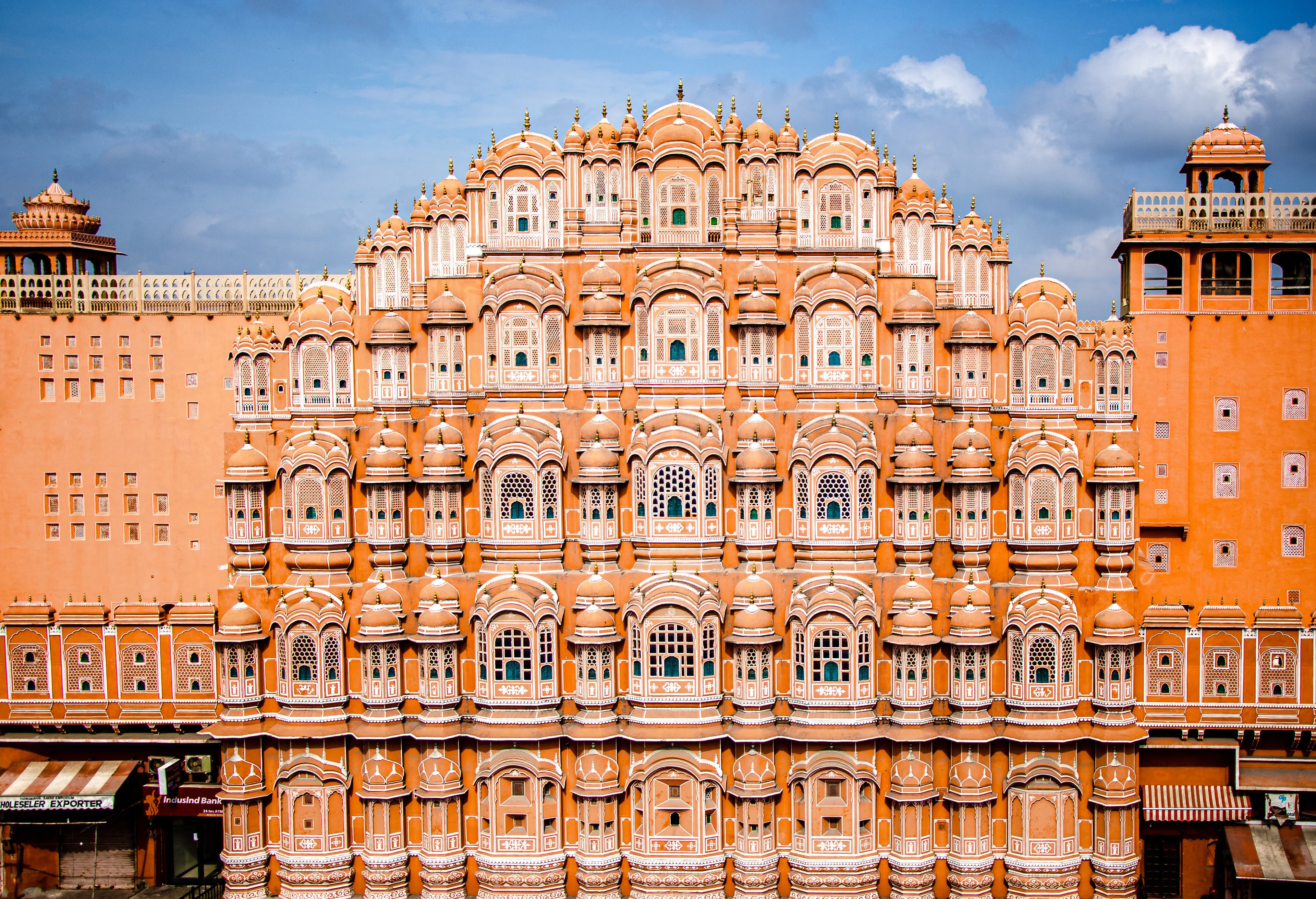
Jaipur, the pearl of Rajasthan to discover in January
As the capital of Rajasthan in northwestern India, Jaipur is arguably one of the most stunning cities in this extraordinary region. Nicknamed the "Pink City" for the color of its buildings, it offers visitors a wealth of sights and activities you simply can't miss.

India is such a vast country, so rich in traditions, customs, and architectural masterpieces, that a single trip will never be enough to explore it all. The city of Jaipur alone fully justifies its status as the state capital.
If you're wondering when to go, know that January is one of the best times to visit Jaipur. The temperatures are pleasant, perfect for exploring monuments and wandering through the bazaars. In fact, India is often a top-tier destination recommended when choosing where to go in January.
Let's head out together to discover its most beautiful sites. To see everything at a relaxed pace, I suggest dedicating 2 full days to your Jaipur sightseeing, keeping in mind that one of the afternoons will be devoted to visiting Elephantastic, my favorite spot in Jaipur, because I absolutely love elephants :)
DAY 1: Heading north of Jaipur
This first day takes you north of the city, where some of Rajasthan's most spectacular sites are concentrated. Plan to leave early to make the most of this busy day!
Amber Fort

Located about ten kilometers from the city of Jaipur, Amber Fort is one of the most impressive structures among Rajasthan's many castles. Inside the fort, surrounded by ramparts, you'll find sumptuous palaces, gardens, and temples. This monument is a UNESCO World Heritage site. It is brimming with artistic wonders, such as paintings and sculptures. Its historical architecture is astonishing. I'll let you discover for yourself the special appeal that Amber Fort holds, not just for travelers, but for the locals too :)
Practical tip: Allow about 2 to 3 hours for the visit. Entry costs approximately 500 rupees for foreigners.
Elephantastic
After lunch and your tour of the fort, it's time for the most memorable experience of your trip! For elephant lovers, visiting Elephantastic in Jaipur is the perfect place. Book the activity in advance so you don't waste time on-site. The visit lasts approximately 4 hours. During this activity, you'll have the chance to feed the elephant, pet it, paint on its skin, take a short walk with it, and bathe it. It really is a fantastic elephant sanctuary where they are well-cared for and never mistreated. The activity is especially popular with families traveling with children.
Practical info: Located near Amber Fort, expect to pay around 3,500 rupees per person. Remember to bring a change of clothes because you will get wet while bathing the elephants!
Jal Mahal

To end this first day on a high note, head to the shores of Man Sagar Lake. The remarkable Jal Mahal in Jaipur is a palace situated right in the middle of Man Sagar Lake and appears to float on the water not far from Amber Fort. The four lower floors of the palace are submerged underwater. Unfortunately, despite its renovation, the palace is not yet open to the public, so you can only admire it from afar. I highly recommend not missing this magical scene at sunset when the palace is illuminated; it's much more impressive than seeing it during the day.
Time on-site: 20 to 30 minutes is enough to admire and photograph this palace from the lake banks. Perfect for wrapping up your first day!
DAY 2: The Old City and its treasures
This second day is dedicated to exploring the historic heart of Jaipur. The Old City, with its iconic monuments all located close to one another, is best discovered on foot.
City Palace

Want to travel back in time and see how the famous Indian maharajas lived? Then you must visit the City Palace in Jaipur. Maharaja Sawai Jai Singh II built the City Palace in 1732. The royal family still lives there, in the graceful Chandra Mahal. Different parts of the palace are open to the public depending on the type of ticket purchased. Standard tickets provide access to the palace courtyards, galleries, Jaigarh Fort, and the royal cenotaphs. Special tickets that also include guide services provide access to the royal family's private residences. The City Palace is located in the Old City. It is open every day from 9:30 AM to 5:30 PM. It reopens from 7:00 PM to 10:00 PM in the evening for a sound and light show. For your information, it is possible to dine in the evening at the famous Baradari restaurant within the City Palace, for those who wish to extend the experience.
Recommended visit duration: 2 hours minimum. Entry fee: about 700 rupees with a guide.
Jantar Mantar

Just a few steps from the City Palace lies an equally fascinating site. Have you ever wondered how people measured time or predicted eclipses? You'll find all the answers by visiting Jantar Mantar. It is an astronomical observatory dating back to 1734. Built by Maharaja Sawai Jai Singh II, this observatory houses nineteen astronomical instruments. The most famous of these is the stone sundial, which is the largest. It is also a UNESCO World Heritage site. It's an interesting place not only for astronomy buffs but also for anyone who would like to see a profound demonstration of how quickly time passes.
Visit time: 1 hour. Entry: about 200 rupees.
Hawa Mahal

Let's continue our exploration of the Old City with this iconic Jaipur monument. The unique facade of the Hawa Mahal (Palace of Winds) complex never fails to captivate travelers visiting Jaipur. Built by Maharaja Sawai Pratap Singh in 1799, this palace was intended for the maharaja's wives. The architectural design allowed the women to observe what was happening outside without being seen. The wind would blow through the palace shutters, which is where the name Hawa Mahal comes from. However, most of the shutters are now sealed to help preserve them. I recommend visiting the palace with a private guide; it will help you better understand the lifestyle of the maharajas' wives and their role in the family.
Duration: 30 to 45 minutes. Price: about 200 rupees.
Galtaji

To finish these two days in Jaipur on a high note, head east of the city for a unique experience. The Galtaji temple (Monkey Temple) is another Jaipur must-see. It is a temple complex with three sacred water pools. During your visit, you will certainly have the opportunity to see Indians coming to bathe and purify themselves. One of the pools is occupied by thousands of monkeys, hence the name given to the temple. They are generally friendly toward temple visitors. To meet them, it is recommended to visit the temple in the late afternoon, around sunset, when the monkeys flock to the temple. It's a unique spectacle: monkeys on one side and Indians on the other. If you take a guided tour, you will learn more about Hindu beliefs and their traditions, one of the most important aspects of any trip to India.
Distance: about 10 km east of the city center. Free entry. Allow 1.5 to 2 hours for the visit and enjoy the sunset from the Sun Temple located at the top of the hill.
There are several other sites in Jaipur that you might also like to explore; I simply tried to choose the main highlights to discover during a 2-day stay. This optimized itinerary will allow you to fully enjoy the cultural and architectural richness of this extraordinary city without wasting time on unnecessary travel.
Have a great trip to the Pink City of Rajasthan!
Comments (0)
No comments yet. Be the first!