
Where to stay in Jaipur: the best neighbourhoods (2026)
The pink city is not a stage set. Behind the façade of the Hawa Mahal and along Johri Bazaar, people sell jewellery, sound their horns and work until nightfall. Almost nobody sleeps there: the hotels start at the gates of the old walls and spread west and south, into the twentieth-century Jaipur.
So the right measure is not distance but the tuk-tuk: ten minutes separate most areas from the Palace of Winds. The price gap, on the other hand, is vertiginous. A dorm bed runs at around $9.30*, a family haveli 30 to 70 EUR, and the maharaja's former palace starts beyond 400 EUR. Four areas follow, from the bazaar to Amer.
Since it is human-sized, we were able to make all our trips on foot or by tuk-tuk.
Compare hotel prices in Jaipur
In a hurry? Find the best accommodation deals in 3 clicks.
Compare live deals from Booking, Expedia, Agoda and other partners.
At a glance: our picks by traveller type
Pick the profile that suits you to head straight to the recommended neighbourhood.
The neighbourhood map in Jaipur
Get your bearings on the neighbourhoods and must-see sights before choosing where to drop your bags. Click a name to jump to its description.
The old pink city Inside the walls and at its western gates
to be in the bazaar as it opens
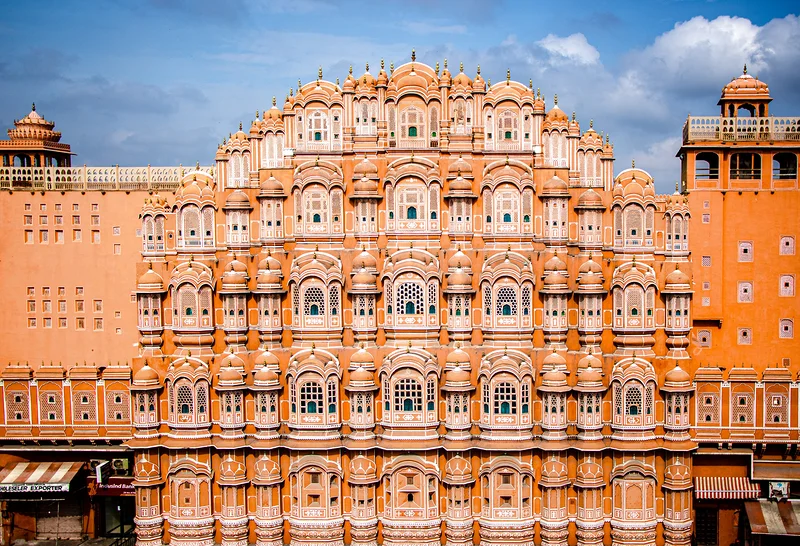
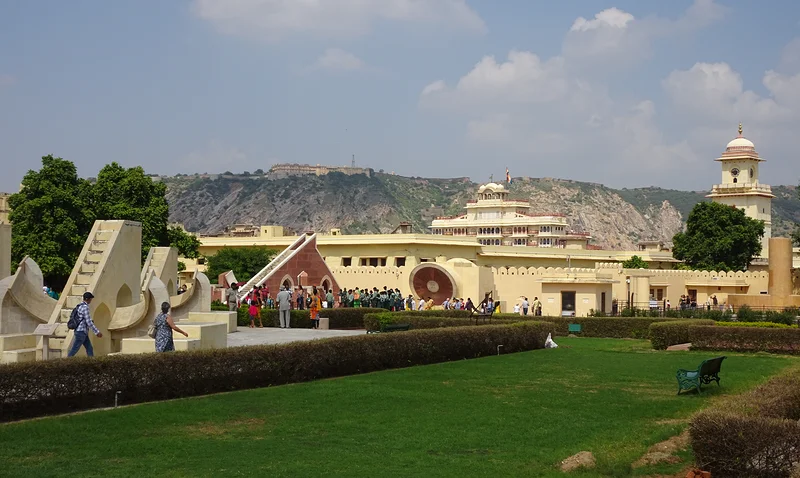
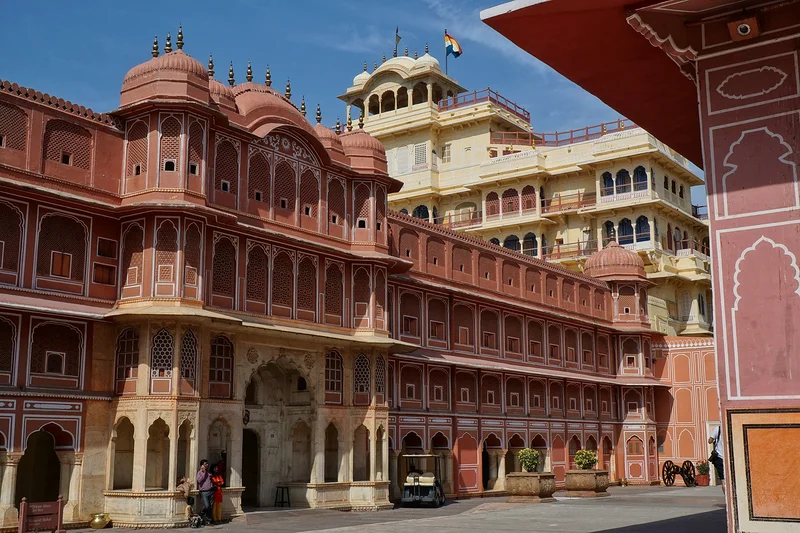
The eighteenth-century walled town, its right-angled avenues and its ochre façades repainted for a prince's visit in 1876: this is where the Hawa Mahal, the City Palace, the Jantar Mantar observatory and the Johri and Bapu bazaars all are. It is also a working commercial district, noisy and dusty until evening. The catch: hardly anyone sleeps here. The havelis converted into hotels are at the western gates, on Sansar Chandra Road, a quarter of an hour's walk or five minutes by tuk-tuk from the Palace of Winds.
The real plus is to go sit on a terrace at a cafe across the street, because that is where you will get the best view.
What to see & do in the area
Where to stay in this area
Alsisar Haveli Luxury
An 1892 family mansion turned hotel, with inner courtyard, pool and around fifty rooms under hand-painted frescoes. This is what a Rajasthan haveli is supposed to look like, ten minutes by tuk-tuk from the bazaar.
Dera Rawatsar Mid-range
A family house run by its owners, rooms decorated one by one and home cooking served in the courtyard. Smaller and more personal than its neighbours, a few hundred metres from the station.
Hotel Arya Niwas Mid-range
An institution on Sansar Chandra Road: a large terrace, a vegetarian restaurant and posted rates with no haggling. No luxury and no nasty surprises, the fallback address that fills up all year.
Horn Ok Please Hostel Budget
The area's backpacker hostel, halfway between the station and the Ajmer gate: dorms, roof terrace and shared kitchen.
Pros
- Monuments and bazaars on foot
- The havelis closest to the walls
Cons
- Noise, traffic and dust until evening
- Almost no hotel inside the walls themselves
Bani Park 3 kilometres west, residential
to sleep in a family house, in peace
A grid-planned residential district west of the station, where several families of the local nobility have opened their homes to travellers. You find havelis with courtyards and pools, gardens, and above all silence, which in Jaipur is priceless. The catch: there is nothing to see here and nothing open in the evening beyond the hotels; every outing means a tuk-tuk, which stays quick and cheap but means agreeing the fare before you get in.
Where to stay in this area
Shahpura House Luxury
The residence of a family from Shahpura, painted domes, a formal drawing room and a rooftop restaurant looking over the city. A member of Heritage Hotels of India: the palace format without the Rambagh price.
Umaid Bhawan Mid-range
A house built in the traditional Rajput style, family-run since it opened, with roof terrace and restaurant. The best balance of setting and price in this district.
Umaid Mahal Budget
Its sister house a few streets away, with wall frescoes and an inner courtyard. Plainer rooms and a gentler rate, for anyone who wants the setting without paying suite prices.
Pros
- Quiet and gardens, both rare in Jaipur
- Family houses rather than hotels
Cons
- Nothing to visit or do on foot
- A tuk-tuk needed for every outing
Civil Lines and the south of the city To the south-west, twentieth-century Jaipur
for the palaces, the restaurants and the museums
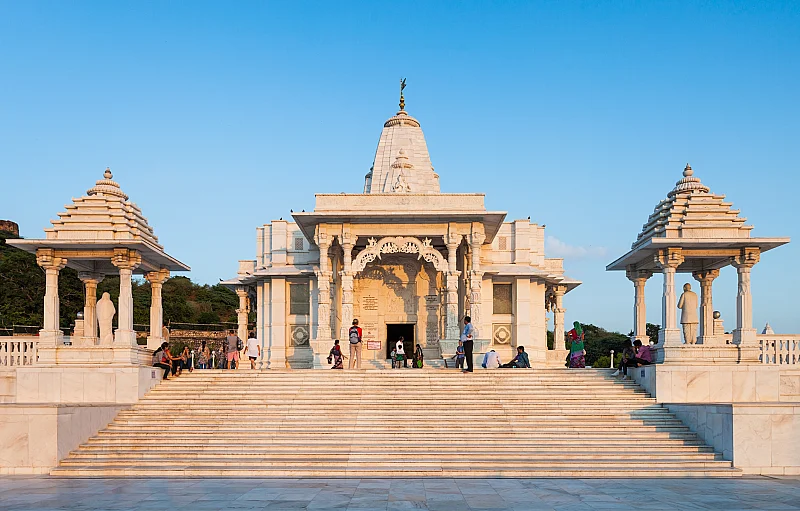
The Jaipur built outside the walls, to the south-west: tree-lined avenues, embassies, designer shops, and two former royal residences turned into palace hotels. The Albert Hall museum and the Ram Niwas gardens mark its entrance, the white marble temple of Birla Mandir its southern edge. The catch: it is the most expensive area, the old city is a quarter of an hour away by tuk-tuk, and its very open layout walks badly at forty degrees.
What to see & do in the area
Where to stay in this area
Taj Rambagh Palace Luxury
The Jaipur maharaja's residence until the 1950s, now one of the most famous hotels in India: eighteen hectares of gardens, peacocks, marble and liveried service.
Jai Mahal Palace Luxury
An eighteenth-century palace in five hectares of Mughal gardens, more discreet and slightly cheaper than its great neighbour, with a pool and a broad terrace. You sleep in peace ten minutes from the old city.
Hilton Jaipur Mid-range
International comfort with no surprises, on the axis running south: spacious rooms, pool, gym and parking. The choice for anyone here on business or arriving late from the airport.
Pearl Palace Heritage Budget
A small neighbourhood hotel with a heavily worked interior, each room built around one Rajasthani craft. The most talked-about value in the city, provided you book well ahead.
Pros
- The two palaces and the best restaurants
- Museums and gardens within walking distance
Cons
- The most expensive area in the city
- A quarter of an hour by tuk-tuk to the bazaar
Amer and the northern road 10 kilometres away, towards the fort
to be at the fort before it opens
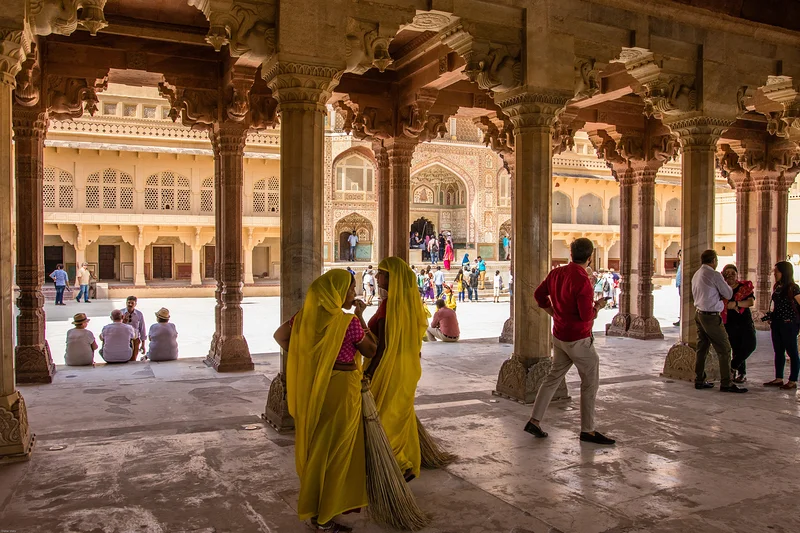
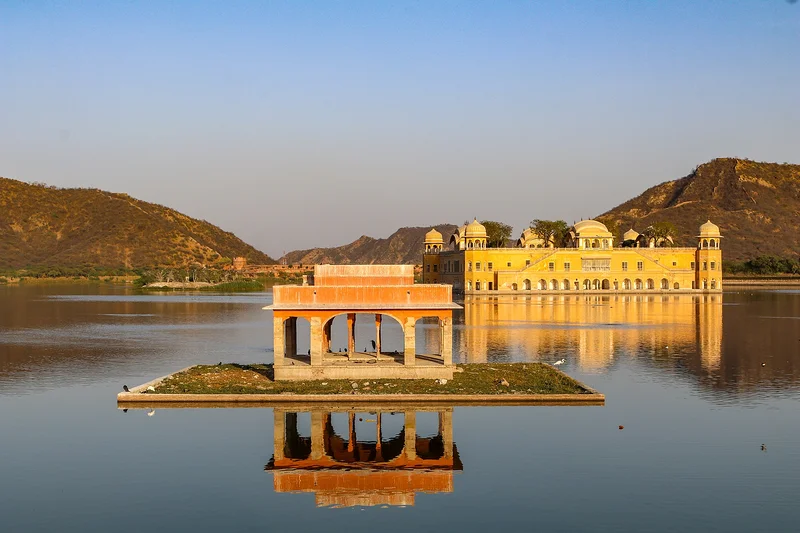
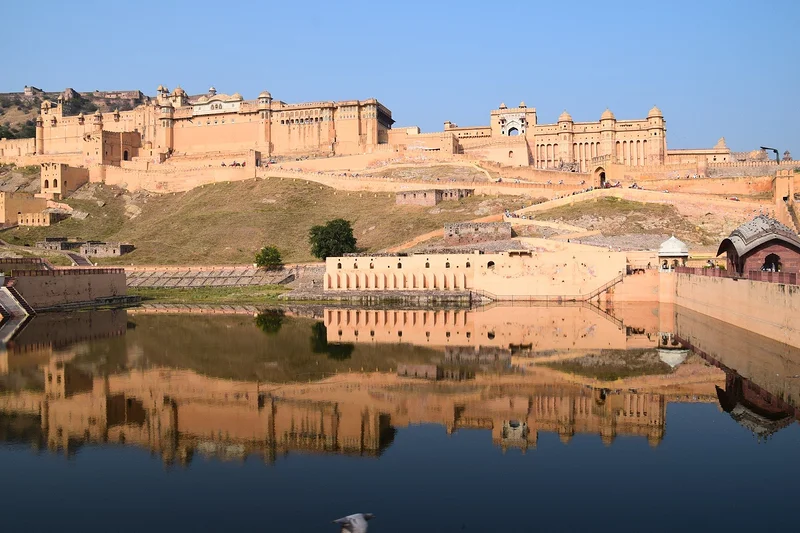
The road up to the old capital runs past the Jal Mahal, the palace set in the middle of an artificial lake that travellers photograph without ever going inside, then the royal cenotaphs of Gaitor. At the end, some ten kilometres out, the Amber Fort and its palace command the gorge. Sleeping here means going up at opening time, ahead of the coaches. The catch: the village of Amer has almost no hotels, so you stay along the road, and in the evening you do nothing but dine at your hotel.
Once you are there, watch out for the many vendors who try to rip you off.
What to see & do in the area
Where to stay in this area
Trident Jaipur Luxury
Five stars facing the Jal Mahal lake, halfway between the city and the fort, with a pool and terraced gardens. The most efficient base for tackling Amer at first light without crossing Jaipur.
Regenta Central Jaipur Mid-range
An Indian chain hotel on the same Amer road, plainer and far cheaper than its neighbour, with a rooftop pool. A sound compromise for anyone wanting the fort ten minutes away and the bazaar fifteen.
Pros
- The fort at opening time, ahead of the groups
- The Jal Mahal lit up in the evening from the road
Cons
- Nothing to do at night beyond the hotel
- Very persistent vendors at the fort
Our tips for booking the right place
- The tuk-tuk fare is agreed before you get in: Jaipur takes fifteen to twenty minutes to cross end to end, and travellers who know it describe a human-sized city you move around on foot or by auto-rickshaw. The fare, though, is never displayed: it is quoted, discussed and settled before you sit down, otherwise the ride ends in a negotiation. Booking apps use fixed prices and avoid the argument altogether. Expect the driver to suggest a detour via a friendly shop as well: a polite refusal is enough.
- Amber Fort is visited early, or not at all: The reviews left on Avygeo all describe the same magnificent fort and the same procession of very persistent vendors at its gates. The difference is the hour: at opening time the elephant courtyard is calm and the light rakes the ramparts; by eleven the coaches are in. Public buses go up from the Hawa Mahal gate for a few rupees, still the cheapest way. Allow a good half day with Jal Mahal and Gaitor on the way.
- What to visit, and what to look at from outside: Three Jaipur monuments photograph better than they visit, and Avygeo members say so bluntly. The inside of the Hawa Mahal is nothing but a run of empty rooms: the best view is from a café terrace opposite. The Jal Mahal cannot be visited at all, it is looked at from the bank, lit up after dark. The Galta temple is worth the trip but swarms with monkeys: keep glasses, phone and food out of reach.
- Booking inside the walls and expecting quiet: the old city is a working commercial district, with horns from morning to night and deliveries at all hours. The few rooms you find there face the street. The havelis at the western gates give you the same walking access plus an inner courtyard.
- Choosing a hotel on the airport road or in the new southern zones to save twenty euros: those areas have no monuments, no neighbourhood restaurants and no evening life, and every trip into the old city costs half an hour of heavy traffic.
- Planning Amer and the old city in the same afternoon: the drive up to the fort takes half an hour, the visit at least two hours, and the bazaars close earlier than you would think. Two separate half-days beat one day spent rushing.
FAQ: where to stay in Jaipur
Which area should I choose for a first visit to Jaipur?
Where can I stay cheaply in Jaipur?
Is Jaipur suitable for families?
Where can I go out in the evening in Jaipur?
Should I rent a car in Jaipur?
How much does a night in a hotel cost in Jaipur?
 Keep exploring
Discover everything in Jaipur
Keep exploring
Discover everything in Jaipur
Comments (0)
No comments yet. Be the first!