
Birla Mandir Temple, the white marble sanctuary at the foot of the Jaipur hills
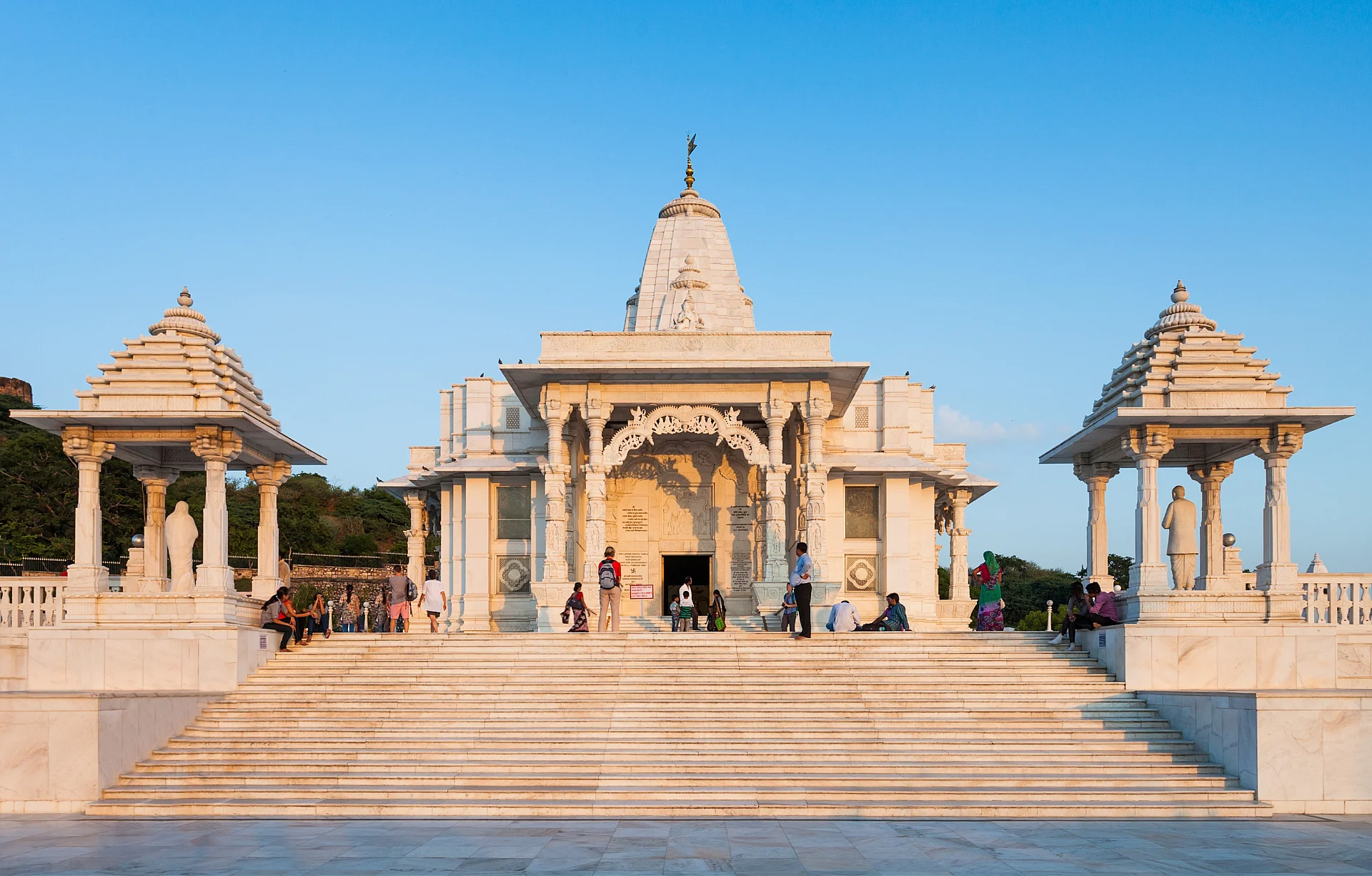
At twilight, when the floodlights kick in and the white marble shifts to a warm ivory under the artificial glow, the Birla Mandir Temple takes on an almost surreal quality. Built in 1988 by the Birla industrial group, this temple is dedicated to Laxmi Narayan (the goddess of prosperity and the god of protection). It stands in stark contrast to the ochre and pink monuments that define the rest of the city. Here, everything is bright, luminous, and distinctly mineral.
Why visit the Birla Mandir Temple?
The temple is constructed from Makrana marble, the same Rajasthan quarry that supplied the stone for the Taj Mahal. The exterior walls are carved with scenes from the Mahabharata and the Ramayana, while the interior stained glass windows depict figures from various religious traditions. Jesus, Buddha, and Socrates all appear alongside Hindu deities. This intentional syncretism is a hallmark of the Birla temples found throughout India.
The architecture blends three distinct styles: Mughal domes, southern Indian gopurams (monumental entrance towers), and northern temple spires. The result is a hybrid design that is occasionally surprising, but never dull.
What to look for
- The bas-relief sculptures on the exterior facades, featuring finely detailed mythological figures
- The colored stained glass inside the sanctuary, a rarity for a Hindu temple
- The statue of Laxmi Narayan carved from black marble at the heart of the main sanctuary
- The small adjacent museum, which displays reproductions of sacred texts and works related to Hindu mythology
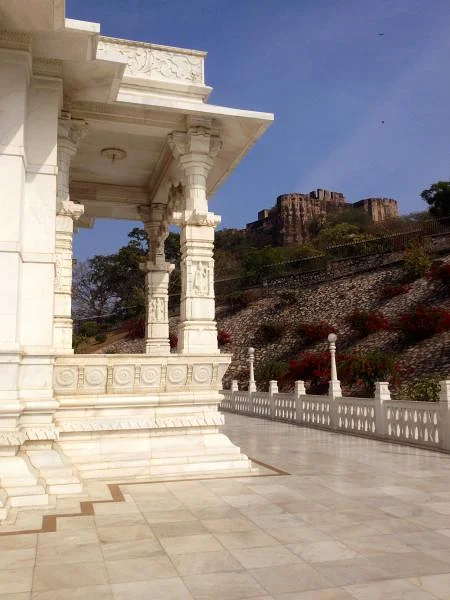
- The view of the Moti Dungri fort from the temple esplanade
The atmosphere: between devotion and tourism
The Birla Mandir Temple is an active place of worship. Devotees come to pray daily, and the evening aarti (light offering) ceremonies draw as many worshippers as curious travelers. The vibe is peaceful on weekdays, but much more energetic on weekends and during major Hindu festivals like Janmashtami (the birth of Krishna) and Navratri, when thousands of people arrive at the site.
Friendly tip: Aim to arrive for the evening aarti, which typically falls between 6 p.m. and 7 p.m. depending on the season. The temple lights up gradually, bells ring out, and the air fills with incense. It is one of the most immersive experiences you can find in Jaipur, and admission remains free.
Practical details: what to know before you go
You must remove your shoes before entering, though free storage is provided at the entrance. Dress modestly by keeping your shoulders and knees covered. Photography is strictly prohibited inside the main sanctuary. Access to the temple is free for all visitors.
Ideal for
- Travelers interested in contemporary religious architecture in India
- Those wanting to witness a Hindu ceremony in an accessible setting
- Late afternoon visits to catch both the sunset light and the evening aarti
Limitations to keep in mind
- Built in 1988, this is a modern structure, which may disappoint those seeking ancient history
- Photography is prohibited inside the sanctuary
- The site gets very crowded on weekends and during Hindu holidays
Opening hours
| Monday | 06:00-12:00, 15:00-21:00 |
|---|---|
| Tuesday | 06:00-12:00, 15:00-21:00 |
| Wednesday | 06:00-12:00, 15:00-21:00 |
| Thursday | 06:00-12:00, 15:00-21:00 |
| Friday | 06:00-12:00, 15:00-21:00 |
| Saturday | 06:00-12:00, 15:00-21:00 |
| Sunday | 06:00-12:00, 15:00-21:00 |
Hours may vary during major religious festivals.
How long for this activity
Plan on 30 to 45 minutes for a relaxed visit. Allow one hour if you want to attend the aarti and explore the adjacent museum.
*Information subject to change

This Hindu temple made entirely of white marble is really very pretty. Be careful, you cannot visit it all the time, so make sure to respect the posted hours. The gardens are superb and well maintained. The marble is finely carved, and it is impressive.