
The Taj Mahal: when an emperor's grief becomes eternal
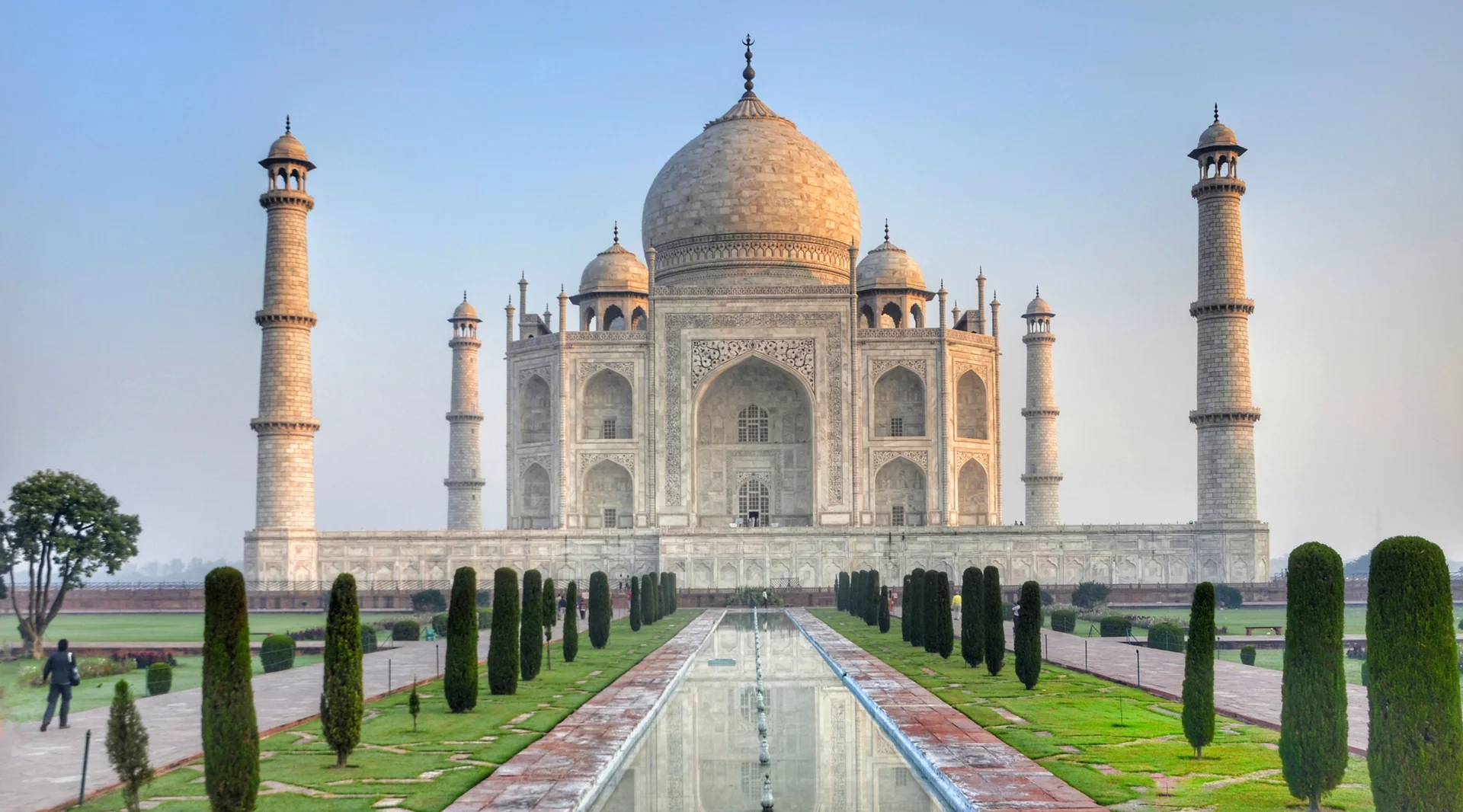
White marble turns rosy at dawn, shifts to gold in the late afternoon, and fades to blue under the moon. This living stone has told the same story for nearly four centuries: an absolute love transformed into architecture. It took 22 years of labor, 20,000 artisans, and resulted in the finest mausoleum ever built.
Why the Taj Mahal transcends all superlatives
Built between 1632 and 1648 for the mausoleum itself, and completed as a whole in 1653, in Agra, in the Uttar Pradesh region, this masterpiece of Indo-Islamic art originated in tragedy. The Mughal emperor Shah Jahan lost his beloved wife Mumtaz Mahal in 1631, as she died giving birth to their fourteenth child. The inconsolable sovereign decided to erect a monument that would defy time itself.
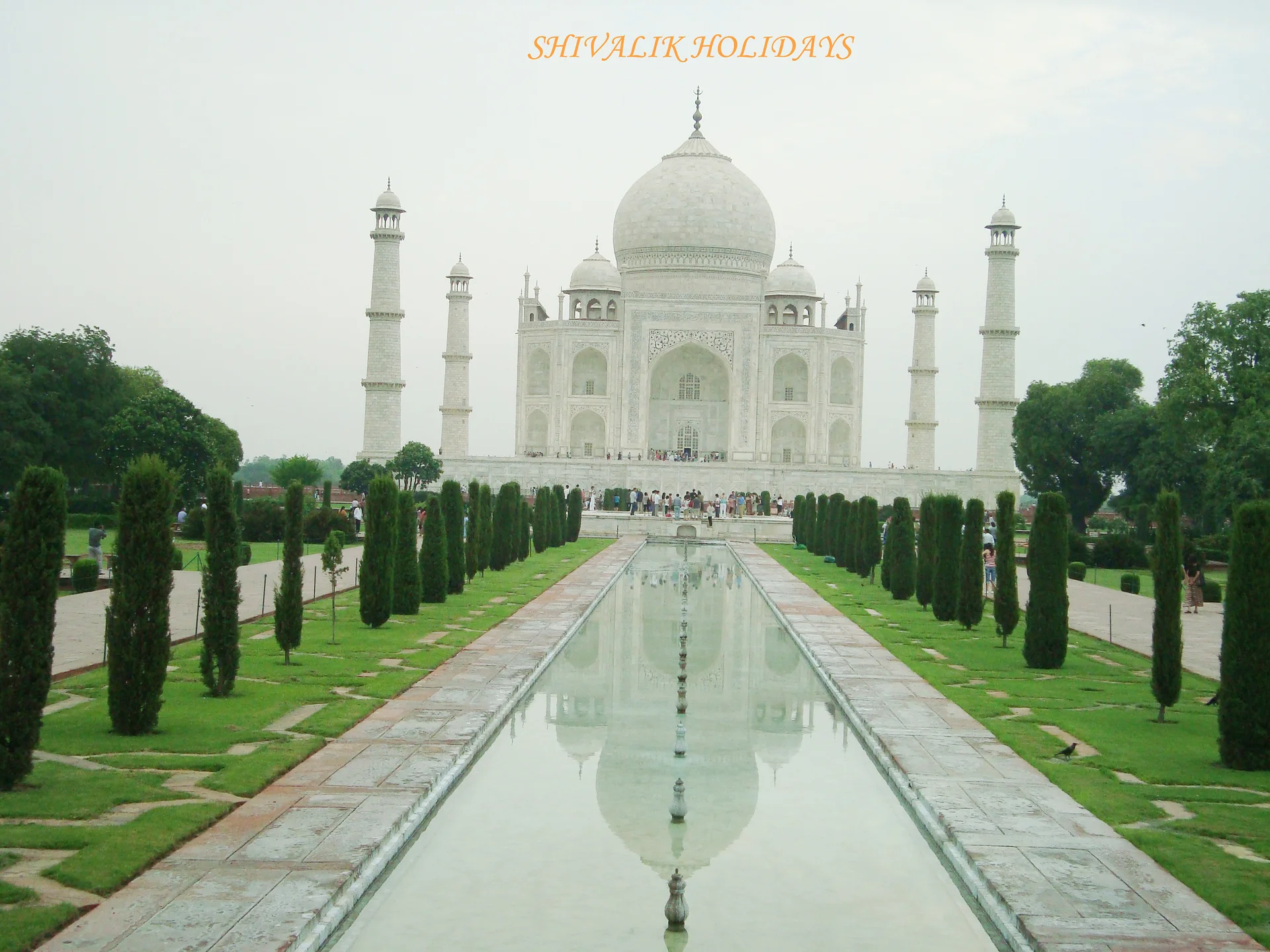
The result is a perfect symmetry that marries Persian, Ottoman, and Indian influences. The central bulbous dome reaches 73 meters, framed by four identical minarets slightly tilted outward (to prevent them from falling onto the mausoleum in the event of an earthquake). The mosque and the guest pavilion, both in white marble, create an architectural balance whose harmony still stuns modern engineers.
The magic of marble and gemstones
The optical illusion of white marble
The Makrana marble, extracted 400 kilometers from Agra, possesses a unique property: its translucency. Light penetrates the stone by a few millimeters, creating chromatic variations that make the monument an architectural chameleon. At sunrise, pink tones evoke hope. At noon, the brilliant white symbolizes purity. At dusk, gold and orange reflect the warmth of a shared life.
Semi-precious stone inlays
Twenty-eight types of stones adorn the walls: lapis-lazuli from Afghanistan, turquoise from Tibet, jade from China, and carnelian from Arabia. Artisans mastered pietra dura, a Florentine inlay technique, to create floral patterns of startling finesse. Lotus petals, roses, and tulips appear to float on the marble.
Friendly tip: observe the walls closely with a flashlight. The semi-precious stones create colorful reflections invisible to the naked eye under natural light. This inlay technique required months of work for just a few square centimeters.
The visiting experience: timing and strategy
The monument attracts between 7 and 8 million visitors per year. Crowds can completely ruin the experience if you arrive between 10:00 AM and 4:00 PM. Two time slots save the day: opening at 6:00 AM (skip-the-line tickets are essential) or the final two hours before closing.
From the monumental entrance gate, a 300-meter path lined with cypress trees leads to the central reflecting pool. This is where the crowd gathers for the classic photo. Bypass them and head directly to the mausoleum. You can return to the pool later, once the tour groups have moved on.
Inside the mausoleum
A cool dimness reigns inside. The cenotaphs of Shah Jahan and Mumtaz Mahal (fake funerary monuments, as the actual remains rest in an inaccessible crypt) are protected by an openwork marble balustrade. The patterns resemble mineral lace. The acoustics amplify every whisper, creating an almost mystical atmosphere.
The Taj Museum, opened in 1906, displays original plans, Persian miniatures, and objects that belonged to the Mughal sovereigns. Budget 20 minutes for this side visit.
Mehtab Bagh, the forgotten perspective
On the other side of the Yamuna river, these restored Mughal gardens offer the most spectacular view of the monument without any visual barriers. At sunset, the silhouette of the dome stands out against the glowing sky. Few tourists make the effort to cross the river, so you will be nearly alone.
Opening hours
| Monday | 06:00-18:30 |
|---|---|
| Tuesday | 06:00-18:30 |
| Wednesday | 06:00-18:30 |
| Thursday | 06:00-18:30 |
| Friday | Closed |
| Saturday | 06:00-18:30 |
| Sunday | 06:00-18:30 |
Dernière entrée à 17h. Visite nocturne lors des pleines lunes (20h30-00h30).
*Information subject to change

The Taj Mahal is an absolutely impressive site and the visit is clearly worth the trip.
On the other hand, the ticket price seemed high to me considering the local cost of living.
Once there, the beauty of the monument is a bit spoiled by the crowds, which sometimes make it hard to really enjoy the place.
It is mostly in the gardens that you can best appreciate the visit, with the chance to admire the changing colors of the Taj as the light shifts.
An unforgettable moment nonetheless.