
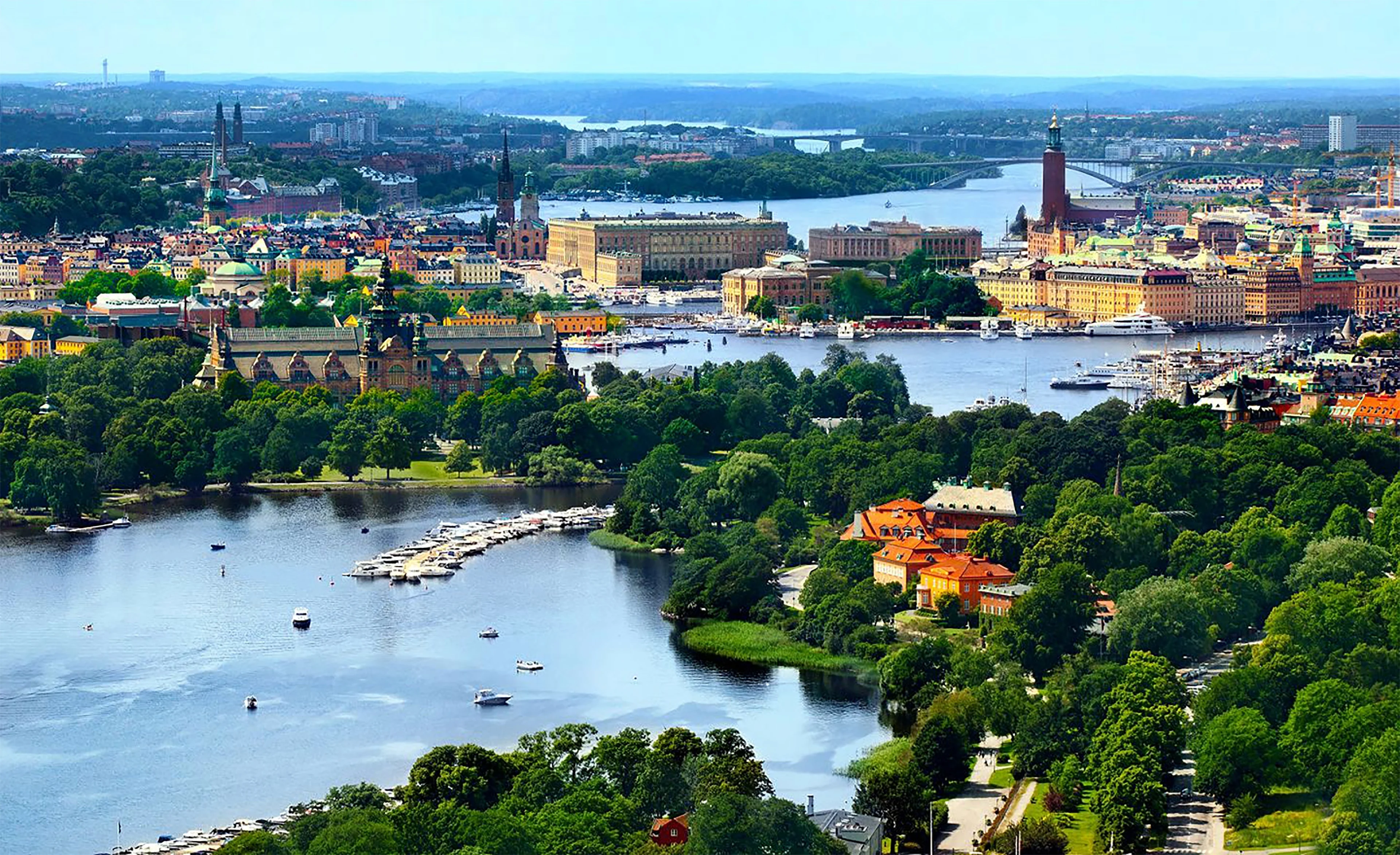
Like many kids, I grew up playing "Vikings," imagining them raiding French towns in their longships and striking terror into the hearts of the locals. Well, perhaps in a spirit of revenge, I decided to head to their home turf, specifically Stockholm, the Swedish capital. But I went with absolutely no bellicose intentions!

How to get there
I left in early June for a week and was lucky enough to avoid the massive tourist crowds. In reality, the peak season really kicks off from late June until about mid-August.
I flew out of Roissy Charles-de-Gaulle airport on Scandinavian Airlines (SAS) headed for Stockholm. The flight was only two and a half hours, which went by quite quickly. Be careful when booking, though; there were flights that were just as expensive, or even more so, that took four hours... I imagine you avoid these issues when traveling with a tour operator, but I chose to put the trip together myself.
I booked a three-star hotel right in Stockholm; they had some great deals because they were clearing out their last few rooms for that period. Actually, it was the hotel's ad and my booking that led me to choose Sweden as a destination in the first place. Here is a comparison tool to help you choose your accommodation in Stockholm.
Practical information
Currency
Although Sweden has been part of the European Union since 1995, it has consistently delayed joining the Economic and Monetary Union. Consequently, the currency to this day remains the Swedish krona (SEK). One krona is divided into 100 öre.
There are no issues using bank cards there; they are accepted everywhere. For my part, I asked my bank for a courtesy waiver on foreign transaction fees. As a result, I didn't exchange any cash on-site and just paid for everything with my card.
Vaccinations
No worries on that front: no specific vaccines are required, as you might expect.
Getting around Stockholm
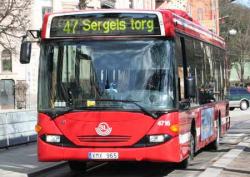 The city offers a very extensive network of subways, trams, trains, buses... and boats! The latter are part of the public transit system since the city is made up of several islands. The network is managed by "Storstockholms Lokaltrafik AB," or SL (you’ll see the acronym everywhere).
The transport is clean: the buses, for example, run on ethanol.
Since single-ride tickets are quite expensive, I recommend looking into subscription passes or ticket booklets to save some money.
For the subway, if you ask for directions, keep in mind that Swedes refer to their lines by color, not by number.
Tickets can be bought at subway station entrances or on buses. Some shops sell them too; they are marked with the SL sticker.
But, of course, Sweden is also the land of the bicycle! There are numerous bike paths, and everything is designed to make life easy for cyclists. It takes a little time to get used to the signage and find your bearings, but you eventually get the hang of it. Otherwise, you always have the taxi option...
Environmental awareness
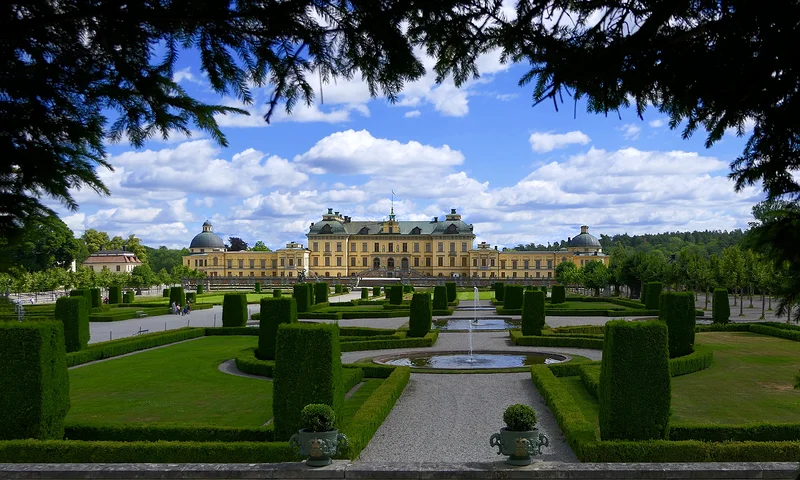
Very advanced in this area, the Swedes have adopted eco-friendly habits for quite some time now. So, you should follow suit: don't litter on the streets and remember to recycle your waste. The capital's green spaces, like the island of Djurgården, are carefully preserved.
Climate
If, like me, you imagined it’s almost always cold in Sweden, you’ll be pleasantly surprised by visiting in the summer. The first week of June was lovely (around 20°C/68°F on average), which is typical for the season. In fact, temperatures climb even higher in July and August. So, don't bundle up too much; just bring something for the evenings or if you’re taking a boat trip.
Another point I really appreciated: in early June, the days are very long. You can still see daylight at 10 PM... and it’s back again before 4 AM. Conversely, I hear it starts getting dark before 3 PM in the winter.
Trip report
I have to admit that I didn't exactly tap into my inner adventurer, and I mostly relied on what I read in various guidebooks and online.
Stockholm's Old Town
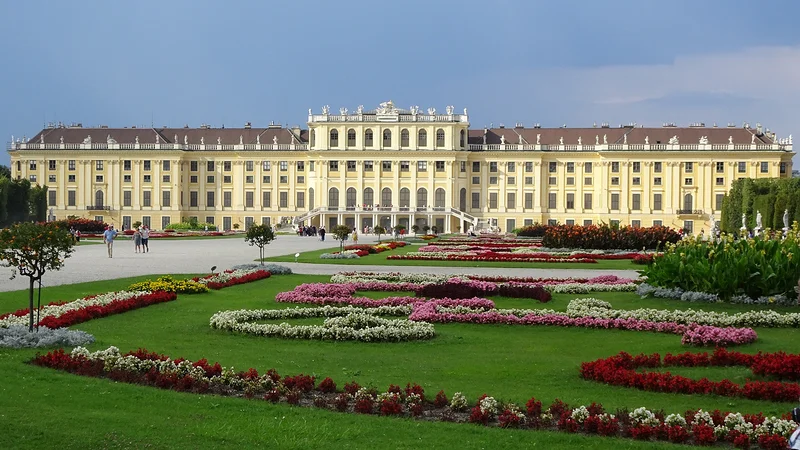
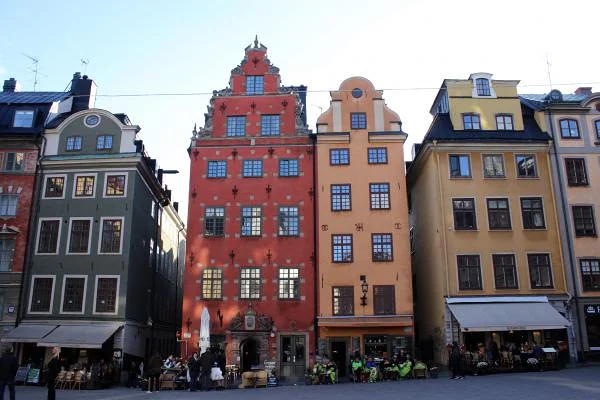
In the city (which reminded me of what I saw during a weekend in Vienna, especially the large, colorful facades), I started by crossing one of the many bridges that connect the various islands to reach the Old Town, which the Swedes call "Gamla Stan."
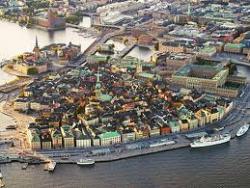
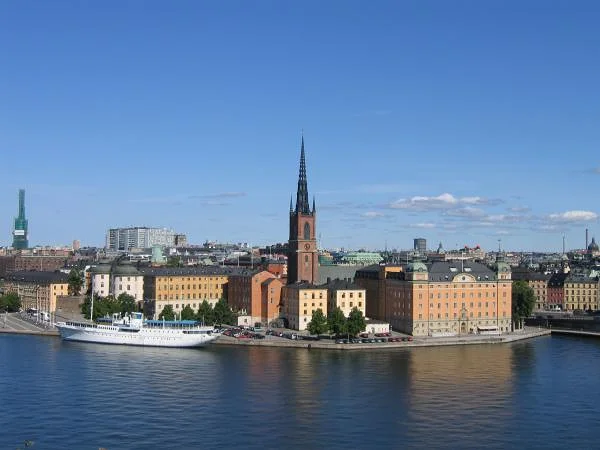
You’ll still find plenty of winding alleys, cobblestone streets, and a feast for the eyes with a mix of old, noble architectural styles dating back to the first Germanic settlers. It really feels like stepping back into the Middle Ages. To give you a good idea and an overview, I’ve included an aerial view (I didn't take this one myself!):
And, of course, you can't visit without seeing the Royal Palace, sitting like a massive block by the water on the shores of Lake Mälaren. Even though it remains the official royal palace, the King and his family no longer live there, which is why we can visit parts of it today, including the royal apartments. Near the royal chapel, the Treasury displays the crowns, scepters, and other regalia of the ruling family. In the basement, a museum shows you the ramparts of the old fortress that once stood on the same site. Don't miss: the changing of the guard at 12:15 PM in June (check the schedule, as times and organization can change).
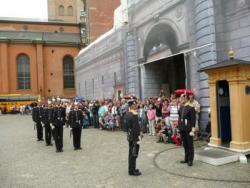
Preceded by a brass band and a mounted troop, the soldiers, dressed in blue for the band and gray for the guards, all wearing silver helmets (somewhat modeled after Prussian helmets), exchange command in the square, surrounded by cannons. It’s fun to watch and always worth a look. In any case, they have nothing to envy the British Royal Guard!
Also overlooking Lake Mälaren, the City Hall, or Stadshuset, which you’ll recognize easily by its bell tower and red bricks, is famous for its reception hall, which is used for the Nobel Prize banquet.
And since we’re talking about the Nobel Prize, head toward the main square and its shops and souvenir stores. After you’ve found what you’re looking for, you should also take a look at the Royal Academy, whose facade (again!) furiously reminded me of Viennese buildings. Behind these walls sits the Nobel committee that selects the laureate in the literature category.
There is also a Nobel Museum on the ground floor of the building. But I didn't get a chance to visit it, so I can't tell you more about it.
For the rest, I’ll let you wander, much like we did: there are so many churches, statues, and facades to see that you just need to walk around a bit to find something to see, photograph, and visit.
Djurgården, the green island

Obviously, you have to treat yourself to a little stroll to the world's first open-air museum: Skansen, on the island of Djurgården (just a few minutes from the city center). Created at the end of the 19th century, this museum offers a comprehensive view of Sweden with its traditional houses, craft workshops, a zoo containing elk and reindeer, gardens, a post office (still in operation), and even Sami houses, named after the people who lived in Lapland, etc. It’s a huge park where you’re sure to find something you like: there’s even a tobacco and match museum!! If you’re hungry or thirsty, you won't have any trouble finding a little shop to grab a bite.
Without planning it, I was lucky enough to be in Sweden during the National Day, which takes place on June 6th and commemorates the end of Danish rule. In the evening, Skansen Park becomes a place of festivities where all the Stockholmers gather to dance and sing. There were even folk groups that were a big hit with all generations. However, although hard liquor is complicated to find in Sweden (you have to go to state-run stores), the majority of the Swedes present must have started drinking, a lot, at home... As a result, when these big, slightly tipsy guys start having trouble walking straight and bump into you while talking very loudly, there comes a point where my five-foot-eleven frame and I decided to head back to the hotel quietly...
It seems the alcohol policy isn't new and that Swedes drink quite a bit when they celebrate. It’s always good to know, especially when you’re out at night. That said, apart from that one evening, which felt a bit like what happens in Paris when the Beaujolais Nouveau arrives, I never felt unsafe on the streets of the Swedish capital.
Birka and the Vikings
All these dives into the country's past and history convinced us to visit the island of Birka on Lake Mälaren (that lake again, see Gamla Stan above), where an ancient Viking trading post was located. Today, there are museums and tours of the historical sites. A brochure at the hotel reception offered one-day ferry cruises including a visit to the Viking museum and cemetery, all for about 260 SEK.
Other versions existed without the guided tours, but we wanted to treat ourselves and learn a little more, so we let ourselves be tempted by the "all-inclusive" package. We weren't disappointed with our choice; I highly recommend it, especially if you have an interest in history. Be careful with museum opening hours, though: some friends who went there recently told us that tours only start from late June. So, check before you go if you're an enthusiast.
Södermalm, the trendy spot
After those historical visits, we also enjoyed the Södermalm district. It’s the island bordering the city center to the south, with a hill running along the shore where several boats converted into restaurants or hotels are moored.
As Stockholm's trendy neighborhood, it’s very busy, especially in the evening. It must be said that you’ll find very hip bars and shops frequented by the golden youth as well as the "boho" crowd. You can also get a dose of culture by visiting the free municipal museum (Stockholms Stadsmuseum), which features several exhibitions tracing the city's evolution.
Sigtuna, Sweden's oldest village
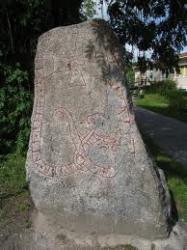 To continue, we took the train and then the bus to reach the pretty village of Sigtuna, about 40 kilometers from Stockholm. Historically very rich, it’s the oldest village in Sweden, founded over a thousand years ago.
Many traces of runes and ancient ruins are visible almost everywhere, especially churches (there were seven in the Middle Ages). There are also museums to discover on-site.
As for the rest of the visit, I have to admit there wasn't much else of interest, or rather, not much that was very new in this village. To keep going, we wanted to eat at a restaurant that looked quite classy, but the prices were just as classy... Still, even here, a change of scenery is guaranteed. We returned to Stockholm, where we finished our stay by limiting our travel, because, after all, life isn't exactly cheap there, and if you aren't a little careful, your vacation budget takes a hit!
Final days
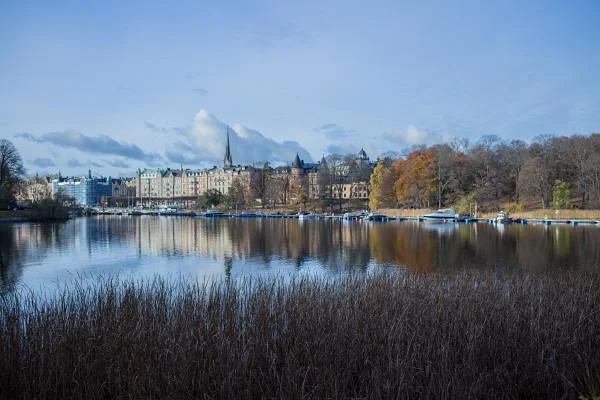
For the rest of your strolls, you’ll always have the option of walking in one of the city's many parks: Stockholm really is a "green" city. All the parks are very popular with locals, especially young dads with their strollers or young children in hand. It’s not a myth: gender equality is truly established in this country, much further ahead than it is in our old France... Parents share household chores and childcare duties equally. We could learn a thing or two!
To conclude, I think that besides Stockholm, there are still beautiful things to see, especially around Göteborg or toward the center of the country. "Now all that's left is to go," as they say!!


Comments (0)
No comments yet. Be the first!