
Hello everyone,
I had the chance to go on vacation to Australia. I took a short trip and settled down in Victoria (on the southeastern coast, facing Tasmania), of which I have spectacular memories that I want to share with you.

Practical info to know
Administrative formalities
You will need your valid passport. On that note, remember to check that it is valid for at least 6 months after your entry date into Australia because, even if it is not required by the government, some overly zealous airlines will not let you board if your passport is at risk of expiring before then. In your passport, you will need the Australian visa. Above all, you will absolutely need an e-Visitor electronic visa meant for passport holders from the European Union who wish to visit Australia for tourism or business purposes. Keep this in mind as soon as you book your plane ticket.
If you plan on driving in Australia, you will need your national driver's license as well as an international driving permit.
The currency is the Australian dollar. No issues using Visa, Eurocard, Mastercard, or American Express cards to pay and withdraw cash. The time difference is between 6 to 8 hours in the summer and 8 to 10 hours in the winter because Australia spans no less than 3 time zones!
Health and natural hazards
On the health front, no specific vaccines are recommended, though it is up to you to ensure your routine vaccinations are fully up to date.
Swimmers and divers should watch out for particularly stinging jellyfish between December and March inclusive, especially around the islands of the Great Barrier Reef. For info, it is listed as a UNESCO World Heritage site and stretches for about 2600 km. As for sharks, attacks are very rare, and the presence of sharks near swimming areas is often announced by local authorities. That said, know that the most high-risk areas are on the east coast, in Queensland and New South Wales, particularly near ports. On the tropical coasts and waterways of northern Australia, inquire about the presence of crocodiles, which can prove dangerous.

On land, in the desert or in the forest, you run the risk of running into snakes. These rarely attack humans and instead flee from their presence. Nevertheless, be aware that some local species are highly venomous. You will therefore not be surprised to learn that it is recommended to keep your distance from these reptiles. You may also cross paths with scorpions, spiders, and other animals with a bad reputation. They are generally quite harmless to humans.
Climate

The climate varies a lot from one region to another, which is how you can go from the humidity of the tropical North to the desert dryness of the Red Centre, the temperate mildness of the New South Wales coast, or the oceanic coolness of Tasmania.
The best time to visit Australia is spring or autumn because the temperatures are most pleasant and the climate is dry. It is best to avoid the period from December to March in the north, a region where rains are most frequent and very heavy. Vigilance is required during this season.
Flight to Australia
As for luggage, the allowance is generally 20 kilos for traditional airlines. As for the flight, it will inevitably be long, and most certainly with a layover. So, for those who can, I invite you to make layovers of a few days to enjoy an intermediate destination in Asia or North America. After all, this kind of distant trip is quite rare in a lifetime...
Whatever your choice, I invite you to compare prices between several airlines. Be careful, however, if you transit through the USA for example, as you will need a biometric passport, the processing times for which are sometimes quite long, and you will need to apply for a travel authorization for the United States (ESTA) in advance.
Victoria, highly varied landscapes

Located at the southeastern tip of Australia, the Victoria region is especially renowned for its diverse and varied landscapes, and this particular character, unique of its kind, constitutes its treasures. You can find rainforests as well as arid deserts, splendid rocky coasts, and miles of beaches that sit alongside snowy mountains. The fauna and flora are very rich and will delight nature lovers. Certain animal and plant species are endemic, meaning they cannot be admired anywhere else in the world.
Putting aside islands like Tasmania, Victoria is the smallest of the Australian states. However, it concentrates the highest population density, notably due to the presence of Melbourne, which makes it the second most populous state behind New South Wales. Its demographics and economy experienced strong growth starting in the 19th century with the discovery and exploitation of gold deposits.
The state of Victoria is broken down into regions, territories, and must-see sights: Daylesford (where you will see the Macedon Ranges), Yarra Valley (Dandenong Ranges), Mornington Peninsula (olive groves, vineyards), Phillip Island (water sports, exceptional wildlife), Great Ocean Road (sumptuous views), Goldfields (the gold rush), Grampians (nature, nature, and nature!), High Country (welcome to the Alps!!), Gippsland (dreamy forests and tourist landscapes), Murray River (swamps and desert).
My stay in Victoria
Melbourne
The tour options are endless. I am going to walk you through mine to give you an idea. I started with Melbourne, the cosmopolitan city par excellence!
Melbourne is truly a surprising city with a genuine mix of old and modern architecture, clean and elegant streets, and superb parks and botanical gardens. The blend of past and present is also found in the transportation networks, where trams, trains, and buses are sometimes truly futuristic. Certain streets and arcades, like the Royal Arcade and the Block Arcade, will plunge you right back into the atmosphere of 19th-century shops and Art Nouveau.

Victorian art can also be observed around the old railway station, Flinders Street Station. Its red-brick facade is topped by a magnificent verdigris bronze dome, just as I imagined it before seeing it in person.
The city also boasts a large number of famous buildings. Among them, the Melbourne Museum, located northeast of downtown in Carlton, houses the remains of a famous 1920s racehorse named Phar Lap. And while we French folks have the Minitel, Australians have preserved the CSIRAC in this museum, the fifth electronic computer built in the world, which is still in working order.
You can also visit the immense dome-shaped reading room of the State Library of Victoria. The atmosphere is a bit like Dan Brown's book Angels & Demons... Tourists visiting Melbourne will not feel entirely out of place if they tour the Victorian Arts Center. Indeed, this museum is topped with a small Eiffel Tower. But, no doubt ironically, locals call it "the upside-down ice cream cone".... Another emblematic building worth a look is the National Gallery of Victoria. Don't forget to photograph the impressive water wall at the entrance.
For gaming and shopping enthusiasts, you will find a mini Las Vegas in the Crown Casino: a gigantic complex featuring a casino, restaurants, hotels, nightclubs, cinemas, and luxury boutiques where every opportunity is good for spending money.
If you are hungry and want to treat yourself, extend your trip to the docklands and toward Port Phillip to enjoy a great meal. To get there, play the tourist and hop on the old green and yellow painted wooden trams that are still kept running on a few lines.

If you are a sports fan, you cannot pass through without seeing Melbourne Park. This is the stadium that hosts the Australian Open in January, one of the famous Grand Slam tennis tournaments.
In all these aspects, I think the city resembles grid-planned American cities: the streets are perpendicular to one another. It is undoubtedly this specific feature that allows for different atmospheres between neighborhoods, a bit like exotic enclaves within the city: Chinatown, Bourke street mall, Greek quarter, City laneways and arcades... The walks the city offers are always refreshing, charming, and full of surprises.
The city's lively atmosphere and cultural richness are widely praised, and indeed, it is no exaggeration: there are always festivals, exhibitions, or cultural and artistic events pacing daily life, including at night when Melbourne stays very vibrant (check out Federation Square and its shows in the Yarra Precinct, the neighborhood of Melbourne that represents the city's cultural heart).
Road trip in Victoria
But Melbourne isn't the only thing in Victoria. So, provided you remembered to rent a car once there, you can treat yourself to getaways in the surrounding areas of the city.
The most common routes (which will no doubt be recommended by tour guides and/or locals) pass through Phillip Island, famous for its penguins, seals, and koalas. You will run into just as many families as surfers here, and you can enjoy the peacefulness and charm of the place. The bravest and most patient will wait until dusk to head to the viewing areas and admire the colonies of little penguins coming ashore to take shelter from predators in their burrows. This is the famous "Penguin Parade". Be warned, you probably won't be alone in watching this live show because the "attraction" is quite popular.

Also, don't miss Wilsons Promontory National Park (or "The Prom" or "Wilsons Prom" if you want to sound like a local :-)), in Gippsland, a wild region known for its spectacular scenery. You'll discover the Australian bush there. You might also spot wombats, kangaroos, and other emus on a guided walking tour where a guide will point out the species you are bound to cross paths with. Although very rich in wildlife, this park is actually quite small since it encompasses "only" the Cape Wellington peninsula.

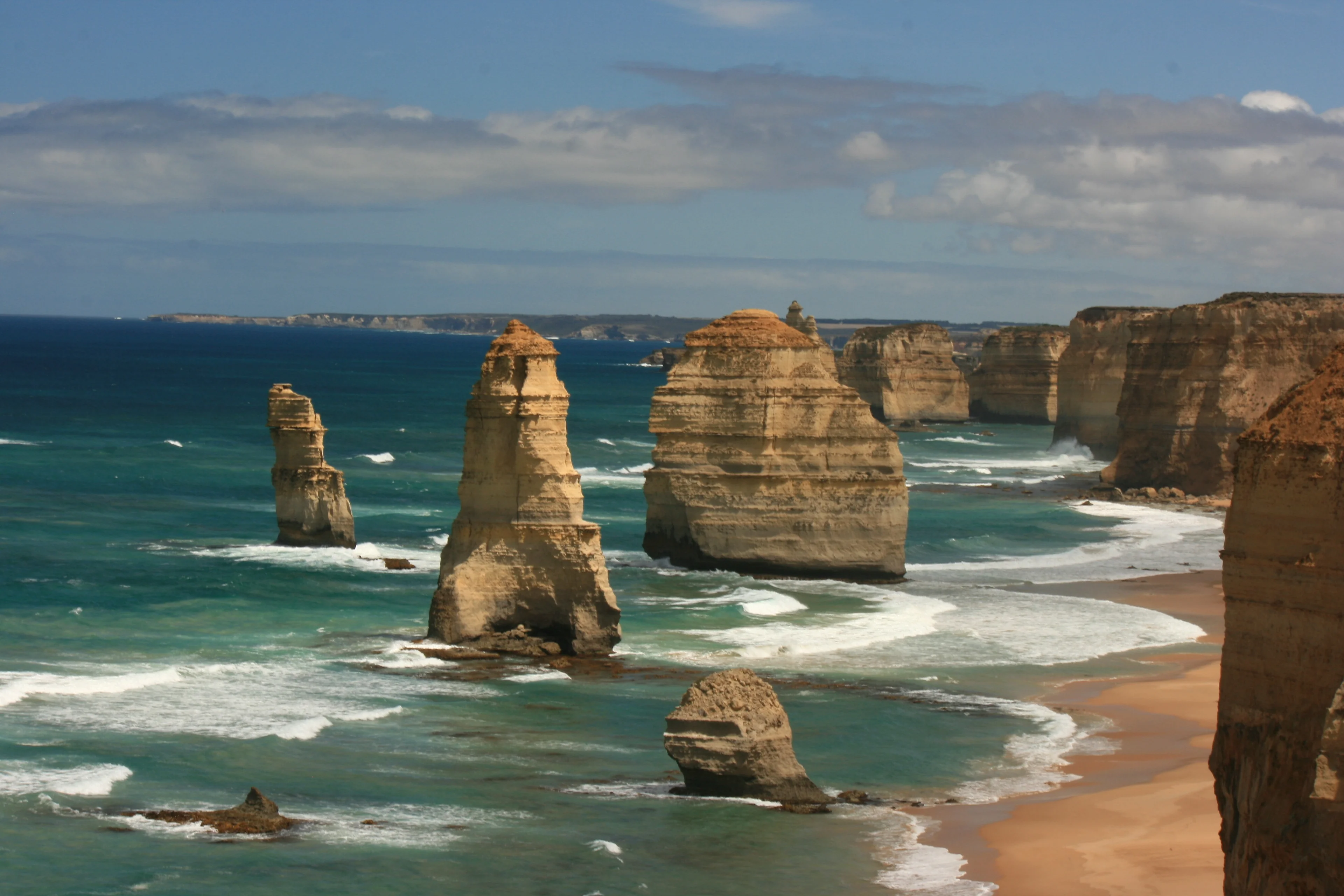
By car, don't miss out on the roughly 300 km of the Great Ocean Road, which will take you from Torquay to Warrnambool, a town famous for the whales that can be spotted there in the winter when they come to give birth to their calves. I am indeed talking about the southern winter, meaning between June and September. Along this route, among other superb sites to see, you will discover the Twelve Apostles, which are actually 8 (and not 12!) rock formations that used to form arches before collapsing, surrounded by the sea. Sadly, they are doomed to disappear because of erosion, as 4 seem to have already succumbed. I'm sure you recognize the photographs of them, taken notably at sunrise or sunset, which cast incredible colors on the limestone rocks. Witnessing this natural spectacle is a truly magical moment.
I then drove on to the High Country, a land of living legends (many shows stage outlaws like Ned Kelly). You'll also find cattlemen's huts, built by the shepherds and drovers who gave their name to a breed of dog descended from dingoes, the wild dogs roaming the region that were domesticated to guide and protect herds. You go from the bush to alpine lands featuring Victoria's highest peaks, snow-capped in winter. Australians love to thrill themselves on the slopes with off-road driving, mountain biking, rock climbing, and more. Others, no doubt looking for something a bit calmer, enjoy great fishing sessions in lakes and rivers, while others go horseback riding or hiking to feast their eyes. That's what I did, by the way. Plan on wearing good shoes because the ground rocks are very sharp.

In winter, ski enthusiasts don't necessarily come here. Instead, they hit the slopes of Mount Baw Baw Alpine Resort, located in Gippsland. This area also offers magnificent landscapes and magical moments. Sitting on a pub terrace with a pint in hand, you can admire the sun reflecting off one of the many local lakes.
For those who want extra information on the parks, here is the official website published by the Victorian tourism office.
As I wrote in the title, this is therefore only a "mini" road trip, because Australia deserves even more time to fully explore all of its landscapes. But I think Victoria has the merit of offering you a wide sampling of almost everything this continent has to offer.

Comments (0)
No comments yet. Be the first!