
Arles Amphitheatre: A Roman Colossus in the Heart of Provence
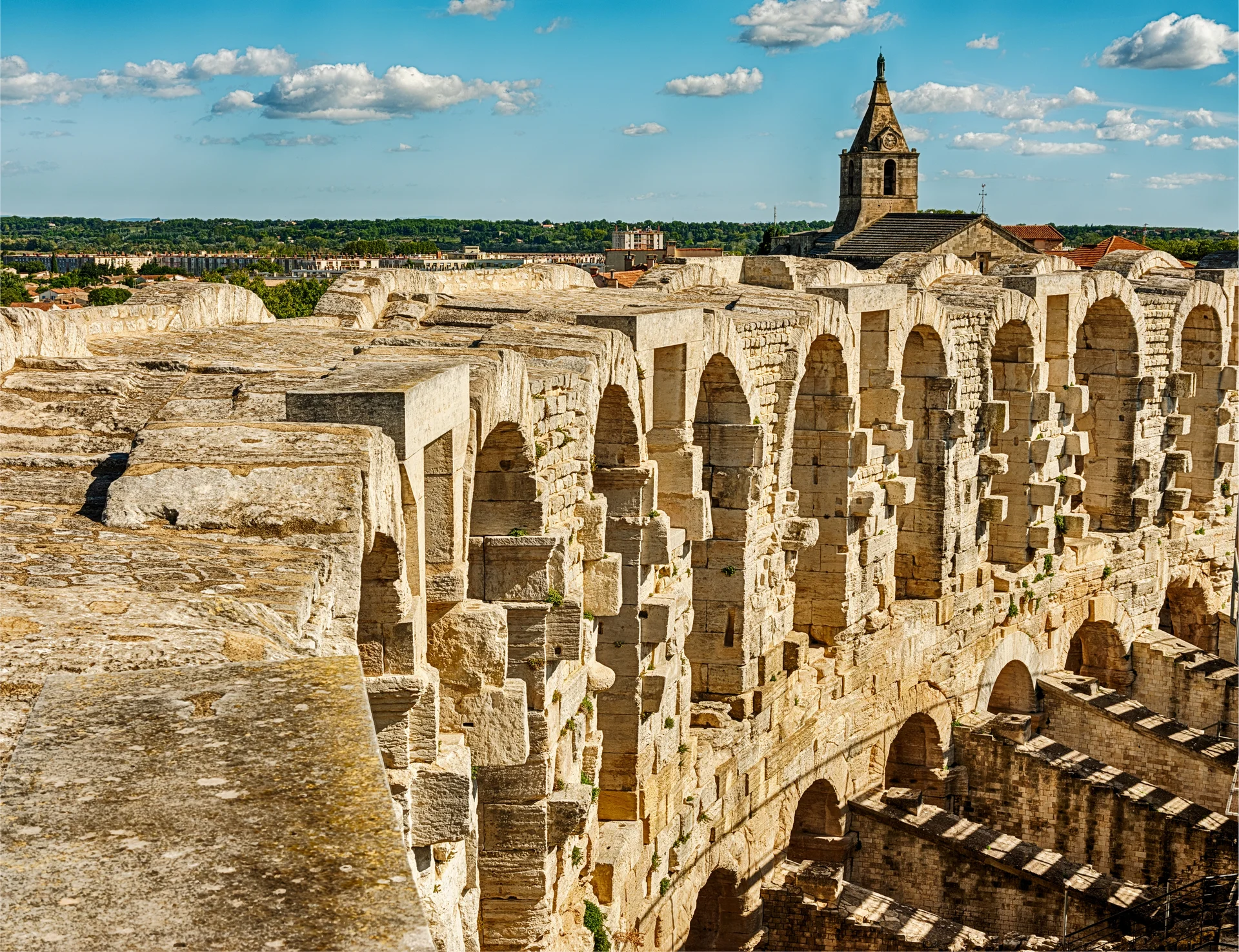
Two millennia after its construction, the Arles Amphitheatre continues to tower over the city at 21 metres high. Its 120 arcades of golden stone speak to an era when the little Rome of Gaul rivaled the greatest cities of the Empire. This stone giant has survived invasions, transformations, and centuries, becoming today the most visited monument in Arles.
Why the Arles Amphitheatre is worth the detour
Built in 90 AD under the reign of the emperor Domitian, this amphitheatre embodied the power of the Roman colony of Arelate. With its impressive dimensions of 136 metres by 107 metres, it even surpasses the Nîmes amphitheatre and ranks twentieth worldwide among Roman amphitheatres. Inspired by the Colosseum in Rome completed ten years earlier, its design could accommodate up to 21,000 spectators spread across two tiers of seating.
Its designation as a UNESCO World Heritage site in 1981 highlights its exceptional architectural importance. The building reflects Roman engineering with its ingenious network of galleries, stairways, and passageways that allowed crowds to circulate smoothly.
Architecture that tells a thousand stories
Secrets of Roman construction
The elliptical facade features 60 arcades per level. The sober first floor adopts the Doric order while the second showcases Corinthian columns with capitals decorated with acanthus leaves. This duality reflected Roman social hierarchy. The underground galleries, recently restored and open to the public since 2025, reveal the backstage areas of ancient shows.
Beneath the arena, a wooden floor that has since disappeared concealed the machinery, wild animal cages, and backstage areas where gladiators prepared. These technical spaces reveal the sophistication of Roman theatrical productions.
Medieval towers, scars of history
In the 5th century, the amphitheatre transformed into a fortress. Watchtowers were erected, and more than 200 houses gradually invaded the seating tiers, turning the building into a fortified village with two chapels. This medieval occupation, though destructive, paradoxically helped preserve the structure. 19th-century restorers wisely chose to keep these medieval towers, giving the monument its unique modern profile.
Experiencing the amphitheatre today
The amphitheatre is not just an open-air museum. It pulses with contemporary performances and carries on its original function as a gathering place for the public:
- The ferias of Arles: the Easter feria and the Rice feria draw more than 500,000 spectators each year
- Historical reenactments: gladiator combats with authentic equipment during school breaks
- Concerts and shows: the arena's natural acoustics host musical events from April to September
- Camargue races: a Provençal tradition where nimble athletes known as raseteurs challenge Camargue bulls
Friendly tip: climb up to the upper tiers in the late afternoon. The golden light of the setting sun sets the blonde stone of the arcades ablaze and offers an exceptional panoramic view over the rooftops of Arles and the Rhône valley. You will understand why Van Gogh fell under the spell of this city.
Exploring the new underground areas
Since April 2025, the restored underground galleries are finally open to visitors. These labyrinthine passages once housed an infirmary and a morgue, testifying to the violence of the shows. A dozen alcoves served as cages for wild beasts. This dive into the bowels of the amphitheatre beautifully rounds out the visit and brings the electric atmosphere of ancient games back to life.
Opening hours
- May to September: 9:00 AM to 7:00 PM (exceptional closure September 12 to 14).
- November to February: 10:30 AM to 4:30 PM.
*Information subject to change

Even though I wasn't a huge fan of the city of Arles itself, which I found pretty dirty, the amphitheater is a must see. This monument right in the center is really well preserved and stands out in the landscape. The tour is very interesting and offers a nice view of the surroundings.