
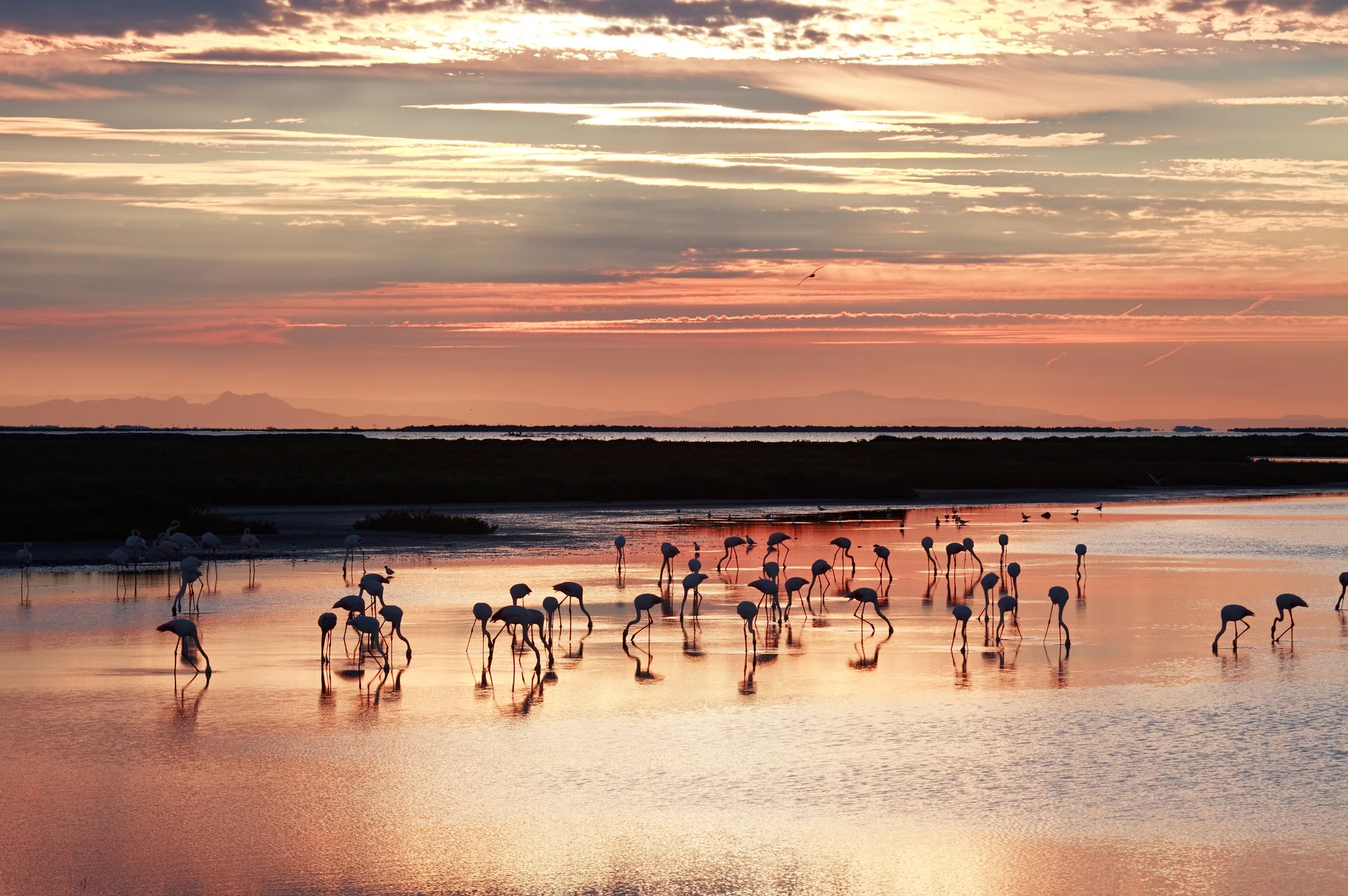
Camargue Regional Nature Park: Kingdom of Pink Flamingos and Endless Horizons
Between the two arms of the Rhône and the Mediterranean, Camargue Regional Nature Park maps out a wild terrain where freshwater meets the sea. Spanning over 85,000 hectares, this river-carved delta delivers a constant natural display: white horses gallop through the marshes, black bulls graze in the damp meadows, and thousands of pink flamingos tint the ponds pink at twilight.
Why Camargue Regional Nature Park is a Must-See
Established in 1970, this park protects one of the last remaining wild European deltas. Its unique ecosystem supports over 400 bird species, with a large portion using the area as a migratory stopover between Africa and Europe. It also functions as a living repository of traditional Camargue culture, where gardians (local herdsmen) maintain the extensive breeding of horses and bulls, while rice paddies farmed using ancestral methods punctuate the landscape.
The variety of natural habitats impresses visitors: arid, salt-encrusted sansouires, rustling reed beds, flooded meadows, brackish lagoons, and coastal dunes follow one another in a palette of colors that shifts through the seasons.
Observing Remarkable Wildlife
The Feathered Stars of the Park
The greater flamingo rules the Camargue lagoons. Up to 20,000 individuals can gather on l'étang de Fangassier, the main breeding site in the Mediterranean. Their pink coloring comes from the pigments in the small shrimp they filter from the water. The sight of a massive takeoff at sunrise stays etched in memory.
Yet the park offers much more than flamingos. Purple herons, little egrets, marsh harriers, black-winged stilts, and pied avocets populate the wetlands. Patient observers might even spot the rare squacco heron or the European roller.
Horses, Bulls, and Terrestrial Biodiversity
The white horses of the Camargue, a hardy native breed, are inseparable from the landscape. Semi-wild, they roam free in manades (traditional herds) and adapt seamlessly to the harsh conditions of the delta. The black bulls, raised for local bullfighting events, complete this iconic imagery.
Friendly tip: To maximize your chances of wildlife sightings, visit the park early in the morning or late in the day. The low light flatters the landscapes and the animals are more active. Bring binoculars and focus on the ornithological observatories at the Pont de Gau bird park or La Capelière, where nature guides share their expertise.
Exploring the Park at Your Own Pace
Itineraries and Ways to Discover
Cycling remains the ideal way to traverse the Camargue. Dozens of kilometers of bike paths crisscross the park, notably the famous dike road running alongside the lagoons. Several riding stables offer horseback rides for an experience straight out of the gardian tradition.
Hikers will appreciate the well-maintained trails:
- Le sentier des Salins: an easy 3 km walk around the former salt pans featuring observatories
- La digue à la mer: 20 km between Salin-de-Giraud and Les Saintes-Maries-de-la-Mer, featuring spectacular panoramas
- La Capelière trails: several short loops to explore different natural environments
- Le phare de la Gacholle: access to a preserved wild beach
Cultural and Heritage Sites
Beyond nature, several locations reflect the human history of the delta. The Camargue Museum, housed in a former sheepfold, traces the evolution of the region and its traditional activities. Typical villages like Le Sambuc and Salin-de-Giraud offer a glimpse into authentic local life, far from standard tourist paths.

The Camargue Regional Nature Park is really well preserved, both in terms of flora and fauna. You can see horses, bulls, and especially flamingos in their natural habitat. It is the perfect place for a walk, especially in the morning when there is no one else around yet.