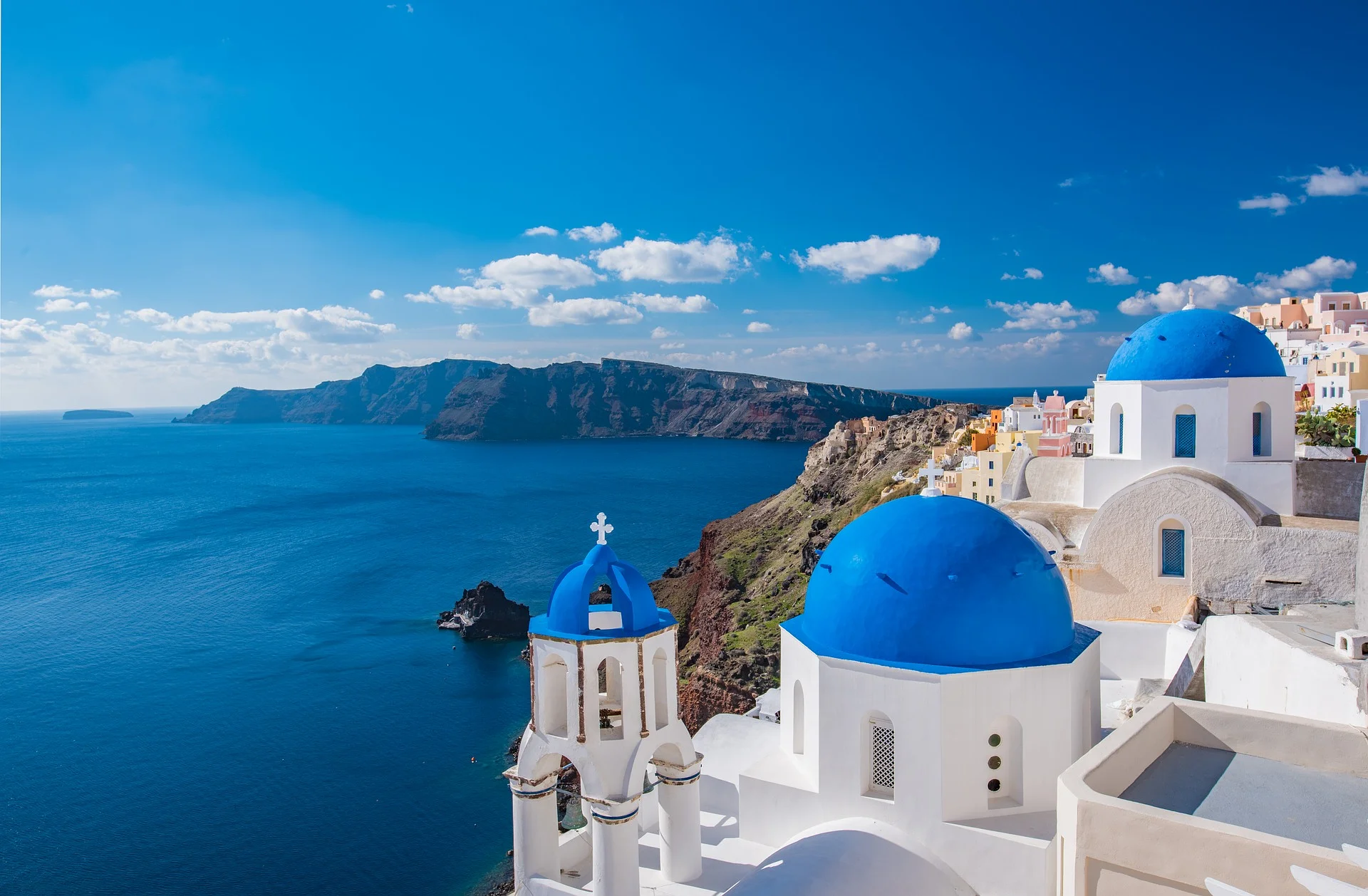
Santorin's Agios Anastasios Church

Top 5 most beautiful villages in Greece to visit2026 ranking

Discover our members' favourite villages in Greece. Feel free to publish your own reviews to take part in this collaborative ranking.

Favourite villages in Greece among our members, approved by the editors

#1 Santorini +40 recs

Santorini was born from a volcanic catastrophe, resulting in white-washed villages clinging to ochre cliffs above a deep blue caldera. The sunsets here are legendary, the vines grow in unique baskets across volcanic rock, and the local cherry tomatoes have a flavor profile you will not find anywhere else. It is a rugged, dramatic landscape that feels like the edge of the world, only with a much better view.

Must-sees

#2 Delphi +25 recs

Clinging to the slopes of Mount Parnassus overlooking the Gulf of Corinth, Delphi remains a powerful site where the Pythia once delivered ancient oracles. Beyond the ruins, the surrounding mountain terrain offers iconic hikes to the Corycian Cave and easy access to the alpine village of Arachova or the seafaring town of Galaxidi. Expect a trip defined by deep history and rugged landscapes, providing a direct look at the roots of Greek culture.

#3 Milos +12 recs

Milos looks like a movie set from another planet: white rock formations carved by erosion, red-sand beaches warmed by volcanic activity, fishing villages with multicolored doors built right at the waterline. The island where the Venus de Milo was found has kept its low-key character, far from the crowds of Santorini or Mykonos. Here you explore sea caves by boat, swim in secret coves, and watch the sun drop into the Aegean from the ruins of a Venetian kastro.

Must-see

#4 Monemvasia +3 recs

Walking into this town in the southern Peloponnese feels like stepping straight into a history book, and carrying the name Monemvasia sets a high bar. Founded in the 6th century, this former Byzantine stronghold started out as a busy trading hub thanks to its harbor and its famous Malvasia wine, which was exported all over Europe. It survived the first Frankish invasion in 1204, weathered a three-year siege by land and sea, endured famine, acted as a shelter port, and faced pirate raids, pillaging, Turkish corsairs, and Ottoman rule. Restored to Greece in 1821, it is now a character-filled destination prized for its unusual layout: the old town is built on a massive rock while the modern town sits on the mainland, making this Greek Gibraltar genuinely captivating.

A medieval town on a rock

A causeway connects the rock to the mainland, and Venetian ramparts enclose what is known as the Kastro. Split into an upper and a lower section, this fortified town bans cars but welcomes an almost fairytale atmosphere around every corner. Wandering through narrow alleyways overhung by stone arches makes you half expect to see knights emerge from the shadows. Every single house is made of stone, and the preserved medieval architecture is remarkable. Commercial Mesi Odos street and its small shops lead to the central square, framed by trees and set against the sheer cliffside. The Christos Elkomenos church and its 17th-century bell tower border the square, serving as a former Byzantine monastery facing the sea in a striking setting. A fairly steep path leads to the summit through a heavily reinforced gateway where wild flowers bloom near the ruins of a 17th-century hammam right on the cliff edge, culminating at the impressive Byzantine church of Agia Sofia, which dates back to 1150. Its wall frescoes rival the views over the lower town and its architectural treasures below.

Beaches and local food

The modern neighborhood of Gefyra feels almost ordinary after such wonders, yet it holds plenty of charm with its small fishing port and marina. Local restaurants showcase the rich gastronomy of Laconia, particularly gongoues artisanal pasta, saitia cheese pastries, and traditional almond sweets. Honey, olive oil, mead, and local wine are absolute essentials here. For swimming, the Portello beach sits right among the ramparts, though beachgoers often head a few kilometers away to Pori Beach for wider expanses of sand. Easily reached by ferry, the island of Elafonisos delivers a taste of the Caribbean with powdery shores, dramatic landscapes, and crystal-clear water, functioning as Monemvasia's ultimate offshore escape. It is a destination that leaves a lasting impression.

When to go

April through November brings ideal weather, peaking with heat and heavier visitor numbers in August. The shoulder seasons work best for experiencing the town at a quieter pace. July brings lively celebrations for the town's liberation anniversary.

How to get there

Monemvasia sits 322 km from Athens, and regular bus service connects the two. The closest airport is in Kalamata, about 190 km away by road, with seasonal flights available from major European hubs.

#5 Mykonos -1 rec

Mention Mykonos anywhere in the world and expect knowing smiles. Synonymous with nonstop nightlife and beach parties, it easily stands out as the most famous of the Cyclades. With the Aegean Sea providing the backdrop, July and August turn the island into an open-air stage pulsing day and night with DJs and festivals. Yet partying is far from its only draw, as anyone spending time in its main town quickly discovers. Mykonos, known locally as Chora, is a town of endless charm defined by classic Greek architecture and character-rich neighborhoods. Tourism remains the primary driver here, with visitor numbers far exceeding the permanent population every year.

The romance of the old port

Wandering the maze of winding streets, you cannot miss Manto Square, named after a heroine of the Greek War of Independence, whose marble bust stands in tribute. It sits at the heart of the old port, now reserved exclusively for small boats, where the waterfront makes for a gorgeous stroll. Just steps away, Little Venice is the defining neighborhood of the town. Also called Alefkandra, it is the ultimate postcard view with its romantic bay and 18th-century homes built right up against the water's edge. Numerous bars and restaurants have opened along the waterfront, creating an ideal setting for trying local specialties. A staple of the pre-dinner drink scene, kopanisti is a sharp cheese often served with mostra, a type of rusks topped with tomatoes. Louza, cured pork tenderloin, fresh seafood, rafiolia pastries, and honey pie round out the local menu. Looking out from the restaurant terraces, you cannot miss the blindingly white Kato Mili with their thatched roofs rising above the hill. These seven 16th-century windmills have become an island icon well worth a visit. Closer to the center, the Aegean Maritime Museum traces the evolution of seafaring in the Aegean Sea and features a functioning lighthouse in its courtyard.

Cycladic architecture

On the way toward the old town, the well-stocked Archaeological Museum houses artifacts excavated from nearby Rhenia, including ancient tombs, sculptures, and pottery. In the Kastro neighborhood, you find the exact style of architecture that made Mykonos famous. Whitewashed houses feature brightly colored doors and shutters, mostly in shades of blue, while blooming bougainvillea spills over narrow alleyways and the soul of the Cyclades is everywhere. The town's oldest and most famous church shares this striking palette against the azure sky and sea, with the brilliant white Panagia Paraportiani anchoring the neighborhood. Architectural masterpiece or work of art, its irregular shape is truly unique. Beaches are naturally a major highlight of Mykonos with their fine sand and clear water, though the most central one, Megali Ammos, gets crowded, leading many visitors to seek out alternatives like Mirsini Beach.

When to go

From May through October, temperatures are ideal for a trip. In the off-season, strong winds can be a real nuisance and the water is too chilly for swimming. July and August bring peak party crowds, making them months to skip if you prefer a quiet vacation.

Getting there

Ferries run to Mykonos from Athens, departing from the port of Piraeus or the closer port of Rafina. Located 4 km from town, the local airport handles seasonal flights from major European hubs like Paris.

Must-see

Latest reviews

Lunar landscapes and paradise beaches

Visiting the island of Milos is a really good alternative to the Cycladic islands that are overrun by tourists, like Santorini. Between the port of Adamas, the island's capital Plaka, or even Pollonia…

212

Between beaches and hiking

Sifnos is a real sanctuary for hiking in the Cyclades. Many trails crisscross the island, often with a pretty beach as a reward for a well-deserved swim! The small capital of Apollonia is magnificent,…

34

Gorgeous

Even though Santorini has become very touristy outside of peak season, the place is truly magnificent. The view of the sea is exceptional. The white and blue houses really look like a postcard. To enj…

39

An incredible view

Santorini is a place that left a deep impression on me because of its panoramas. The white houses with their turquoise pools are clinging to the cliffside. The show unfolds before your eyes, from a re…

39

Beautiful postcard views

I just got back, and the weather is still beautiful in September. A picturesque village just the way we like them, with some pretty coves for swimming nearby. All these landscapes are a real treat for…

39

Rankings by travellers, for travellers

Our rankings are powered by thousands of reviews from travelers like you, not the arbitrary pick of a single editor. Every positive review you publish raises the destination’s score.

1 positive review = +1 reco

Your voice matters!

Have you travelled and discovered amazing places? Share your experience and help the community rank the most beautiful destinations! Sign up for free to post reviews and make your voice heard.