
Visiting the Temple of Apollo at Delphi
Perched on the slopes of Mount Parnassus in Phocis, Delphi was once considered by the ancient Greeks to be not just the center of the world, but its navel, the Omphalos. Legend says this is where two eagles sent by Zeus crossed paths to pinpoint the exact location. Within this dramatic natural setting, the sanctuary of Apollo offers deep insight into the politics, religion, mythology, and arts of the ancient world. First excavated in 1892, this archaeological complex dates back to the 8th century BCE and remains one of the most significant sites in Greece, with the Temple of Apollo at Delphi serving as its most important structure.
A hub for life, offerings, oracles, and games
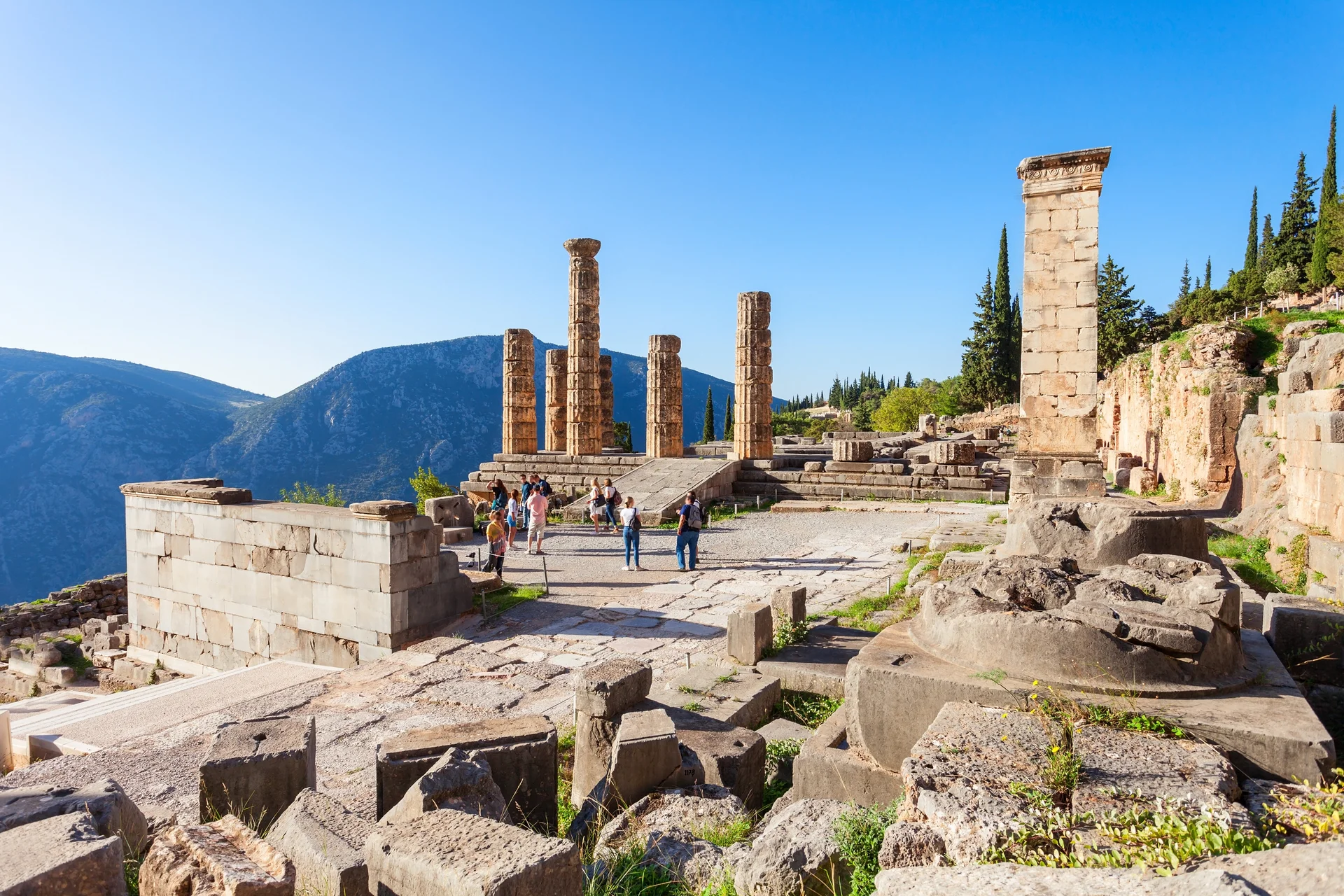
To enter the site, you walk along the Sacred Way. As you follow this paved path through the cliffs, you pass various ruins, starting with the Temple of Athena Pronaia and its striking circular Tholos. Standing at the heart of the panhellenic sanctuary, the Temple of Apollo at Delphi commands attention, primarily through its six remaining Doric columns. The rectangular foundations are still visible, and you can see the restored base of the altar where sacrifices were once performed. The omphalos, a massive stone, was originally placed in the center. These ruins represent the sixth iteration of the temple, completed in 330 BCE and built over the remains of a 6th-century BCE predecessor. This was the site where powerful figures from across the ancient world came to consult the oracle of the Pythia, who sat on a tripod to deliver her prophecies. The site is dense with history. Various treasuries, which once housed statues and votive offerings, display intricate architecture, most notably the all-marble treasury of the Athenians. Higher up the slope, you will find the gymnasium, the stadium, and an impressive theater dating from the 4th century BCE, all of which highlight the intense activity that once defined Delphi. Its 5,000 seats reflect the scale of a venue that symbolized the unity of ancient Greece and served as the stage for athletic competitions between the major city-states. The site is currently designated as a UNESCO World Heritage site.
Opening hours
*Information subject to change

This is the one monument you cannot miss at the archaeological site of Delphi. There is not much left of the structure except for a few columns and the foundations, but the site is superb and gives you an idea of its splendor back in the day. I recognized the maxims inscribed at the entrance of the temple, especially "know thyself," from all my philosophy books. Remember to book your tickets in advance, especially in the summer, because it gets very crowded. I recommend going in the late afternoon to avoid the crowds and the heat.