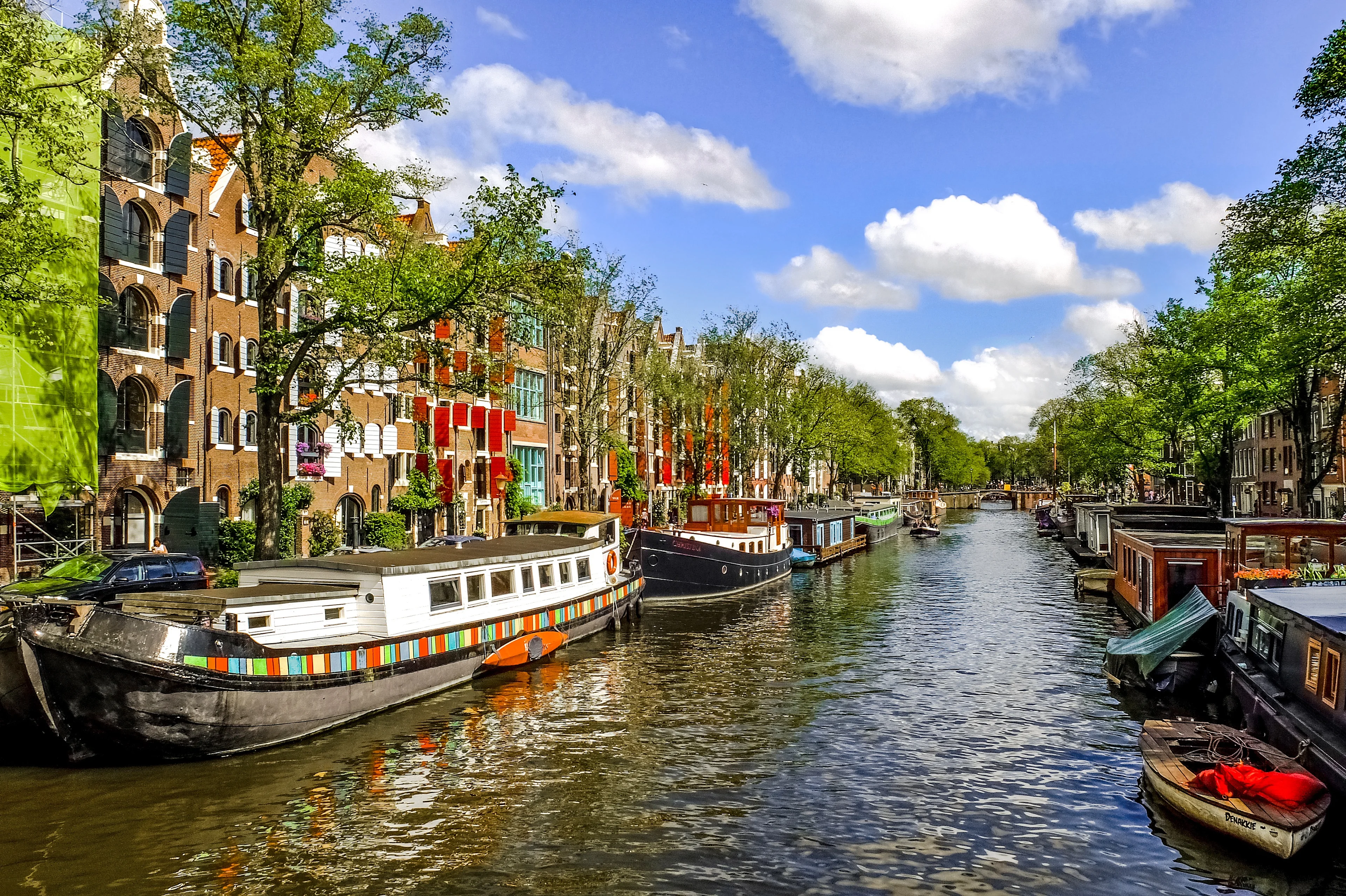
Amsterdam et ses canaux

Top 9 most beautiful cities in Netherlands to visit2026 ranking

Discover our members' favourite cities in Netherlands. Feel free to publish your own reviews to take part in this collaborative ranking.

Favourite cities in Netherlands among our members, approved by the editors

#1 Amsterdam +167

In Amsterdam, bicycles and houseboats set the daily pace along UNESCO-listed canals. Between the masterpieces at the Rijksmuseum, the bohemian alleys of the Jordaan, and the old-school atmosphere of local brown cafes, the Dutch capital maintains an easygoing urban rhythm. It is a city of colorful tulips and a distinct sense of independence that makes it easy to lose track of time.

#2 Maastricht +22

Most travelers heading to the Netherlands stick to Amsterdam. If you want to get off the beaten path, consider a detour to Maastricht. It offers a distinct personality and makes for an ideal long weekend destination.

A city known for its historic treaty

Located in the far south of the country, Maastricht is one of the oldest and most significant cities in the Netherlands. It is world-famous as the birthplace of the Maastricht Treaty, the official founding document of the European Union. While many know the city solely through that political connection, it is far from a stagnant museum piece. It is a lively hub, thanks largely to the University of Maastricht, which draws a massive population of students from across Europe.

A livable city

Several neighborhoods define the character of Maastricht. The university district is known for its concentration of bars, restaurants, bookstores, and shops. Its cafe terraces, the local energy, and the sprawling green park space have made it a magnet for students. From here, you can easily walk to the old town district to see its historic architecture.

The Vrijthof square serves as the city focal point, easily spotted from a distance by the steeples of the twin churches of Saint Servatius and Saint John. Pedestrians spend most of their time wandering the surrounding car-free streets to shop or grab a local waffle. For a quick bite, keep a few coins handy to try the famous FEBO vending machines. They dispense kroket, breaded beef croquettes served hot.

Parks, forests, and walking paths

Maastricht is built for walking, though its extensive network of bike paths makes cycling just as easy. Head out to the Maastricht forest to visit the American Cemetery in Margraten. If you prefer to stay central, check out the large Waldeckpark. You will find The Girl and the Giraffe, a sculpture by Michel Huisman that highlights the plight of endangered wildlife. Finally, the ramparts walk is a local favorite, providing a green corridor that locals often use for weekend strolls or picnics.

When to go

Maastricht is accessible year-round, but the best weather arrives between May and September. Expect more sunshine for exploring the parks and narrow streets during these months.

How to get there

There are no direct high-speed rail links from major international hubs into Maastricht. If you are starting your trip in northern France, driving is often the most practical option. Expect a drive of at least four hours from Paris.

Alternatively, you can fly or take the train into Amsterdam and transfer to a domestic train to Maastricht. The rail connection takes about two and a half hours and costs between 20 EUR and 30 EUR (about $21-$32).

Must-see

#3 Haarlem +9

Haarlem is a city in the northern Netherlands and the capital of North Holland, positioned between Amsterdam and the North Sea beach resorts of Zandvoort or Bloemendaal. During the 17th century, it ranked among the most influential cities of the Dutch Golden Age. Following a period of religious persecution, invasion, and a Spanish siege in 1573, Haarlem proved its resilience and eventually became a haven for immigrants of all backgrounds. Today, the city is defined by its floral heritage, its thousand-plus landmark buildings lining the Spaarne river that flows through the center, and a collection of shops and cafes that make it an easy place to spend time.

Haarlem's Golden Age

Founded in the 9th century, Haarlem grew quickly. It gained its status as a free city about 750 years ago. Once fully integrated into the Dutch East India Company (VOC), Haarlem saw massive economic and cultural expansion, fueled by the textile and shipbuilding industries, local breweries, and the trade of flowers like tulips, hyacinths, and narcissi.

After a devastating fire in 1351, the city was extensively rebuilt and redesigned during the 17th century in a classic Renaissance style under the direction of architect Lieven de Key. He designed several of the city's iconic monuments, including the meat market or Vleeshall, which has since been converted into an exhibition space.

A lively city steps from Amsterdam

Stroll through the Grote Markt, which serves as the city's historic center and is home to Saint Bavo Church, converted to Protestantism in 1578 following the city's siege. One of the most recognizable views in Haarlem is the Molen de Adriaan windmill, which overlooks the river.

Haarlem has a deep cultural footprint, having long hosted impressionist painters who were drawn to the portrait galleries of artist Frans Hals, whose major works are now housed in a museum dedicated to his name. Haarlem also contains the oldest museum in the Netherlands, the Teylers Museum, built in 1778 in the spirit of the Enlightenment and focused on the advancement of science and the arts. Its collection even includes works by Rembrandt and Michelangelo.

Haarlem is a regional shopping destination filled with boutiques and antique stores. Don't miss the Gouden Straatjes (Golden Streets) for a bit of window-shopping.

When to go

Haarlem is at its best during the warmer months, from May through September, or during the flower season starting in mid-March. As a major hub for flower cultivation and trade, the city is a primary stop on the Bloemen Route (Flower Route).

How to get there

Haarlem is an easy 15-minute train ride from Amsterdam. Once in Haarlem, you can hop on a bus to reach the sandy beaches of Bloemendaal aan Zee (line 81) or Zandvoort (line 81 or 84).

#4 Enschede +4

Once a textile hub turned university city, Enschede provides a welcome departure from the packed streets of Amsterdam. As the birthplace of Grolsch beer, the city pulses with the energy of FC Twente soccer matches and the outdoor cafes lining Oude Markt. Its Saturday market ranks among the largest in the Netherlands, while local museums showcase an industrial past that has been boldly reimagined.

#5 Volendam +4

The sound of gulls over the dike, the salty scent of smoked eel drifting from the smokehouses, and the rhythmic clip-clop of wooden clogs on the cobblestones of the Doolhof. This fishing port in the Netherlands, founded in the 14th century, cultivates an identity so distinct that locals like to say there are 16 million Dutch people and 22,000 Volendammers. In short, they are different, and they are proud of it.

Yes, the town relies on tourism. Yes, you will run into souvenir shops and day-trippers from Amsterdam. But beyond the postcard folklore, Volendam retains the soul of a fishing village, with its colorful wooden houses huddled along the Markermeer lake and its residents deeply attached to their traditions.

Volendam: a getaway for fans of authentic Dutch charm

This destination is perfect for travelers looking to immerse themselves in traditional Dutch culture, families seeking an easy outing from Amsterdam, and photographers hunting for that classic shot. You can see the village in half a day, or take a full day if you include Marken.

However, if you are looking to avoid tourist crowds or want raw adventure, look elsewhere. The harbor is packed during high season and the atmosphere is heavily oriented toward tourism. For your budget, expect to spend 30 to 60 EUR (about $32 to $65) per person for a day including transport, meals, and activities. You do not need a car because the 316 bus from Amsterdam Central gets you there in 20 minutes.

Strolling the dike and the maze of the Doolhof

The beating heart of the village is the dike that runs along the harbor. Here, traditional fishing boats bob gently while restaurants spread their terraces facing the Markermeer. The vibe shifts between festive energy and quiet reflection depending on when you visit. Early in the morning or late in the afternoon outside of peak season, you will find the village in its most peaceful state.

Afterward, escape into the Doolhof, which literally means maze. This historic district in the heart of the old village earns its name, as narrow alleys wind without any obvious logic between wooden houses and small canals. This is where fishermen once lived and where, in the 19th and 20th centuries, many artists settled, drawn by the unique light and atmosphere.

Do not miss the Art Hotel Spaander, a legendary establishment opened in 1854 where painters once stayed to find inspiration. The walls of the interior restaurant are still covered with works left as payment by broke artists. Your walk will eventually lead you to the Sint-Vincentiuskerk, a quiet witness to the village's Catholic past.

Friend's tip: To photograph the colorful houses without the crowds, venture into the Oude Kom, another old street that is less frequented than the main dike. The facades are just as photogenic and you will see more locals than tourists.

Diving into maritime history: museums and traditions

The Volendam Museum and its cigar band house

The Volendam Museum looks back at local life between 1850 and 1950 through recreations of period rooms, traditional costumes, and everyday objects. But the real gem is hidden inside: the Cigar Bands House, a room entirely covered in mosaics made with 11 million cigar bands. It is a massive, hypnotic project that depicts a map of the Netherlands and even the Empire State Building. Coffee or tea is offered at the entrance, ensuring a friendly atmosphere.

Experience Volendam: the village in virtual reality

Experience Volendam offers an immersive experience using virtual reality headsets that transport you to the harbor as it was in 1916. You wander virtually between the boats, discover the trades of yesteryear, and run into locals in period costumes. The guided tour beforehand effectively complements the VR experience. It costs about 9 EUR (about $10) per person, with the option to have your photo taken in traditional clothing.

The Palingsound Museum and the village's musical soul

Historically, the village survived on fishing and smoking eel. The Palingsound Museum traces this tradition while exploring the rise of palingsound (literally "eel sound"), a characteristic pop music style that marked a whole generation of Dutch artists. It is an unexpected dive into the local cultural identity.

Friend's tip: If time permits, pedal to the De Kathammer windmill, which stands in the middle of the meadows about 2 kilometers from the center. The path crosses the lush, green countryside typical of North Holland and offers a relaxing perspective after the bustle of the harbor.

From Volendam to Marken: crossing to an ancient island

From the harbor, the Volendam Marken Express takes you in 25 minutes to the former island of Marken, which has been connected to the mainland by a dike since 1957. The crossing on the Markermeer offers great views and an audio guide tells the fascinating history of these fishing villages.

In Marken, the traditional architecture is immediately striking: houses built on mounds of earth or on stilts to protect them from floods before the dikes were constructed. The pace is even slower than in Volendam, and the atmosphere is significantly less touristy. Do not miss the Marken Museum, which sheds light on local customs, the old clog factory, and the walk to the Paard van Marken lighthouse, built in 1839 and still in operation.

The small beach in Volendam is modest but welcoming, allowing for a refreshing swim in the freshwater of the Markermeer (which was saltwater before the Afsluitdijk was closed in 1932). It is perfect for families with children on hot summer days.

Where to eat and drink in Volendam?

The undisputed specialty remains raw herring (haring), served with chopped onions, which you swallow in one bite with your head tilted back, the Dutch way. The kiosks on the dike offer them for about 2 EUR (about $2.20). Also try kibbeling, which are crispy fried pieces of cod, and smoked eel (paling), a historic local specialty with a pronounced flavor and naturally fatty texture.

For a sit-down meal with a view, Smit-Bokkum excels in smoked fish dishes and even has a small museum and a deli. Expect to pay 35 EUR (about $38) on average per person. Restaurant De Lunch, in the heart of the harbor, serves traditional fish cuisine in an authentic setting filled with memorabilia. For a budget option, De Haven serves generous fish and chips at a low price right on the dike.

As for cheese, taste the Gouda and Edam at the surrounding cheese farms like Alida Hoeve or Henri Willig, which offer free tastings and production demonstrations. Some also showcase the artisanal craft of making wooden clogs (klompen).

Where to sleep in Volendam and the surrounding area?

The village has a few charming hotels, including the famous Hotel Spaander (Best Western Signature Collection) with its unique historic character and walls covered in artwork. It is perfect for soaking up the artistic atmosphere of the place. The Hotel Old Dutch offers a comfortable alternative right in the center.

For an original experience, the Marinapark Volendam rents small houses inspired by local traditional dwellings, which are ideal for families. Expect to pay between 80 and 150 EUR (about $85 to $160) per night depending on the season and the standard.

If everything is booked or you want a change of pace, Edam (5 km away) offers more lodging options in a setting that is also very charming. Amsterdam is only 20 kilometers away, so sleeping in the capital and coming for a day trip is the most flexible option.

How to get to and around Volendam?

From Amsterdam, take bus 316 from the Centraal Station. The trip takes 20 minutes and costs about 5 EUR (about $5.40) one way. The Amsterdam and Region Ticket (about 12 EUR / $13) covers all regional transport and is cost-effective if you combine several visits. Buses run all day with high frequency.

By car, it takes 20 to 25 minutes from Amsterdam via the A10 and then the N247. Paid parking (about 5 EUR / $5.40 per day) borders the village. Once there, everything is walkable, as the historic center can be crossed from one end to the other in 15 minutes.

Many organized tours from Amsterdam combine Volendam with Marken, Zaanse Schans (windmills), and Edam (cheese). This is practical if you are short on time or prefer to delegate the logistics.

When to go?

Spring (April-May) and summer (June-August) offer the best weather conditions with temperatures between 15 and 22°C (59 to 72°F). This is also the high tourist season, so expect crowds on the dike between 11 AM and 4 PM, especially on weekends. Tour buses arrive constantly.

Autumn (September-October) represents the best compromise, with weather that is still mild, superb light for photography, and significantly fewer crowds on weekdays. Winter remains cold and windy but offers an authentic atmosphere if you are looking for absolute tranquility. Some restaurants close in the off-season, so check before you go.

#6 The Hague +3

The Hague, or Den Haag in Dutch, is the third-largest city in the Netherlands. While it is not the capital, it serves as the seat of the Dutch government and parliament, and it is the primary workspace for the royal family at Noordeinde Palace. Located in the heart of the Randstad, a massive metropolitan area home to millions, The Hague also hosts major international institutions like the International Court of Justice and the International Criminal Court. You can tour the building that houses these bodies, the Peace Palace.


A cultural hub in the Netherlands

The Hague was founded in the 13th century when Count William II of Holland commissioned a castle here. The project was never fully completed, but the Ridderzaal, or Hall of the Knights, remains from that era. It is now part of the Binnenhof complex, which anchors the activity of the Dutch government and parliament. You can tour this hall to see its Gothic architecture and stained glass windows featuring the coats of arms of noble Dutch families. The Binnenhof is one of the city's most striking sites, overlooking the large Hofvijver pond and its small island.

The city center is home to the most significant museums, including the Mauritshuis, housed in an elegant 17th-century mansion. Inside, you will find major works of Dutch painting, such as Vermeer's Girl with a Pearl Earring. To round out your tour, head to the Escher Museum, named after the famous Dutch artist who utilized woodcuts to create mind-bending optical illusions.


From dunes to the beach: outdoor activities in The Hague

The Hague offers plenty of outdoor access thanks to its seaside location and long stretch of sand at Scheveningen Beach. If you are looking to get out on the water, head toward Kijkduin. Otherwise, check out the Pier, an impressive structure on stilts that features various attractions, including a Ferris wheel standing about 60 meters (nearly 200 feet) tall.

Head east to explore the Dutch Dunes National Park, which is best navigated on foot or by bike. On your way back toward the center, take a break at Clingendael Park to walk through its peaceful Japanese garden.

If you want a crash course in the country while staying in The Hague, visit Madurodam. This attraction, which opened in 1954, is one of the most popular in the region. It features a massive model display showcasing the unique architecture and city planning of the Netherlands.


When to go

The best time to visit The Hague is during the warmer months to take full advantage of the outdoor amenities.


How to get there

To reach The Hague, you will likely connect through Amsterdam or Rotterdam by air or train. The Hague is well-connected by rail from both cities.

#7 Eindhoven +2

Eindhoven is the fifth-largest city in the Netherlands, located in the southern province of Brabant. The city traces its roots to the 13th century, when Henri Ier de Brabant granted it municipal rights and the authority to host its own markets. Head to the place Markt, the historic heart of the city, to see the few remaining period homes. This is still where the city holds its food markets and flea markets today. As a historic trading hub, Eindhoven remains a prime destination for shopping. Continue your walk along rue Stratumseind, the city's main commercial artery. Along the way, you will pass the église Sainte-Catherine, a striking neo-Gothic building.


A lively Dutch city

Eindhoven hit its stride in the 19th century as an industrial powerhouse, largely driven by the founding of the electronics giant Philips, which originally manufactured lighting systems. Located in the city center, the musée Philips chronicles the company's evolution from its start in 1891 to the present day.

At one point, an entire district was dedicated to Philips operations: Strijp-S, once nicknamed the "forbidden city." Since being renovated and repurposed, this former industrial complex has evolved into a trendy neighborhood packed with bars, boutiques, and restaurants.


The design capital of the Netherlands

Eindhoven is known for building a robust industry around design and culture, with the musée Van Abbe serving as a primary anchor. It is one of the continent's most important modern and contemporary art museums. Inaugurated in 1936 and expanded in 2003 by architect Abel Cahen, the museum holds extensive collections ranging from Cubism to Pop Art and Minimalism, featuring works by international names such as Picasso, Dubuffet, Chagall, and Mondrian. Nearby, do not miss the DesignHuis of Eindhoven.

Numerous local monuments reflect the city's design-forward identity. Take the Blob, a bubble-shaped landmark made of glass and steel that marks the entrance to the De Admirant shopping center. It was designed by Italian architect Massimiliano Fuksas.

For something different, vehicle enthusiasts should visit the musée DAF, which showcases the history of the firm that gained worldwide fame for its trucks and buses.


When to visit

The best time to visit Eindhoven is between June and September. However, design fans should take note of Glow Eindhoven in November. This festival, a Dutch take on a light show, features a week of light installations that illuminate the city.


How to get there

By car, you can reach the city via the A67 or A2 highways. You can fly into aéroport de Welschap Eindhoven, though you will likely have a layover in Amsterdam. Frequent train and bus lines also connect the Dutch capital to Eindhoven. Once you arrive, you must experience the piste cyclable Van Gogh. This fully phosphorescent bike path features a design inspired by the famous La nuit étoilée painting.

#8 Rotterdam

As the second-largest city in the Netherlands, Rotterdam is a key player in the Randstad, a massive metropolitan area home to over 7 million people. Located at the mouth of the Rhine and Meuse rivers, the city grew around industrial and port commerce. Today, its port stretches for 42 kilometers. Crisscrossed by numerous waterways, Rotterdam serves as a prime example of a city managing complex hydraulic engineering. In 1940, roughly 90% of the city center was destroyed by German bombardment. Since then, the city has reinvented itself through bold architectural and cultural projects.

A Modern and Lively Port City

Start your tour on Witte de Withstraat, the artistic heart of Rotterdam. Nearby, you will find the famous yellow cube houses designed by architect Piet Blom. Their design is striking, especially since they are tilted at a 45-degree angle. You can tour a show home at the Musée Show Cube, or even spend the night in one, as a hostel has opened its doors there. Soak up the energetic atmosphere of the Oude Haven, and for lunch, head to the Markthal, a massive indoor market housed under an inverted U-shaped structure.

Enjoy a cultural excursion at Museum Park. You will find the Kunsthal, which hosts a variety of rotating exhibitions. Its design was led by internationally renowned architect Rem Koolhaas, who famously incorporated actual tree trunks into the building's structure. At the center of the park sits the Depot Boijmans Van Beuningen, which temporarily houses the collections of the museum of the same name, featuring works ranging from the 18th century to the contemporary era.

Continue your visit a bit further west to discover the historic Delfshaven district, where you will find traditional Dutch houses. While in the area, do not miss the Pilgrim Fathers Church, known for hosting the pilgrims before their departure for the Americas. The Pilgrim brewery is another local must-visit.

Curiosities to see in Rotterdam

Rotterdam is a city of contrasts. Climbing to the top of the nearly 200-meter-tall Euromast tower will give you a clear perspective on that. Afterward, cross the swan-shaped Erasmus Bridge, which connects the north and south sides of the city, to get closer to the Kop Van Zuid district.

Check out the skyline, featuring high-rises like De Rotterdam or the Maastoren, and look for the famous historic Hotel New York, where hopeful travelers once departed for the New World. Here, in the heart of the trendy Katendrecht neighborhood, you can hop on a water taxi. Swing by the photography museum, which holds over 120,000 items, and do not miss the Van Nelle Factory, a former coffee, tea, and tobacco plant that is now a UNESCO World Heritage site.

When to go

The best time to visit Rotterdam is during the warmer months between May and September. If you can, plan your trip to coincide with the World Port Days in September.

How to get there

Rotterdam is well-connected to Paris by the Thalys train line and is accessible by air via the Rotterdam The Hague Airport. Once you are there, make full use of the numerous water taxis that connect the city's different districts.

#9 Texel

Texel is an island where life moves to the rhythm of the wind. Skip the car and hop on a bike to explore vast beaches, rugged dunes, and the island's iconic lighthouse. Grab a local beer, meet the famous sheep, and experience a true break from the daily grind. It is a breath of fresh air and a straightforward escape from the mainland pace, perfect for anyone looking to recharge.

Latest reviews

A city that everyone loves

We visited Amsterdam with friends and kids. We quickly realized that there is something here for everyone. During the day, it is really nice to wander through the historic center, stroll along the can…

129 0

A city full of charm

I fell in love with this city, which is best explored on foot or by bike. Its canals, famous museums, and lively neighborhoods give it a unique charm. Amsterdam offers a complete and refreshing experi…

30 0

An authentic city

This authentic city has managed to preserve its old-world charm. While walking around, you discover some beautiful period buildings that are well maintained, along with fortifications. It is very plea…

30 0

A human-scale city perfect for a green weekend getaway

This large city in the eastern Netherlands is very pleasant. Major roads make it easy to get to the pedestrianized center, which offers a great sense of freedom. Numerous parks decorate Enschede and m…

17 0

Charming and picturesque town

Located not far from Amsterdam, I recommend taking a detour to the city of Haarlem during your trip to the Netherlands. It is a very charming city. The city center is very pleasant to visit on foot. T…

16 0

Rankings by travellers, for travellers

Our rankings are powered by thousands of reviews from travelers like you, not the arbitrary pick of a single editor. Every positive review you publish raises the destination’s score.

1 positive review = +1 reco

Your voice matters!

Have you travelled and discovered amazing places? Share your experience and help the community rank the most beautiful destinations! Sign up for free to post reviews and make your voice heard.