
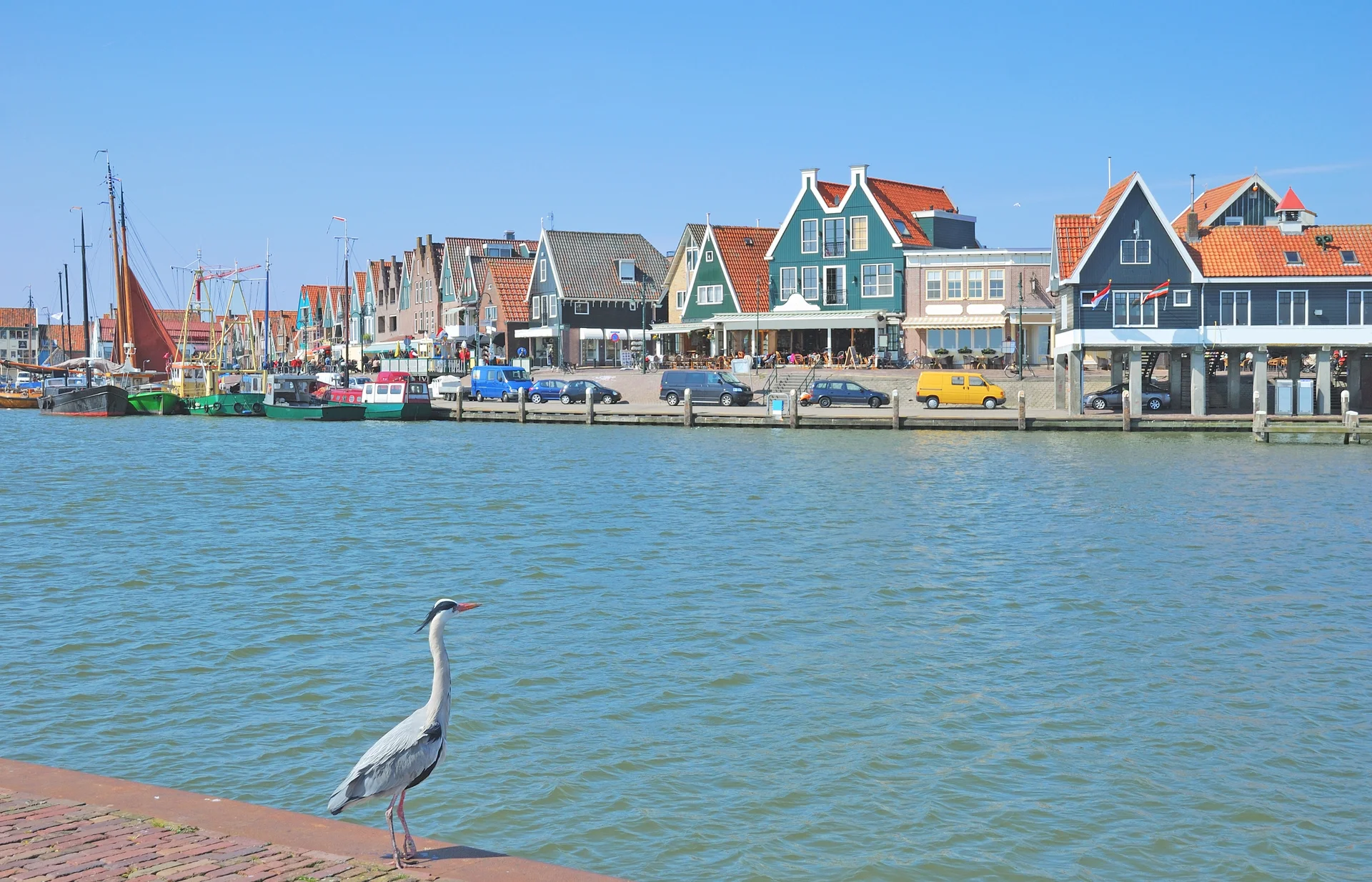
Volendam Seawall, the beating heart of the most famous Dutch fishing village
The seawall stretches along the Markermeer, serving as a boundary between the shimmering water and the multicolored houses that look like they belong on a postcard. This barrier against the sea, built centuries ago to protect the village from flooding, has become the primary artery of Volendam, where fishermen, artists, and visitors from around the world have crossed paths for over a century.
Why is the Volendam Seawall so fascinating?
This waterfront promenade embodies the turbulent history of a Catholic village that lived in isolation for centuries, surrounded by Protestant communities. When artists discovered Volendam in the 1880s, they were captivated by its winding alleys and residents dressed in traditional costumes. The seawall then became the stage for a unique transformation: from a defensive structure, it evolved into a tourist promenade where maritime authenticity meets commercial energy.
Behind the seawall hides the Doolhof (the labyrinth), a historic neighborhood where fishing families lived packed into tiny houses. It is a striking contrast to the current activity of this street, which has become the economic engine of the village.
Strolling the seawall, a unique sensory experience
The port atmosphere
Traditional fishing boats sway gently in the port, their colorful hulls reflecting the changing light of the lake. Along the promenade, the smoky scent of grilled eel mixes with the smell of fresh herring, while seagulls circle above the fish stalls. The facades of former fishermen's homes now house restaurants, souvenir shops, and photography studios where you can have your portrait taken in traditional costume.
Culinary specialties not to be missed
Volendam remains deeply attached to its fishing traditions. On the seawall, several spots allow you to taste the seafood that made the village famous:
- Smoked eel (gerookte paling), a local specialty with a rich and unique taste
- Dutch raw herring, served with onions and pickles according to tradition
- Kibbeling, small pieces of battered and fried fish, perfect for snacking
- Freshly made stroopwafels from bakeries, thin caramel waffles to be enjoyed while still warm
Friendly tip: Visit the seawall early in the morning or in the late afternoon to avoid the massive crowds from tour buses. At these hours, the low-angled light illuminates the colorful facades beautifully, and you can watch the local fishermen go about their work. Sunsets over the Markermeer offer exceptional golden hues, perfect for photography.
Beyond the main promenade
Exploring the Doolhof neighborhood
Just behind the seawall, the narrow alleys of the Doolhof reveal the Volendam of the past. These winding passages, where no urban planning was ever applied, retain the atmosphere that so seduced the painters who came to capture the village. The tiny houses bear witness to a time when fifteen people could live in 320 square feet.
The ferry to Marken
From the port on the seawall, the Volendam Marken Express reaches the former island of Marken in just 30 minutes. This crossing offers a unique perspective on the Markermeer and is an excellent way to combine two traditional villages in a single day.
Activities around the seawall
The promenade is more than just a walk. Several experiences enrich the visit:
- Photo sessions in traditional costume at one of the many studios in the port, complete with pointed caps, wooden clogs, and period sets
- A visit to the Volendam Museum, located just a few steps away, which traces the history of the village and its fishing industry
- Cheese tasting at the traditional cheese shop, featuring manufacturing demonstrations
- Virtual reality exploration of Volendam in 1916, a total immersion into the village past
Traffic regulations on the seawall require attention. Between 11:00 AM and 11:00 PM, car access is strictly controlled by electronic bollards. Vehicles can exit the area from the Hotel Spaander on the hour and half-hour, while entry from the Noordeinde is only permitted at the quarter and three-quarter hour marks.