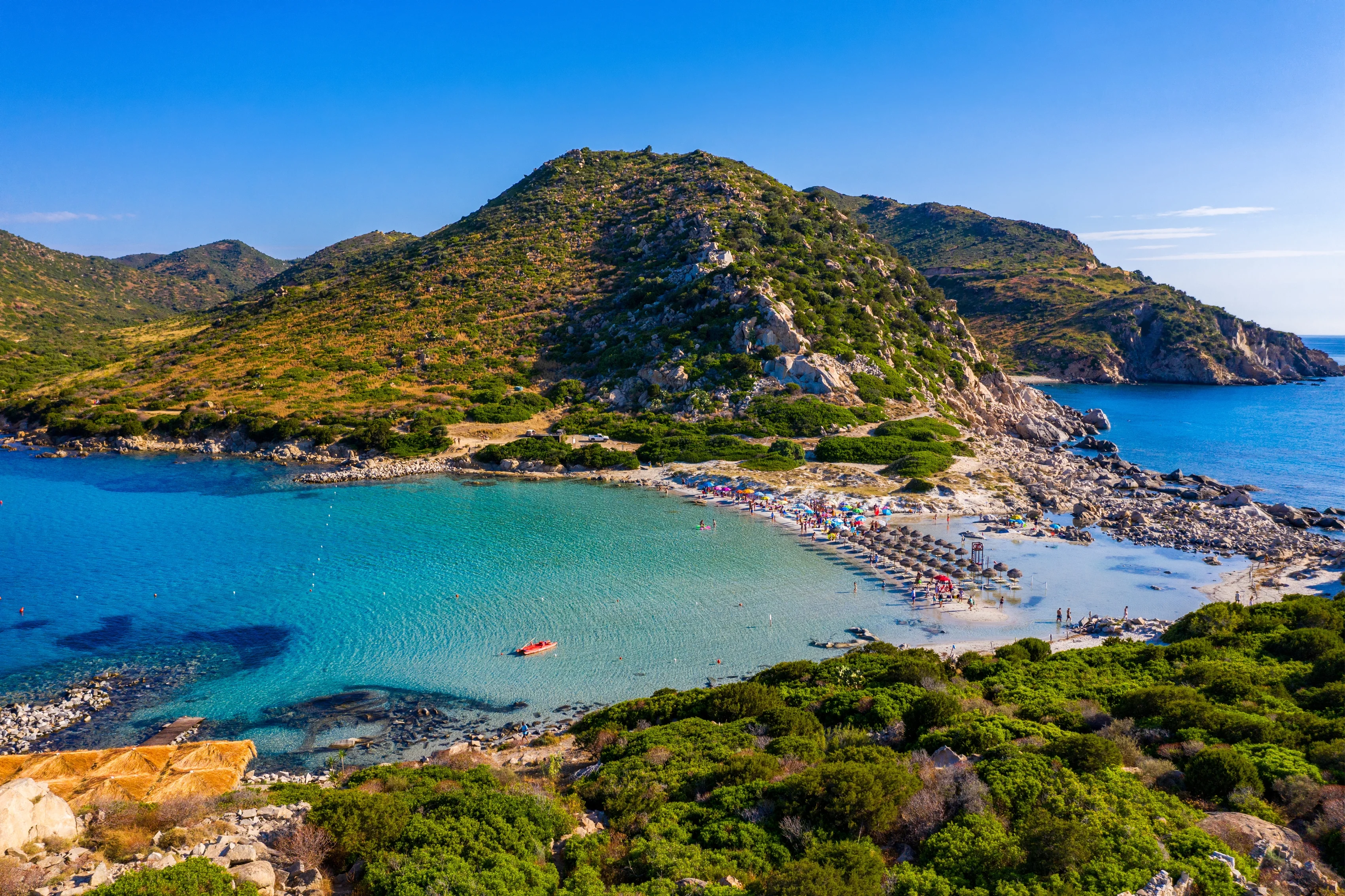
Spiaggia di Punta Molentis

What to do in Sardinia: top 14 highlights in 2026

Seven thousand dry-stone towers raised before Rome, and a sea that the Italians themselves come here to find. The rankings below are built by travellers like you.

Our members' favourite places in Sardinia

Ranked on recommendations from travellers who went there

#1 Villasimius +12 recs

How does a town of 4,000 residents handle tens of thousands of visitors the moment the weather warms up? By letting 32 kilometres of coastline do the talking. Villasimius could have stayed a sleepy fishing village in southern Sardinia, defined by sheep farming, but tourism had other plans. Tucked against the Sette Fratelli mountain range, it pulls in travelers with its beaches, mountain peaks, lush greenery, and deep historical roots, making it a heavyweight destination in Italy.

Paradise Beaches

This is the kind of town people picture for a Mediterranean getaway, complete with low-rise colorful buildings and towering palm trees setting a scenic backdrop. Artisanal and food shops line the streets. With local honey, Sardinian wines, almond Amaretti cookies, formaggelle ricotta pastries, and seadas sweet fried ravioli, regional specialties are everywhere. The port and marina make ideal spots to grab a sidewalk table, and the summer brings constant events, especially along via Umberto. Walk down that street and you will hit Simius and its kilometer-long stretch of fine sand, the closest beach to downtown. There are roughly twenty beaches tucked into scenic bays, rocky coves, fragrant greenery, and shores made of pink sand or tiny rice-shaped grains. Whether you reach them down quiet walking paths or find fully equipped stretches, few coastlines compare. The water is remarkably clear with a bright turquoise hue, and fish thrive in spots like Campus, putting on a show of their own.

This stretch of coast is a haven for snorkeling, particularly around Capo Carbonara, a protected marine area featuring spots like the Secca di Santa Caterina and its 30 m granite seabed. Two nearby islands round out the area for boat trips: Isola dei Cavoli, where a decorated boat procession heads out every summer toward an underwater statue of the Madonna, and Isola di Serpentara.

A Rich Archaeological Legacy

By the beach at Timi Ama, an old Spanish watchtower stands on the bluffs. The coastal ruins prove that Villasimius has a military past that draws history buffs, especially with sites like domus de janas, pre-Nuragic chamber tombs cut straight into the rock. Nuraghes, the round Bronze Age stone structures that served as hubs for the Nuragic civilization, dot the interior, and the one at Giardone offers sweeping views. Just 3 km from downtown, la Fortezza vecchia is a 14th-century fortress perched on a promontory 700 m from the Notteri pond. The town archaeological museum is a must-visit to make sense of the local artifacts, spanning four rooms filled with everyday tools, coins, and items salvaged from a 15th-century shipwreck. Between the coastal views, bold food, and stunning beaches, Villasimius delivers on every front.

When to Go

Winters are mild and summers are warm. Villasimius has a Mediterranean climate that works year-round, though shoulder seasons are ideal if you want to skip the massive summer crowds and intense heat waves.

How to Get There

The nearest international airport is in Cagliari, 65 km away, with frequent bus connections to the village during tourist season. By car, you take the coastal road or the SS 125 var.

#2 Cagliari +8 recs

Most travelers rush past to reach the northern beaches, but Cagliari, the Sardinian capital nicknamed La Città del Sole for its 300 days of sunshine, holds four historic districts layered with 2,500 years of Phoenician, Roman, and Spanish history. Between pink flamingos reachable by bus, a morning fish market, and golden bastions at sunset, this is a city that makes you want to stay.

#3 Badesi +4 recs

Badesi offers a dose of rugged Sardinian coastline. Picture miles of wind-swept golden sand that make this a go-to spot for surfing and wide-open views, much like the quieter stretches of the Oregon coast. The area is defined by its raw shoreline, backed by inland vineyards and granite rock formations. It is a destination for travelers seeking an authentic side of Sardinia that feels less polished and more open, where the horizon remains the only true boundary.

#4 Santa Teresa Gallura +4 recs

At the northern tip of Sardinia, Santa Teresa Gallura serves as a granite outpost facing the white cliffs of Corsica. The landscape is shaped by the wind, leading you through the surreal rock formations of Capo Testa before you dive into turquoise waters. This town sits at a maritime crossroads, where the deep blue of the sea meets the horizon in a way that feels reminiscent of the rugged California coastline.

#5 Costa Rei +4 recs

Costa Rei is all about easy, slow days on the southeast coast of Sardinia. Picture a five-mile stretch of golden sand edged by shallow, turquoise water that feels like a natural swimming pool for kids. Beyond the main beach, you can track down quieter spots like Cala Sinzias or the famous Scoglio di Peppino rock formation. It is the kind of place where your only real decision is which shade of blue you want to look at while you relax.

#6 Stintino -1 rec

Perched at the tip of the peninsula that shares its name, Stintino sits well away from the frantic pace of larger cities. It fiercely guards its rugged, natural landscape, a key ingredient in a town that possesses a thousand different charms. Located on the far northwestern coast of Sardinia, this small village was founded in 1885, and nothing in its early history suggested it would become a world-class beach destination. Its creation was tied to the establishment of a quarantine station and a penal colony on the nearby island of Asinara. When 45 fishing families were displaced to make room for the facility, they formed a cooperative known as the "Communion of the 45." While the old tuna processing buildings still stand, the area is now defined by its beaches, which many argue are the finest in Italy.

A Picturesque Village

Even before you arrive, the scenic coastal road sets the stage for a dramatic landscape. The drive offers clear views of the sea and hidden coves, eventually leading to the village's low-slung, pastel-colored houses. The streets are narrow and charming. On Via Lepanto, the war memorial anchors Piazza dei 45, the town's main social hub. Further along near Via Sassari, the Parish Church of the Immaculate Conception (1930) stands out with its simple tower and pale pink facade. The center is compact, filled with small shops, local crafts, and a variety of restaurants. Those lining the Marina are essential, as the waterfront is split into three ports that offer a scenic backdrop for a meal.

Watching sailboats, fishing vessels, and yachts pass by while dining waterfront is a local staple. The local cuisine is defined by fresh fish and shellfish. Look for fresh seafood pasta, lobster potato soup, octopus salad, and, of course, grilled tuna. You should also try bottarga di tonno (cured tuna roe), tumbarella (a ricotta-based dessert), and tiricche, which are traditional honey-and-nut cookies.

To understand the link between Stintino and the sea, the Tonnara Museum pays homage to the historical tuna fishing industry. The museum is designed to replicate an actual tuna processing site, guiding visitors through the history of the catch using archival photos and original tools.

Paradise Beaches

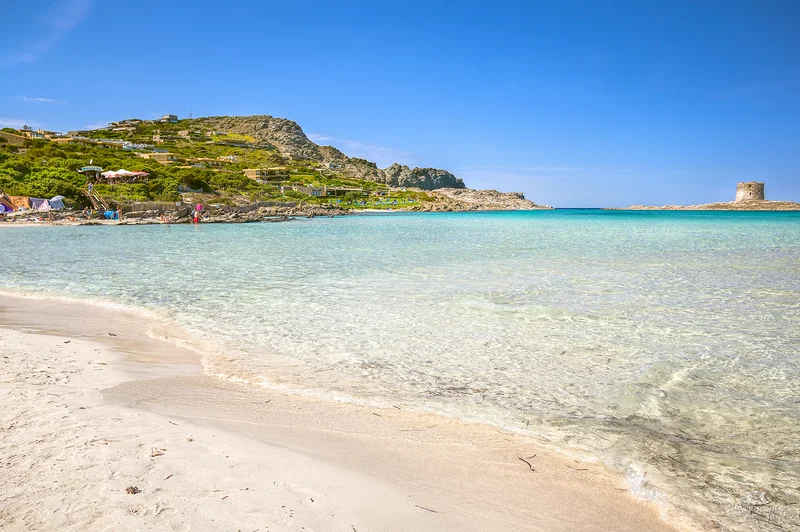
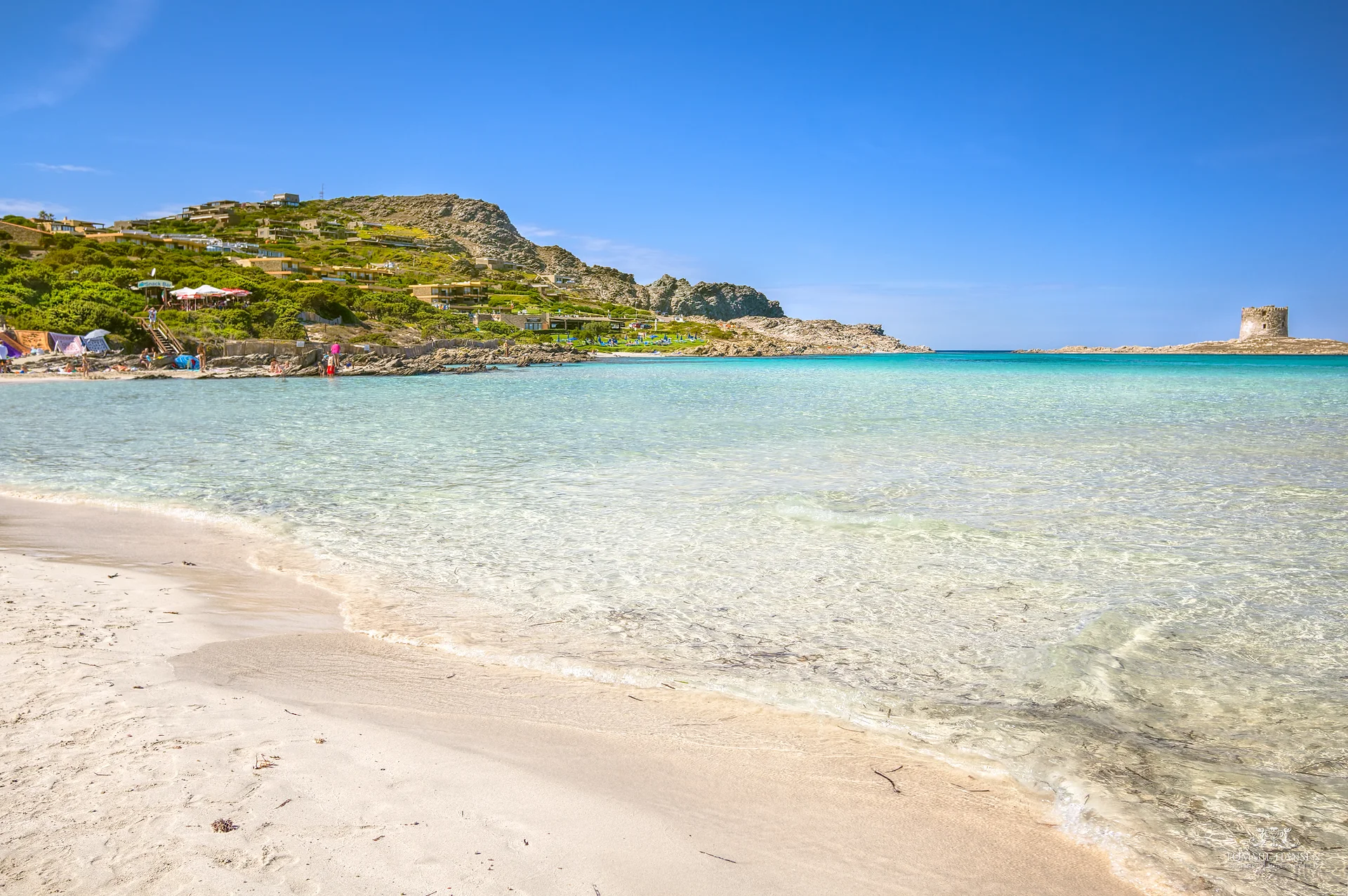
The true draw here is the coastline. Several beaches feature fine white sand and water so clear it mirrors the turquoise tones of the Caribbean. Less than 2 kilometers away, La Pelosa is arguably one of the most beautiful beaches in the entire Mediterranean. It is a vast stretch of shoreline facing the town's icon, the Torre della Pelosa, an Aragonese fortification built in 1578. The water is shallow for a long distance, making it ideal for worry-free swimming. Further north, La Pelosetta sits beneath the cliffs of Capo Falcone, where a terrace 200 meters up offers an expansive view. Falcons nest in these cliffs, and birdwatchers can also head to the Casaraccio Pond to spot cormorants and terns. At Cala Lupo beach, which is slightly more secluded, the atmosphere is quiet and the water is excellent for snorkeling, much like the rocky shoreline of Punta Negra di Stintino. The protected natural areas of Asinara Island are another wonder, home to rare wildlife, historic ruins, and pristine beaches.

When to go

The climate is mild year-round, but to enjoy the beaches without the intense crowds, May, June, and September are the best months. The water is warm enough for swimming during these times, whereas La Pelosa becomes very crowded throughout July and August.

How to get there

The nearest airport is Alghero-Fertilia, located 35 kilometers away. Public and private bus lines connect the airport to the town in about one hour, with five departures daily during peak season. Ferries from Genoa and Barcelona dock at Porto Torres, about 30 kilometers away. Once you arrive, renting a car is the best way to maintain independence while exploring Sardinia.

Our members' favourite things to do in Sardinia

Ranked on recommendations from travellers who did them

#1 Basilica of San Saturnino (Cagliari) +8 recs 5/5

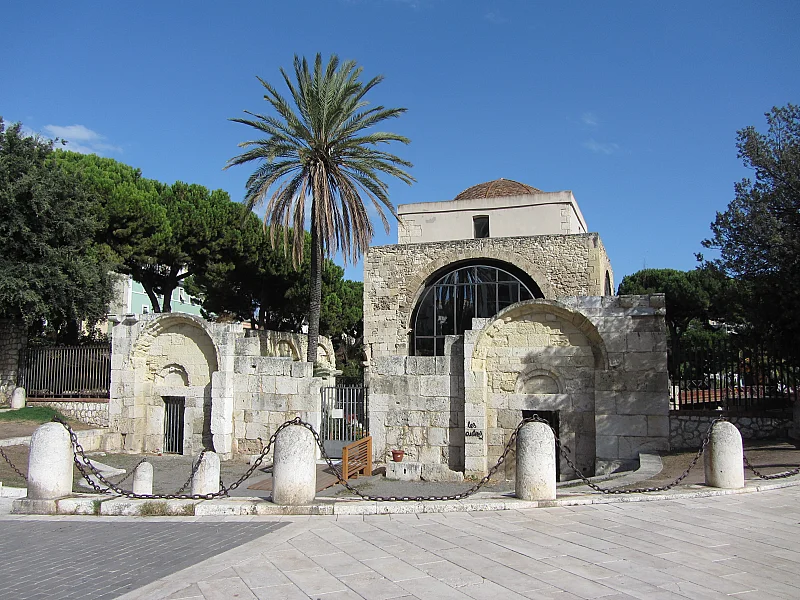
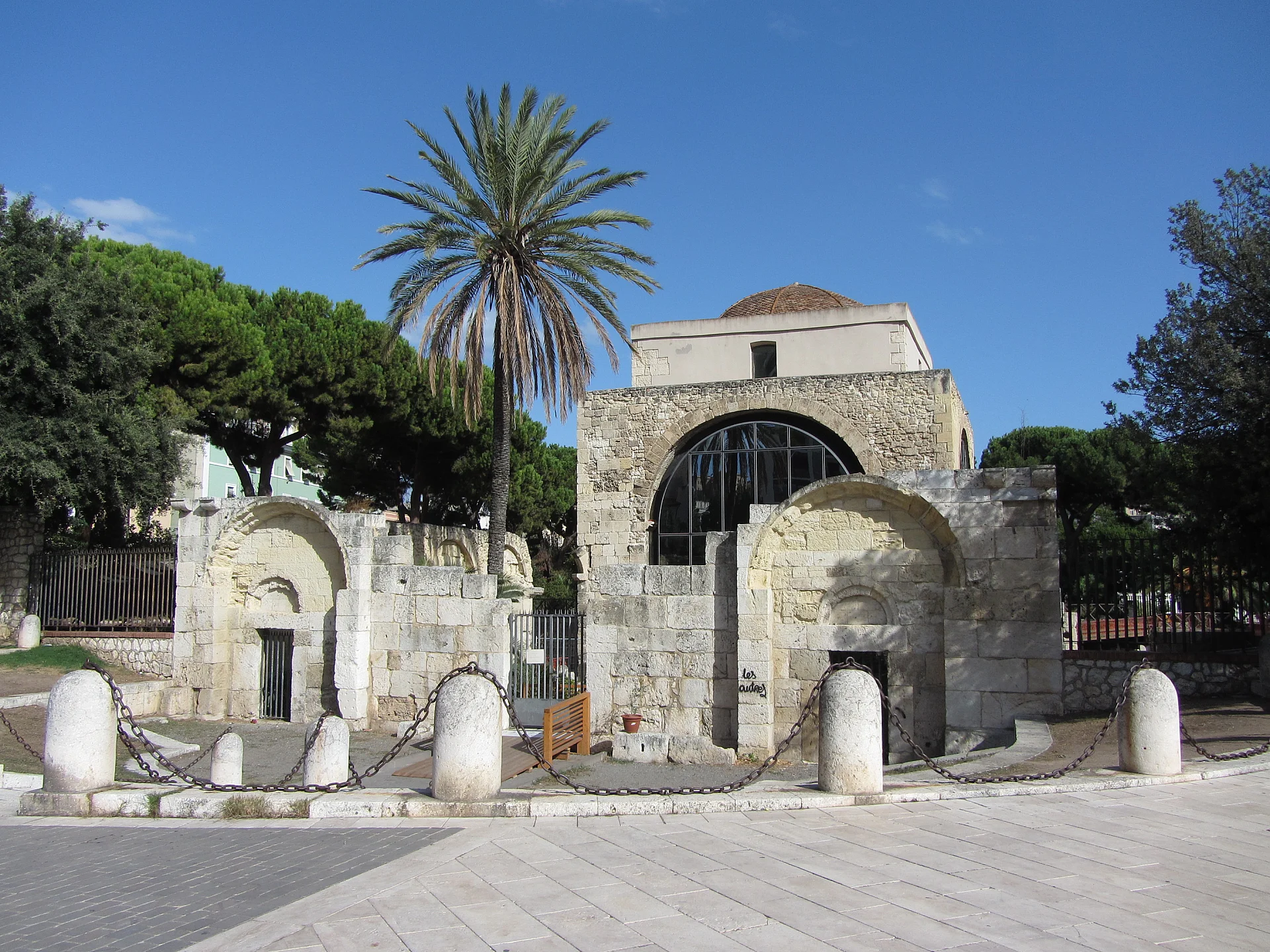
Widely considered the oldest Christian building in Cagliari, this monument spans seventeen centuries of history. Inside its weathered walls, you will discover a rare Byzantine floor plan alongside ancient necropolis remains. It is an ideal stop if you appreciate the austere beauty of archaeological sites, far from the typical baroque crowds.

#2 Porto Giunco Beach (Villasimius) +6 recs 4.8/5

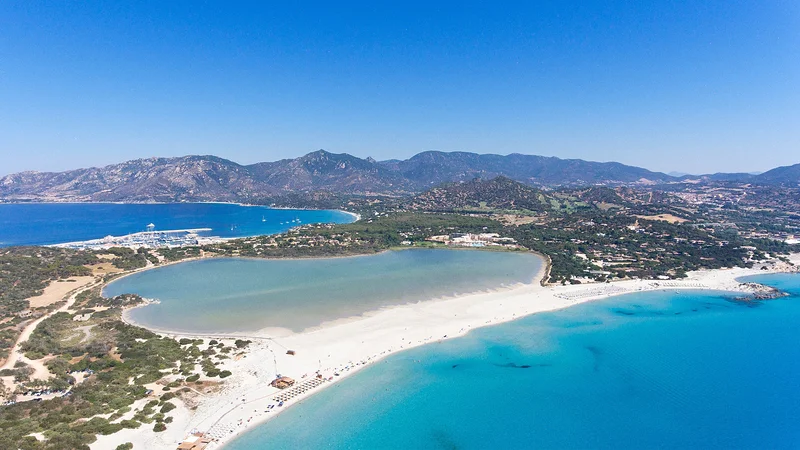
Known as the beach of two seas, Porto Giunco Beach is a sandy strip with rose-tinted hues, wedged between turquoise Mediterranean waters and the Stagno di Notteri (Notteri Pond), home to pink flamingos. Overlooked by an Aragonese tower, this Villasimius beach is a highlight of the Area Marina Protetta di Capo Carbonara (Capo Carbonara Marine Protected Area), famous for its clear, shallow waters.

See the guide See deals

#3 Costa Rei Beach (Costa Rei) +4 recs 5/5

They say the Sarrabus region holds the finest landscapes in Sardinia, and facing the gorgeous Costa Rei Beach, it is hard to argue. Set between Villasimius and Muravera, this nearly 10 km coastline delivers endless beauty. Beaches, coves, bays, and lagoons unfold within the lush southern greenery, framed by the Tyrrhenian Sea and mountain ridges with white sand and clear waters.

#4 Punta Molentis Beach (Villasimius) +2 recs 4/5

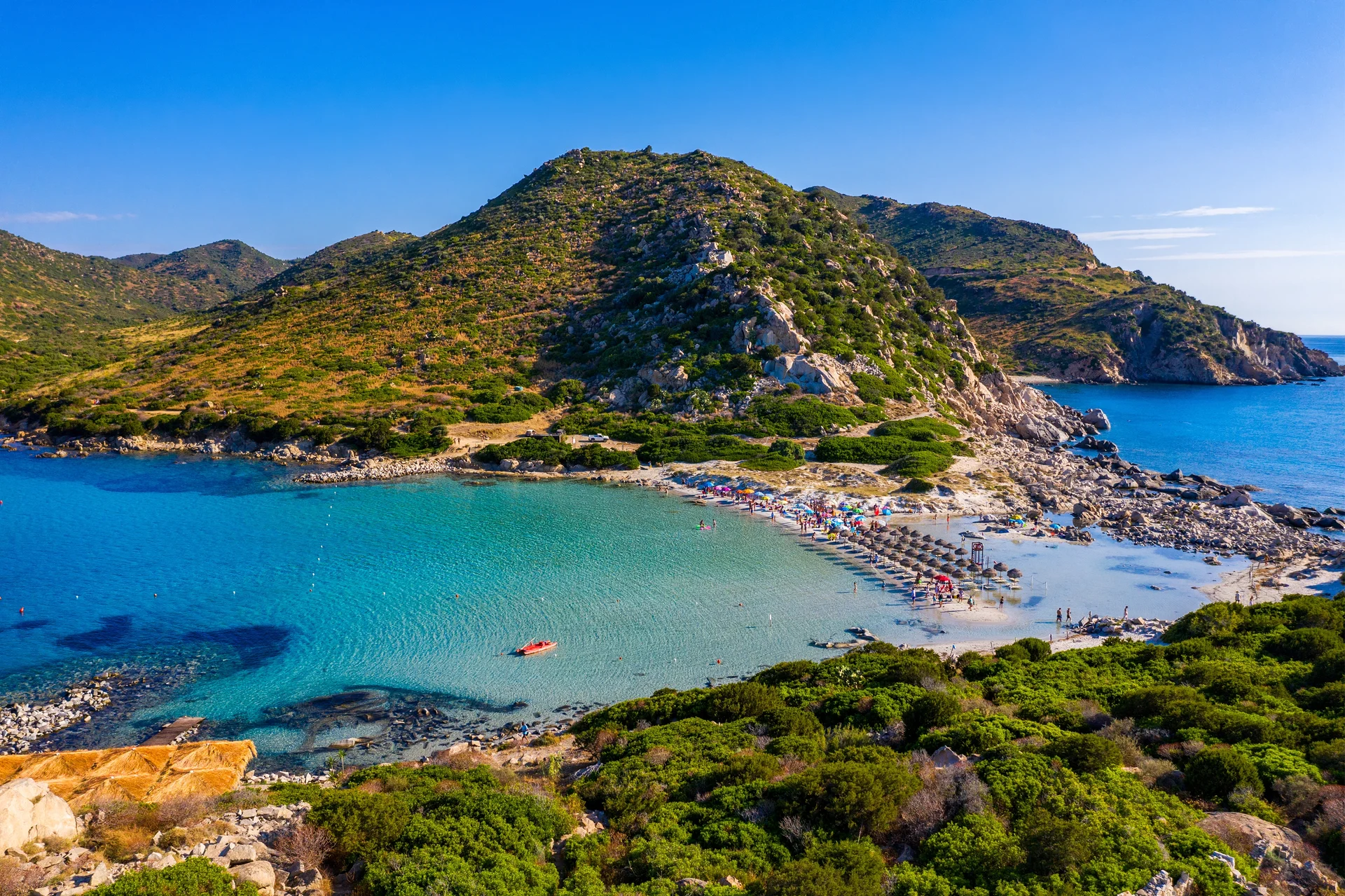
Located near Villasimius, Punta Molentis Beach is a Sardinian gem known for its sand isthmus separating two distinct shades of sea. Its shallow, clear waters are ideal for snorkeling. To protect the ecosystem, access is restricted and requires an online reservation during peak season. Parking also requires a fee and fills up fast.

See the guide See deals

#5 Archaeological Museum (Villasimius) +2 recs 4/5

With history as dense as Sardinia, ruins are everywhere. In Villasimius, a village in southeastern Sardinia, the Archaeological Museum showcases civilizations dating back to the Neolithic era. Four rooms display Nuragic, Carthaginian, and Roman treasures from sites like the Cuccureddus Sanctuary and underwater excavations. It is a compelling look beyond the beaches.

#6 Su Nuraxi di Barumini (Barumini) +1 rec 4/5

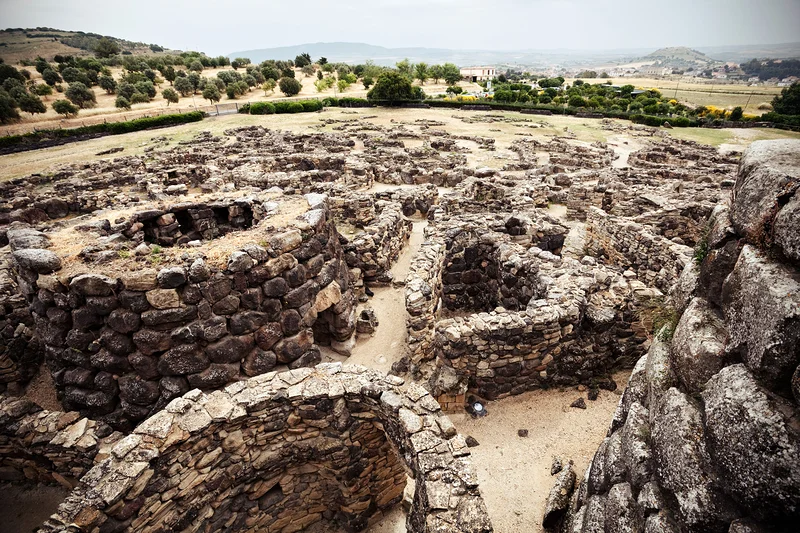
Su Nuraxi di Barumini is a landmark archaeological site in Sardinia and a UNESCO World Heritage site. Located in the Marmilla region, this complex features a central tower surrounded by stone bastions and huts. Explore the ruins before visiting the nearby Casa Zapata museum to see ancient artifacts and detailed scale models.

See the guide See deals

#7 La Maddalena Archipelago National Park (La Maddalena)

La Maddalena Archipelago National Park, off the northeast coast of Sardinia, Italy, is a protected sanctuary of seven main islands known for white sand beaches and clear water. Established in 1994, it hosts diverse marine life like dolphins and sea turtles. Explore Caprera island to see the home of Giuseppe Garibaldi, a key figure in Italian unification, or enjoy snorkeling and hiking.

See the guide See deals

#8 La Pelosa (Stintino) -1 rec 2/5

In northern Sardinia, raw, powerful landscapes create incredible settings. Just two kilometers from Stintino, a small fishing village, La Pelosa is arguably the island's finest beach. Its fine white sand contrasts with turquoise water as clear as the Caribbean. The 1578 Torre della Pelosa (Aragonese watchtower) defines this iconic, magical coastal panorama.

See the guide See deals

Map of Sardinia

Visiting Sardinia

Sardinia is bigger than Sicily in seaside reputation and smaller in people: one million six hundred thousand inhabitants across twenty-four thousand square kilometres, the lowest density in Italy after Aosta Valley. That emptiness is what explains the beaches.

The two ends share the visitors: Villasimius and Costa Rei in the south-east, Stintino and Santa Teresa Gallura in the north. Between them lies the interior, which you will cross almost alone.

You will love it if

  • You want Caribbean water a short flight from home
  • A civilisation whose language nobody can read intrigues you
  • You come in June or September, when the sea is already warm

Look elsewhere if

  • You would rather not rent a car: the island cannot be crossed any other way
  • You come in August: prices double and the coves fill up by 9am
  • You are after art cities: there is one, and it is Cagliari

The must-sees

  1. Su Nuraxi di Barumini

    1 Su Nuraxi di Barumini +1 rec

    The best preserved nuraghe on the island, a truncated cone tower from the 17th century BC surrounded by a stone village. Sardinia holds some seven thousand of them, built without mortar by a civilisation that left no readable text behind.

  2. Porto Giunco beach

    2 Porto Giunco beach +6 recs

    A tongue of sand so white it turns pink against the light, with the Mediterranean on one side and a salt lagoon on the other. The flamingos stay on the lagoon, thirty metres from the towels, and they do not move.

  3. La Pelosa

    3 La Pelosa

    At the far north-west, facing the Aragonese tower and the reefs of Capo Falcone, pale sand runs out for two hundred metres. Access is capped by a paid daily quota, introduced once the crowds began carrying the sand away.

  4. San Saturnino basilica

    4 San Saturnino basilica +8 recs

    Seventeen centuries under a bare brick dome, a few metres from the Villanova traffic: this is the oldest Christian building in Cagliari, and one of the oldest in the western Mediterranean.

  5. La Maddalena archipelago national park

    5 La Maddalena archipelago national park

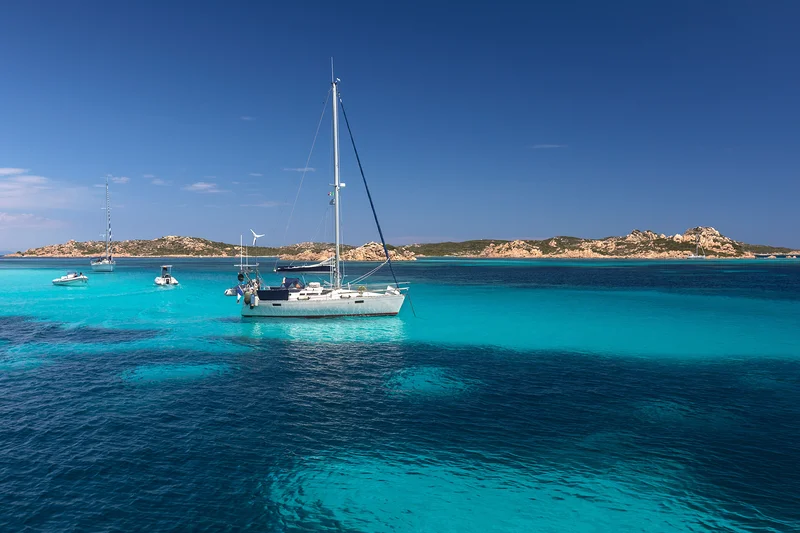
    Sixty granite islands and islets in the north-east, reached by boat from Palau. Moorings are regulated and the finest beaches run a quota: that is the price of their condition, and it is booked online weeks ahead.

The classic mistake

Do not book a single base for the whole island. Villasimius and Stintino are four hours apart by road, with no motorway between them. For one week, stay at one end; for two, split the trip in two.

Our itineraries in Sardinia

Our itineraries by length of stay
LengthRouteWhat you see
1 weekCagliari and the south-eastPorto Giunco, Costa Rei, the capital
1 weekThe north: Stintino and GalluraLa Pelosa, La Maddalena
10 daysCagliari › Barumini › the northBoth coasts, and the nuraghi in between

The road that climbs from south to north through the interior passes Barumini and crosses the Marmilla, a plateau of hills and wheat nobody photographs. It is the only way to see something other than the coast, and it costs you one hour of detour.

Count four hours between the two ends, five with a stop. Average speed is low: two-lane roads, villages to drive through, and sheep that have right of way in practice.

When to visit Sardinia

RatingSeasonWeatherCrowds and prices
June and September25 to 29 °C, sea at 23Moderate, the best trade-off
August30 to 35 °C, spells of mistralItalian peak, prices doubled
May and October20 to 25 °C, sea at 19Light, ideal for walking
November to April12 to 18 °C, short showersResorts close, Cagliari lives on

Our advice

Italians take their holidays in the second and third weeks of August, and the island tips over: ferries sell out, rentals triple and the coves with limited parking fill before nine in the morning. The first half of June gives you the same sea for a third of the price.

Getting to Sardinia

  1. 1 By plane The quickest

    Ryanair and easyJet fly from London, Manchester and Dublin to Cagliari, Olbia and Alghero, mostly from April to October, in about three hours. Cagliari serves the south, Olbia the north: pick the airport that matches your coast.

  2. 2 By boat With your car

    if you are already in Italy, night ferries link Genoa, Livorno and Civitavecchia to Porto Torres, Olbia and Cagliari, with your car on board. Ten to thirteen hours, cabins available, and you wake up on the island.

  3. 3 By car On the island

    essential here: buses connect the towns but not a single cove, and there is no train worth the traveller's time. Rent at the airport and book ahead for July, when the fleet runs out.

From Santa Teresa Gallura, Bonifacio is a fifty-minute crossing away: Corsica and Sardinia string together easily, and it is a route you would not think of on your own.

Getting around Sardinia

Cagliari is walkable, from the port up to the Castello quarter, with a public lift for the climb. Everywhere else you will need a car: the finest beaches sit at the end of two or three kilometres of dirt track.

Worth knowing

Do not take sand or pebbles home: it is an offence in Sardinia, fined up to three thousand euros, and airport checks are real. Several beaches also run a paid daily quota, La Pelosa among them: the booking is made online, not at the gate.

What to eat in Sardinia

  • Pane carasau: a flatbread baked twice, thin as paper, that keeps for months. Born for shepherds who left for weeks at a time, and still on every table.
  • Culurgiones: ravioli closed by hand in a wheat-ear seam, filled with potato, pecorino and mint. The seam is counted in stitches, and a good cook makes thirteen.
  • Porceddu: suckling pig roasted on a spit over myrtle wood, crackling skin and melting meat. The feast dish, ordered the day before in the agriturismi.
  • Bottarga: grey mullet roe, dried and pressed, grated over spaghetti with breadcrumbs. Cabras produces most of it, and it is the most recognisable taste on the island.
  • Pecorino sardo and fiore sardo: the second smoked and hard-aged, long used as a shepherd's wage. Served with bitter strawberry-tree honey, which exists nowhere else.
  • Seadas: a fried pastry filled with fresh cheese and lemon, poured over with honey. Cheese for pudding, and it works.
  • Mirto: myrtle berry liqueur, served ice cold after the meal. Red from the berries, white from the leaves, and every family swears theirs is the right one.

The agriturismi of the interior serve a single set menu of six or seven courses, with no card and no choice, for a fixed price. It is the best table on the island and the cheapest, provided you book and arrive without having had lunch. Set the whole evening aside.

Where to stay in Sardinia

AreaWhat it is forWorth knowing
VillasimiusPorto Giunco, Punta MolentisFour thousand residents, tens of thousands in summer
Costa ReiEight kilometres of sand, familiesPurpose-built, quiet, little going on at night
CagliariSan Saturnino, market, airportThe only real city, alive all year
StintinoLa Pelosa, AsinaraNarrow peninsula, full in August
Santa Teresa GalluraLa Maddalena, Corsica oppositeGranite and wind, good value off season

The agriturismi inland cost half what the seafront charges and sit twenty minutes from the beaches: that is the trade-off Italians make themselves, and you will gain by it too.

At Badesi, on the north coast, the maquis runs down to the dunes and the wind never drops: it is a kitesurfing base, and one of the few beaches on the island that stays liveable in August.

How much does a trip in Sardinia cost?

Indicative budget per person, excluding travel to Sardinia
StyleLengthBudget per person
Tight (campsite, shared car, markets)7 days400 to 600 €
Comfortable (hotel, car, restaurants)7 days900 to 1,400 €
High (seafront, boat, name tables)7 days2,500 to 4,000 €
  • June rather than August: the same rental costs three times less, for a sea at 23 °C and coves you can actually park at.
  • The agriturismi: thirty to forty euros for a six-course set menu, wine included, against twice that on the seafront for less.
  • Beaches without a quota: the south-eastern coves are free and often empty on weekdays, while La Pelosa is paid and booked.
  • The San Benedetto market in Cagliari: the largest covered market in Italy, where you have lunch for five euros.
  • A car outside July and August: the same model costs a third, and the fleet is not sold out.

Traditions and way of life in Sardinia

The nuraghi are the island's riddle: seven thousand dry-stone towers, raised between 1800 and 700 BC by a civilisation that left neither readable writing nor a name for itself. Su Nuraxi is the only one you can visit and still understand what you are looking at.

Sardinian is not an Italian dialect but a Romance language of its own, the closest to Latin according to linguists, and a million people still speak it. The bilingual road signs are not decoration.

Two useful habits. Inland, what is offered is not refused: take the glass of mirto or the piece of pane carasau even without appetite, because a refusal reads as distance.

And the hours: everything closes between 1pm and 4.30pm, shops included, and restaurants do not open before 8pm. Turn up at noon sharp and you will find half the kitchens still cold.
Top photos posted by members

Spiaggia di Punta Molentis
Basilique San Saturnino à Cagliari
La Pelosa en Sardaigne

Traveler reviews

Admission way too expensive

While the amphitheater is one of the monuments to see in Cagliari, there is an admission fee to enter the site. The visit is very quick, though. In my opinion, it is not worth buying a ticket. You can…

2

Very beautiful monument

This basilica is one of the oldest Christian buildings in the city. From the outside, it has a rather simple architecture but is very well preserved. The interior is also worth seeing. The basilica is…

2

Stunning, colorful city

I really loved my visit to the city of Cagliari. It is a good starting point for exploring Sardinia. The city is very colorful and remains quite authentic. The Castello district is truly magnificent.…

151

Unusual landscape

This beach stretching between a lake and the sea is truly unique. A must-see! Swimming here is super pleasant.

304

Beautiful beach, but with some drawbacks

Absolutely stunning beach, but often crowded. Parking costs money (a fee for the car, up to €10, but also for passengers), however, the same ticket allows you to visit other nearby beaches during the…

238