
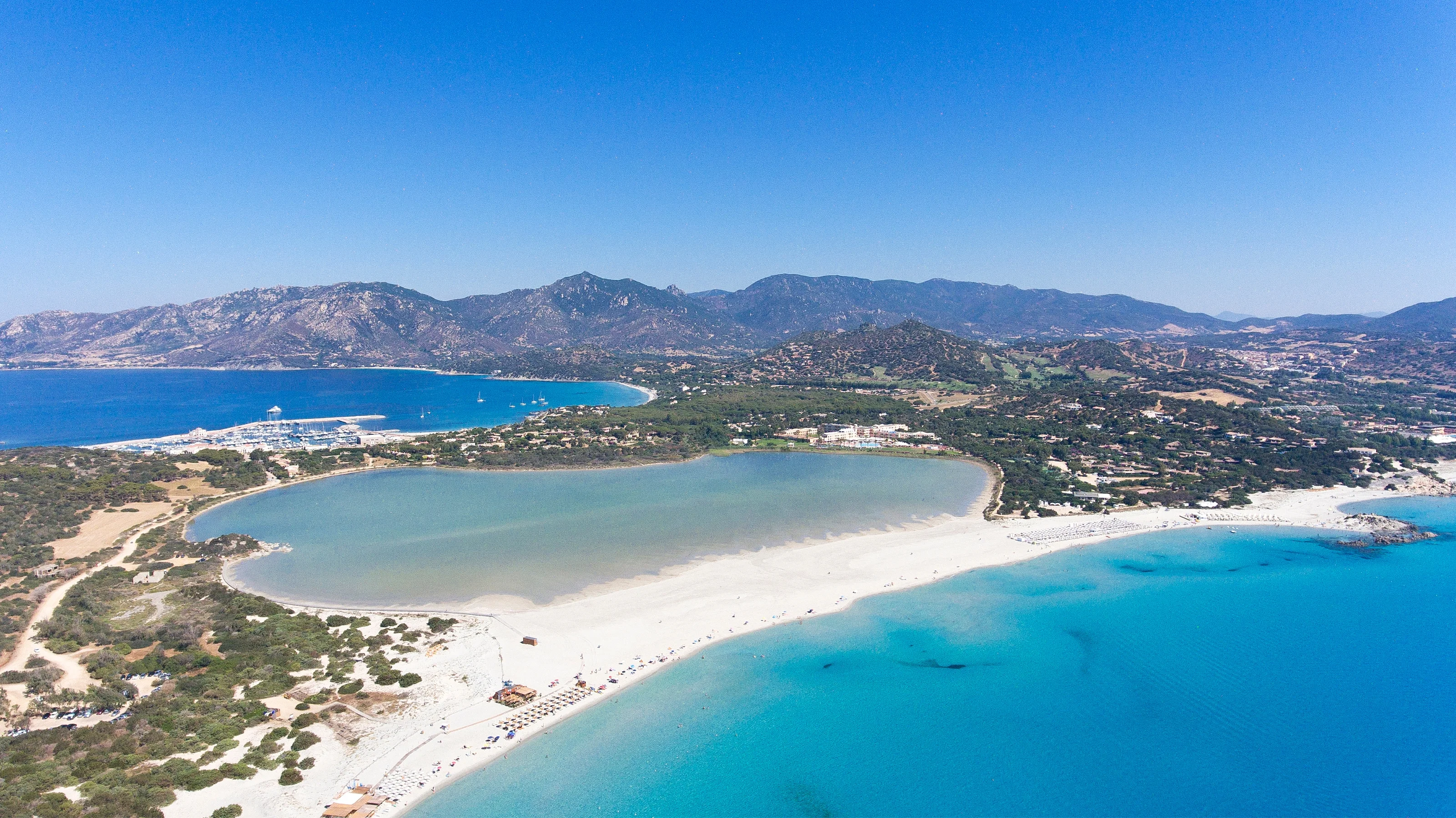
Plage Porto Giunco à Villasimius

Top 5 most beautiful villages in Sardinia to visit2026 ranking

Discover our members' favourite villages in Sardinia. Feel free to publish your own reviews to take part in this collaborative ranking.

The most beautiful villages in Sardinia

#1 Villasimius +12 recs

How does a town of 4,000 residents handle tens of thousands of visitors the moment the weather warms up? By letting 32 kilometres of coastline do the talking. Villasimius could have stayed a sleepy fishing village in southern Sardinia, defined by sheep farming, but tourism had other plans. Tucked against the Sette Fratelli mountain range, it pulls in travelers with its beaches, mountain peaks, lush greenery, and deep historical roots, making it a heavyweight destination in Italy.

Paradise Beaches

This is the kind of town people picture for a Mediterranean getaway, complete with low-rise colorful buildings and towering palm trees setting a scenic backdrop. Artisanal and food shops line the streets. With local honey, Sardinian wines, almond Amaretti cookies, formaggelle ricotta pastries, and seadas sweet fried ravioli, regional specialties are everywhere. The port and marina make ideal spots to grab a sidewalk table, and the summer brings constant events, especially along via Umberto. Walk down that street and you will hit Simius and its kilometer-long stretch of fine sand, the closest beach to downtown. There are roughly twenty beaches tucked into scenic bays, rocky coves, fragrant greenery, and shores made of pink sand or tiny rice-shaped grains. Whether you reach them down quiet walking paths or find fully equipped stretches, few coastlines compare. The water is remarkably clear with a bright turquoise hue, and fish thrive in spots like Campus, putting on a show of their own.

This stretch of coast is a haven for snorkeling, particularly around Capo Carbonara, a protected marine area featuring spots like the Secca di Santa Caterina and its 30 m granite seabed. Two nearby islands round out the area for boat trips: Isola dei Cavoli, where a decorated boat procession heads out every summer toward an underwater statue of the Madonna, and Isola di Serpentara.

A Rich Archaeological Legacy

By the beach at Timi Ama, an old Spanish watchtower stands on the bluffs. The coastal ruins prove that Villasimius has a military past that draws history buffs, especially with sites like domus de janas, pre-Nuragic chamber tombs cut straight into the rock. Nuraghes, the round Bronze Age stone structures that served as hubs for the Nuragic civilization, dot the interior, and the one at Giardone offers sweeping views. Just 3 km from downtown, la Fortezza vecchia is a 14th-century fortress perched on a promontory 700 m from the Notteri pond. The town archaeological museum is a must-visit to make sense of the local artifacts, spanning four rooms filled with everyday tools, coins, and items salvaged from a 15th-century shipwreck. Between the coastal views, bold food, and stunning beaches, Villasimius delivers on every front.

When to Go

Winters are mild and summers are warm. Villasimius has a Mediterranean climate that works year-round, though shoulder seasons are ideal if you want to skip the massive summer crowds and intense heat waves.

How to Get There

The nearest international airport is in Cagliari, 65 km away, with frequent bus connections to the village during tourist season. By car, you take the coastal road or the SS 125 var.

#2 Badesi +4 recs

Badesi offers a dose of rugged Sardinian coastline. Picture miles of wind-swept golden sand that make this a go-to spot for surfing and wide-open views, much like the quieter stretches of the Oregon coast. The area is defined by its raw shoreline, backed by inland vineyards and granite rock formations. It is a destination for travelers seeking an authentic side of Sardinia that feels less polished and more open, where the horizon remains the only true boundary.

#3 Santa Teresa Gallura +4 recs

At the northern tip of Sardinia, Santa Teresa Gallura serves as a granite outpost facing the white cliffs of Corsica. The landscape is shaped by the wind, leading you through the surreal rock formations of Capo Testa before you dive into turquoise waters. This town sits at a maritime crossroads, where the deep blue of the sea meets the horizon in a way that feels reminiscent of the rugged California coastline.

#4 Costa Rei +4 recs

Costa Rei is all about easy, slow days on the southeast coast of Sardinia. Picture a five-mile stretch of golden sand edged by shallow, turquoise water that feels like a natural swimming pool for kids. Beyond the main beach, you can track down quieter spots like Cala Sinzias or the famous Scoglio di Peppino rock formation. It is the kind of place where your only real decision is which shade of blue you want to look at while you relax.

Must-see

#5 Stintino -1 rec

Perched at the tip of the peninsula that shares its name, Stintino sits well away from the frantic pace of larger cities. It fiercely guards its rugged, natural landscape, a key ingredient in a town that possesses a thousand different charms. Located on the far northwestern coast of Sardinia, this small village was founded in 1885, and nothing in its early history suggested it would become a world-class beach destination. Its creation was tied to the establishment of a quarantine station and a penal colony on the nearby island of Asinara. When 45 fishing families were displaced to make room for the facility, they formed a cooperative known as the "Communion of the 45." While the old tuna processing buildings still stand, the area is now defined by its beaches, which many argue are the finest in Italy.

A Picturesque Village

Even before you arrive, the scenic coastal road sets the stage for a dramatic landscape. The drive offers clear views of the sea and hidden coves, eventually leading to the village's low-slung, pastel-colored houses. The streets are narrow and charming. On Via Lepanto, the war memorial anchors Piazza dei 45, the town's main social hub. Further along near Via Sassari, the Parish Church of the Immaculate Conception (1930) stands out with its simple tower and pale pink facade. The center is compact, filled with small shops, local crafts, and a variety of restaurants. Those lining the Marina are essential, as the waterfront is split into three ports that offer a scenic backdrop for a meal.

Watching sailboats, fishing vessels, and yachts pass by while dining waterfront is a local staple. The local cuisine is defined by fresh fish and shellfish. Look for fresh seafood pasta, lobster potato soup, octopus salad, and, of course, grilled tuna. You should also try bottarga di tonno (cured tuna roe), tumbarella (a ricotta-based dessert), and tiricche, which are traditional honey-and-nut cookies.

To understand the link between Stintino and the sea, the Tonnara Museum pays homage to the historical tuna fishing industry. The museum is designed to replicate an actual tuna processing site, guiding visitors through the history of the catch using archival photos and original tools.

Paradise Beaches

The true draw here is the coastline. Several beaches feature fine white sand and water so clear it mirrors the turquoise tones of the Caribbean. Less than 2 kilometers away, La Pelosa is arguably one of the most beautiful beaches in the entire Mediterranean. It is a vast stretch of shoreline facing the town's icon, the Torre della Pelosa, an Aragonese fortification built in 1578. The water is shallow for a long distance, making it ideal for worry-free swimming. Further north, La Pelosetta sits beneath the cliffs of Capo Falcone, where a terrace 200 meters up offers an expansive view. Falcons nest in these cliffs, and birdwatchers can also head to the Casaraccio Pond to spot cormorants and terns. At Cala Lupo beach, which is slightly more secluded, the atmosphere is quiet and the water is excellent for snorkeling, much like the rocky shoreline of Punta Negra di Stintino. The protected natural areas of Asinara Island are another wonder, home to rare wildlife, historic ruins, and pristine beaches.

When to go

The climate is mild year-round, but to enjoy the beaches without the intense crowds, May, June, and September are the best months. The water is warm enough for swimming during these times, whereas La Pelosa becomes very crowded throughout July and August.

How to get there

The nearest airport is Alghero-Fertilia, located 35 kilometers away. Public and private bus lines connect the airport to the town in about one hour, with five departures daily during peak season. Ferries from Genoa and Barcelona dock at Porto Torres, about 30 kilometers away. Once you arrive, renting a car is the best way to maintain independence while exploring Sardinia.

Must-see

Latest reviews

From Badesi to Santa Teresa Gallura via the SP90: stunning views

I biked along the SP90 in May between Badesi and Santa Teresa Gallura, and it was a real treat! This winding road offers breathtaking views of the sea, with gorgeous coves and beaches to discover alon…

179

Santa Teresa Gallura is all about relaxing

I loved my short stay in Santa Teresa Gallura, a cute little town full of charm in the north of Sardinia. Between the beaches, the turquoise water, and the lively streets in the center, everything inv…

121

Lots of things to do and see

Picturesque village with charm, inland areas with heritage, coastline a bit crowded in the summer. Don't hesitate to head further out to find a bit more peace and quiet.

100

Rankings by travellers, for travellers

Our rankings are powered by thousands of reviews from travelers like you, not the arbitrary pick of a single editor. Every positive review you publish raises the destination’s score.

1 positive review = +1 reco

Your voice matters!

Have you travelled and discovered amazing places? Share your experience and help the community rank the most beautiful destinations! Sign up for free to post reviews and make your voice heard.