

A city of red sandstone, street canals, and sunshine
In the morning, clear streams ripple along the edges of the sidewalks while bicycles glide silently over the cobblestones. Freiburg im Breisgau (population 215,966) sits right against the Black Forest, and the mountains are visible from almost every street. The red sandstone spire of the Münster dominates the skyline.
Is this destination right for you?
Freiburg im Breisgau appeals to travelers who enjoy compact cities that are easy to explore on foot or by bike. It also serves as an ideal base camp, as a short tram ride takes you straight into the vineyards or the trails of the Black Forest.
On the flip side, it may disappoint those looking for wild nightlife or world-class major museums. The historic center can be covered quickly, and much of it was rebuilt following the bombing raids of 1944.
Great for:
- hiking and biking enthusiasts
- food lovers and fans of Baden wine
- those curious about sustainable urban planning
- couples and families looking for a weekend getaway
Not ideal for:
- travelers looking for endless historic monuments
- fans of bustling, high-energy metropolises
- visitors in a rush with only half a day to spare
Practical realities
The downtown area is largely pedestrianized, and the network of trams covers most of the city. Bicycles rule here with plenty of dedicated lanes, making it easy to settle into the local rhythm.
Freiburg im Breisgau ranks among the sunniest and mildest cities in Germany. German is the main language, but English is widely understood in tourist spots, and the proximity to France and Switzerland is evident in both the local accents and the food.
The historic center and its water channels
The Münster and its square
The cathedral (Münster) is the undisputed centerpiece. Its openwork red sandstone tower is one of the few medieval Gothic spires completed in Germany. Climb it if your legs are up for the workout, as the views stretch across the rooftops, the Rhine, and the Vosges Mountains on a clear day.
Right outside, the Münstermarkt runs Monday through Saturday, bringing fruit stalls, flower vendors, and grilled sausage stands to the square. Across from the cathedral, the red Historisches Kaufhaus with its statues of emperors catches the eye.
The Bächle and medieval gates
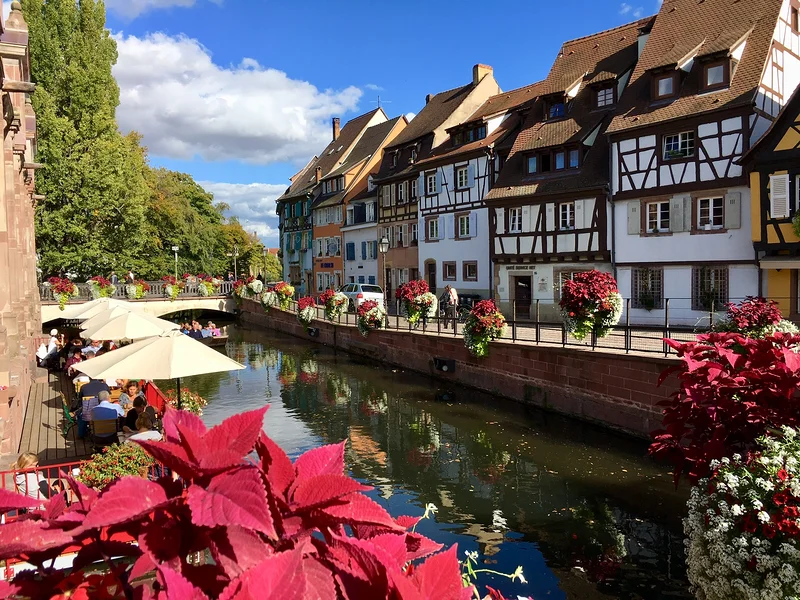
The Bächle, small open water channels running alongside the paving stones, once cooled the city and served as a water supply for firefighting. Local lore says that stepping into one means you will marry a local. Residents just laugh, but visitors always play along.
Two medieval gates still stand: the Schwabentor and the Martinstor. Around the first gate, the Schneckenvorstadt neighborhood and its narrow alleys offer a quiet contrast to the busier shopping streets.
Vauban, the eco-neighborhood
A former French military base, the Vauban neighborhood has transformed into a living laboratory for sustainable urban planning featuring energy-positive homes, restricted car traffic, and housing cooperatives. It makes for a unique visit that leans more sociological than picturesque.
The Solar-Siedlung and its solar-paneled Sonnenschiff building showcase the green transition the city is known for. It stands out as one of the few model neighborhoods that is genuinely pleasant to visit because it remains inhabited and full of life.
Black Forest and vineyards a tram ride away
The Schlossberg rises right above the city, offering shaded trails and a viewpoint that is well worth the climb. For a higher vantage point, the Schauinslandbahn cable car takes you to the summit of the Schauinsland at over 1,200 m, opening up sweeping ridge trails.
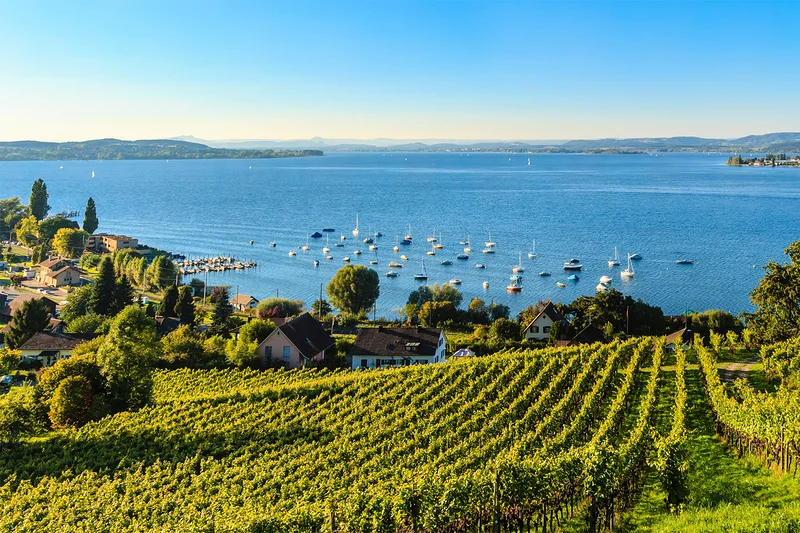
To the west, the Kaiserstuhl and Markgräflerland form one of Germany's warmest wine regions. You can visit local cellars by regional train or bicycle, stopping to taste local Pinots and Grauburgunder on site.
Friendly tip: Hike up the Münster tower early in the morning before the crowds arrive, then head back down to grab a sausage at the market before lunch.
Where to eat and drink in Freiburg im Breisgau?
The iconic street food here is the Lange Rote, a long grilled sausage served in a crusty roll right around the Münsterplatz. For hearty meals, expect Spätzle, Flammkuchen inherited from neighboring Alsace, and Black Forest ham.
For dessert, Schwarzwälder Kirschtorte (Black Forest cake) is the regional classic. To drink, local Baden wines like Spätburgunder and Gutedel are best enjoyed in a traditional Weinstube, while the Schlossberg terraces offer one of the best spots for a late-afternoon glass.
Where to stay in Freiburg im Breisgau and around?
Staying in the historic center lets you do everything on foot and remains the most convenient choice for a short trip. The area around the central station offers plenty of options with great tram connections. For a quieter stay, the more residential Wiehre neighborhood works well.
If you prefer nature, the villages of the nearby Black Forest offer traditional inns and guesthouses just a few kilometers outside the city.
How to get to Freiburg im Breisgau?
The city has no international airport. The closest option is EuroAirport Basel-Mulhouse-Freiburg, about 70 km away, connected to Freiburg by bus or train via Basel. Strasbourg and Karlsruhe serve as alternative gateways for certain flights.
By train, the station sits along the ICE and regional lines of the Basel-Karlsruhe corridor. US travelers flying into European hubs like Frankfurt or Zurich can easily connect by train down to Freiburg.
By car, the A5 autobahn runs right past the city. Parking in the center is limited, so aim for the perimeter parking garages.
How to get around Freiburg im Breisgau?
The center is entirely walkable, and the tram network handles the rest. The Deutschlandticket is valid on trams, buses, and regional trains, making it easy to head out into the vineyards or the Black Forest. Bikes are easy to rent and suit the flat geography of the Rhine plain perfectly.
A car is only truly useful if you plan to visit isolated villages deep in the Black Forest. Within the city itself, taxis and rideshares are available but rarely needed.
When to go?
From May to September, the light is ideal for hiking and enjoying the outdoor cafe terraces. Autumn brings the grape harvest and vibrant foliage along the forest trails. In December, the Christmas market sets up its wooden chalets around the Münster, though crowds get dense, especially on weekends.

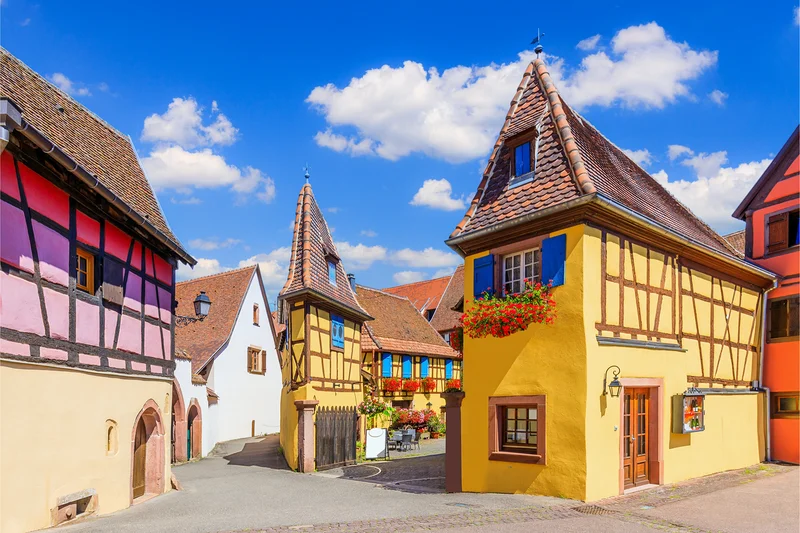
I really enjoyed my stay in the charming German city of Freiburg. I spent the weekend there, which is the perfect amount of time. The center is very pleasant with typical architecture and well preserved buildings, especially in the main square. In the summer, it is quite lively and busy. In the winter, the city is known for its beautiful Christmas market.