Visiting the Riviera Maya
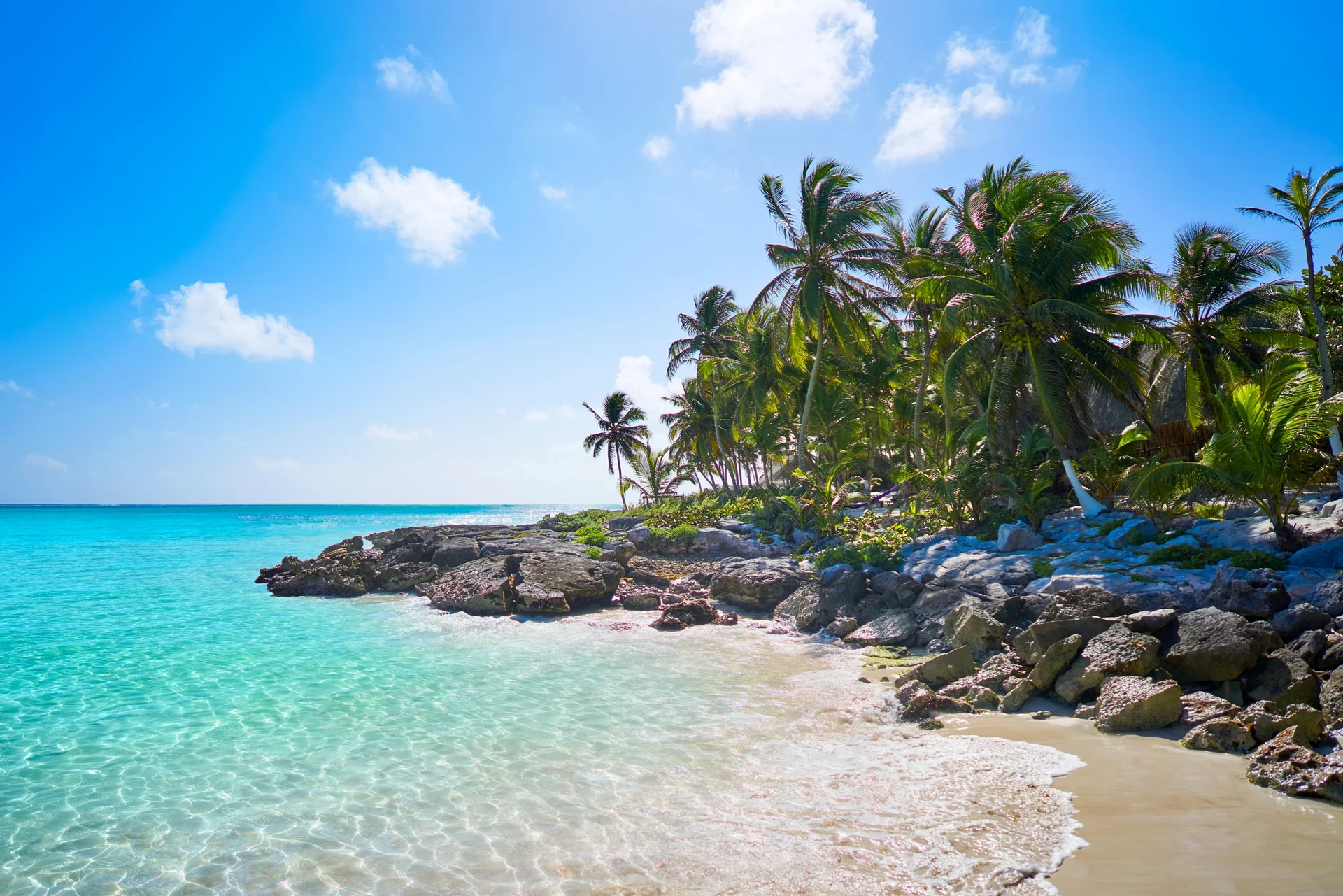
The Riviera Maya is a strip of coast, not a city. A hundred and thirty kilometres of limestone and sand between Puerto Morelos and Tulum, crossed by a single straight road, Highway 307.
Everything happens on either side of it. In front, a few hundred metres out, runs the Mesoamerican Barrier Reef, the second-largest in the world. It breaks the swell: that is why the sea here is flat and translucent. Behind, the low jungle hides cenotes five minutes from the beach.
The rest is recent. There was nothing here but a fishing village and plantations when the first hotel opened, in the 1980s. That explains the long line of resorts, and it is also why the base you choose decides your trip.
You'll love it if
- You want to swim with wild turtles without getting on a boat
- You're happy to switch between warm sea in the morning and a freshwater cenote in the afternoon
- You're coming with children: the sea is flat, shallow and 27 °C
Look elsewhere if
- You're looking for a wild coast: the 307 is built up along almost its entire length
- You're coming between May and October for the beach: sargassum seaweed turns up without warning
- You want Mayan cities: they are inland, not here
The must-sees
-

1 Akumal Bay +11 recs
Akumal means "place of the turtles" in Maya, and the name still holds: green turtles graze the seagrass twenty metres from the shore, all year round. Access to the swimming area is controlled, with life jacket and guide compulsory, and that is what saved the place.
-

2 Yal-Kú Lagoon +8 recs
A cove where fresh water from the underground rivers meets the sea. The mix blurs your view in bands and draws a density of fish that is rare elsewhere. No waves, no current, and you get in by a staircase: save it for your first time with mask and snorkel.
-
3 The Tulum ruins +16 recs
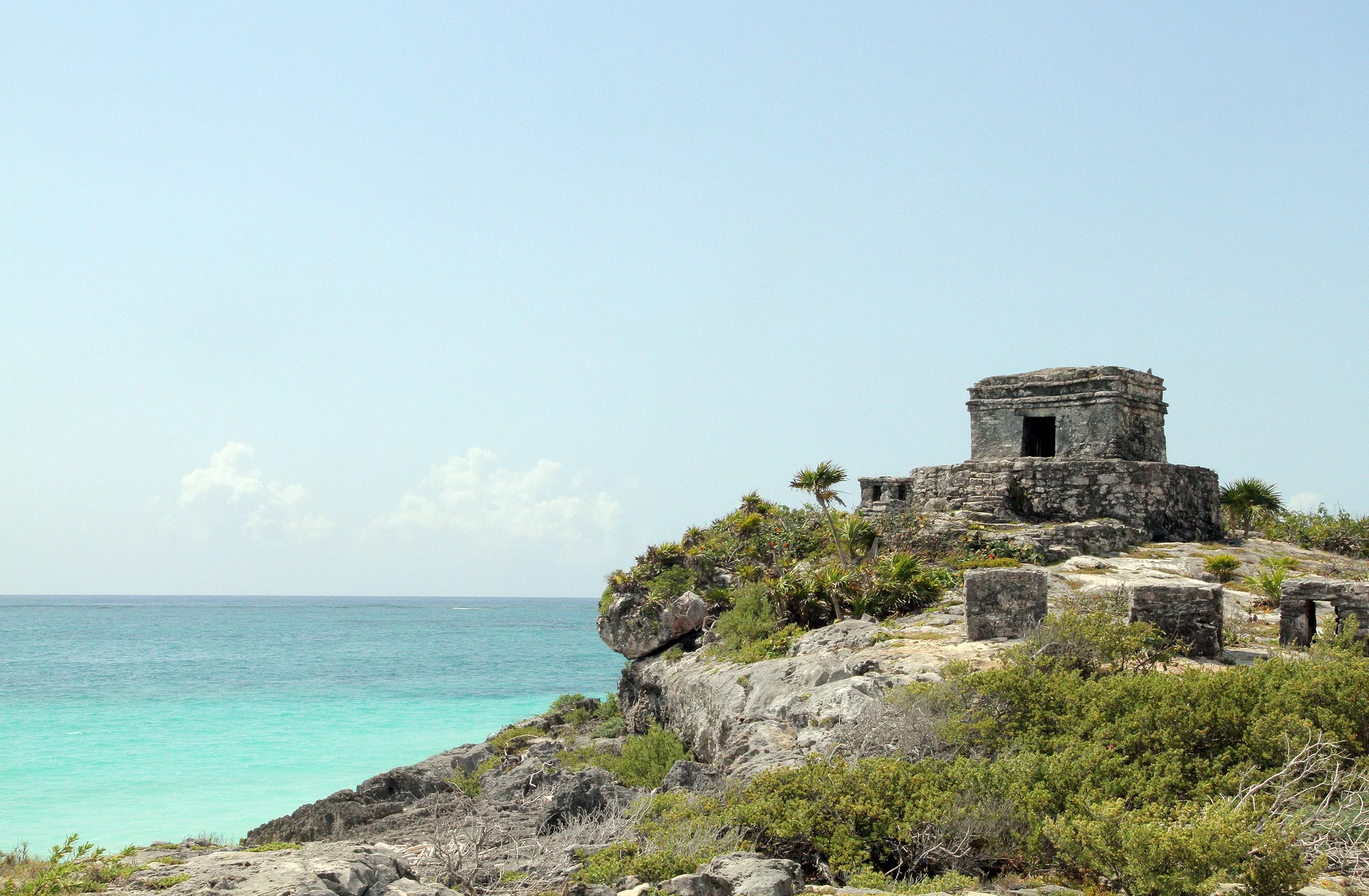
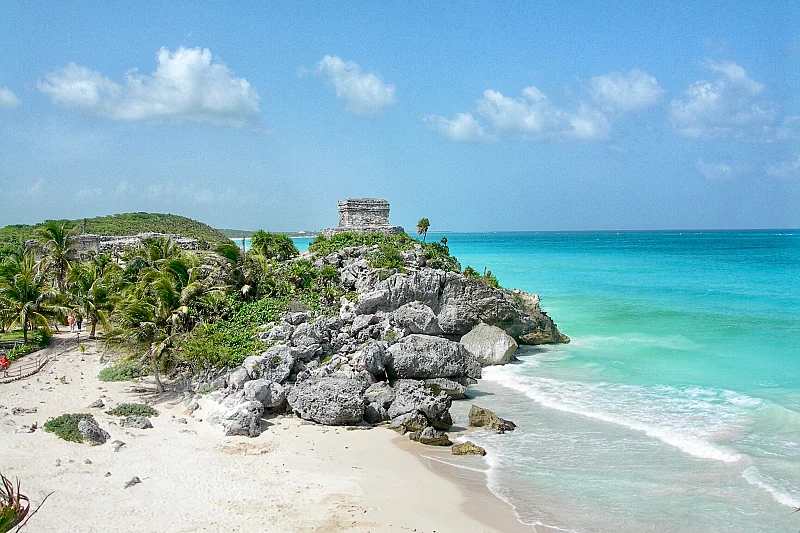
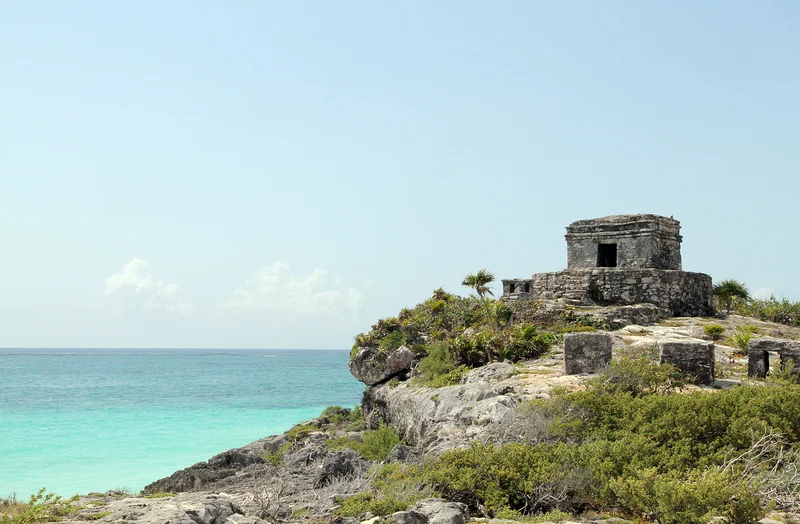
The only Mayan city built facing the sea, on a white cliff, and the only major archaeological site on the coast. You can walk round it in an hour: come at opening time, and you'll avoid both the heat and the coaches.
-
4 Xel-Há +17 recs
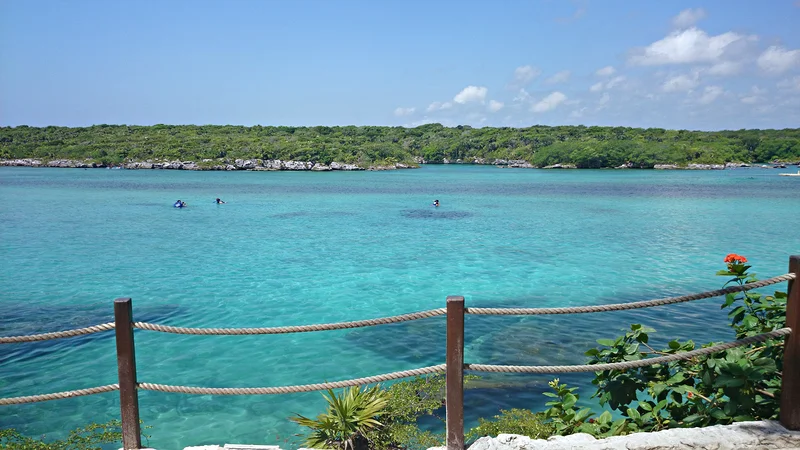
A natural inlet where the underground river flows into the sea, turned into a park. You drift down the current with mask and snorkel, carried by the flow, all the way to the mouth. Expensive, family-friendly, and very different from a beach.
-
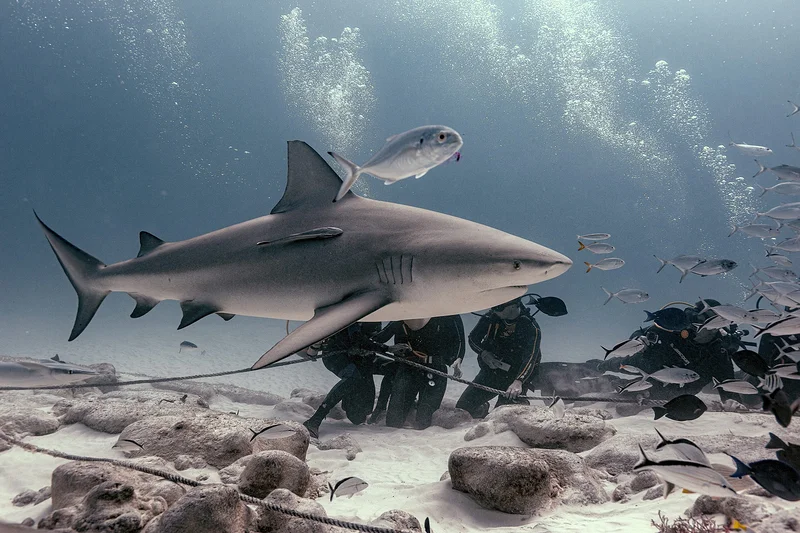
From November to March, pregnant females gather off Playa del Carmen, at a depth of around twenty metres. Guided dives, with no cage and no bait at the serious dive centres. In summer, it's whale sharks, further north.
The classic mistake
Don't turn up at Akumal Bay in the middle of the day. By eleven, the queue is long, the water has been churned up by two hundred pairs of fins and the turtles have moved offshore. At opening time, they are still grazing close to the shore and the water is clear. The same rule applies to the Tulum ruins and to the cenotes: get up early, the first hour is worth the whole day.
Our itineraries on the Riviera Maya
| Length | Itinerary | What you see |
|---|---|---|
| Weekend | Playa del Carmen | The beach, a cenote, Fifth Avenue |
| 1 week | Playa del Carmen › Akumal | Turtles, lagoon, reef |
| 10 days | The coast › Tulum › Cozumel | Ruins, jungle, wall diving |
The coast is best taken from north to south, and a single base is enough for three days. Everything is less than an hour from Playa del Carmen, which sits in the middle.
Beyond a week, split the stay in two. The north for easy sea and the parks, the south for cenotes, jungle and ruins. The Cozumel ferry leaves from the centre of Playa, so you can add an island without moving your luggage.
When to visit the Riviera Maya
| Rating | Season | Weather | Crowds and prices |
|---|---|---|---|
| December to March | 27 °C, dry, flat sea | High season, clean beaches, high prices | |
| April and May | 33 °C, muggy | Moderate, first sargassum | |
| June to October | Showers, hurricane season | Low, rock-bottom prices, frequent sargassum | |
| November | 29 °C, skies clearing | Quiet, turtle hatchings |
Our advice
Two calendars pull against each other, and you have to choose. Turtles nest on these beaches from May to October, and the hatchlings head for the sea from August to November, often after dark in front of the hotels. That is exactly the season of sargassum and rain. Aim for January to March for a clean beach. For the hatchings, accept a less pristine beach and come in October or November.
Getting to the Riviera Maya
-
By air The simplest
Cancún airport is the gateway, and one of the best connected in Latin America: direct flights arrive from much of the United States and Canada, and from several European cities, London among them. From elsewhere, you connect through a hub. The centre of Playa del Carmen is an hour's drive away. The newer Tulum airport is better placed for the south of the coast.
-
By bus From the airport
ADO coaches leave from the airport terminal every half hour for Playa del Carmen and Tulum, no booking needed. Take one rather than haggling over a taxi as you come out of baggage reclaim.
-
By car The most freedom
the 307 runs the whole length of the coast, as a four-lane road with no difficulties. It's only worth it for the cenotes and the small beaches in the south: along the main road, the colectivos make the same journey for next to nothing.
For a week on the coast, you don't need a car: the coach to and from the airport plus the colectivos cover everything. A car makes sense once you want to stop between two villages, where nothing else goes.
Getting around the Riviera Maya
The colectivos are the backbone of the coast. These white minibuses run down the 307 every ten minutes and stop on request. They link Playa del Carmen, Akumal and Tulum for a few pesos.
In Tulum, the bicycle replaces everything. Five flat kilometres separate the town from the beach road, and a taxi costs more than a whole day's bike hire.
Good to know
Taxis on this coast have no meters, and ride-hailing apps are poorly tolerated. Ask the fare and agree on it before you get in, otherwise it will be decided on arrival. Two kilometres within Tulum commonly cost what a colectivo charges for fifty: knowing that is enough to avoid being caught out.
What to eat on the Riviera Maya
- Tacos de pescado: fish fried in a light batter, raw cabbage, cream and lime. A recipe from Baja California, adopted here, and better at roadside shacks than on a terrace.
- Tikin xic: a whole fish marinated in achiote and bitter orange, cooked in a banana leaf over embers. The dish of the coast, to order for two and to wait half an hour for.
- Ceviche de camarón: prawns cured in lime juice with tomato, coriander and chilli, served with corn chips. Eat it at lunchtime, never in the evening, and judge it by how fresh the juice is.
- Cochinita pibil: the marinated, pit-cooked pork found all over the Yucatán, sold here in tacos from early morning. The best places close when the pot is empty.
- Agua de chaya: a drink of water, lime and chaya, the Mayan spinach that grows in every backyard. Green, almost sweet, and served everywhere.
- Marquesitas: a crisp wafer rolled into a cone, filled with grated cheese and jam, sold in the evening on the town squares. The region's street dessert.
- Michelada: beer, lime, sauces and salt on the rim of the glass. Served ice cold on the beach, and more thirst-quenching than a plain beer at 33 °C.
The rule that never fails here: the further you get from the sea, the less you pay. Two streets back from the beach, the same plate costs a third as much and the fish comes off the same boat.
Where to stay on the Riviera Maya
| Area | What it's for | Good to know |
|---|---|---|
| Puerto Morelos | Reef 500 metres out, quiet village | The closest to the airport, the least built up |
| Playa del Carmen | Central base, ferry, restaurants | Everything is on foot, and everything is an hour away by colectivo |
| Puerto Aventuras | Marina, families, sheltered sea | Gated development: practical, no village life |
| Akumal | Turtles and snorkelling as soon as you wake up | A handful of places to stay, no nightlife |
| Tulum, town | Cenotes, ruins, budget under control | Five kilometres from the beach, a bike is recommended |
| Tulum, beach road | Jungle hotels, right on the water | The most expensive stretch of the coast, generators included |
How much does a trip on the Riviera Maya cost?
| Trip | Length | Budget per person |
|---|---|---|
| Budget (hostel, colectivos, taco shacks) | 7 days | 350 to 500 € |
| Comfort (beach hotel, excursions, restaurants) | 7 days | 900 to 1,400 € |
| Luxury (boutique hotel, diving, driver) | 7 days | 2,500 to 3,500 € |
- The private parks: a day at Xcaret or Xel-Há costs as much as two nights in a hotel. A municipal cenote costs the price of a coffee.
- Colectivo versus taxi: on the same journey, the difference is one to ten, and the colectivo runs more often.
- The Quintana Roo state tax: pay it online before you leave, it is checked at the airport. Paid at the counter on arrival, it costs twice as much.
- Snorkelling from the beach: in Akumal as in Puerto Morelos, the reef can be reached from the shore. A boat trip only adds depth.
- Eat two streets back from the beach: it's your most effective everyday saving, and it costs nothing in comfort.
Traditions and way of life on the Riviera Maya
This coast is young. Forty years ago, Playa del Carmen was a fishermen's landing stage for boats to Cozumel; today it has one of the fastest urban growth rates in Mexico. Most of the people who work here come from elsewhere: Chiapas, Veracruz, Mexico City.
The Mayan villages, for their part, have stayed inland, a few kilometres from the road. That is where Yucatec Maya is spoken and where the patron saint festivals are held, without a single visitor.
Two habits that matter here. In a cenote, sunscreen and insect repellent are banned, even biodegradable ones, and you are asked to shower before going in: the water you cloud feeds the village wells.
On the reef, don't touch the coral, don't stand on it, and keep your distance from the turtles. The local rule is simple: two metres, never above the animal, which must be able to come up to breathe.