
Bull sharks and whale sharks: two marine encounters to experience from Playa del Carmen
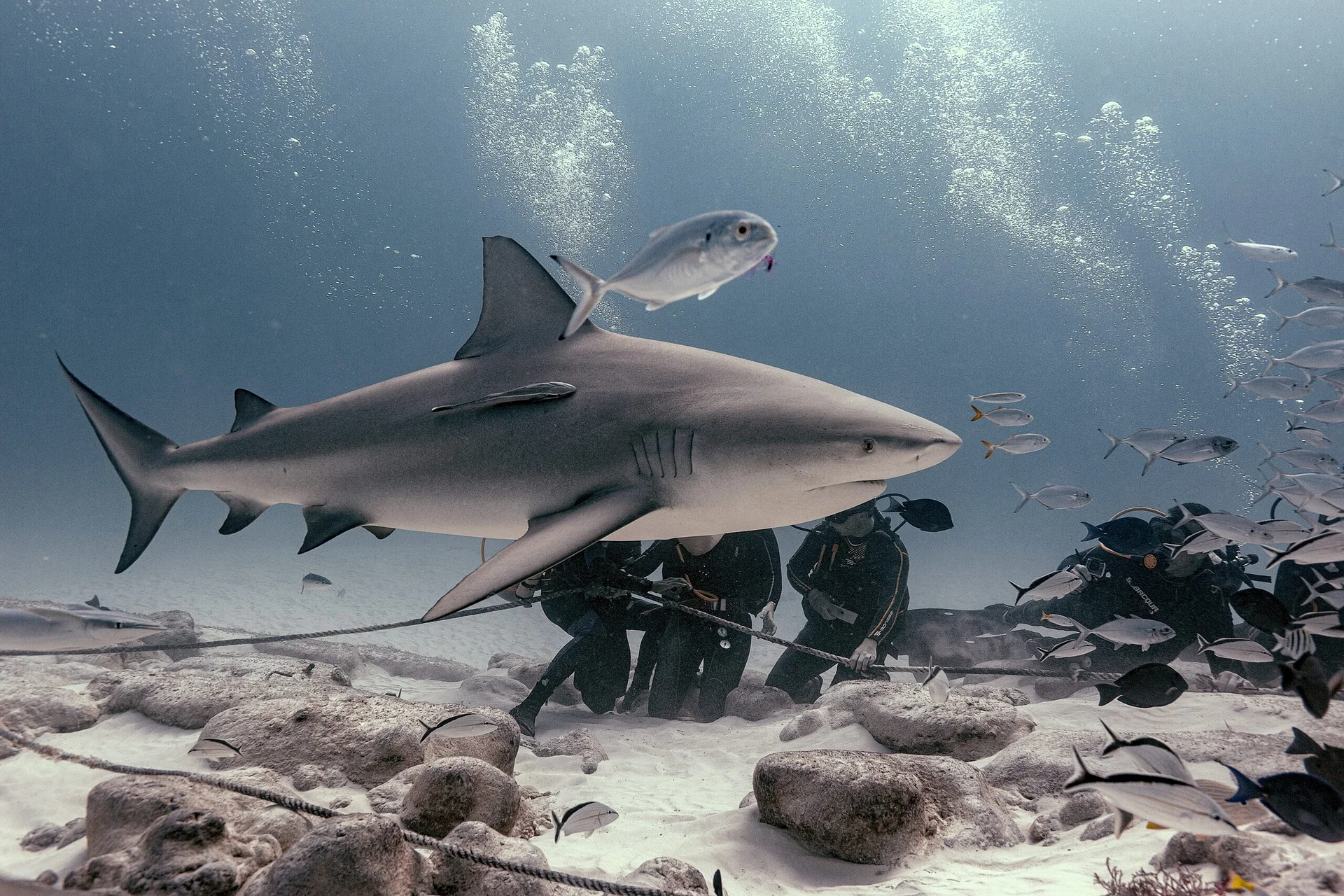
It is 7:00 AM, and the boat is pulling away from the shore of Playa del Carmen. Ten minutes later, the engine cuts. The guide signals to descend. At 24 meters below the surface, over a white sandy bottom, a massive silhouette glides through the blue. Your first bull shark.
This coast of Quintana Roo offers a rare privilege: two distinct seasons to approach two shark species in their natural environment at very close range.
Why Playa del Carmen attracts sharks
The warm waters of the Riviera Maya sit at the crossroads of two biological phenomena. Each winter, from November to March, pregnant female bull sharks head toward the shallow coastal waters of Playa to feed before giving birth. The freshwater flowing from nearby cenotes into the ocean plays a role in this migration, as bull sharks are one of the few shark species capable of tolerating freshwater.
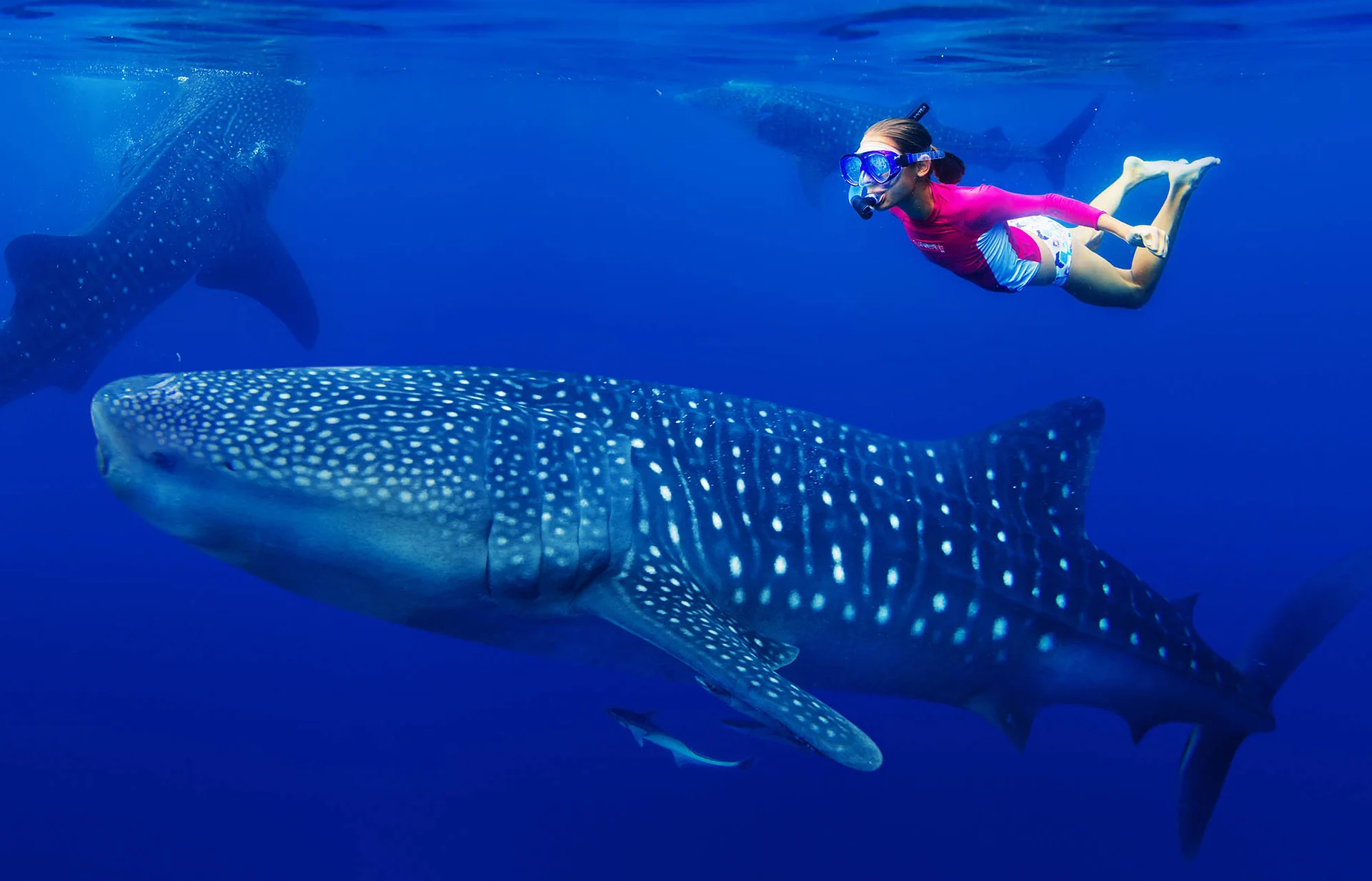
When summer arrives, from June to September, the spectacle shifts in scale. The largest gathering of whale sharks in the world forms off the coast of Isla Mujeres and Isla Contoy, about 45 minutes by boat from the marina in Puerto Juárez. These giant filter feeders, which can reach 10 to 12 meters in length, come to gorge themselves on the plankton and tuna eggs that saturate the surface.
Diving with bull sharks
Procedures and requirements
This is not a casual dive. The site, known as Bull Shark Point or Jardines Deep, is located on a sandy plateau between 20 and 25 meters deep, just minutes from the shore. Divers descend along a line, kneel in a row on the sand, and observe. The sharks arrive, depart, and circle the group for about 30 minutes. In the heart of the season, between December and February, it is common to count 8 to 15 at once. Stingrays often accompany the show.
Most dive centers require a PADI Advanced Open Water certification. Some accept Open Water divers who can prove at least 25 logged dives and depth experience. Another strict rule: all equipment must be dark in color. Neon yellow fins, pink wetsuits, or bright red regulators are forbidden, as vivid colors can disturb the animals. Camera flashes are also prohibited.
Ethics and safety
The subject is divisive. Some operators practice shark feeding, while others refuse to do so and prioritize passive observation. Centers like Phantom Divers, a pioneer in the activity since 1997, or Acuaticaribe do not feed the sharks.
No incidents have ever been reported at this site. In fact, local shark protection associations have convinced area fishermen to stop their activity by sharing a portion of the revenue from dive tourism.
Swimming with whale sharks
The world's largest fish, via mask and snorkel
In Mexico, regulations strictly forbid scuba diving with whale sharks. The approach is made exclusively by snorkeling, with a life jacket required. Swimmers enter the water in pairs, accompanied by a guide, and move along the surface next to the animal. The required minimum distance is about two meters. Touching the whale shark is strictly forbidden. If fewer than five individuals are spotted, only observation from the boat is permitted.
Excursions depart early, with hotel pickup starting at 5:30 AM to 6:30 AM. The minibus ride to the marina at Puerto Juárez or Punta Sam takes about 1 hour and 15 minutes. After a light breakfast on-site, the boat navigates 45 minutes to the gathering zone. The day generally ends with snorkeling on a coral reef near Isla Mujeres and a ceviche lunch on the beach at Playa Norte. Expect to be back at your hotel around 3:00 PM.
Friendly tip: for whale sharks, book in July or August, when concentrations are at their peak. At the very beginning of the season (late May, early June), sightings are still possible, but the animals are fewer and more dispersed. Take motion sickness medication at least an hour before departure, as the swell in the open sea can be strong.
Who is this for, and how to choose
Snorkeling with whale sharks is accessible to everyone, including children from age 6. No certification is required.
Diving with bull sharks, however, is intended for experienced divers who are comfortable at depth and capable of perfect buoyancy control.
The two experiences are complementary and cover opposite seasons, which allows winter and summer visitors alike to leave with an extraordinary memory. A few tips:
- Prioritize operators with small groups: 4 divers maximum per guide for bull sharks, 10 people per boat for whale sharks.
- Verify the center's ethical policy: feeding versus passive observation, group size, and respect for distances.
- Bring cash for marine park fees, which are not included in most tours.
Opening hours
Whale sharks: Daily departures during the season (June to September), with hotel pickup between 5:30 AM and 6:30 AM and return around 3:00 PM.
*Information subject to change