
Tulum National Park: Where Maya Civilization Meets the Caribbean Sea
Ancient ruins stand perched on a white limestone cliff, overlooking the turquoise waters of the Caribbean Sea. Tulum National Park combines archaeological heritage with natural splendor with rare elegance: on one side, Maya temples bear witness to a fascinating civilization, while on the other, the tropical jungle reaches down to white sand beaches where Caribbean waves break.
Why is Tulum National Park unique?
Established in 1981, this relatively compact park, measuring 664 hectares, protects far more than archaeological remains. It forms a complete ecosystem bringing together tropical forests, mangroves, coastal dune vegetation, pristine beaches, and crystal clear cenotes. Biodiversity thrives here despite the modest surface area: howler monkeys, ocelots, ubiquitous green iguanas, sea turtles, and a rich array of birdlife make up a living tableau.
Tulum stands apart from all other Maya sites because of its spectacular seaside location. This former fortified Maya city, which reached its peak between the thirteenth and sixteenth centuries, served as both a strategic trading port and a religious center. The Spaniards who spotted it in 1518 compared it to Seville because it struck them as so imposing and prosperous.
Exploring the Maya Ruins Facing the Ocean
El Castillo and the Sacred Buildings
El Castillo, the main building perched atop the cliff, immediately commands attention. This pyramid likely functioned as a lighthouse to guide Maya navigators through the reefs. Its flawless proportions stand out against the azure sky, creating one of the most iconic images in Mexico.
The Temple of the Diving God, adorned with remarkably well preserved frescoes, highlights the importance of the cult dedicated to this mysterious figure depicted upside down. The Temple of the Frescoes, featuring decorated niches and carved masks, reveals the artistic mastery of the Maya builders. Every stone tells a story from centuries past.
The Walls and Defensive Architecture
Tulum actually derives its name from the Maya word meaning wall or barrier. The thick fortifications surrounding the city demonstrate its strategic importance. These stone walls, several meters high, provided protection against invaders while marking out the sacred space of religious and political power.
Friendly tip: Arrive right at opening time at 8:00 AM to enjoy the site in soft light and avoid the heavy crowds that pour in starting at 10:00 AM. Morning light brings out the nuances of the limestone rocks and allows for spectacular photos without tourists in the frame. Additionally, the heat is much more manageable early in the morning, as the site offers very little shade.
The Natural Treasures of the Park
Idyllic Beaches
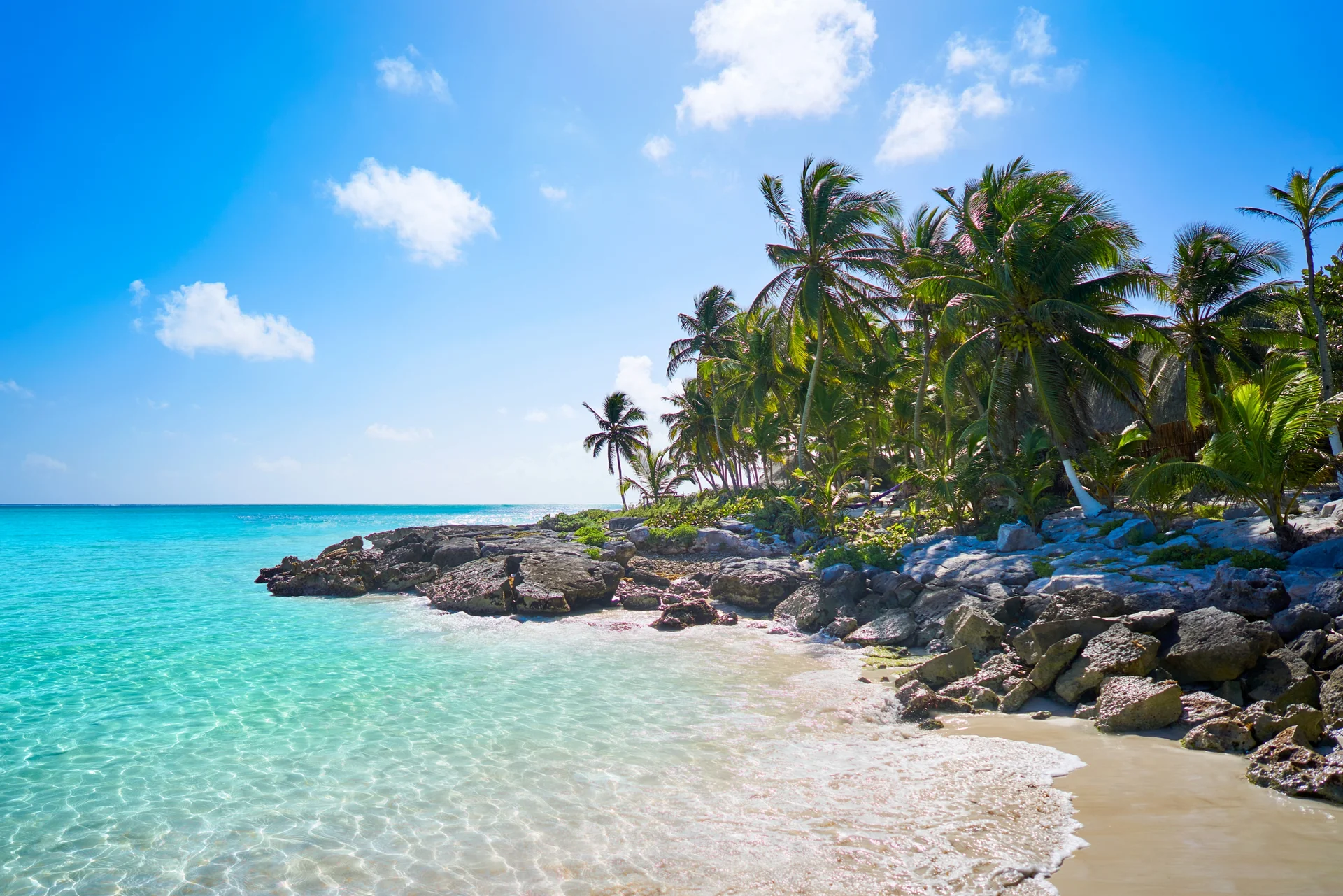
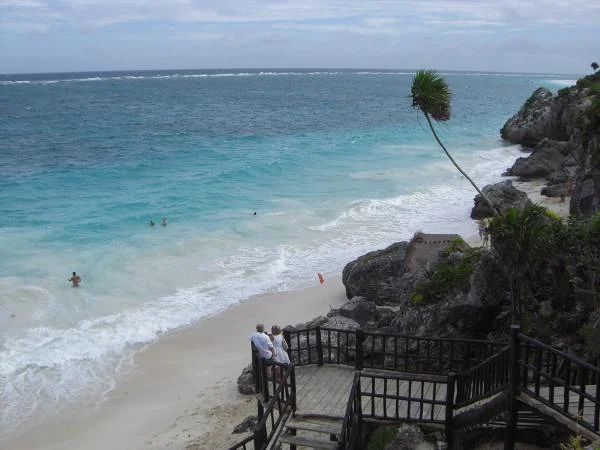
Directly below the ruins, several beaches of powdery white sand border the park. Access is via wooden staircases winding along the cliffside. These sheltered coves offer crystal clear water ideal for swimming and snorkeling. The coral reef located a few meters from the shore shelters multicolored tropical fish, rays, and sometimes even sea turtles.
The water shifts from turquoise to deep blue depending on the depth, creating a striking natural gradient. The waves, generally moderate, invite relaxation while providing a pleasant cool down under the tropical sun.
Cenotes and Karstic Formations
The park hides several cenotes, those natural sinkholes considered sacred by the Mayas who viewed them as portals to the underworld. These unique geological formations, filled with crystal clear fresh water, allow for swimming in an enchanting setting surrounded by lush vegetation.
The coastal mangroves play a crucial ecological role by serving as a nursery for numerous marine species. Marked trails allow visitors to observe this fragile ecosystem where fresh water meets salt water, creating a unique habitat.
Activities and Nature Immersion
The park offers multiple ways to experience the area:
- Jungle hiking trails: several marked paths cross the tropical forest, ideal for birdwatching and wildlife observation
- Snorkeling and diving: the coral reef offers exceptional marine biodiversity to explore with a mask and snorkel
- Wildlife viewing: ubiquitous green iguanas, colorful tropical birds, and, with some luck, howler monkeys in the canopy
- Biking: bike paths allow visitors to explore the park in an eco-friendly way, particularly toward the adjacent new Jaguar Park
- Landscape photography: panoramic viewpoints offer unique photo opportunities blending archaeology and nature
Between May and November, the park beaches welcome nesting sea turtles. Watching these ancient creatures deposit their eggs in the sand provides a moving natural spectacle, reflecting the preserved ecological richness of the site.
Opening hours
| Monday | 08:00-17:00 |
|---|---|
| Tuesday | 08:00-17:00 |
| Wednesday | 08:00-17:00 |
| Thursday | 08:00-17:00 |
| Friday | 08:00-17:00 |
| Saturday | 08:00-17:00 |
| Sunday | 08:00-17:00 |
Last entry is at 4:30 PM.
*Information subject to change