
Hello everyone!
Last October, I had the chance to spend three days in Cairo. First off, I have to tell you that October is a pretty pleasant time to visit; afternoons are still around 86°F (30°C), far from the intense heat waves that hit the country in mid-summer. It’s the perfect weather for sightseeing and enjoying the city.
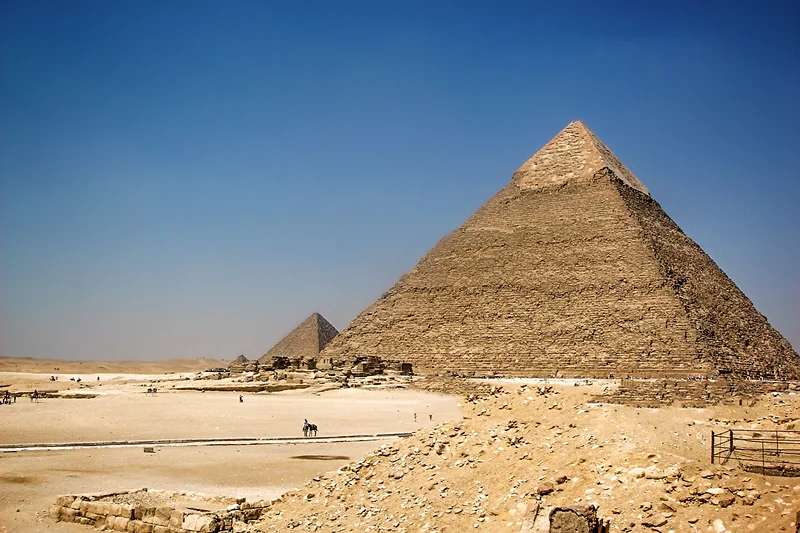
Of course, you’re likely heading to the Egyptian capital primarily to see the Pyramids of Giza, which I completely endorse. Just so you know, I’ve written another article dedicated specifically to my visit to the Pyramids of Giza. Below, you’ll find my recommendations for visiting the must-see spots in downtown Cairo over 3 days.
Must-see downtown spots for a 3-day trip
The Egyptian Museum in Cairo

First, I’d like to talk about the Egyptian Museum in Cairo, located near Tahrir Square. You can’t miss it; its red/orange facade really stands out in the landscape. You should know that there are restrictions on photography: it’s free and allowed with a phone. For a professional camera, I believe you need to request special permission in advance and pay an extra fee. It’s a real shame! There is so much to discover about the ancient Egypt of the pharaohs that you can’t possibly remember it all. Fans of Ancient Egypt could easily spend the whole day there, or even longer.
However, be aware that you pay for admission (about €13), but you’ll have to pay a second time (nearly €6) to see the Royal Mummies Hall, which is kept in a restricted area. I had a rather unsettling feeling of watching over the dead when I went there…

For the rest, you can see the treasures and sarcophagi of the famous Tutankhamun. Impressive!! The collection of statues is also breathtaking. Note that some of these treasures may be temporarily exhibited in other museums around the world, but not Tutankhamun’s mummy, which never leaves the premises.
The Saladin Citadel

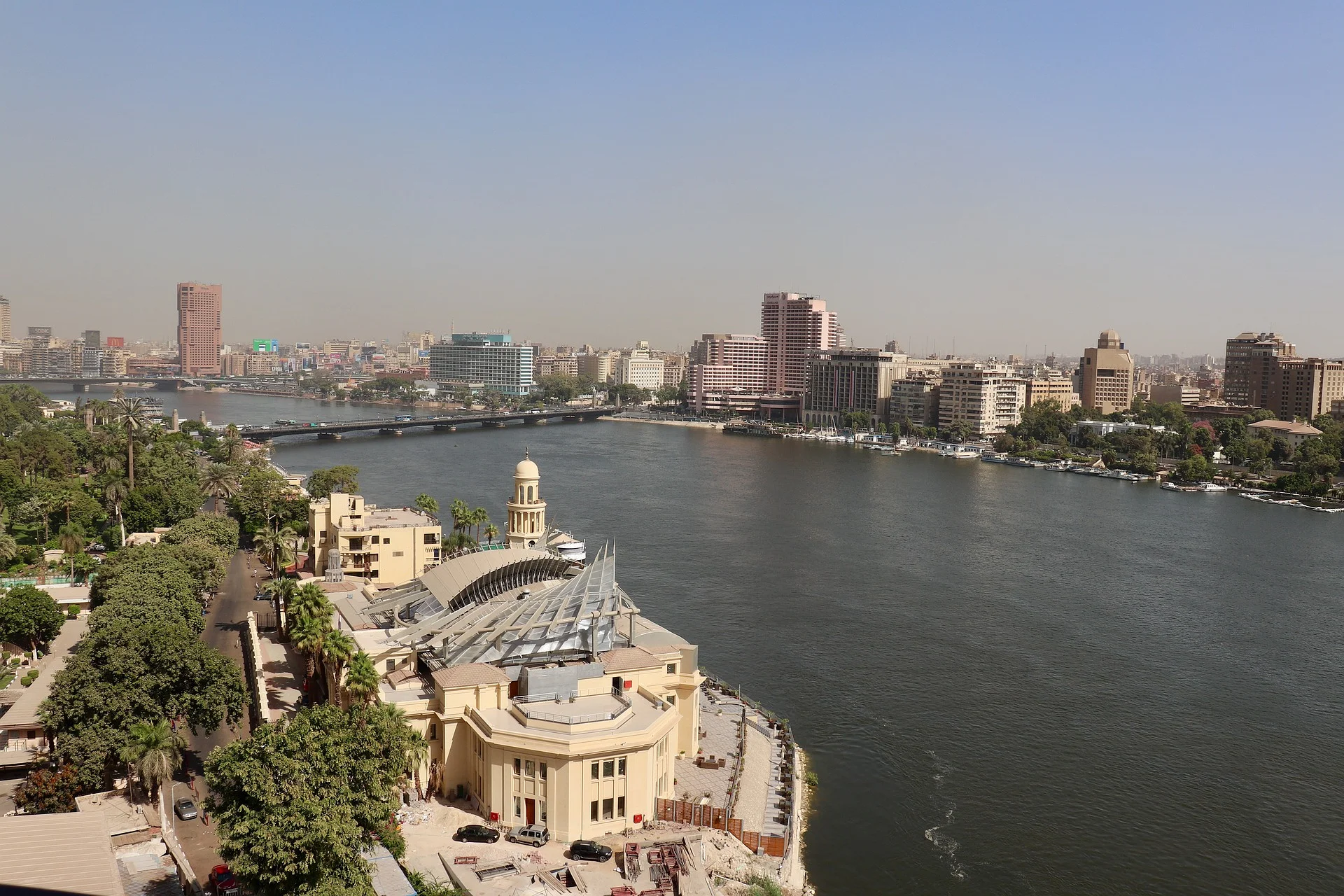
Also worth seeing is the Saladin Citadel, located east of the city center, perched on hills that allow it to overlook the entire area. You can even catch panoramic views of Cairo from there, though the horizon often fades into a kind of haze (dust? pollution?).

Founded in the 12th century by Sultan Saladin, the citadel has been continuously occupied and transformed by the generations of leaders who followed. It houses the stunning Mosque of Muhammad Ali, recognizable by its domes and slender minarets. I invite you to visit it, as part of it is open to non-practicing visitors. You will also find the remains of a royal palace within the Citadel walls.
The Sakakini Palace

A curiosity I recommend: the Sakakini Palace, not far from the central part of the 6th of October Bridge… Ask your taxi driver to take you by… It’s surprising…
This wild and slightly weathered palace, built by Sakakini Pasha in 1897, is an explosion of styles, like a mix of a baroque castle and a rococo palace right in the heart of the city. Upon arrival, I was surprised and captivated by the facade, full of incredible details. Every balcony, every window tells the story of an extravagant era. Once inside, you feel almost intrusive, a bit like being on a movie set where everything seems frozen in time. The state of disrepair even adds a special charm. I pictured myself in the Cairo of yesteryear, when the local nobility didn't hesitate to draw inspiration from European styles. Today, it houses the Museum of the History of Medicine.
The Coptic Quarter

Further south, along the Nile, don't miss the Coptic Quarter, home to Egypt's Christian community, also known as Old Cairo, and its superb churches. As soon as you set foot there, the atmosphere changes: the noise of the city dies down, and the narrow, cobblestone alleys invite you to slow down.
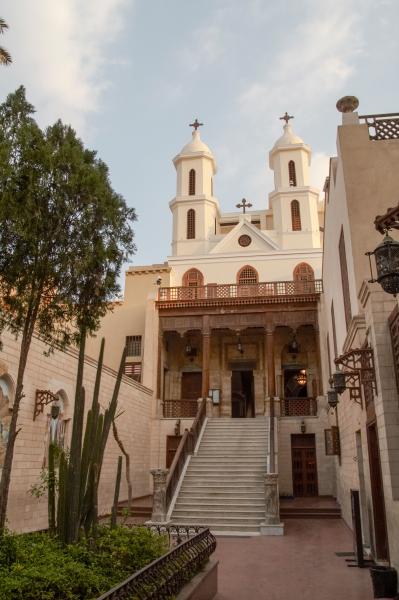
You’ll find churches dating back to the Roman era and buildings that tell over 1,000 years of faith and tradition. The famous Hanging Church, which seems to float above a passageway, with its ancient icons and colorful stained glass, is a must-see. And then there’s the Church of Saints Sergius and Bacchus, renowned for having sheltered Jesus and Mary during their flight to Egypt. This neighborhood offers a side of Cairo rarely discussed. It’s a place of contrast, far from the tumult of the bazaars and avenues.
Just make sure the area is calm and prefer daytime visits, as tensions between Copts and Muslims are still quite high.
Other must-sees

Consider taking a stroll through a souk! It’s an experience you have to live, and you might find some typical souvenirs to take home. Cairo’s megalopolis obviously has several. The most famous and most visited is the great Khan el-Khalili Souk, a joyful maze of stalls rich in colors, scents, and sounds of all kinds. It is located near the Al-Azhar Mosque, a bit north of the Citadel.
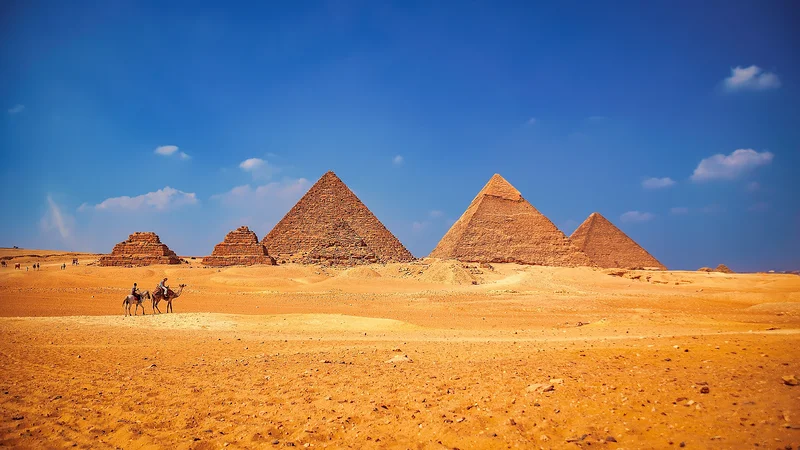
Finally, as I mentioned in the introduction, a trip to Cairo wouldn't be complete without a quick trip to the neighboring city of Giza and its famous Pyramids (the Great Pyramid of Khufu is one of the 7 wonders of the world!). But I’ll tell you all about that in a second article.
Practical tips and info for your stay
Where to sleep and stay in Cairo
For accommodations, I must admit I was lucky enough to stay very close to Gezira Island in a very luxurious hotel: the Four Seasons. There are many high-class hotels, but it’s a big budget to plan for, unless you take advantage of last-minute offers, which happen often right now because Egypt is sorely lacking tourists… Other hotels of this type are also located on the banks of the Nile, except for the Intercontinental, which is a bit further away, near the large CityStars mall.
I think you can find cheaper options in the rest of the city. Unfortunately, in these times, I’m of the opinion that it's better to stick to safe and "secure" bets. To do your own research, here is the link to the comparison tool.
The city's neighborhoods

I had held onto a dreamlike vision of Cairo from the 1930s-50s. We are far from that today. A gigantic city of over 17 million inhabitants, the city never stops bustling. Life there never stops, even at night! If you want, you can go to the hairdresser at 2 a.m. It must be said that, like many other Arab countries, the lifestyle is different from ours, and activities take place during the cooler hours.
The city is broken down into several neighborhoods which, whatever one might say, all or almost all (except for the wealthier areas near the Citadel or along the Nile near Gezira Island) present the same image of great poverty. Because, yes, the city is poor and dirty. We are very far from the images of the colonial period, even if some houses in the English Quarter allow you to imagine what Cairo was like back then. Careful, I’m not nostalgic for that period! I only observe that the city has continued to develop, but in total anarchy. It really had to face a major influx of new inhabitants, even if Cairo is not Egypt: only 1 in 10 Egyptians is a Cairene.
A poor and chaotic environment

Aside from a few affluent zones, there are apartment buildings packed against each other whose windows will never see the light, slums in the heart of Cairo, cemeteries squatted by families, etc… Children are obviously affected by poverty, and they are the ones you will often see coming to jump on you to beg or hanging around tourist bus stops. Unfortunately, it’s hard to give to everyone…
Road traffic is also incredible: overpasses are legion, and Egyptian driving is sporty! The rare traffic lights are not respected, and it’s the law of the strongest (and the loudest horn) that prevails. According to some tourists I met there, it’s even worse than in India, for those who know and can compare…


Comments (0)
No comments yet. Be the first!