
The Mystery of the Great Pyramid, Part 2: Giza

Hello everyone!
Welcome to part two, which follows my first travelogue covering the must-see spots in downtown Cairo. As promised, this second installment is dedicated to the Giza Pyramids (comic book fans will surely catch the nod to E.P. Jacobs' heroes here :-)).
Getting to Giza from Cairo
 You don't need to travel hundreds of miles into the deep desert to see the only wonders of the ancient world still standing today!
You just need to drive a little way west from Cairo, past the Nile, because Giza is practically right next to this ever-expanding city. Depending on which way you look, you'll see either the desert or the city in the background... the choice is yours.
There are several routes you can take. You might end up on the road that takes you through some very poor neighborhoods, let’s be honest, slums. As I mentioned in my first post, it’s not the most comfortable environment. But you’ll soon catch sight of the pyramids, their silhouettes cutting through the sun despite the hazy, polluted air. Once you arrive at the site, which is patrolled by the tourist police, you’ll have to leave your vehicle behind and continue on foot, or by horse or camel.
You will very quickly be approached by the owners of these animals or by vendors selling t-shirts, postcards, and other unofficial souvenirs. Just a heads-up: they’ll likely shove t-shirts into your hands, and if you instinctively take them, you’ll be expected to pay for them. So, don't feel bad, just let them drop to the ground if you aren't interested.
The Ancient Necropolis of Giza

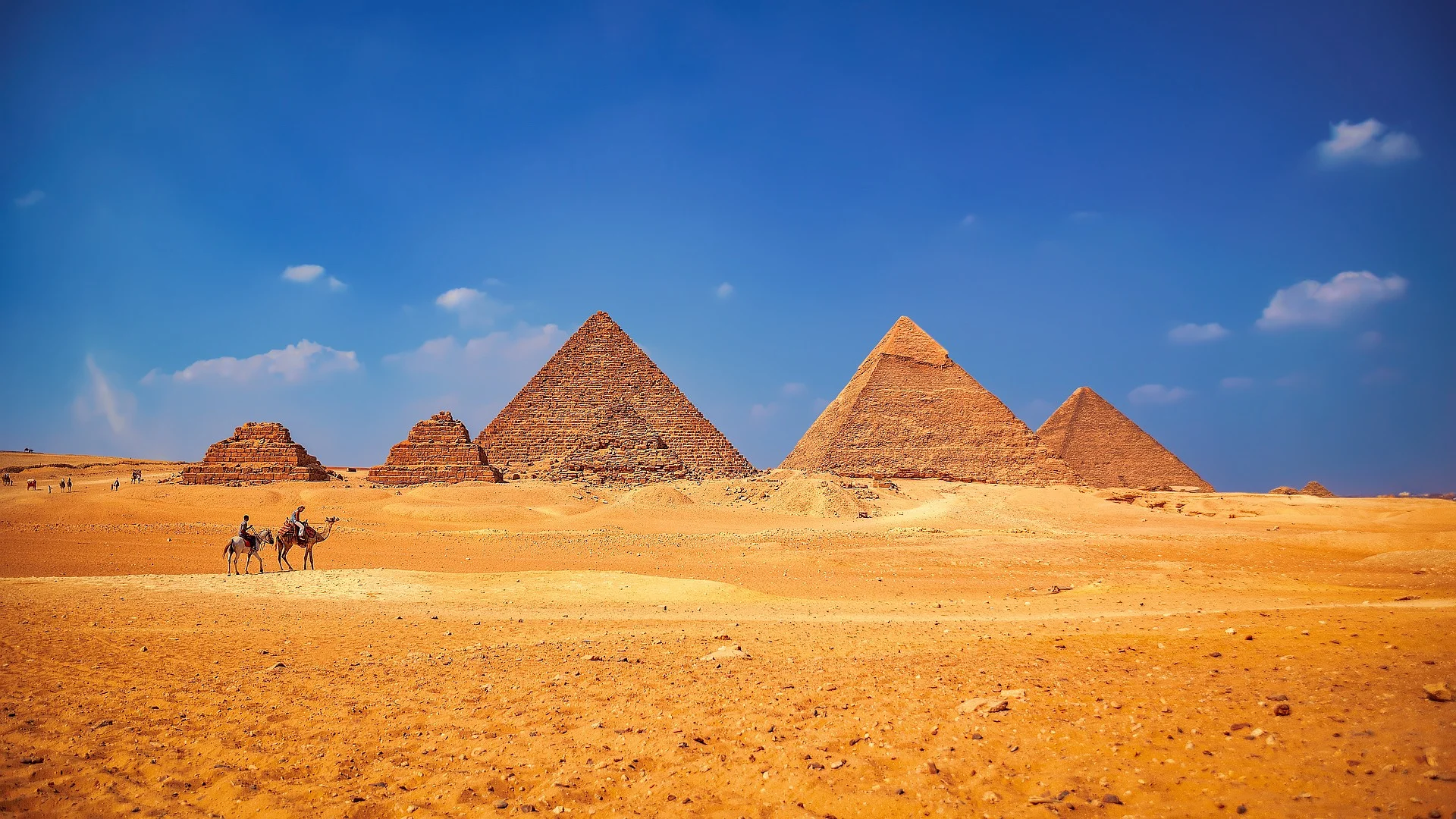
Anyway, back to the pyramids: the Giza Plateau is a necropolis that originally included twelve pyramids where pharaohs were laid to rest after their death.
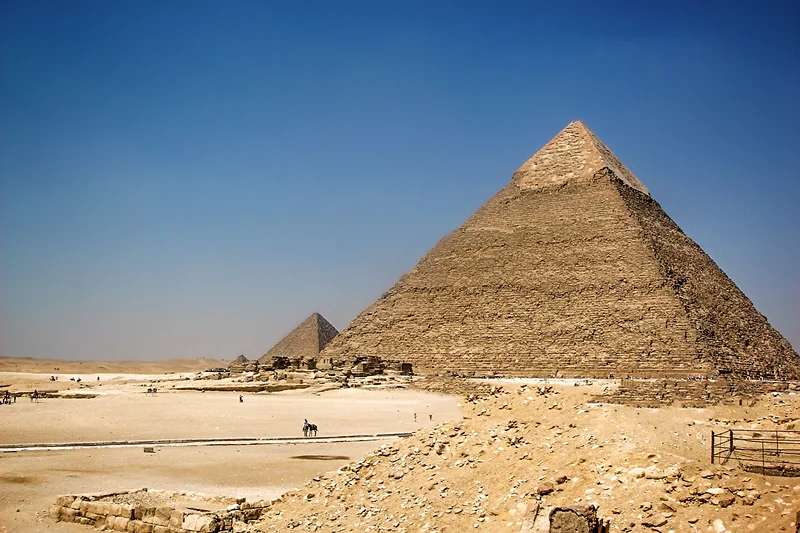
Today, visitors can only see three: Khufu (the Great Pyramid), Khafre, and Menkaure. The Pyramid of Khafre is built on slightly higher ground than the Great Pyramid of Khufu, making it appear taller. But that’s not the case: at 139m, Khufu’s pyramid stands 3m taller than Khafre’s 136m. At 61m, the Pyramid of Menkaure looks like a dwarf next to the two giants.
Along with some of the pyramids, you’ll also see smaller ones and mastabas, which are tombs designed to house the remains of ancient nobility.
You’ll definitely want to make a detour to what’s known as the panorama, the spot where you can snap some incredible photos of all three pyramids. Ask your guide if they don't suggest it themselves, sometimes they try to rush through the visit to save time.
The Pyramid of Khufu
 To put things in perspective, the Khufu pyramid was built around 2560 BC and is still standing today, even though the outer casing stones have vanished, leaving the facade exposed and giving it that stepped appearance. However, to get an idea of what the pyramids looked like covered in their limestone casing, just look at the Pyramid of Khafre, which still has some of it left near the top.
When you stand in front of the Pyramid of Khufu, remember that this massive monument remained the largest structure built by humanity for over 4,000 years!
If you want to go inside, only the pyramids of Khufu and Menkaure are open to the public. The most interesting one to visit is, of course, Khufu’s.
To enter this gigantic mausoleum, you’ll pass through a hole that isn't the original entrance, but one cut by Caliph Al-Ma'mun. Just so you know, once you’re inside the pyramid, photos are strictly forbidden.
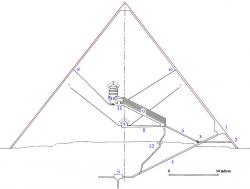
The tour begins with a slight descent, followed by a long, steep climb at a 26% incline where you’ll have to walk hunched over. If you’re claustrophobic, skip this part!
The climb is quite long and exhausting. Once you reach the top of the slope, there are a few dozen more meters to go, but you can stand upright. Looking up, you can see the vault of the pyramid. It’s all very impressive, as you can clearly see the massive granite blocks supporting the weight of the stone layers above.
After passing through the antechamber, you arrive in the King's Chamber. There’s nothing left inside but a very simple stone sarcophagus. You don't visit for the chamber itself, but to experience the interior of the structure. You truly feel small and in awe of the talent of the ancient architects and workers.
Beyond the Three Great Pyramids
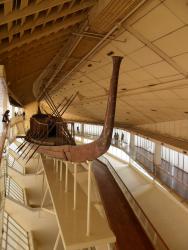 When you come back out, make sure to visit the Solar Boat Museum. It houses a stunning wooden boat that helped transport the spirits of the dead to the afterlife, in addition to having carried the remains to the site (the Nile is very close by).
Of course, you can't leave without heading back up the ramp and visiting the Sphinx, the guardian of the necropolis. Even though wind erosion has claimed the statue's nose, you’ll still be left speechless by the architectural genius of the ancient Egyptians!
Finally, beyond these main sites, you can explore smaller ritual temples scattered around the pyramids. For those who can, I highly recommend it, it’s simply extraordinary!


Comments (0)
No comments yet. Be the first!