
Hello everyone.
Today I want to talk to you about a city I discovered during a short trip a few days ago: Bruges, Belgium. This stunning city is located in the Flemish region, in West Flanders (that’s the province).
I can't remember which post I read that mentioned a city visited by one of our fellow travelers (Amsterdam?) being nicknamed “the Venice of the North”… But wait, there are two of them! Because Bruges also carries this nickname, largely due to the many canals that wind through the city and its port. Plus, traces of the city's rich past are everywhere, and the remarkably preserved medieval architecture truly transports you back in time. And, to top it all off, the city of Bruges is also famous for its chocolates and beers! Finally, and because there’s more to life than just physical pleasures, Bruges is renowned for its Flemish School painters.

Here is a quick tour of the must-sees for your stay in Bruges.
Discovering the city
The old medieval city
So, where should you start, you ask? Well, why not begin with a tour of the city that will show you all the remnants of its military and commercial past, particularly its 15th-century golden age. For example, while wandering around, you’ll likely pass by the powder towers or defensive towers that once guarded the city gates. Several are still in excellent condition, notably the Kruispoort and the Gentpoort. There are four medieval gates in total to discover, along with some ramparts, remnants of the defensive wall that surrounded and protected the historic city in the 12th century.

The canals
Of course, don’t miss the Lake of Love, or Minnewater: it’s one of the old port basins, closed off from the inside by the lock-keeper's house. You can peacefully admire the swans (the city's emblem) and the ducks splashing about. Legend has it that a lover buried his sweetheart here and, to protect her grave, flooded the area to create the lake. Extend your walk by checking out the small park nearby; it’s often overlooked by tourists in a hurry, but it’s well worth a look.
On the edge of the lake lies the Princely Beguinage Ten Wijngaerde, a UNESCO World Heritage site. The Beguines were autonomous communities of religious women. The Beguine houses are now inhabited by a congregation of Benedictine nuns.
To continue your stroll, hop on a boat to see the city from the canals: it’s truly magnificent, and it would be a shame to leave without doing it.

The monuments
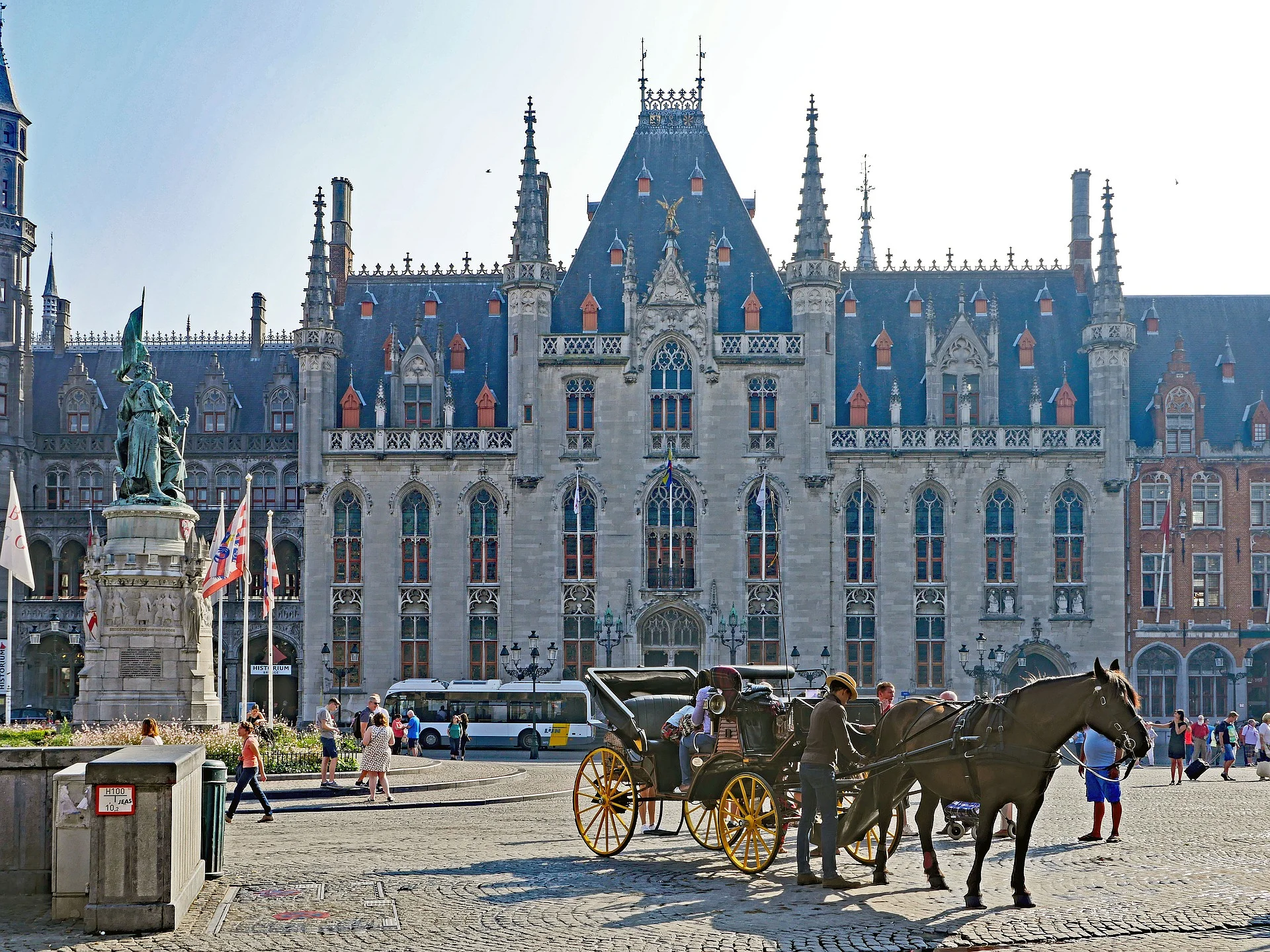
As for the rest, the monuments are magnificent: for instance, when visiting the city center, you’ll see the superb City Hall overlooking Burg Square. You’ll also find the Liberty of Bruges Palace and its museum, as well as the Basilica of the Holy Blood. A small museum is located right next to the basilica. The basilica gets its name from one of the Holy Relics brought back from the Holy Land by one of the Counts of Flanders: the blood of Christ.
Naturally, you can’t miss the great Belfry. Standing 83 meters (272 feet) tall, you’ll need to climb the 366 steps to take in the view of the entire city (it’s worth the effort). The belfry is also a museum. Way up at the top, 47 bells set the rhythm for the locals' daily lives. Beneath the belfry, the old market halls were a place for commerce and gatherings, especially for “official” announcements.
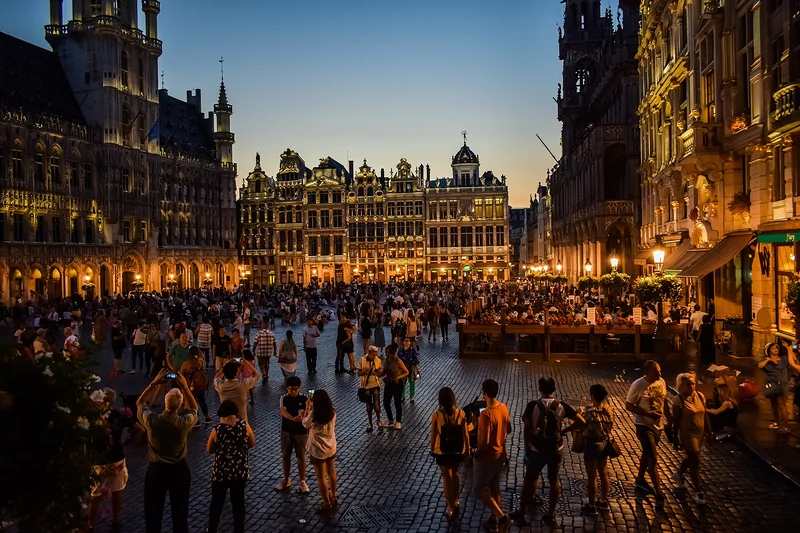
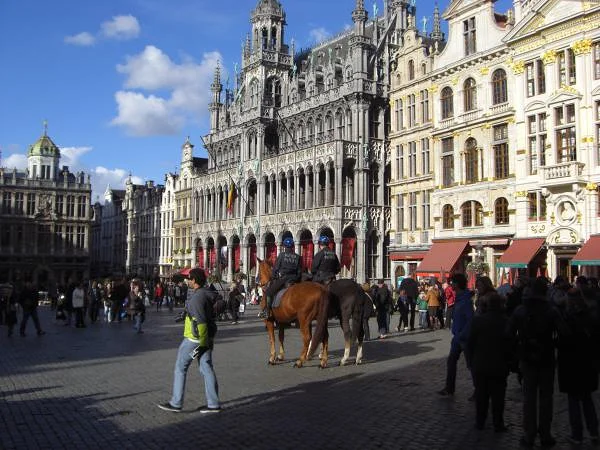
At the foot of the belfry lies the Grand Place, or Grote Markt. Surrounded by typical Flemish houses, the square has an incredible charm.

The museums
As for museums, you’ll be spoiled for choice! There are so many. To name just a few:
- Arentshuis, a 17th-century mansion that houses the work of Anglo-Bruges painter Frank Brangwyn;
- the Sint-Janshuis windmill, built in 1770;
- the Koelewei windmill, located near the Damme city gate;
- the Archaeological Museum;
- the Museum of Popular Arts and Traditions;
- the Groeningemuseum, which houses a collection of Flemish paintings (including the Primitives) ranging from the 15th century to the present day. This is undoubtedly the place that art lovers can't afford to miss!
- In the same spirit, the museum dedicated to Hans Memling, located in the former Saint-Jean Hospital: Memling in Sint-Jan;
- the Gruuthuse Museum;
- the Brewery Museum;
- the Guild of Saint George Crossbowmen;
- the Chocolate Museum;
- the Lace Centre, and so on...
Finally, take advantage of the countless chocolate shops: they are everywhere (or almost)! The most famous is likely The Chocolate Line, located right in the center between Saint-Salvator Cathedral and the Belfry (you’ll likely pass by it during your tour of Bruges).
And muster up the courage to test the different types of beers. Again, you’ll need time because there are so many varieties… Personally, I really enjoyed the Brugse Zot, a blonde ale presented as the last beer still brewed within Bruges itself. Please drink responsibly, of course!
Enjoy your visit!

Comments (0)
No comments yet. Be the first!