
Visiting the Belfry of Bruges
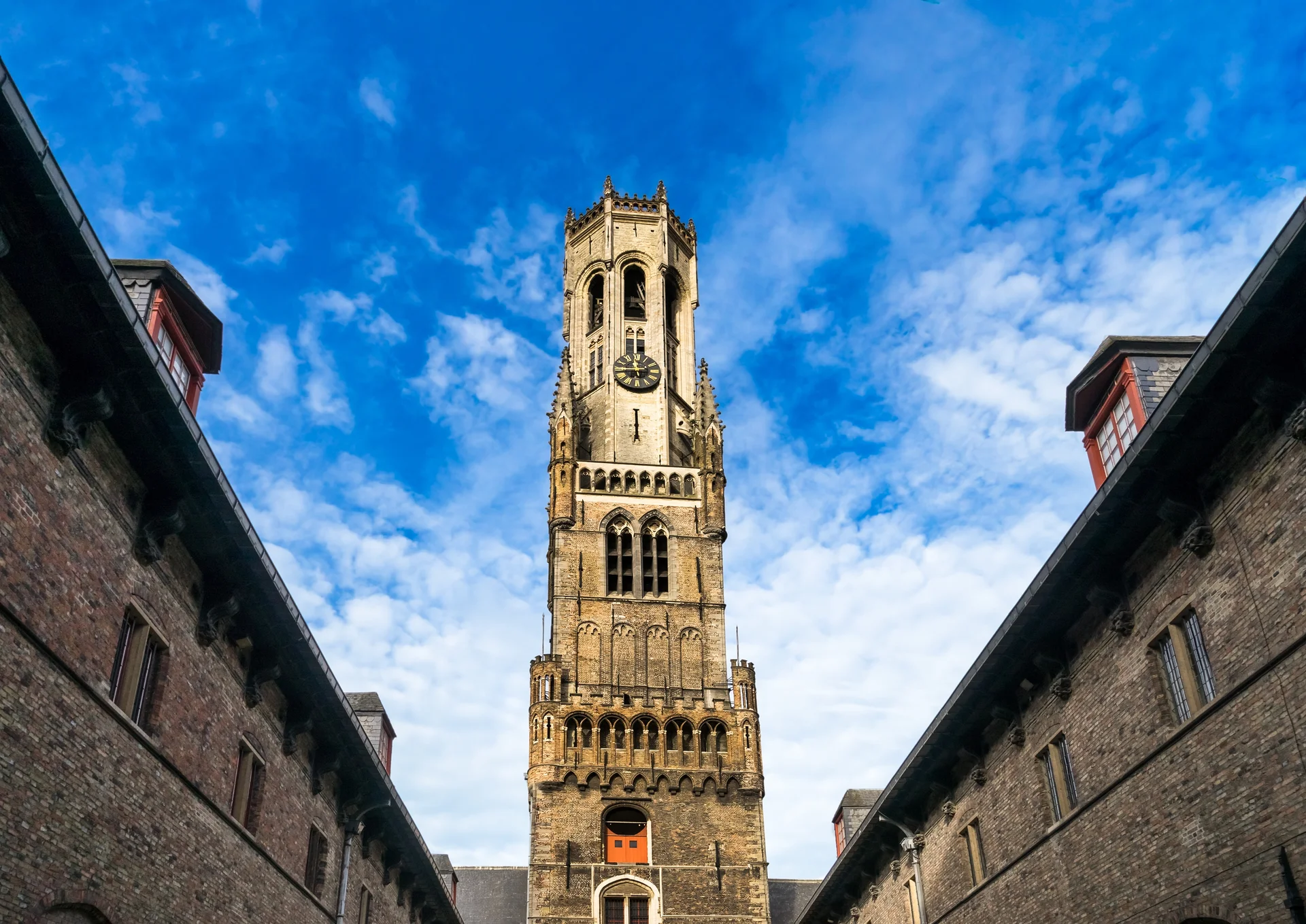
The Belfry of Bruges is a 272-foot medieval tower located on the Grote Markt (Main Square) in the city of Bruges. It is recognized as a UNESCO World Heritage site.
A bit of history
Built in 1240, the original structure was a wooden wool and cloth hall topped with a tower that served as a town hall for local magistrates. After a fire, it was rebuilt in stone in 1280. A second level was added in the 14th century, followed by an octagonal section in the 15th century. These additions symbolize the rise of communal freedoms and the power of the local merchant class. The Flemish bourgeoisie used the architecture to assert their independence from feudal lords. As the city grew in influence, the belfry grew as well. It served as the secure repository for city charters and documents regarding civic liberties. Until 1741, a 62-foot wooden spire crowned the tower. The ground floor of the belfry still houses a busy covered market today. You will also notice that the tower leans slightly to the east.
The museum
The museum is located in the former treasury on the second floor of the tower. During the Middle Ages, this room held the city seal, the charter, and the municipal coffers. Today, it offers a historical overview of the belfry, documenting its construction and evolving functions. Exhibits include a scale model of the tower, various bells, and historic clock hands.
The carillon
Consisting of 47 bells weighing a total of 27.5 metric tons, this is one of the most famous carillons in Europe. The bell named Victoire alone weighs 19,432 pounds. The carillon was a bold statement of civic power. Originally, bells were exclusively found in churches, where the clergy used them to regulate daily life. Installing this carillon in a secular building signaled the desire of the townspeople to move beyond the control of the Church. You can listen to carillon concerts held every Sunday morning. The bells ring every fifteen minutes, providing a look at the intricate mechanical workings of the instrument.
Reaching the top
You must climb 366 steps to reach the fifth floor. From there, you get a clear view over the rooftops of Bruges and the medieval halls that once signaled the immense wealth of the city.
Opening hours
| Monday | 09:30-18:00 |
|---|---|
| Tuesday | 09:30-18:00 |
| Wednesday | 09:30-18:00 |
| Thursday | 09:30-18:00 |
| Friday | 09:30-18:00 |
| Saturday | 09:30-18:00 |
| Sunday | 09:30-18:00 |

It would be a real shame to leave Bruges without visiting its Belfry. This impressive monument transported me back to the Middle Ages. You visit it like a museum, following a path that winds all the way to the top of the tower.
The Treasury room, which used to house charters, gives you a good idea of the Belfry's historical function. For me, the drum room was the most impressive part, with its massive drum that rotates to trigger the bells. Finally, after climbing more than three hundred steps (which is pretty exhausting), you arrive right beneath the bells. I loved the view over Bruges and the sound, which was almost deafening.
I recommend getting your tickets online to avoid the wait, and opting for the Musea Brugge Card if you want to see several museums. Otherwise, expect to pay 15 euros for admission.