
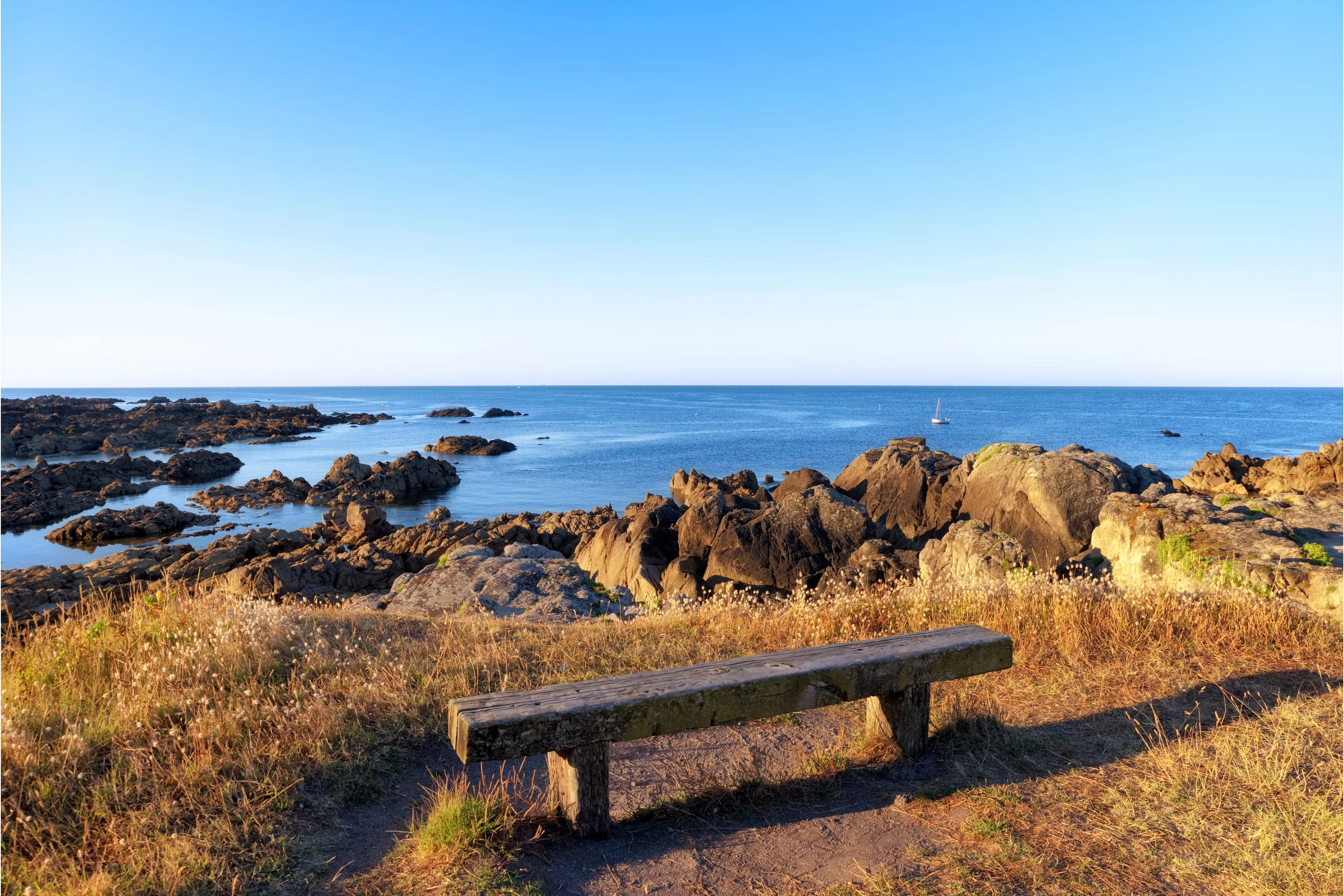
Without wading into the territorial debate, let’s just admit that Loire-Atlantique has, in certain spots, a distinctly Breton flair. Leave Nantes behind, perched on its river, and head west via the N165 expressway. Veer south on the N171, leaving Saint-Nazaire to its docks and La Baule to its hotels with a view. The name Le Pouliguen might stir your thirst for all things Breton, but don't linger in that charming port village until you’ve had a taste of its more oceanic sibling: Le Croisic.
The route there branches off due south, not far from the ramparts of Guérande. If the name on the road signs hasn't caught your attention yet, the connection will click once the salt marshes appear on either side of the road. This is where the famous fleur de sel comes from, the very stuff that defines those salted-butter caramels and ice creams you’ve been enjoying.
After a leisurely drive through the land of the paludiers (salt workers), crossing the railway tracks, where the TGV still ventures, marks your entrance onto the Le Croisic peninsula. A bit further on, a final roundabout offers a choice between the direct road or the one along the Côte Sauvage. Don't hesitate: opt for the detour. You won't be disappointed. Facing due south, this stretch of coastline will awaken your senses with the shimmer of the swell, the salt-sprayed sea breeze, and hidden rocky coves.
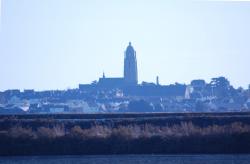
Like a spell cast from Breton legend, the sea hypnotizes you as the coastal road gently curves to the right. You won't even realize, as you enter Le Croisic, that you’ve rounded the tip of the peninsula and are heading back in the other direction. All granite and slate in the Armorican style, the little town seems to keep watch over its harbor. But the real treasure lies just a bit further, beyond the fishing boats at anchor: it’s the traict (pronounced "trê"), or more specifically, the traicts (the Grand and the Petit). Seen from above, these two inlets form the asymmetrical ventricles of a heart beating to the rhythm of the tides. Like Arcachon or the bay of Mont Saint-Michel, this alluvial organ reveals itself at low tide, only to be quickly cloaked again by the sea as the water rushes back through the narrow passage between the peninsula and the tip of Pen Bron to the north.
Observing the life of the traicts requires a taste for patient contemplation, the kind where you stay in one spot for hours, letting nature permeate your senses with its existence, indifferent to our insignificant selves.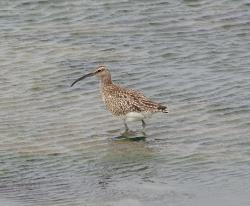
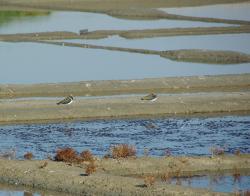
After perhaps preparing for this "sacerdotal" duty by consuming a few crêpes or some seafood in Le Croisic, head to the endless jetty that almost locks the entrance to the traicts tight. Choose your spot along this promontory and, leaning against the granite wall on the ocean side or sitting with your feet dangling over the rocks on the traicts side, watch the bay come to life. At low tide, a multitude of shorebirds (the surveyors of the wet mudflats) probe the silt in search of invertebrate prey. When the tide is high, especially in winter, pelagic creatures seek the shelter of the traicts to rest from the ocean's fury. This is how you might spot a razorbill or a guillemot, often called "penguins" in French. Yes, "penguins." We won't waste time here correcting you on what you think is a penguin, even though your brain is likely picturing a flightless bird from the Antarctic. Go check Wikipedia for that.
The other remarkable spot to soak in the surroundings is the crest of the salt marsh ridge that separates the two traicts. It’s a place called Sissable which, at last check (May 2014), still has no road signs. Heading back toward Guérande on the D245, take the Route des Marais to the left as you leave Batz-sur-Mer, and look for the only trees in the area on your left (about 2 km as the crow flies). At their feet, you’ll spot a building with modern architecture. If you can find the road that leads there (follow your intuition), you can park your car in the small lot in front of the private Sissable property and head out to contemplate the Grand Traict to your left or the Petit Traict to your right. At the end of the day, as the sun follows its path toward the sea and warms your cheeks, you can be sure you’ll be etching a true moment of ecology into your memory, the kind that makes you realize your modest, trivial place in an unfathomable Great Whole. Unless, of course, you’re just craving another crêpe.



3 ans d'étude à Nantes mais j'avoue n'avoir jamais eu l'occasion de visiter le Croisic, malgré tout le bien qu'on m'en a dit :(