
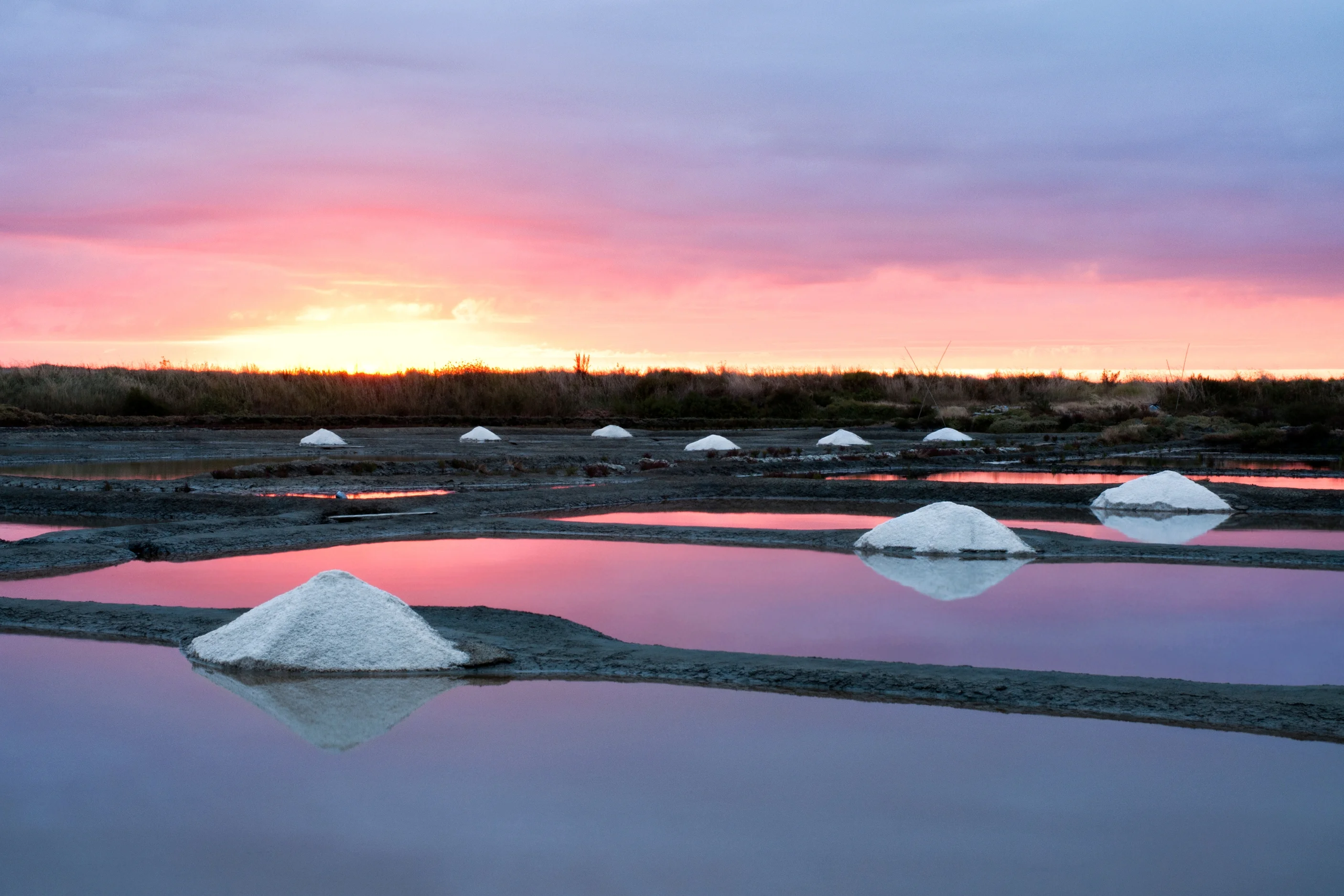
Guérande, the fortified town where salt has shaped the history for 1,500 years
Wednesday morning, 9 AM. Market stalls go up inside the nineteenth-century covered market on Place Saint-Aubin. A vendor stacks pyramids of coarse gray sea salt next to the produce. The slate roof of the collegiate church dominates conversations in Breton. Just outside, medieval ramparts still enclose the town for 1,400 meters. Welcome to the Breton younger sister of Carcassonne.
Who is this trip to the Breton Loire-Atlantique for?
This town of art and history draws travelers who love medieval architecture and living heritage. There is no artificial stagecraft here. Residents actually live in the half-timbered houses, artisan shops sit next to art galleries, and salt workers still harvest by hand in the salt marshes a few miles away. It is an ideal spot for a quiet weekend or as a stop on a southern Brittany road trip.
On the other hand, if you are looking for nightlife or massive museums, skip this stop. The center takes two to four hours to explore. The proximity of the beaches of La Baule (7 km) makes up for the lack of evening activities. The Atlantic climate stays moody even in the summer, so always keep a windbreaker in your bag. One final detail: administratively, you are in the Pays de la Loire region, but culturally, Brittany speaks the loudest.
Reasonable budget for the region
Plan for $68 to $90* per day if you are traveling on a budget. A traditional buckwheat galette costs $9 to $14*, a 3-star hotel inside the ramparts starts at $102* per night, and nearby campgrounds offer sites starting at $23*. Guided tours of the salt marshes run around $12 to $14* per adult. Free parking near the ramparts makes logistics easier.
The ramparts and the historic center
The fortifications date back to the fourteenth century, built during the War of the Breton Succession. Four gates pierce the defensive walls. The Porte Saint-Michel, standing 24 meters high with two massive towers, houses a museum dedicated to local history. Climbing the bell tower reveals panoramic views over the slate rooftops and the distant marshes. You can walk a third of the perimeter along the rampart walkway between the tour Saint-Jean and the tour Sainte-Anne.
Inside the town, cobblestone alleys weave around place Saint-Aubin. The collegiate church of the same name, built between the twelfth and sixteenth centuries, blends Romanesque and Flamboyant Gothic styles. Its nineteenth-century stained glass windows depict Saint Margaret of Antioch and Saint Dominic receiving the rosary. In the summer, organ concerts echo through the nave. rue Saint-Michel is packed with craft shops, jewelry stores, and souvenir stands. Quieter rue de Bizienne leads to the chapelle Notre-Dame-la-Blanche, the oldest building in town, dating from the thirteenth century.
Friendly tip: Park at the Remparts parking lot on chemin du Guesny outside of July and August, or use the underground Balzac parking garage inside the walls. The garage closes at night, so check the hours. Avoid Saturday mornings on market day when finding a spot turns into an endurance test.
The salt marshes, the soul of the territory
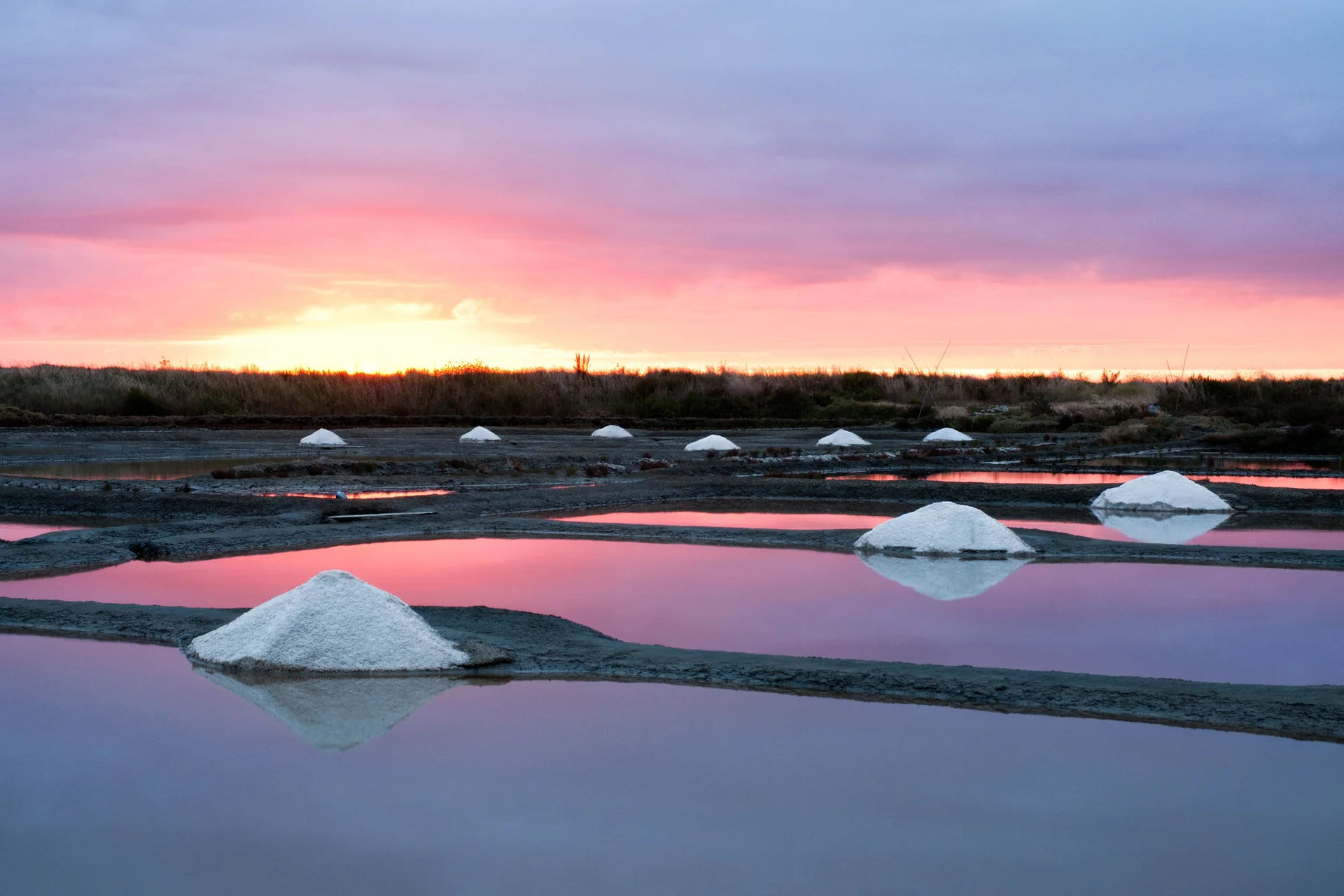
The 2,000 hectares of salt marshes stretch between the Traict du Croisic and the Traict de Mesquer. Nearly 380 salt workers still harvest between 8,000 and 15,000 tons of coarse salt by hand every year, alongside 200 to 300 tons of fleur de sel. The gravity-fed water system fills the vasière at high tide, then moves through the cobiers, fares, and adernes before crystallizing in the œillets.
Two main sites help visitors understand this trade. Terre de Sel in Pradel features a 1,000-square-meter permanent exhibition and guided tours lasting from 45 minutes to 2 hours. The themed walks cover wildlife, plant life, the salt worker's craft, and edible plant tastings. In Saillé, an authentic salt worker village, la Maison des Paludiers organizes 90-minute outings combining a walk through the marshes with a tour of the historic village. Advance booking is essential for all these activities.
The landscape shifts with the hours. Pearl gray at dawn, blinding white at noon, violet at dusk. Red salicornia in August, purple statice in July, migratory birds in autumn. More than 280 bird species frequent this Natura 2000 protected area, including the pied avocet, black-winged stilt, western marsh harrier, and bluethroat.
Surrounding areas: beaches and heritage
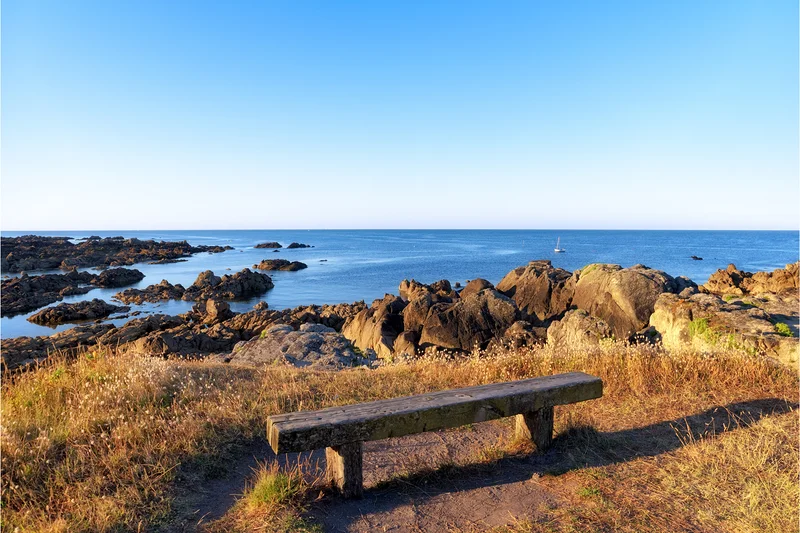
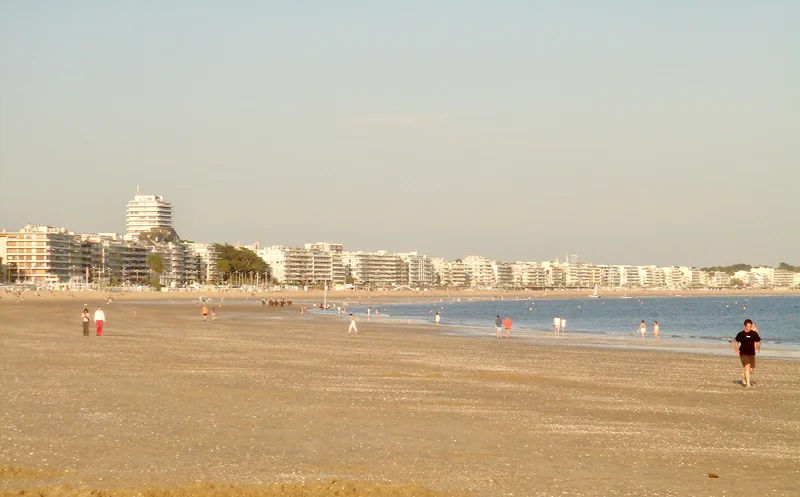
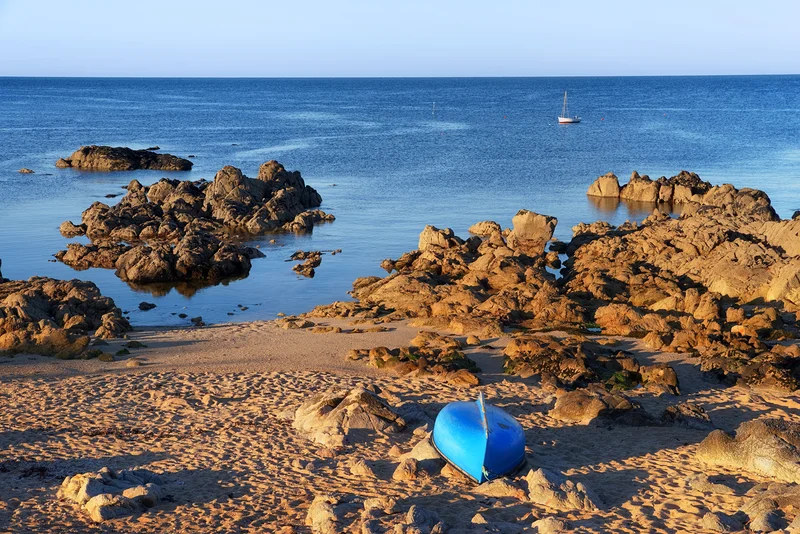
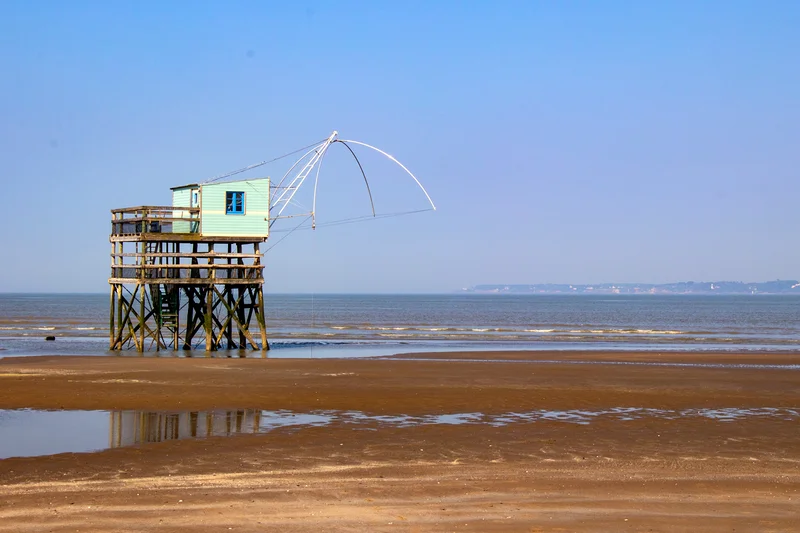
La Baule, 7 km away, features nine kilometers of fine sand. A chic Belle Époque seaside resort, it offers beaches, historic villas, and shopping. For a more authentic feel, Le Croisic keeps its fishing port charm with half-timbered houses along the quays and the Océarium showcasing sharks, jellyfish, and local marine life. The Côte Sauvage toward Batz-sur-Mer overlooks wave-battered cliffs that are ideal for hiking.
To the north, the Parc naturel régional de la Grande Brière spans 40,000 hectares of freshwater marshes, canals, and reed beds. Explore it on a chaland, the region's signature flat-bottomed boat. Traditional thatched cottages dot the landscape. The château de Careil, 3 km from Guérande, is worth a detour for its medieval facades and Renaissance dormer windows.
Where to eat and drink in Guérande?
The culinary scene revolves around salt and Breton products. You can sample traditional buckwheat galettes at La Crêperie Les 2 Marais on place du Vieux Marché or at Moulin du Diable. Salted butter caramel, a local specialty also known as salidou, is available in every sweet shop. Gout'Thé on rue de Saillé serves salads and pastries on a pleasant terrace.
For seafood, the proximity to the ocean guarantees freshness. Do not miss the oysters from Pénestin and artisan semi-salted Le Gall butter. The Wednesday and Saturday markets on place Saint-Aubin overflow with local producers.
Where to stay in Guérande and nearby?
Staying inside the ramparts places you right in the middle of the medieval atmosphere. The Sure Hotel by Best Western and Hôtel des Quatre Saisons sit right next to the walls. For more character, La Guérandière, a guesthouse set in a nineteenth-century home with a garden, earns stellar reviews.
In La Baule, lodging options multiply with oceanfront hotels, residence rentals, and vacation homes. Prices peak in July and August. Three- and four-star campgrounds around Guérande feature swimming pools and family activities from mid-May to mid-September.
How to get to and around Guérande?
By car from Nantes, allow one hour via the N171, taking the Guérande exit. From Paris, the drive takes four and a half hours via the A11 then the N171. Nantes-Atlantique Airport is 70 km away. By train, get off at La Baule-Escoublac or Saint-Nazaire, then take the Lila Presqu'île bus network line 5 toward Batz-sur-Mer and get off at Guérande. The TGV from Paris to La Baule takes 3.5 hours.
Once you arrive, everything in the center is walkable. For the salt marshes, a car or bicycle is recommended. Bike paths connect Guérande to La Baule and Le Croisic, and bike rentals are available near the La Baule train station.
When to go?
May through September brings the best weather and peak activity in the salt marshes. The harvest is in full swing from June to September. The medieval festival in June transforms the town with period costumes, banquets, and traditional dances. Summer markets come alive with street musicians. Avoid January, when many tourist sites partially close.

Guérande checks all the boxes for the kind of towns we love to discover, wander through, and revisit. It has a medieval vibe with its ramparts flanked by 6 towers and 4 gates, flowery charm, beautifully presented shops, and some very attractive restaurants and food stores. My favorite spot in Loire-Atlantique!