
Saint-Nazaire, the city that builds ocean giants
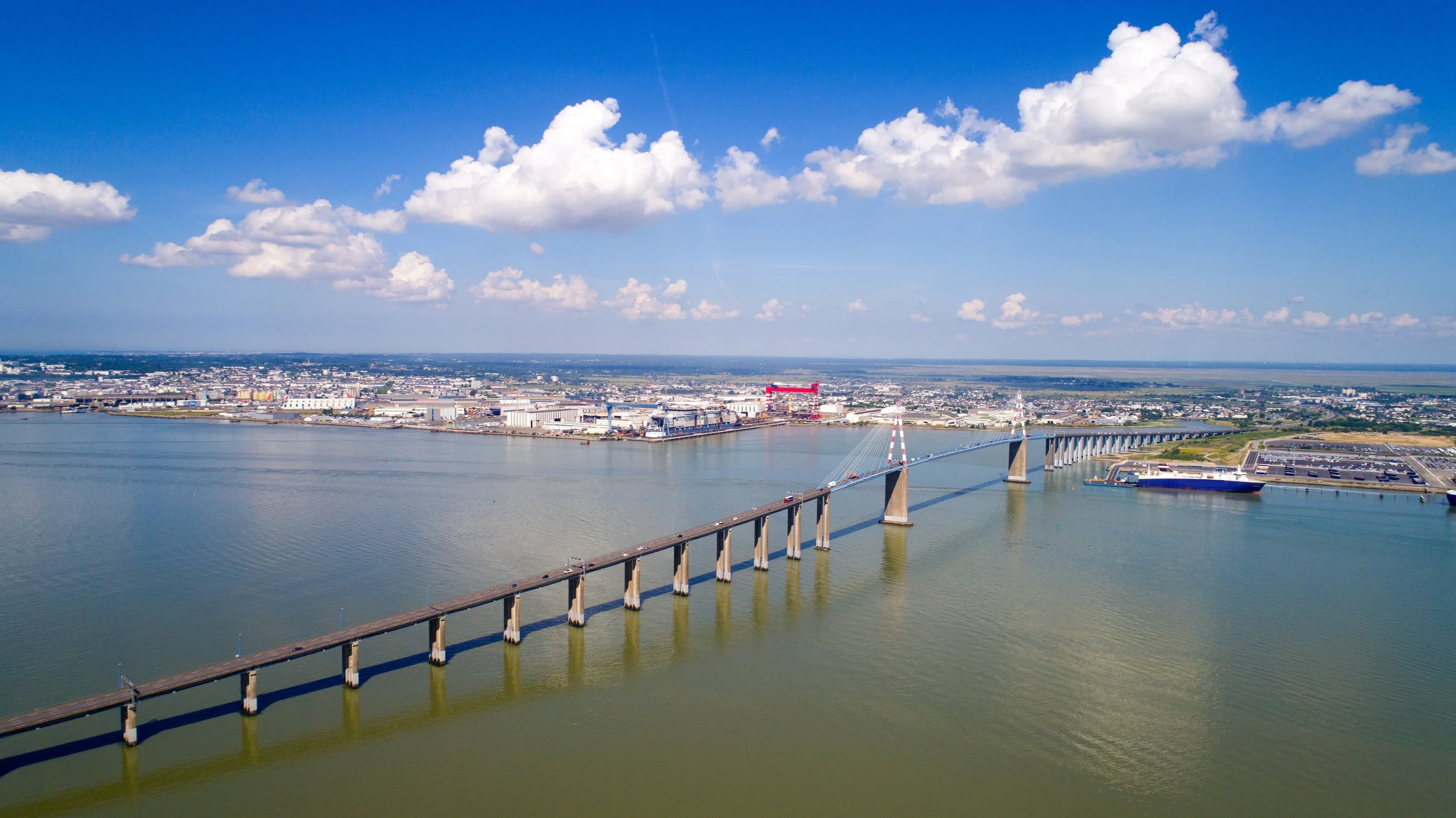
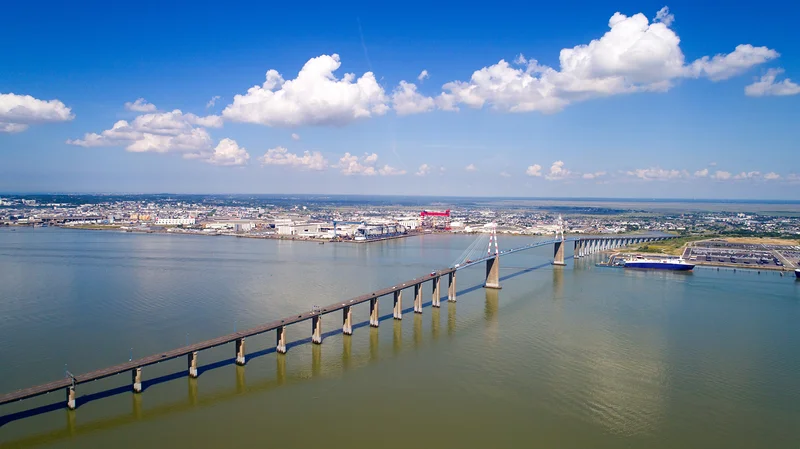
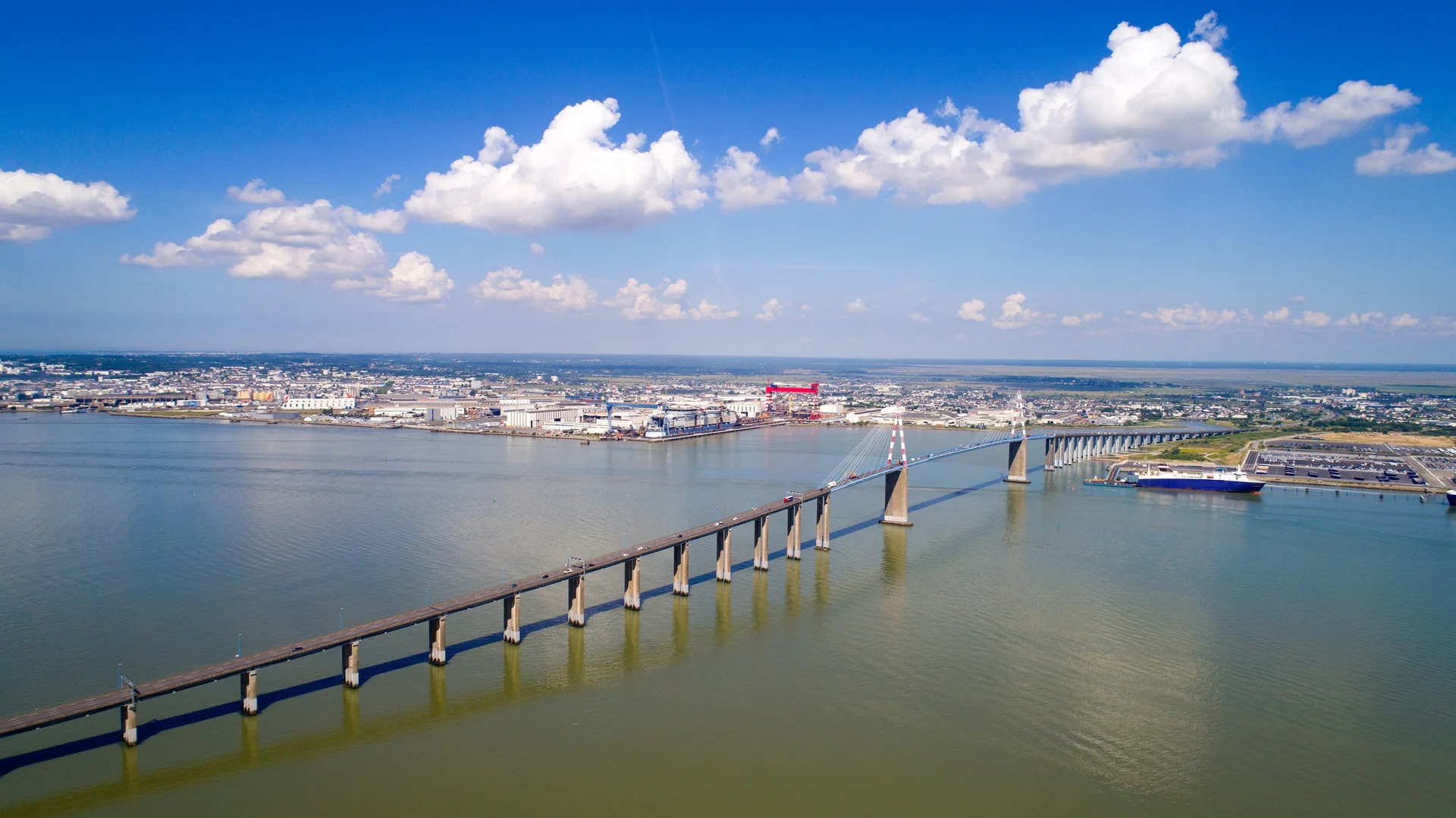
It is 6:00 AM on the Loire estuary. The giant hull of a cruise ship emerges between the port's cranes. The shipyard is already smoking. Dockworkers start their day beneath orange gantry cranes standing 85 meters tall. A few hundred meters away, the concrete bunkers of the former submarine base seem to defy time. Rebuilt to 85% after 1945, the city hides nothing of its industrial past. In fact, it makes that past its greatest strength.
For fans of mechanical engineering and military history
This destination thrills enthusiasts of mechanical engineering and contemporary history. Here, you step inside Airbus workshops, tour a real submarine, and walk right up to the yards building the largest cruise ships in the world. The Harmony of the Seas, the Queen Mary 2, and the France were all born here. The post-war concrete architecture will not appeal to everyone, but the city fully embraces its working-class and maritime identity.
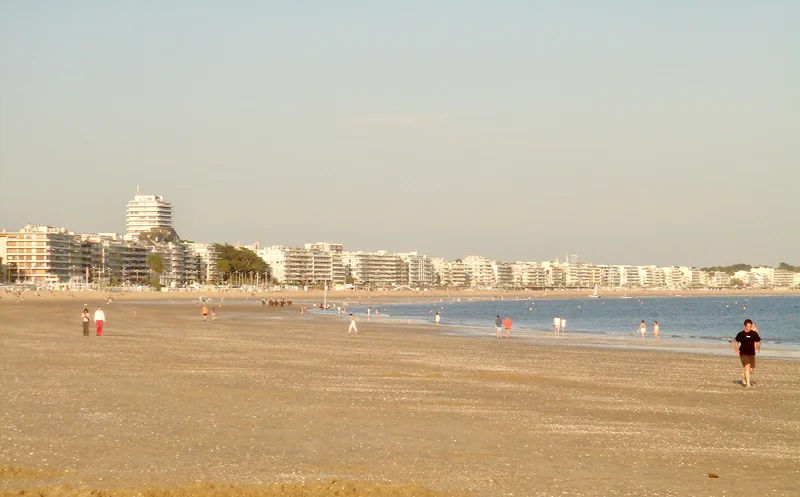
If you are looking for a picture-postcard medieval town, keep driving. The bombing raids of 1942 to 1943 leveled 85% of the buildings. The 1950s reconstruction gives certain neighborhoods a brutalist edge. On the other hand, the 20 beaches and coves stretching along 15 km of coastline make up for it entirely. The Briére regional natural park just a few kilometers away offers a welcome nature break. Plan for 2 to 3 days to explore the city and its surroundings.
A moderate budget for an industrial destination
Expect $79 to $102* per day per person. Guided tours of the industrial sites run around $17*, a meal at a creperie costs $14 to $21*, and 3-star hotels start at $68-$79* per night. The Liberté pass for the STRAN buses costs $4.50* and lets you ride all day long throughout the metropolitan area.
The submarine base and its attractions
The concrete monster dominates the entrance to the port. Built in 16 months starting in 1941 by the German military, this fortress features 9 meters of reinforced concrete that withstood every bombing raid. Converted after the war, it now houses the tourist office, concert halls, and two flagship attractions.
Escal'Atlantic recreates the atmosphere of transatlantic liners across 3,700 m² and 27 scenographic spaces. You will see first and third-class cabins, the engine room, the upper deck, and a dining room featuring original chandeliers from the 1962 France. Interactive displays recreate the voyage to America as passengers experienced it in the early 20th century. The rooftop panoramic terrace offers a 360-degree view of the estuary, the Saint-Nazaire bridge, and the shipyards. Allow 90 minutes for the tour. Admission is $17*.
On the other side of the basin, inside the fortified lock, floats the Espadon submarine. As the first French submersible to dive beneath the Arctic ice pack in 1964 with 65 men on board, it is open for self-guided tours with an audioguide. The cramped interior is striking. The 60 cm wide corridors, the stacked bunks, the control dials everywhere, and the engine room with its tangled pipes make the living conditions of sailors during Cold War missions entirely clear.
Friendly tip: Be sure to head up to the panoramic terrace of the submarine base at sunset. The light on the estuary and the shipyards is well worth it. You can also view a contemporary art installation by the Swiss artist Felice Varini from this exact spot.
Industrial tours, the soul of the city
The Chantiers de l'Atlantique employ thousands of people across 110 hectares. The 2-hour guided bus tour departs from the submarine base on Wednesdays, Saturdays, and Sundays. Once a week in July and August, they run an English-language tour. Reservations are required. You follow the construction of a cruise ship from the cutting of the steel plates to the fitting-out basin. The 22-hectare dock where the ships are assembled is dizzying. Photography is prohibited for industrial confidentiality reasons.
The Airbus factory is also open for bus tours departing from the submarine base on Wednesdays and Fridays. Reservations are required at least 48 hours in advance, and a photo ID is mandatory. Inside the giant assembly workshops, fuselage sections for all the company's aircraft take shape before being shipped to Toulouse, Spain, or Germany. The A320, A330, and A350 all pass through Saint-Nazaire. The sheer scale of the facilities leaves a lasting impression.
The coastline and its 20 beaches
Just minutes from the industrial center, the Côte d'Amour unfolds coves and sandy beaches. The Monsieur Hulot beach in Saint-Marc-sur-Mer is named after the character created by Jacques Tati, who filmed Mr. Hulot's Holiday there in 1953. A bronze statue overlooks the beach. It is a quiet residential neighborhood featuring a few Belle Époque villas that survived the bombings.
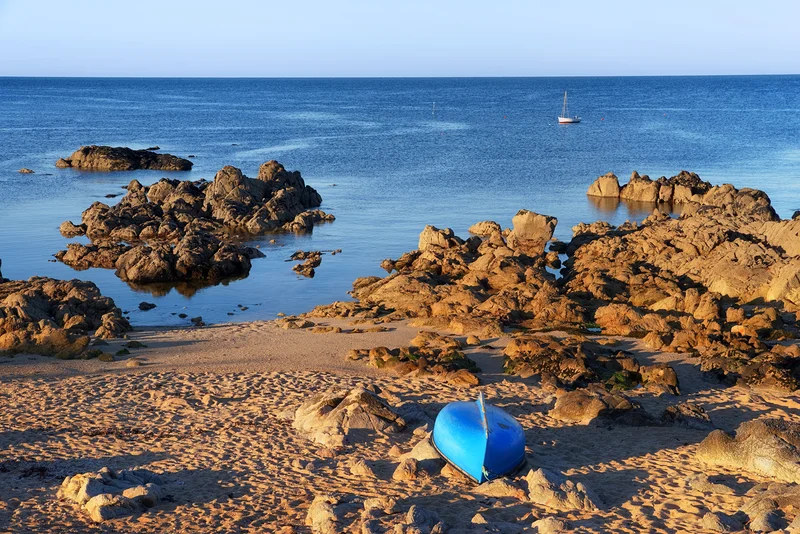
Wilder in feel, the Jaunais beach stretches for 500 meters, backed by granite cliffs. It has lifeguards in July and August, a large parking lot, and shallow water. The rocks at either end shelter natural tide pools favored by crab fishermen. Right next door, the Trébézy cove hides behind the coastal path. Quiet and sheltered by vegetation, it is a local secret.
The customs trail, or GR34, finishes its 2,000 km run starting from Mont-Saint-Michel right here in Saint-Nazaire. Several sections allow you to hike along the coast toward Pornichet (14 km, 3.5 hours) or La Baule.
Historical and cultural heritage
The Ecomuseum traces the history of the city from the 19th century to the present day. It features models of legendary ocean liners, seaplanes built in the 1930s, and photographs of the bombings and reconstruction. The Dissignac tumulus, a 6,000-year-old Neolithic site, contains two megalithic tombs. Guided tours are available in the summer, located 15 minutes by car from the submarine base.
Street art covers the walls everywhere. Look for six-story giant murals by American artist Ellen Rutt, and enigmatic characters by Chilean artists Inti and La Robot de Madera in the Petit Maroc neighborhood. The Estuaire contemporary art trail connects Nantes to Saint-Nazaire with 34 works spread across 60 km. The tourist office hands out a free guide.
Where to eat and drink in Saint-Nazaire?
The Halles Centrales, built in 1950s architecture, host a large market on Tuesday, Friday, and Sunday mornings. You will find eel stalls, international products, and local farmers. For Breton galettes, several creperies dot downtown. Seafood is best enjoyed facing the ocean on the terraces in Saint-Marc-sur-Mer.
Place du Commando, a recent development facing the estuary, concentrates bars, snack spots, and La Plage restaurant, which specializes in fish and seafood. It has a relaxed vibe and bustling terraces as soon as the sun comes out. Marmitako, a Basque tuna stew, appears on several menus.
Where to stay in Saint-Nazaire and the surrounding area?
Downtown near the train station has most of the hotels. Ibis Styles Centre Gare, Best Western Hotel de la Plage, and Aparthotel Adagio Access offer solid accommodations for $68 to $102* per night. For seaside charm, stay in Saint-Marc-sur-Mer or head further to Pornichet and La Baule 10 km away, where hotel options explode in number.
Family campsites sit in the hinterland toward Trignac and the Briére park. Vacation rentals are plentiful along the coast, though booking ahead is essential in July and August.
How to get to and around Saint-Nazaire?
Direct TGV high-speed trains run from Paris Montparnasse in 3 hours, with 13 daily departures. From Nantes, regional TER trains take 45 minutes. Nantes-Atlantique Airport is 60 km away, but it has no North American service: fly into Paris and take the TGV from Montparnasse. Take the airport shuttle to the Nantes train station in 20 minutes, then switch to the train. By car, take the A11 from Paris (4.5 hours) or the N171 from Nantes (1 hour).
The STRAN bus network serves the entire metropolitan area. A single ticket costs $1.70*, a 10-ride book costs $14*, and the Liberté day pass is $4.50*. A smartphone app handles purchases and ticket validation. Bicycle rentals are available. Downtown is easy to explore on foot, while the industrial sites and beaches require a bus or car.
When to go?
May through September offers the best conditions. The Les Escales festival in late July draws 30,000 people for world music concerts right at the port. International headliners like Iggy Pop and Asaf Avidan perform here. The Grande Marée in June kicks off the season with a giant picnic on the beach. Avoid winter, which brings fog and heavy winds across the estuary.
With a style similar to Le Havre, Saint-Nazaire drops you into a very industrial setting, with smells of soy, which can be a bit off-putting at first.
However, the city offers plenty of activities. Escal’Atlantique immerses you in the fascinating world of cruise ships through an educational and highly interactive tour. You can also visit the shipyards, though you need to book ahead and go with a guide. It is a very impressive look at how these marine giants are built, from the assembly of the hull to the launch.
As for the sea, while Saint-Nazaire isn't really the place for swimming, the newly renovated promenade is still really nice for a walk.