
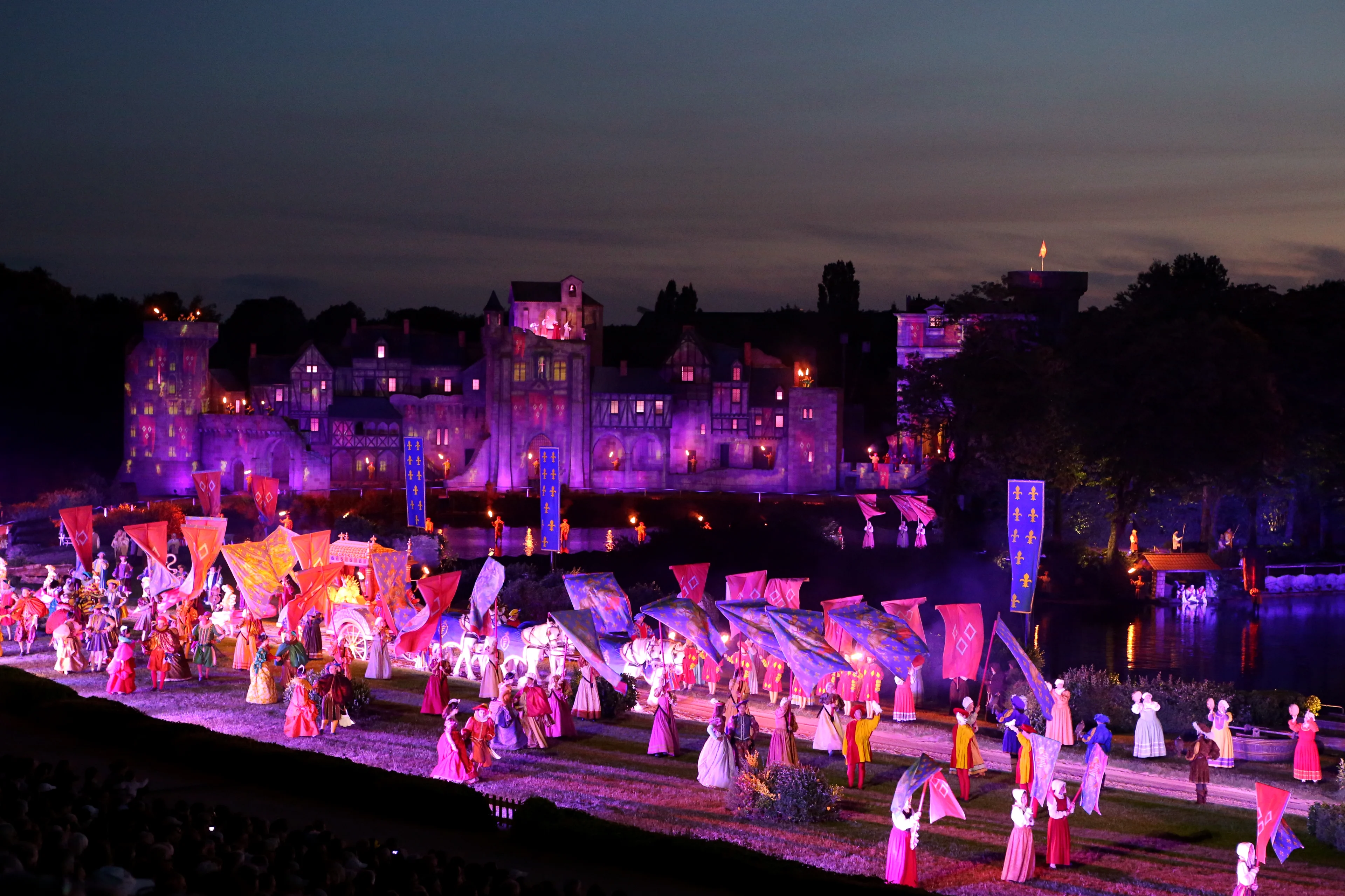
As I wrote in my post titled Two Days at Puy du Fou in the Vendée, I absolutely loved the Grand Parc at Puy du Fou. But I didn't have time to tell you about the Cinéscénie. So, today, I’m finally covering it!
A must-see highlight of any trip to the Vendée or the surrounding area, Puy du Fou is truly worth the journey, whether you go for the park, the Cinéscénie, or both. Since tickets are limited, I highly recommend booking in advance. Here is a link to book your tickets online via the park's official website.
The History of the Cinéscénie
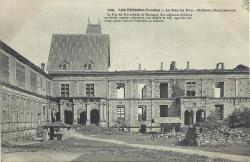
Historically, it was the Cinéscénie that first came to life in 1978. According to the book on sale at the site (and in all good Vendée bookstores) which traces the adventure of the show's creation, it was Philippe de Villiers who decided to bring this project to fruition.
He chose the site of the château in the commune of Les Epesses in the Vendée, in a place called Puy du Fou. The area is located in the Vendée bocage, near Cholet. It was part of the former "Military Vendée" during the War in the Vendée, which took place between 1793 and 1796.
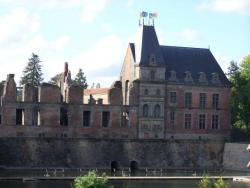 The Château des Epesses as we see it today, and as it has been integrated into the show, was built in the Renaissance style by order of François II du Puy du Fou at the beginning of the 16th century. A close associate of King François I, he was appointed governor of Nantes. The castle still bears the scars of the fire set by the "infernal columns" commanded by General Boucret during the War in the Vendée.
This castle replaced the old fortress of Renaud du Puy du Fou. Its ruins are visible in the Grand Parc, where they have found a second life as the backdrop for the Bal des Oiseaux Fantômes (Ghost Birds Ball) show.
A Massive Spectacle Featuring 1,200 "Puyfolais"
Today, across twenty-three hectares, more than 1,200 volunteer "Puyfolais" transform into actors on show nights. These volunteers donate their time to a wide variety of tasks: some guide cars and buses in the massive parking lots, others manage ticket booths, some run the shops, others specialize in the technical side of the show, and some have joined the security teams.
In short, there is always work to be done, and some even juggle multiple roles: they might trade their usher uniform for the costume of a Vendéen villager storming a column of Republican soldiers. They also benefit from the support of permanent staff, including stunt riders, stage managers, and specialized technicians.
How to become a volunteer Puyfolais?
For those interested in participating, you should know that it is very difficult to join the very exclusive circle of Puyfolais: you must send your request to the Puy du Fou association secretariat, either by phone at 0 820 09 10 10 or by mail (address: 30, rue Georges Clemenceau, BP 25, 85590 Les Epesses). To become a volunteer, you must have a sponsor, meaning you need to know a Puyfolais who can guide you and help you learn the ropes and the spirit of the place. Your sponsor will then recommend you to their peers. After that, you have to write a cover letter and... wait! The waiting list is very long. Quite an initiation process, right? The title of Puyfolais is something you have to earn.
I can tell you this: I applied a year ago and I’m still waiting. But I haven’t lost hope!
In any case, unlike the Grand Parc where staff are paid (like bird handlers, vets, stunt riders, etc.), the Cinéscénie is run by volunteers. The atmosphere is fantastic! My "sponsor" let me visit the backstage area, which allowed me to see the massive machinery that is the Cinéscénie. I was incredibly impressed by the control room, the pyrotechnicians, the lighting technicians, and the professionalism of all these passionate people who give their time, sometimes for twenty years, with the same motivation and desire: to ensure the show runs perfectly and to provide a great experience for the fourteen thousand spectators per night (more than ten million since its creation!).
The Cinéscénie Storyline
The show traces the history of a Vendéen family, the Maupilliers. For context, this character is inspired by Jacques-Louis Maupillier, a young recruit in the Vendéen army immortalized by the Marquise de La Rochejaquelein, who sketched him with weapons in hand. We follow him from ancestor to ancestor, as each time, it is the grandson who witnesses the scenes described in the tableaux.
It all begins at the start of the 20th century, during a "veillée." A "veillée" was an evening where families and neighbors would gather around the fire to talk, tell stories, and sometimes invite a storyteller or a traveling merchant to share news of what was happening in the country or the region.
A Gigantic 23-Hectare Stage
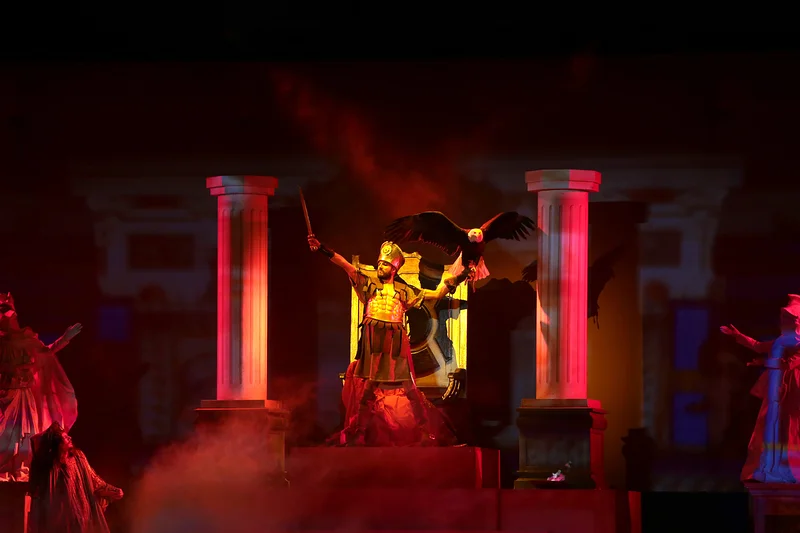
In front of his audience, the old merchant tells the life story of the young boy's ancestors. Then, as if in a dream, the massive twenty-three-hectare stage comes to life. This marks the beginning of a succession of living tableaux, brought to life by all the volunteers in period costumes.
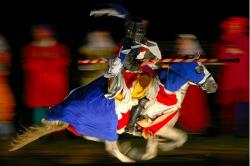
We travel through the centuries, starting from the Middle Ages and moving up to the Second World War.
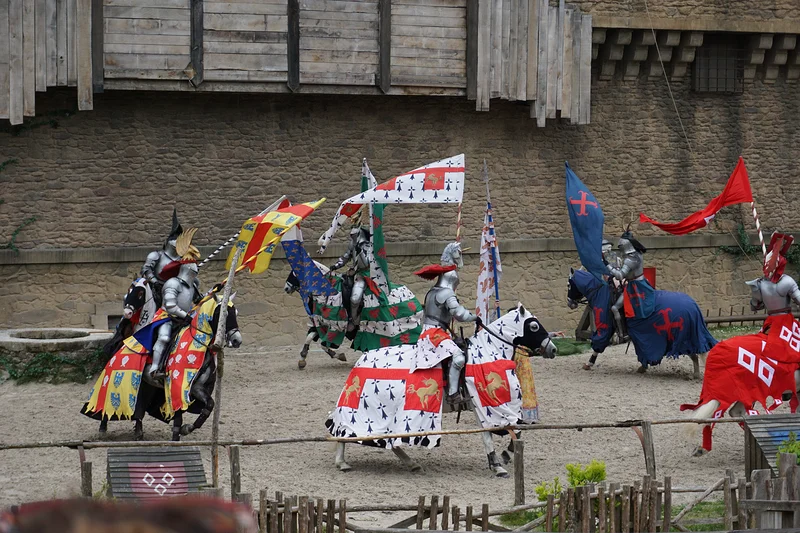
Knights gallop across the stage at high speed, clashing in jousts that I used to dream about as a child.
Actors appear from everywhere; there is so much to see that you’re bound to miss some details.
The entire stage area is utilized: the castle is an integral part of the set, scenes are played out in the background like in a film, and the lake itself is used for the dancers' performances. It’s clear that the staging has been meticulously crafted and that, even though it’s run by volunteers, there is a high standard of rigor and professionalism. The attention to detail remains impressive.
A Magical Production!
Innovative techniques are used for breathtaking special effects.
Lights, lasers, and fireworks follow one another, and images projected onto water screens appear throughout the show.
The actors perform to music by Nick Glennie-Smith, an English film composer. Fans will likely know he has worked on films like "Pirates of the Caribbean," "We Were Soldiers," and "The Lion King II." His music is available on CD, sold on-site in all the shops.
Similarly, many celebrities have lent their voices to the characters: Robert Hossein, Jean Piat, Philippe Noiret, Alain Delon, Suzanne Flon, Michel Duchaussoy, etc. These voices echoing in the night add a special luster to the show: you let yourself be swept away by the adventure, even if you aren't a history buff. I still remember the "mercy for the prisoners!" shouted by the Vendéen general Bonchamps, dying on the battlefield of Cholet, in a terrifying silence after the tumult and clash of weapons.
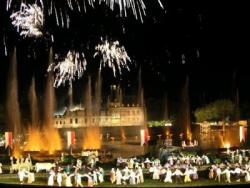
The magic has begun, and it won't stop until the end of the one-hour-and-forty-minute performance.
The adjectives used to describe the Cinéscénie are glowing. It must be said that the show is grandiose and magical. When the music stops, the last firework explodes, and the echo of the blast fades away, you’re left wanting more, a feeling that it ended too soon.
As written on the official Puy du Fou website: "The Cinéscénie is the largest night show in the world with a 23-hectare stage. Each performance requires 1,200 actors, 120 riders, 100 technicians, 6,000 costumes, 800 fireworks, and 140 water jets."
Practical Tips
- Bring warm clothing (nights can be chilly despite the summer season) and, if the weather looks threatening, waterproof gear. In a pinch, ponchos are for sale on-site. Another solution: some of my neighbors had slipped their legs into plastic trash bags... Apparently, that worked pretty well too.
- Those with sensitive lower backs might want to bring a small cushion. The wait time is a bit long because you have to wait for total darkness to start the show.
- For international visitors (and there are many!), it is possible to follow the show with a headset that provides translation.
- Be aware that leaving the parking lots (which are free) can sometimes take a while, and it can be pleasant to wait quietly for the traffic to clear while having a hot drink, for example.
- If this isn't your first visit and you want to focus on the details of the living tableaux, consider bringing a pair of binoculars. If it's your first time, there is so much to see that it's better to have the widest field of vision possible. However, they can help pass the time while you wait.
- Wear loose clothing that allows you to raise your arms without tearing anything: every night there are "ola" (the wave) contests!! So, if you want your section to win, you need to be equipped and motivated!
- The official Puy du Fou website offers packages combining accommodation and show tickets. Here is a page that will help you choose your hotel and organize your stay.
An Unmissable Experience
In conclusion, I must admit that I was completely blown away by the show. Since I went, I’ve been recommending it to everyone I know and have sent quite a few people there: everyone who has seen the show agrees that it is grandiose! You rediscover your inner child and, as a bonus, you rediscover moments of French history through the lens of the Vendée.
This post also refers back to the one about the Grand Parc (Two Days at Puy du Fou in the Vendée) because, in fact, even though the two adventures are different, they are complementary. Each can certainly be experienced on its own, but they complement each other wonderfully. So, if you can, try to do both, it's really worth it! I also liked Asiangirl's article (greetings!) where she shares her opinion on the Grand Christmas Show offered by Puy du Fou.
NB: for the sake of completeness, the Cinéscénie should not be confused with the night show titled "Les Orgues de Feu", which plays on specific evenings during certain periods. It is one of the attractions of the Grand Parc and has nothing to do with what I’ve detailed in this post. It is a magical show blending music and dance in a poetic atmosphere, all with special effects involving water and fire. It’s also worth a look!
Top photo credit: Alain Monéger


Comments (1)