
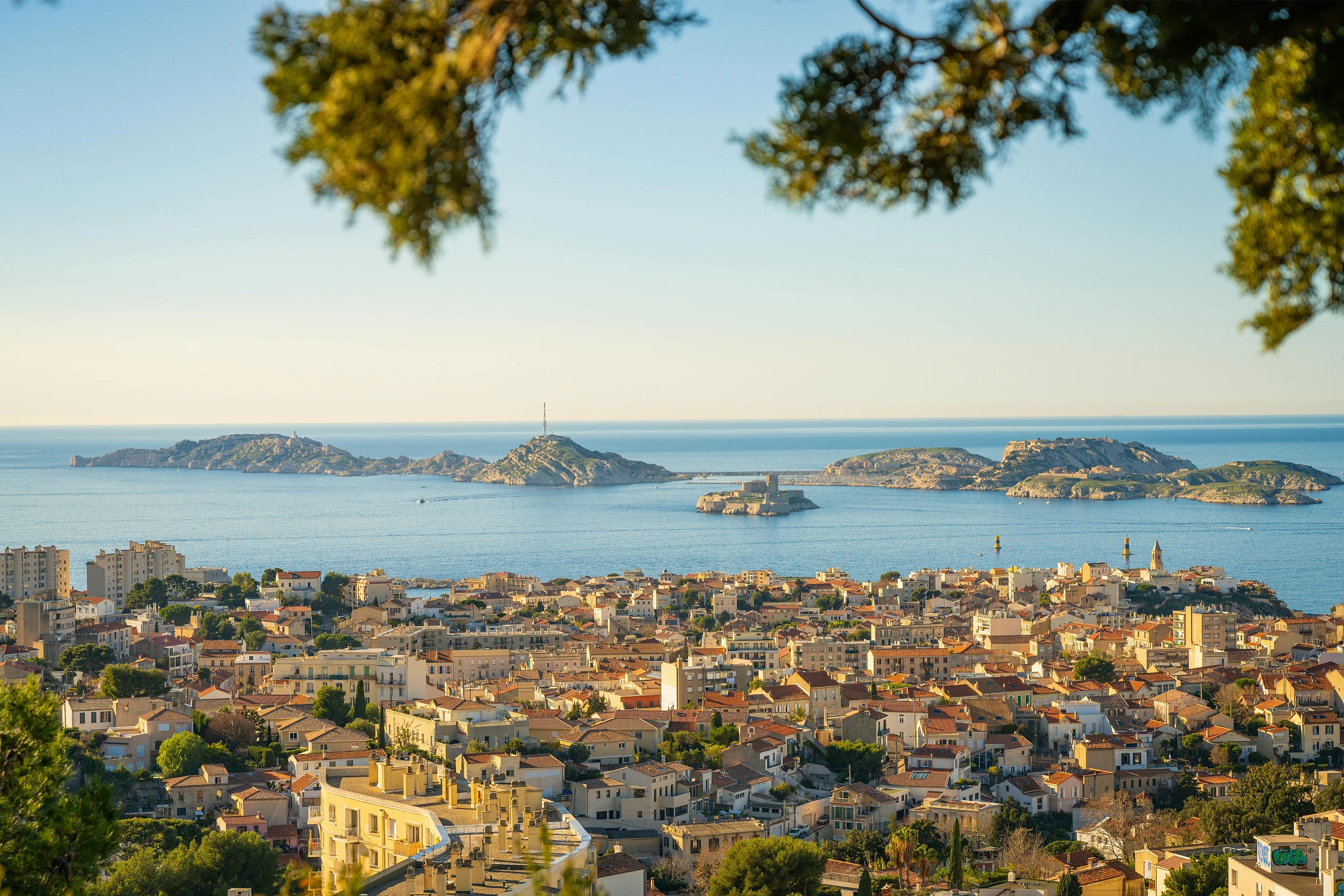
I pulled into Saint-Charles station on a Friday morning in June with nothing but a backpack and zero car rental plans. Three days later, I’d hiked the calanques, eaten the best bouillabaisse of my life, and hopped on a boat to sip a pastis in Les Goudes. All without ever touching a steering wheel.
If you're still on the fence about visiting Marseille without a car, this article should convince you. I’m sharing my complete 3-day itinerary, including the exact transport I used for every leg of the journey: bus lines, metro stations, and water shuttles. It’s practical, tried-and-tested advice, plus a few "oops" moments that will save you from making the same mistakes I did.
How to get around Marseille without a car?
Before we talk about sightseeing, let’s set the stage. Because this is THE question that always comes up: can you really get by without a car in Marseille? The short answer: yes. The long answer: yes, and it’s actually often more enjoyable.
Arriving in Marseille: the TGV, the best starting point

From Paris, the TGV takes about 3h15 to reach Saint-Charles station. And this station is a huge asset: it’s located right in the city center, perched on the heights. As you exit, you head down the monumental staircase and you’re on the Canebière in 10 minutes on foot. The Old Port (Vieux-Port) is 15 minutes away.
My advice: remember to book your Paris-Marseille train ticket in advance on the SNCF Connect website. If you want the best deals, plan your trip 2 to 3 months ahead and stay flexible with your departure date and time.
⚠️ Good to know: Saint-Charles station is the hub for all Marseille transport. Metro lines M1 and M2, the tram, and buses, everything starts here. You don't need anything else to kick off your stay.
The RTM network: metro, tram, bus, and ferry-boat
Marseille has 2 metro lines, 3 tram lines, and over 80 bus lines. For a 3-day trip, the 72h pass for 10.80 € is unbeatable. It gives you unlimited access to the entire RTM network (metro, tram, bus, and the Vieux-Port ferry-boat).
The two lines you absolutely need to remember:
- Metro M1: connects Saint-Charles to the Vieux-Port (2 min, yes, really, 2 minutes)
- Metro M2: serves Joliette (MuCEM), Notre-Dame du Mont (Cours Julien), and Rond-Point du Prado (beaches and bus departures for the calanques)
Water shuttles: Marseille's best-kept secret
This is my favorite way to get around. Every summer (from April to the end of September), the RTM runs water shuttles between the Vieux-Port, Pointe Rouge, L’Estaque, and Les Goudes. This isn't a tourist cruise: it’s a real mode of transport used by locals to get to work or go for a swim.
| Line | Duration | One-way fare | Period |
|---|---|---|---|
| Vieux-Port → Pointe Rouge | 20-25 min | 5 € | Late April to late September |
| Vieux-Port → L'Estaque | 35 min | 5 € | Late April to late September |
| Pointe Rouge → Les Goudes | 8 min | 5 € | Late May to late August |
| Vieux-Port → Les Goudes (via Pointe Rouge) | 30-35 min | 8 € | Late May to late August |
⚠️ Warning: the 24h, 72h, and CityPass passes do not grant access to the water shuttles. You must pay for the ticket separately, in cash only, directly on board. Make sure you have change!
Bikes, scooters, and walking
Marseille’s center is compact. From the Vieux-Port to Le Panier, from Le Panier to the MuCEM, from the MuCEM to the Major: everything is walkable in just a few minutes. For slightly longer distances (the Corniche, the Prado beaches), self-service electric bikes (Le Vélo, Lime, Dott) do the job perfectly. The Geovelo app is great for finding bike lanes.
Day 1: the heart of Marseille on foot
Day one, we barely use any transport. We walk, we get lost, we soak it all in. Marseille is best discovered on foot.
The Vieux-Port in the early morning

I was there at 8:30 AM, which is the perfect time. Fishermen are selling their night's catch on the Quai des Belges, it smells like fresh fish and sea salt, and the seagulls are putting on a show. Norman Foster’s "Ombrière" (that massive mirrored structure) reflects the scene in a somewhat surreal atmosphere.
Grab a coffee at La Caravelle, on the first floor of the Hôtel Bellevue, on the south side of the port. It’s an old sailor’s bar with a stunning view looking down over the boats. The place has a soul that newer cafes just don’t have.
Le Panier: getting lost in the oldest neighborhood in France
From the Vieux-Port, head up the Montée des Accoules. You’re entering Le Panier, the oldest neighborhood in Marseille (and one of the oldest in France, founded 2,600 years ago by the Greeks). Narrow alleys, colorful facades, laundry drying in the windows: it feels like a Mediterranean village dropped in the middle of a big city.
The highlights I loved:
- La Vieille Charité: a 17th-century former hospice turned cultural center. The arcade architecture is superb, and entry to the courtyard is free.
- Place de Lenche: terraces with a view of the port, the perfect spot for an apéro by noon.
- The street art of Rue du Petit Puits and Rue du Panier: murals, tags, stencils. The neighborhood is an open-air gallery.
Noailles: the "belly of Marseille" that guides often skip
Head back down toward the Canebière and veer off toward Noailles. This multicultural neighborhood is Marseille’s permanent market. Bulk spices, olives, oriental pastries, sun-drenched fruits: stalls spill out onto the sidewalks in a joyful Mediterranean bazaar.
This is where I had lunch for next to nothing. A Lebanese sandwich, baklava for dessert, all for less than 8 €. Locals come here to do their daily shopping, and it shows: there isn't a tourist in sight (or barely any).
💡 Tip: on Rue d'Aubagne, stop by the Père Blaize herbalist shop, open since 1815. Essential oils, medicinal plants, Provençal products: it’s a local institution.
Sunset at Notre-Dame de la Garde (bus 60)

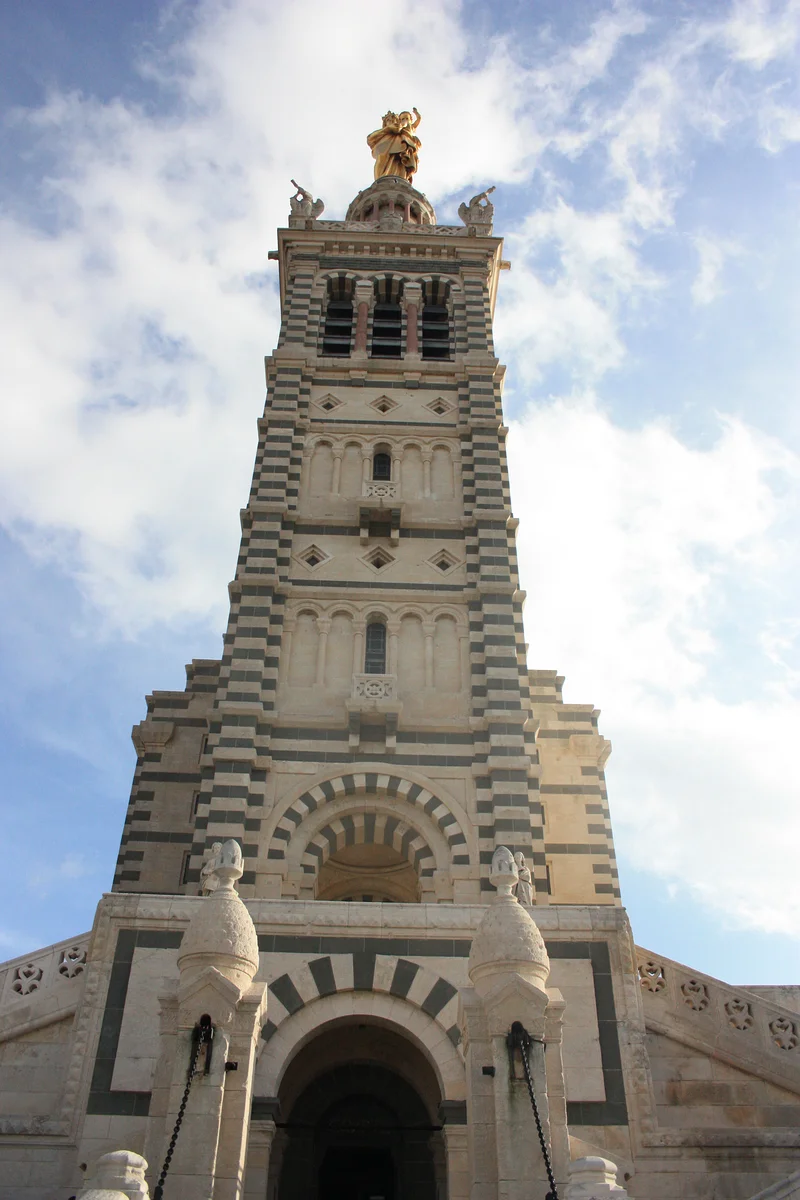
End of the day, head to the "Bonne Mère". From the Vieux-Port, take bus 60 (departure right next to the ferry landing). In 15 minutes, you’re at the summit, 154 meters up. The 360° view is spectacular: the Vieux-Port below, the Frioul islands offshore, and the calanques massif to the south.
Inside the basilica, the Byzantine mosaics and the hanging model ships (ex-voto) tell two centuries of maritime devotion. The people of Marseille are very attached to this place.
My advice: take the bus up, but walk back down. The stroll toward the Vieux-Port through the small streets takes 20 to 25 minutes and offers different viewpoints at every turn.
Day 2: calanques and coastline, 100% car-free
This is THE day everyone waits for, and the question that stresses car-free travelers the most: can you get to the calanques by public transport? Spoiler: yes, and it’s actually what the National Park recommends to limit road traffic.
Hiking option: bus + walk to Sugiton
For hikers, here is the route I followed:
- Metro M2 to Rond-Point du Prado: from Saint-Charles, it takes 10 minutes.
- Bus 21 toward Luminy: departure from the Prado Métro stop, about a 20-minute ride.
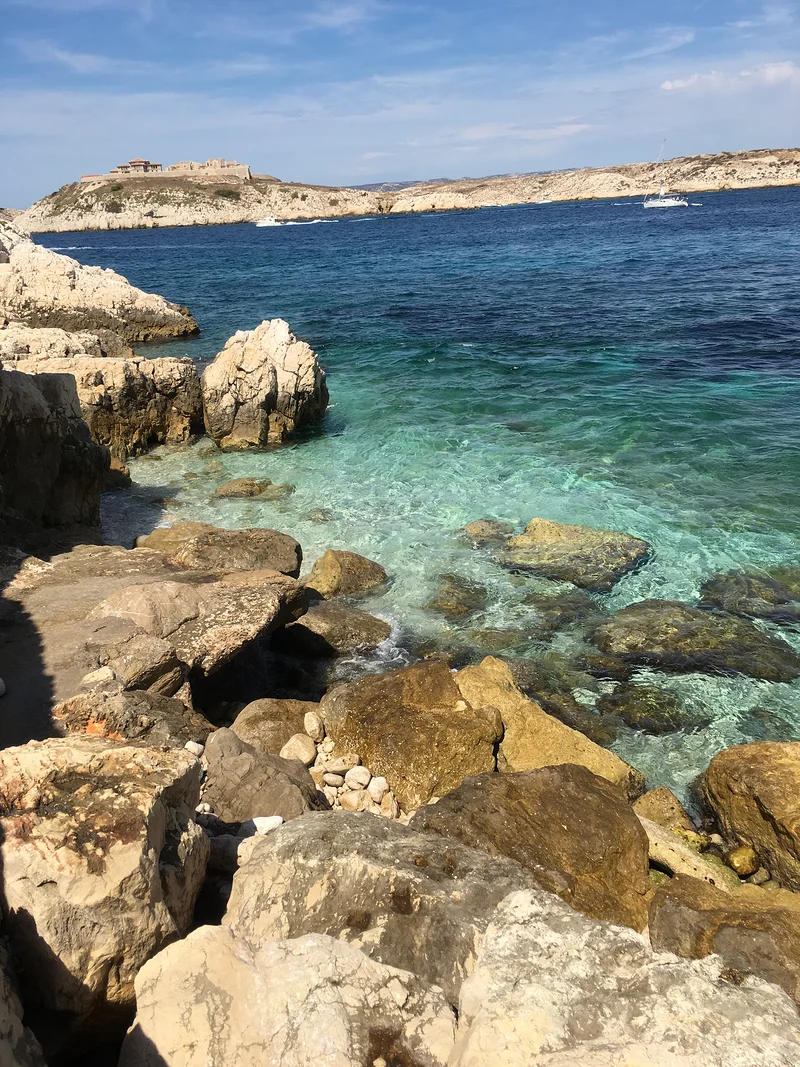
- Walk to the Calanque de Sugiton: 45 minutes on a marked trail, medium difficulty. The path descends through the garrigue with increasingly crazy views of the cliffs and turquoise water.
Swimming at Sugiton is one of those moments where you think: I’m in a national park, in the heart of wild nature, and I took the bus to get here. The contrast with the city is total.
What's great about this hike
- Accessible by public transport, no car needed
- Well-marked trail, doable without being an expert hiker
- Crystal-clear water at the end, perfect for swimming
- Free (excluding transport)
What to plan for
- In summer (June to September), booking a time slot is mandatory to access the massif on certain days. Check the Calanques National Park website.
- No water points or shops on the trail: bring at least 1.5 L of water per person.
- The return is via the same path: save some energy for the climb back up.
- Closed-toe shoes are mandatory; flip-flops are a no-go.
Boat option: calanques cruise from the Vieux-Port
Don't feel like walking? Boat cruises depart directly from the Vieux-Port. Several companies offer 2-hour to 3.5-hour circuits along the calanques, with views from the sea that hikers don't get.
In the past, I’ve tested the 2h15 package that passes by Sormiou, Morgiou, and Sugiton. It’s less physically demanding than hiking, but just as beautiful. The white cliffs plunging into the Mediterranean, seen from the boat, are quite a spectacle.
⚠️ Book in advance, especially between May and September. Spots fill up fast, and morning departures (9:00-9:30 AM) are the most popular. Expect to pay between 25 and 35 € depending on the duration.
End of the day: apéro in Les Goudes by water shuttle

If you’re visiting between late May and late August, don't miss this. From the Vieux-Port, take the water shuttle to Les Goudes (8 €, about 35 min via Pointe Rouge). You’ll land in a small fishing village clinging to the rocks at the edge of the Marseille world.
The atmosphere at the end of the day is magical. The white cabins, the bobbing boats, the golden light on the rocks. I had a pastis on a terrace facing the sea, and I told myself that this village alone was worth the trip.
Return by shuttle (last departure from Les Goudes around 8:20 PM in summer) or by bus 20 if you prefer to return by road (allow 45 min to get to the center).
Day 3: culture, street art, and a getaway to L'Estaque
Last day. We change the pace: a bit of culture in the morning, some urban strolling, and a shuttle getaway to finish on a high note.
The MuCEM and Fort Saint-Jean: free outdoor access

From the Vieux-Port, the MuCEM is a 10-minute walk (or one metro stop on M2, Joliette station). This Museum of European and Mediterranean Civilizations, designed by Rudy Ricciotti, is a spectacular building: an openwork concrete cage set facing the sea.
The pro tip: the footbridge, the rooftop terrace, and the Mediterranean gardens of Fort Saint-Jean are free and open to the public. You can enjoy the architecture, the views of the sea, and the Major Cathedral without spending a cent. If a temporary exhibit catches your eye, admission is 11 €.
Cours Julien: Marseille's creative neighborhood
Take metro M2 to Notre-Dame du Mont. You’ll emerge onto Cours Julien, Marseille’s bohemian neighborhood. It’s a world apart: street art on every wall, thrift stores, record shops, independent bookstores, and craft beer terraces.
The Cours Julien stairs, covered in colorful graffiti, have become one of the most photographed spots in the city. But beyond the Instagram aesthetic, the neighborhood is truly alive. On Saturdays, the square is packed with locals having a drink in the sun. It’s the perfect place for brunch or lunch before hitting the road.
L'Estaque by water shuttle: the last-day mini-escapade

If your return train is in the late afternoon, save 2 to 3 hours for this outing. From the Vieux-Port, the water shuttle to L'Estaque takes 35 minutes and costs 5 €. The crossing follows the northern coast of Marseille and offers a totally different perspective on the city.
L'Estaque is a former fishing village that inspired Cézanne, Braque, and Dufy. You understand why when you see the light. The port is tiny, colorful, with "pointus" (traditional boats) moored along the quay.
The mandatory gourmet stop here: panisses (fried chickpea flour cakes) and chichis frégis (long doughnuts sprinkled with sugar). It’s simple, popular, and delicious. L'Estaque has made it their specialty.
Return by shuttle, then a 5-minute metro ride from the Vieux-Port to reach Saint-Charles station and catch your TGV.
💡 Want to extend your trip? If this Marseille stay gave you a taste for Provence, I wrote a complete article on the good reasons to choose Provence for an exotic getaway. The Luberon, the Alpilles, Avignon: there is so much to discover beyond Marseille.
Where to stay in Marseille without a car? Strategic neighborhoods
Choosing the neighborhood is crucial when you don't have a car. Here are the three areas I recommend, all close to a metro station or the Vieux-Port.
| Neighborhood | Vibe | Transport access | Ideal for |
|---|---|---|---|
| Vieux-Port / Panier | Tourist-friendly but lively, historic heart | Vieux-Port Metro (M1), everything walkable | First-time visitors, couples |
| Cours Julien / La Plaine | Bohemian, street art, bars, and restaurants | Notre-Dame du Mont Metro (M2) | Young travelers, nightlife lovers |
| Joliette / Euroméditerranée | Modern, close to MuCEM and station | Joliette Metro (M2), 5 min from Saint-Charles | Short stays, business travelers |
⚠️ My advice: choose accommodation within a 15-minute walk of Saint-Charles station or a metro station. It makes all the difference for early morning departures to the calanques or the Vieux-Port shuttles.
My practical tips for a successful car-free Marseille
Three days in Marseille without a car, I loved it. But I also learned a thing or two on the fly. Here’s what I wish I’d known before I left.
- Download the SNCF Connect app: train ticket purchases, real-time schedules, routes, traffic alerts... You can even find your public transport routes (metro, bus).
- Download the RTM app: real-time schedules, routes, traffic alerts. It’s essential, especially for buses serving the calanques and the southern neighborhoods.
- Buy your 72h pass as soon as you arrive: at the automated machines in Saint-Charles station. No photo or ID needed; the pass is anonymous and active from the first validation.
- Bring cash for the water shuttles: tickets are sold only on board, in cash. No credit cards, no apps.
- Book the calanques cruise online: morning spots go fast in high season. It’s better to book a few days in advance.
- Bring a water bottle and sunscreen: it seems basic, but between the calanques and Notre-Dame de la Garde, you walk a lot in direct sunlight.
- In summer, check calanques access: on certain days with high heat or wind (mistral), access to the massif is restricted or prohibited. The National Park website publishes updates every morning.
Marseille without a car: my verdict after 3 days
Honestly, I didn't expect it to be so seamless. Marseille has a reputation for being a chaotic city that’s hard to navigate. And it’s true that driving a car there is a nightmare. But on foot, by metro, and by boat, it’s a whole different story.
What did I like best? The water shuttles, without a doubt. Crossing Marseille by sea, with the wind, the light, and the cliffs passing by, is a way of traveling that has nothing to do with a bus ride. And the fact that it’s public transport for 5 € makes it even more satisfying.
Marseille surprised me. With its raw beauty, its energy, its generosity. And with how easy it is to let yourself discover it without a car, neighborhood after neighborhood, calanque after calanque. If you’re looking for a southern city accessible by train that can be explored on foot, this is the right destination.
Enjoy your trip!



Comments (0)
No comments yet. Be the first!