
Visiting MuCEM
In 2013, when Marseille was named a European Capital of Culture, French President Hollande inaugurated a museum whose origins traced back to 1990. This added a major cultural institution to the country's second-largest city.
The story behind a landmark project
MuCEM, officially known as the Musée des Civilisations de l'Europe et de la Méditerranée, stems from a long heritage. It began in the late 19th century with the musée d'Ethnographie du Trocadéro in Paris, followed in the mid-20th century by the musée national des Arts et Traditions populaires. The latter's collections were relocated to the Bois de Boulogne in the 1970s, but due to low visitor numbers, discussions about transferring them outside Paris began in the early 1990s.
Following the closure of the musée national des Arts et Traditions populaires in 2005 and the expansion of its collections to include North Africa and the Near East, Marseille was the natural choice to host the project. MuCEM was built on the site of the Hangar J4, which historically handled ferry links between Marseille and Algiers.
This massive project cost $187,457,500* and stands today as one of Europe's flagship museums.
The 4 parts of MuCEM
The museum is split into four distinct areas:
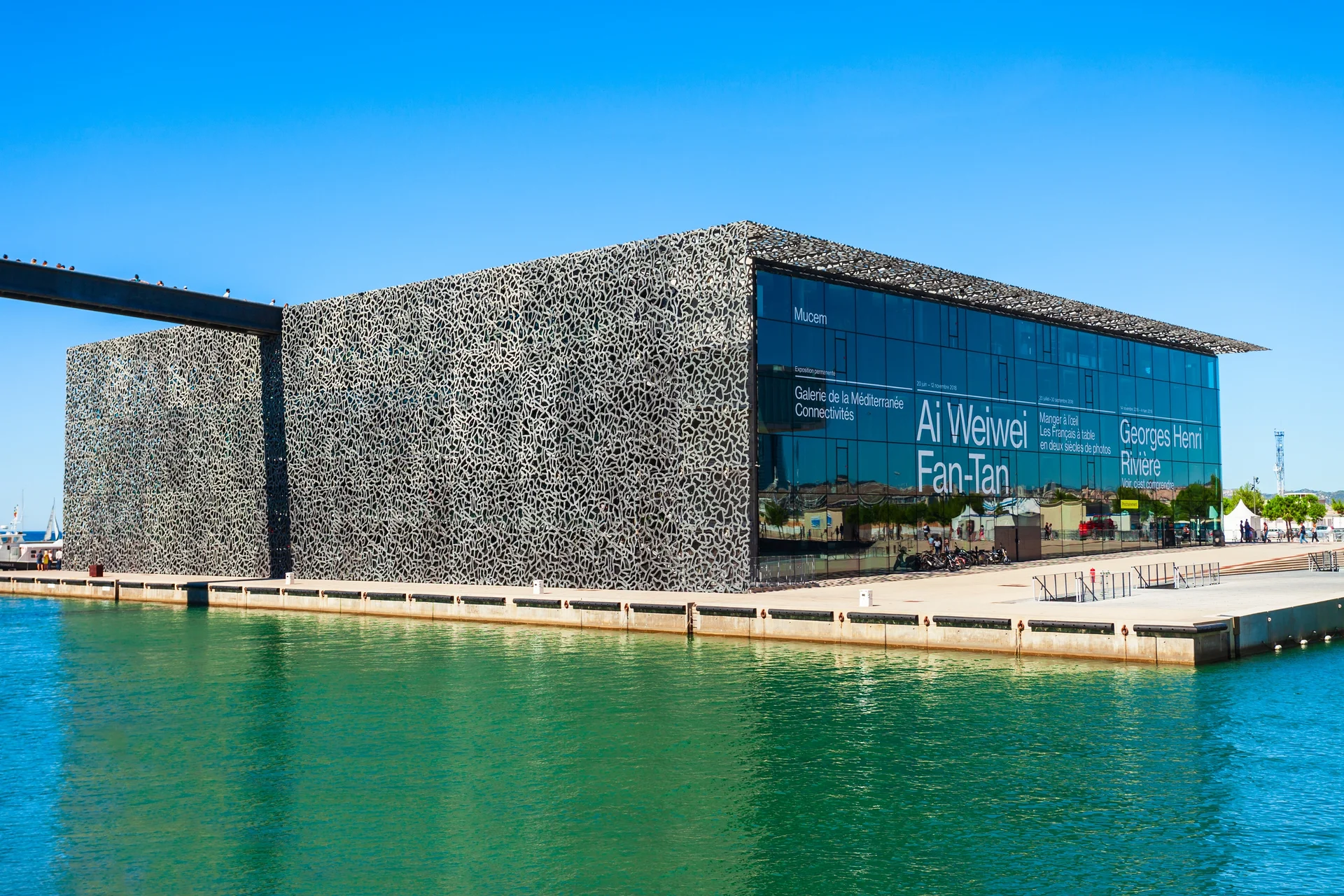
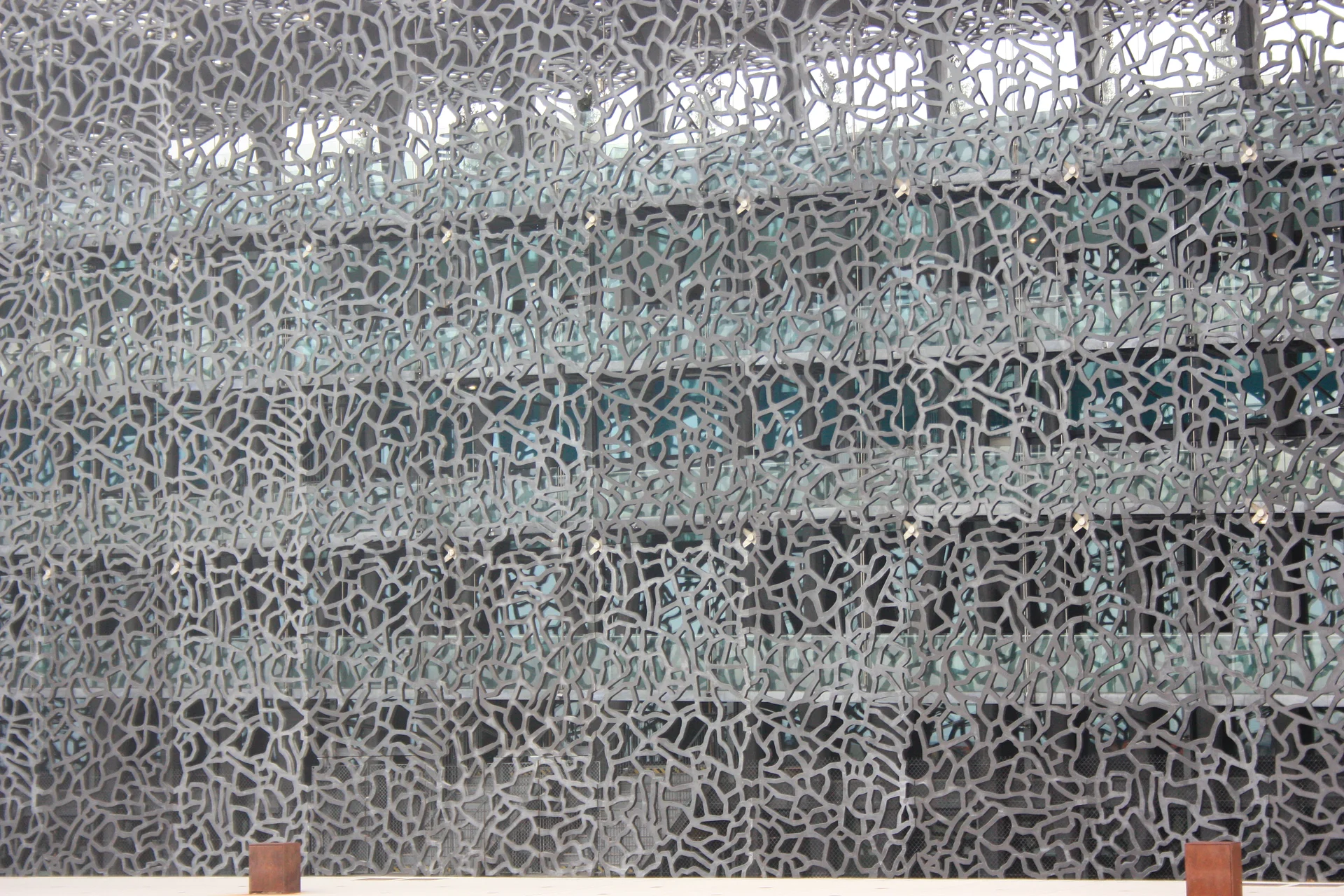
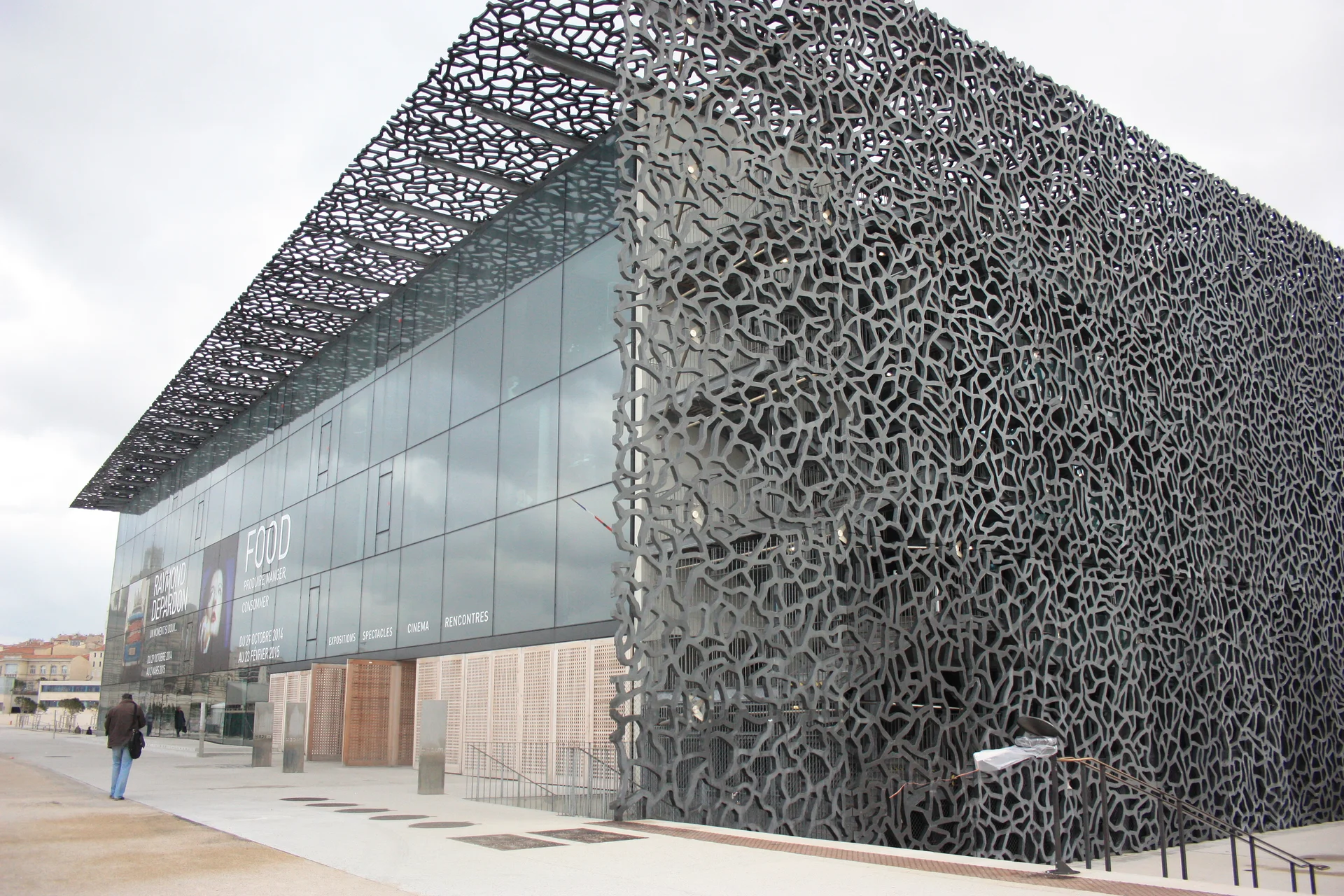
- The J4 is a cube measuring 72 meters on each side, supported by 309 pillars. It houses an auditorium, a screening room, a children's space, bookstores, cafes, and restaurants.
- The Fort Saint-Jean, overlooking the entrance to the Old Port, features a 12,000-square-meter garden, an esplanade for summer events, an exhibition space, and a historical walking trail.
- The I2MP (Institut méditerranéen des métiers du patrimoine) serves as a training center and a venue for cultural gatherings.
- Finally, the centre de conservation et des ressources brings together storage reserves, a reading room, and an exhibition space. Crucially, it allows visitors to handle, examine, and learn about certain artifacts from the museum collections by prior appointment.
MuCEM holds around 1 million items in its collections, cementing its status as a cornerstone of French cultural life.
Opening hours
| Monday | 10:00-18:00 |
|---|---|
| Tuesday | Closed |
| Wednesday | 10:00-18:00 |
| Thursday | 10:00-18:00 |
| Friday | 10:00-18:00 |
| Saturday | 10:00-18:00 |
| Sunday | 10:00-18:00 |
*Information subject to change

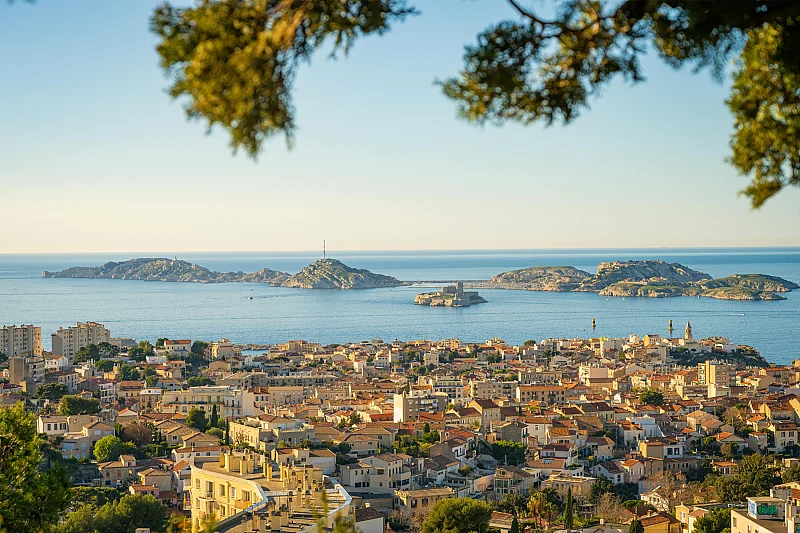
I found this museum very pleasant to visit, but also very big! Between the temporary and permanent exhibits, there is something for everyone. I left with a little more knowledge and some pretty photos. The museum is connected to Fort Saint-Jean: if you walk for a few minutes, you discover a beautiful outdoor space. A great place to spend the afternoon!