
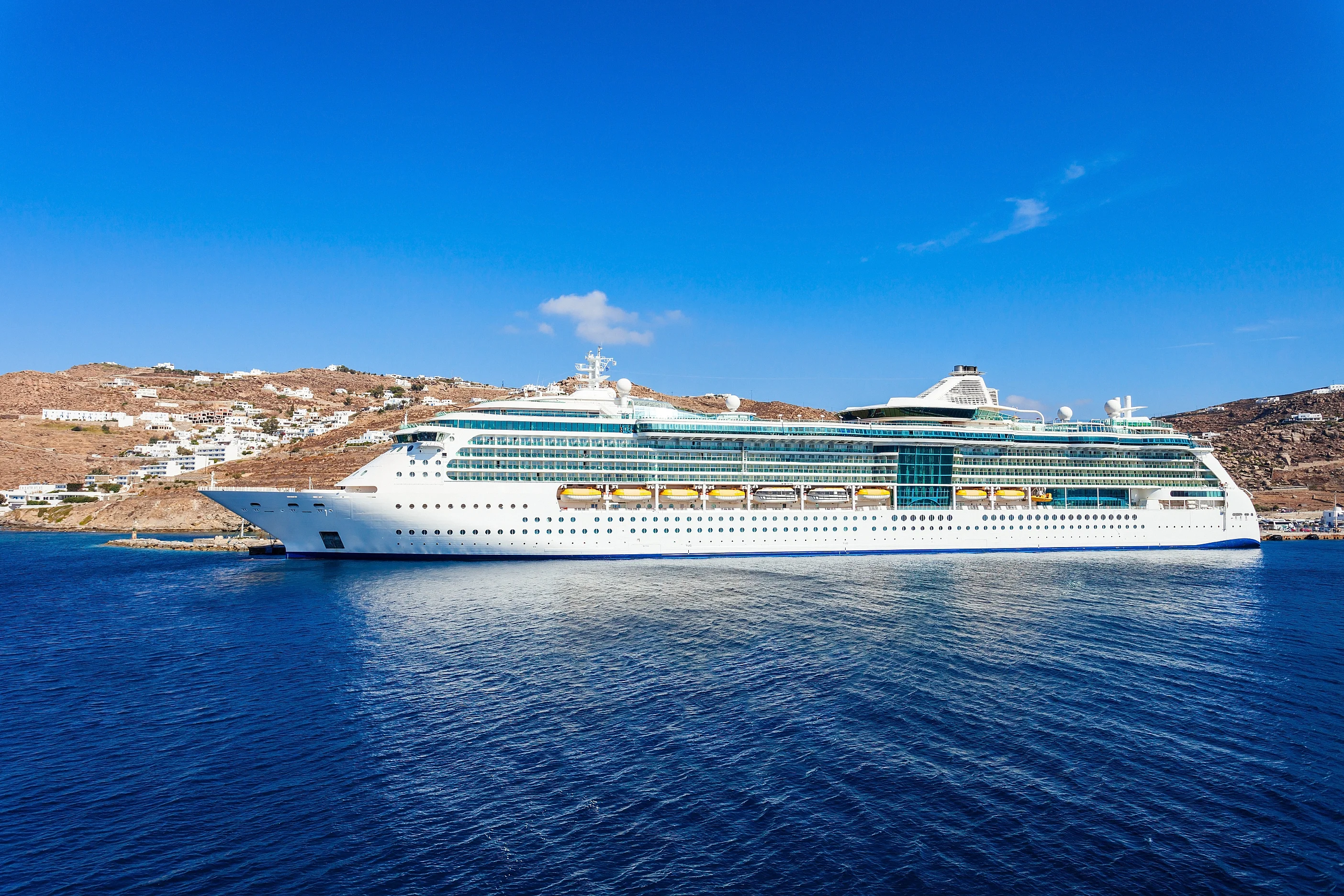
Last month, on a May evening, I was sitting on the pebbles of Centenaire Beach in Nice when a cruise ship glided by offshore, all lit up, heading toward Italy. I grew up between Nice and Liguria and have been traveling this coast by train for years, yet that night, it struck me that I had never truly seen my own region from the sea.
A few weeks later, I started seriously digging into itineraries. And that’s where things get complicated: between the 5,000-passenger mega-ships, the smaller, intimate vessels, departures from Marseille, Genoa, or Barcelona, and prices that can vary sixfold, it’s easy to feel overwhelmed by the options.
So, here is what I learned while planning my own trip. This isn't a brochure comparison, but rather the questions you should ask yourself in the right order, from the perspective of someone who lives on this coast and knows these departure ports from the inside. Just the practical stuff, as always.
The first question: Western Mediterranean or Eastern Mediterranean?
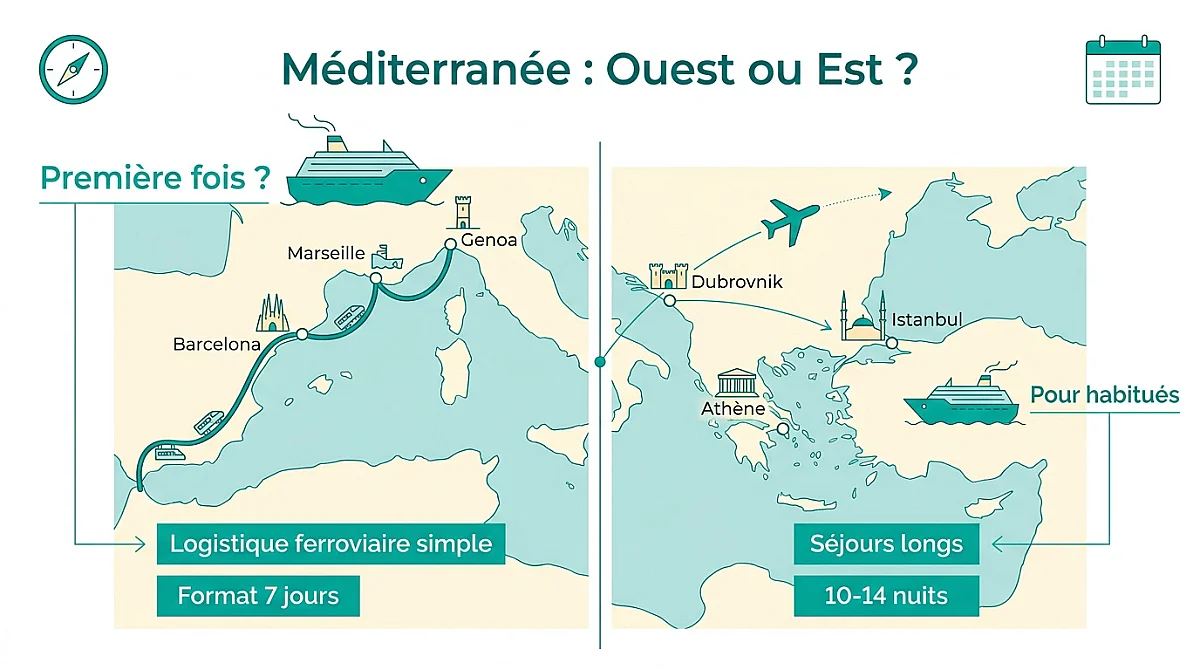 A look at Western vs. Eastern Mediterranean cruises
Before you even look at cruise lines, ships, or prices, you need to decide on the region. Everything else, the length of the trip, the departure port, and your budget, depends on that one choice.
The Western Mediterranean
It’s France, Italy, Spain, the Balearic Islands, and sometimes Tunisia or Malta. This is my home turf. Classic itineraries usually last 7 to 8 days, looping between Marseille, Genoa, Rome, Naples, and Barcelona.
For anyone starting from the south of France, it’s disarmingly simple: you take the train to the port, hop on board, and a week later you’re back exactly where you started. No flights, no transfers, and no lost luggage.
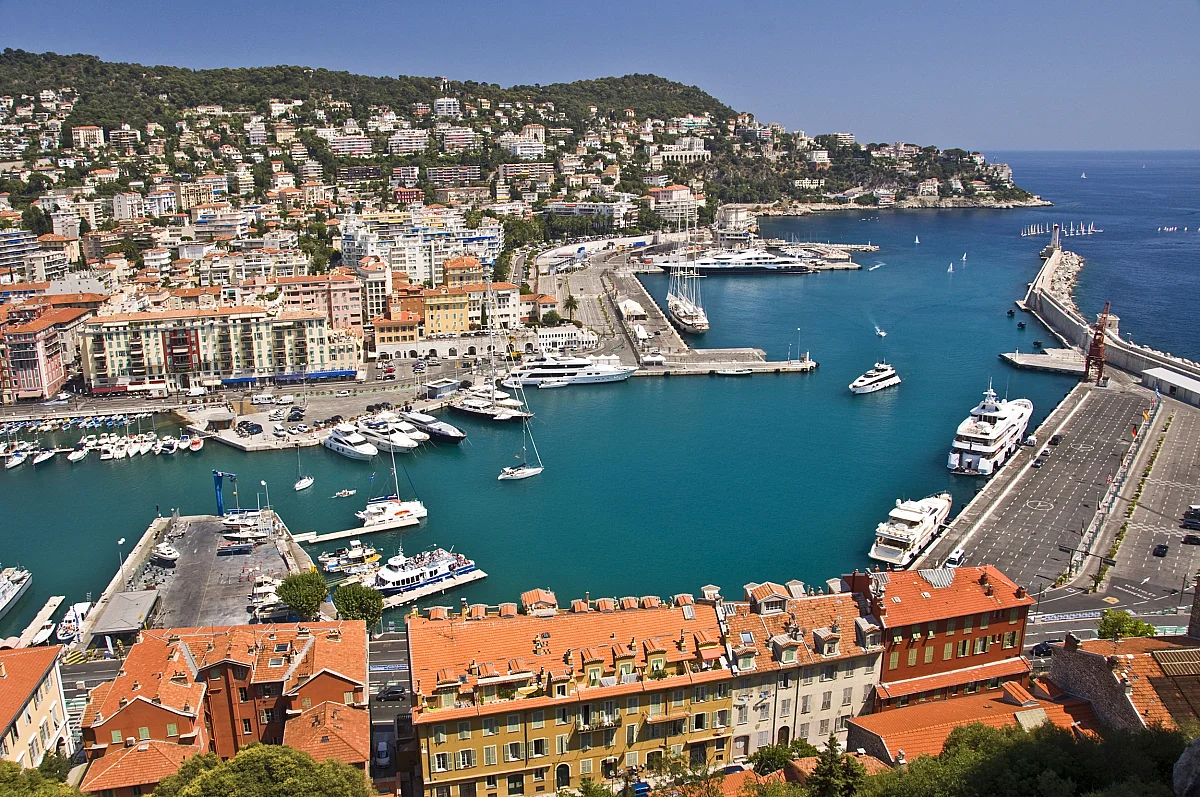 Nice Harbor
The Eastern Mediterranean
Think Greece, Turkey, Croatia, and the Adriatic. The change of scenery is more dramatic and the itineraries are longer (usually 10 to 14 nights), but getting there is more involved: you’ll generally need to fly into Athens, Venice, or Trieste. It’s a different kind of trip that requires a different budget and more logistical planning.
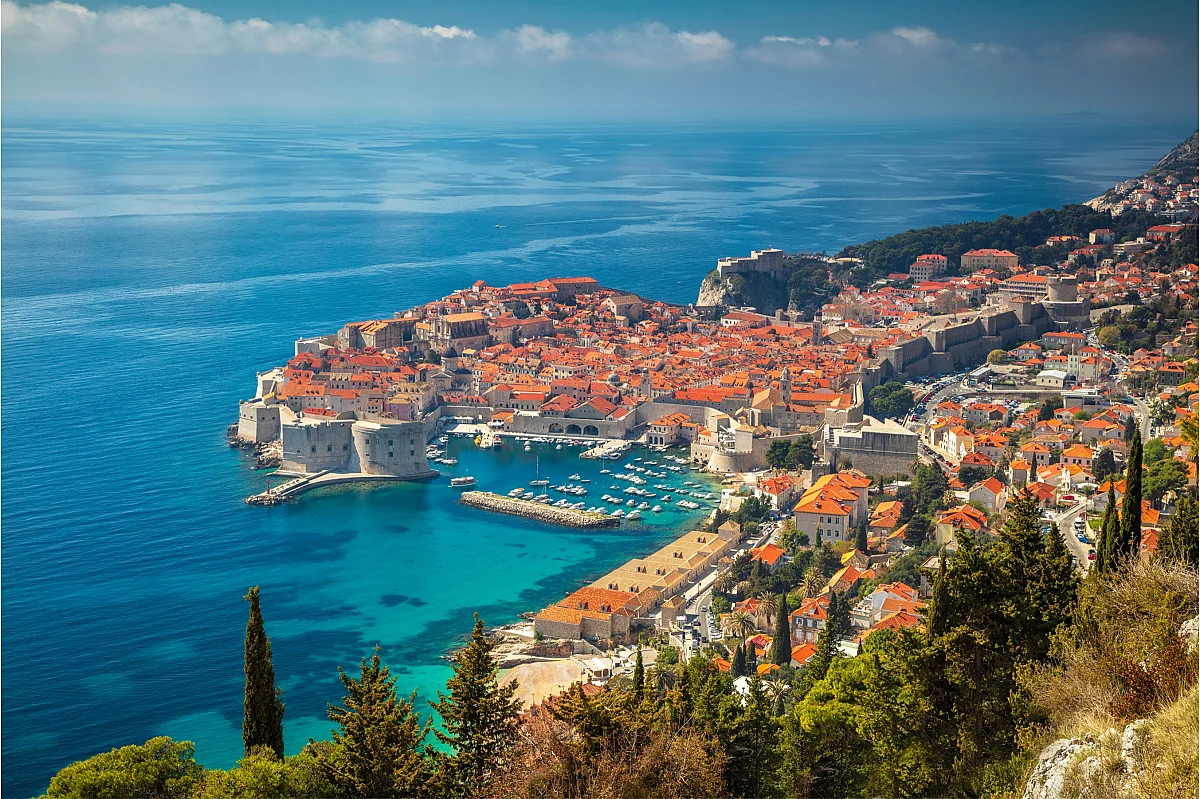 Dubrovnik, Croatia
So, where should you head for your first time?
For me, the answer is clear: the Western Mediterranean. A week departing from Marseille or Genoa is the perfect way to get a feel for life on board and see if the cruise lifestyle is for you, without committing to two weeks of vacation time or a long-haul flight. You can save the East for later, you'll appreciate it all the more then.
To get a better sense of the itineraries available in each region, I spent quite a bit of time comparing options on this site for Mediterranean cruises: you can find all departures from Marseille, Toulon, Cannes, Nice, Genoa, or Barcelona, complete with detailed, port-by-port itineraries. It’s the easiest way to get a concrete look at what’s sailing near you, when it leaves, and how much it costs.
The port of departure: the choice everyone underestimates
It’s the big missing piece in most guidebooks, yet it’s the one thing that truly sets the tone for the start and end of your vacation. As a regular visitor to this coastline, here is my take on the four options in the western basin.
Marseille: the obvious choice for those arriving by train
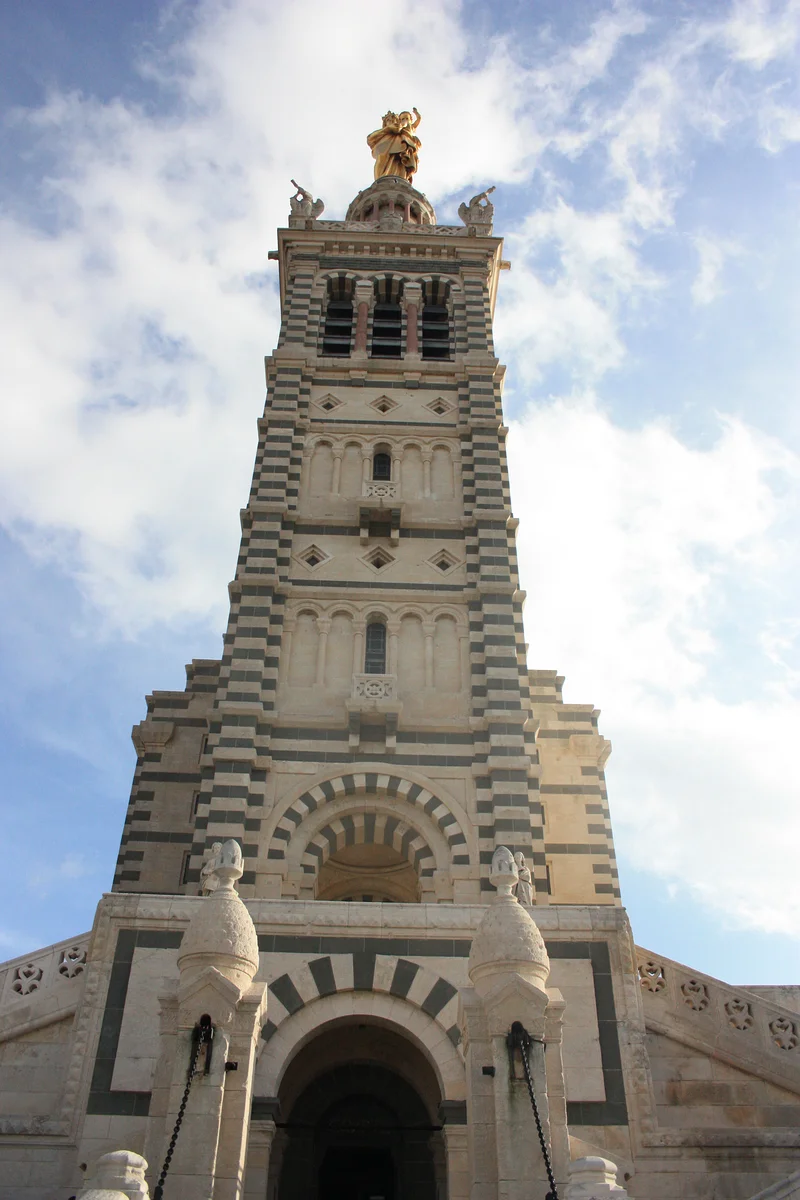
I’ve already mentioned in my article on visiting Marseille without a car just how much of an asset the Saint-Charles train station is: it's located right in the city center and connected to Paris by a 3h15 TGV ride. It’s the same story for cruises. Depending on the size of the ship, boarding takes place at the Môle Léon Gourret (with shuttles available from the city center) or, for smaller vessels, at the J4, just a stone's throw from the MuCEM.
My advice
For Marseille, arrive the day before. A night near the Vieux-Port, dinner on the quay, and the next day you can board feeling relaxed instead of scrambling to catch a TGV that’s running ten minutes late. The ferry companies won't wait for anyone.
Nice and Villefranche: charming, but not for every budget
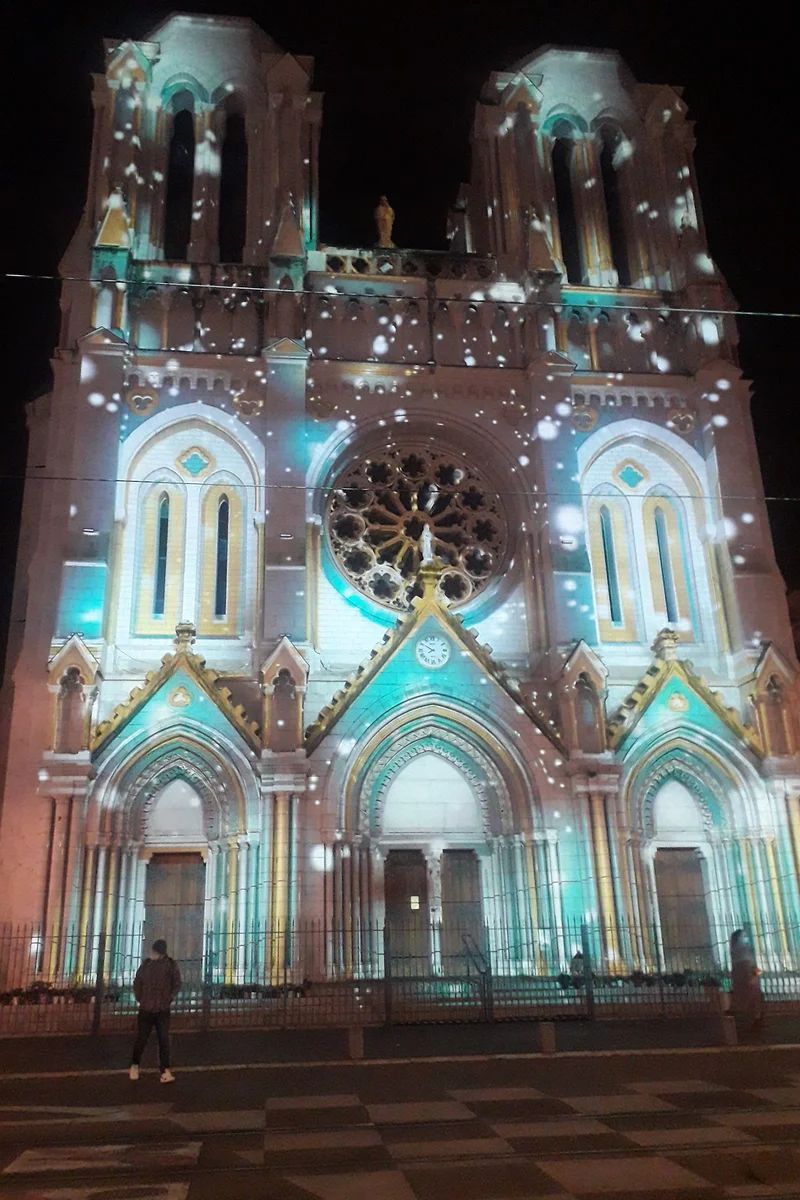
Smaller ships dock in the port of Nice (the Lympia port, which is stunning, by the way), while large cruise liners anchor in the bay of Villefranche-sur-Mer and tender their passengers ashore. It’s a beautiful sight, the bay of Villefranche is one of the finest in the Mediterranean, but in the summer, accommodations in Nice come with eye-watering price tags. This is better suited for those who already live on the French Riviera or travelers looking to combine a cruise with a stay on the Côte d'Azur.
Cannes: the hidden gem everyone overlooks
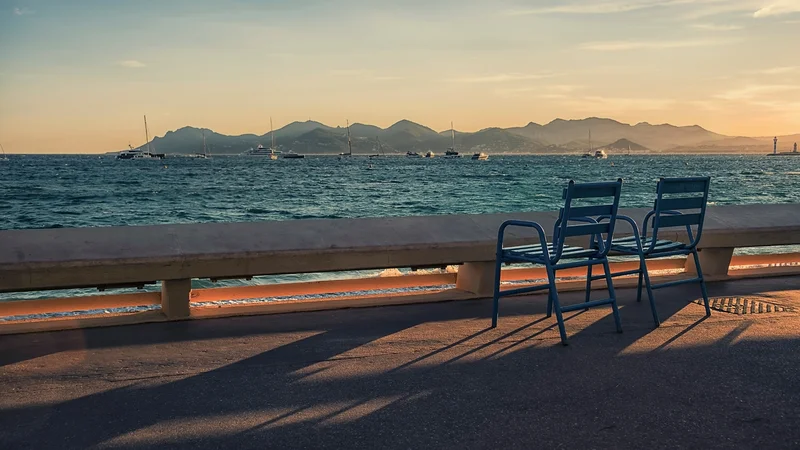
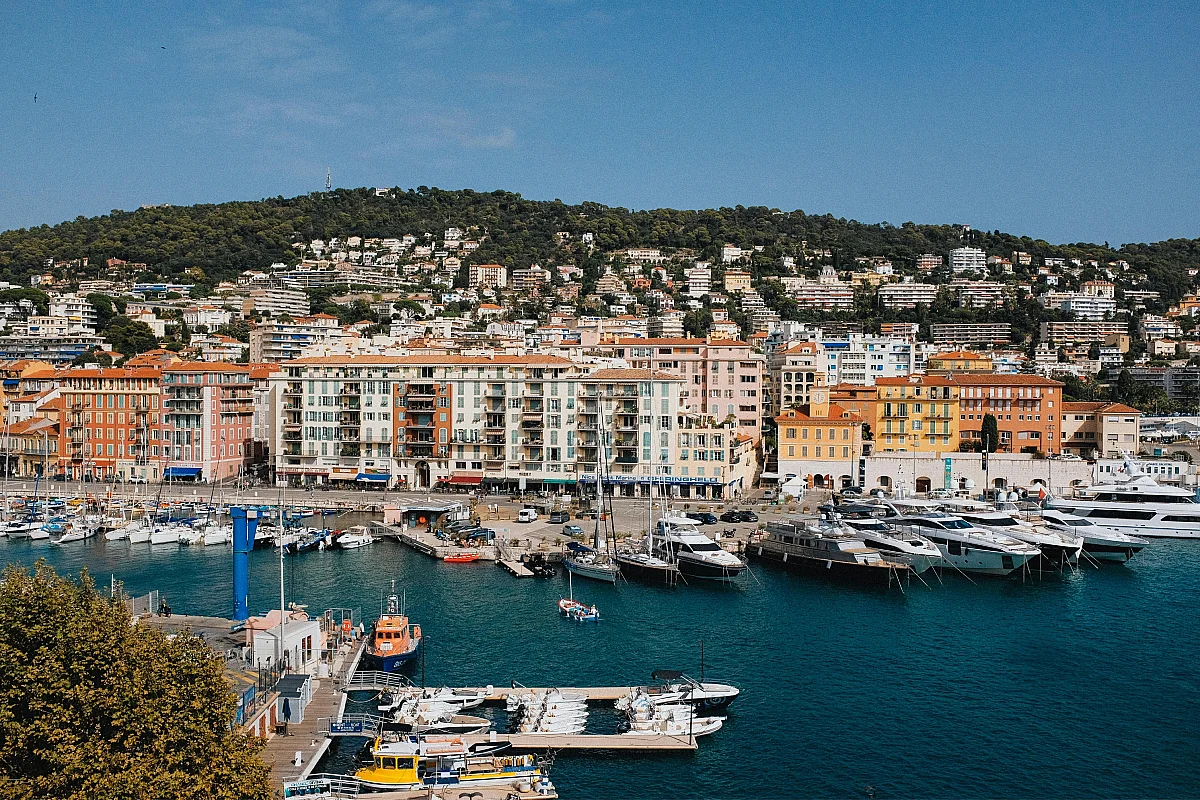 Cannes Harbor
Some MSC itineraries depart from Cannes, and almost no one thinks of it. The port is just a 35-minute regional train ride from Nice, the terminal is manageable in size, and boarding is significantly less stressful than at the major hubs. If your dream itinerary stops there or sets sail from there, go for it.
Genoa and Savona: the Italian map
From Nice, expect about a 3-hour train ride with a transfer in Ventimiglia: it’s a longer trip than heading to Marseille, but the route hugs the coastline for almost the entire way, which isn't a bad way to start a cruise.
The real benefit, however, lies elsewhere: Genoa and Savona are the historic home ports for MSC and Costa, and the exact same itineraries are often sold for less than they are departing from Marseille. For the same route, the savings can easily cover your drink package.
Logistics tip
Opt for a loop, meaning an itinerary that starts and ends at the same port. You only have to handle your accommodation and travel arrangements once, and on the day you disembark, you'll know exactly how to get home.
Big cruise ship or small vessel? Let’s be honest
It’s the question that gets everyone riled up, and I’m going to try to answer it without any snobbery.
The big cruise ships
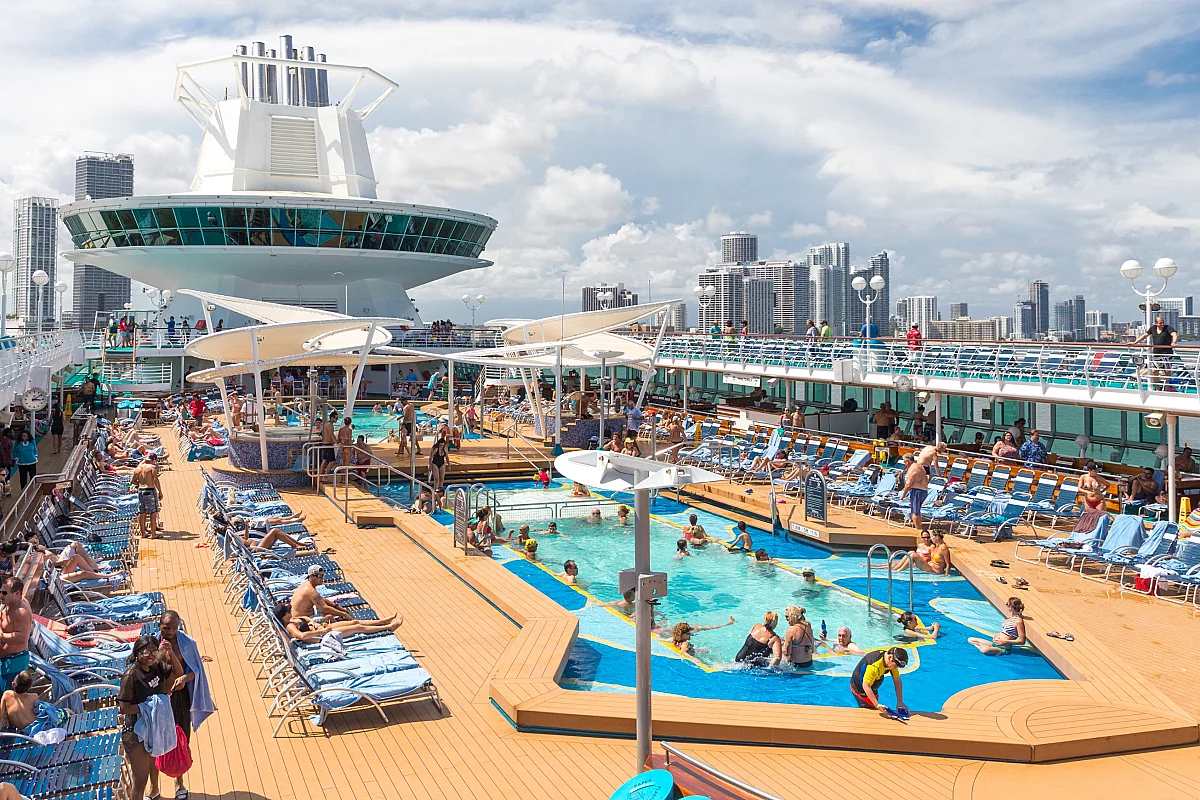 Swimming pools on a cruise ship
Mega-cruise ships (MSC, Costa, Royal Caribbean, with 3,000+ passengers) have one major selling point: the price. In 2026, you can find week-long sailings in the Western Mediterranean for around €400 to €450 per person in an interior cabin, full board included. For that price, you get access to pools, shows, and kids' clubs, it's like a floating small town. It’s an unbeatable value for families or for a first-time cruise experience.
The downside, which I see regularly from the pier, is that when 3,000 people disembark at the same time in Palermo or La Spezia, the city’s atmosphere changes completely for a few hours. Plus, the port calls are sometimes short: you get off at 9:00 AM and have to be back on board by 4:30 PM, so you end up just scratching the surface rather than truly exploring.
Small ships
Ponant and CroisiEurope, with their ships carrying fewer than 1,000 passengers, solve this problem perfectly: they can access ports where the giants simply can't dock (Cassis, Porquerolles, Portofino), and the arrival of 200 passengers doesn't turn a charming village into a theme park.
But the price of admission is a whole different world: expect to pay €2,500 and up per person. It’s not the same kind of trip, nor is it the same crowd.
| Critère | Grand paquebot | Petit navire |
|---|---|---|
| Capacité | 3 000+ passagers | Moins de 1 000 |
| Prix indicatif (7-8 jours) | Dès 400-450 € | Dès 2 500 € |
| Escales | Grands ports (Barcelone, Rome, Naples) | Ports confidentiels (Cassis, Portofino) |
| Idéal pour | Familles, premières croisières | Couples, voyageurs déjà convertis |
Good to know
For your first cruise, don't shy away from the big ships, but choose your itinerary based on the length of the port calls, not the number of waterslides. Aim for stops of 10 hours or more. If the itinerary includes an overnight stay in port, you've hit the jackpot: you get to experience the city at night, once the other ships have sailed and it has returned to its authentic self.
Which season? The answer from someone who lives here year-round
July-August: If you have a choice, avoid it. Ports are packed, prices are at their peak, and the heat can turn certain shore excursions into a real ordeal (visiting Naples or Palermo at 95°F between 11 a.m. and 4 p.m. is nobody's idea of a good time). High season remains the only option for families with school-aged children, however; in that case, the ship itself (pools, AC, kids' clubs) becomes your best ally during the hottest hours.
May-June is a great choice. Calm seas, temperatures in the 70s, beautiful light, and ports of call that are still breathable. This is exactly what I noticed when visiting Vernazza in the Cinque Terre off-season: the same village, without the crowds, becomes a completely different experience. The same principle applies to every Mediterranean stop.
September-October is the other sweet spot, with a bonus that spring doesn't have: the sea has soaked up the summer heat, making swimming delightful well into mid-October. Prices drop significantly compared to August, and the ports regain their local vibe. If I had to pick just one month, it would be September.
Winter exists too, and it's unfairly overlooked: itineraries to Malta, Tunisia, or the Canary Islands mean rock-bottom prices and ports without the tourists. The crossing can be a bit rougher (I've experienced the Gulf of Lion on a ferry in December, believe me), but for curious travelers on a budget, it's a genuine option.
Great deal
The number one way to save money is by being flexible with your dates. For the exact same itinerary, a cabin can cost 30 to 40% less in late May than it does in mid-August. Before you book, always compare the weeks surrounding your ideal travel dates: shifting your trip by just a few days can sometimes be enough to cover the cost of all your excursions.
The price shown isn't the final price: let's do the math
This is the one thing I wish I’d been warned about sooner. The base cruise fare covers your cabin, full board at the main dining room and buffet, and access to common areas. Everything else is an add-on:
- Drinks: This is your biggest extra cost. Packages range from €30 to €60 per person, per day, depending on the plan. Water, drip coffee, and breakfast juices are usually included, but everything else is extra.
- Automatic gratuities: Expect to pay €10 to €15 per person, per day, depending on the cruise line. These are automatically charged to your onboard account, in practice, they aren't optional.
- Organized excursions: These run €30 to €80 per port of call. The good news: in ports like Marseille, Genoa, or Barcelona, you can easily reach the city center on your own, which saves you a bundle.
- Wi-Fi: €5 to €15 per day for a satellite connection that can be pretty temperamental. Take the opportunity to unplug, and just save your mobile data for when you're in port (since most of the Western Mediterranean is in the EU, you won't get hit with roaming fees).
In reality, a cruise advertised at €435 can easily end up costing between €700 and €850 all-in once you factor in tips, a few drinks, and a couple of excursions. It’s not a scam, it’s just the industry's business model. But that’s the figure you need to keep in mind when comparing it to a standard vacation.
My pre-booking checklist
- Port call duration: 10 hours minimum in the ports I'm truly interested in, ideally an overnight stay.
- The accessibility of the departure port by train from my home, and the round-trip route (departure = arrival).
- The season: May, June, or September are my top picks; July and August only if I have no other choice.
- The real budget: cabin price + gratuities + drinks + one excursion per port of call, calculated before comparing different offers.
- The perfect itinerary balance: at least one stop I’ve visited before (for the joy of seeing it again from the sea) and one that’s brand new to me.
My takeaway: choosing a cruise is, first and foremost, about choosing your own pace.
Ultimately, what I realized while planning this trip is that there’s no such thing as the "perfect" Mediterranean cruise in an absolute sense. It’s really about finding the one that matches your pace: a one-week loop out of Marseille to test the waters, an extensive eastern itinerary for those with time to spare, or a smaller ship for those who want to escape the crowds and can afford the splurge.
For me, what makes me want to set sail is the idea of watching the coastline, which I usually see from hiking trails, train stations, and local markets, drift by from the deck: the calanques of Marseille, the bay of Villefranche, and the port of Genoa where my father grew up. Seeing the Mediterranean from the open sea is just another way to fall in love with it. And if you ever find yourself watching a glowing cruise ship glide along the coast at night and feel a little tug at your heart, you’ll know it might just be your turn to go.
Bon voyage!


Comments (0)
No comments yet. Be the first!