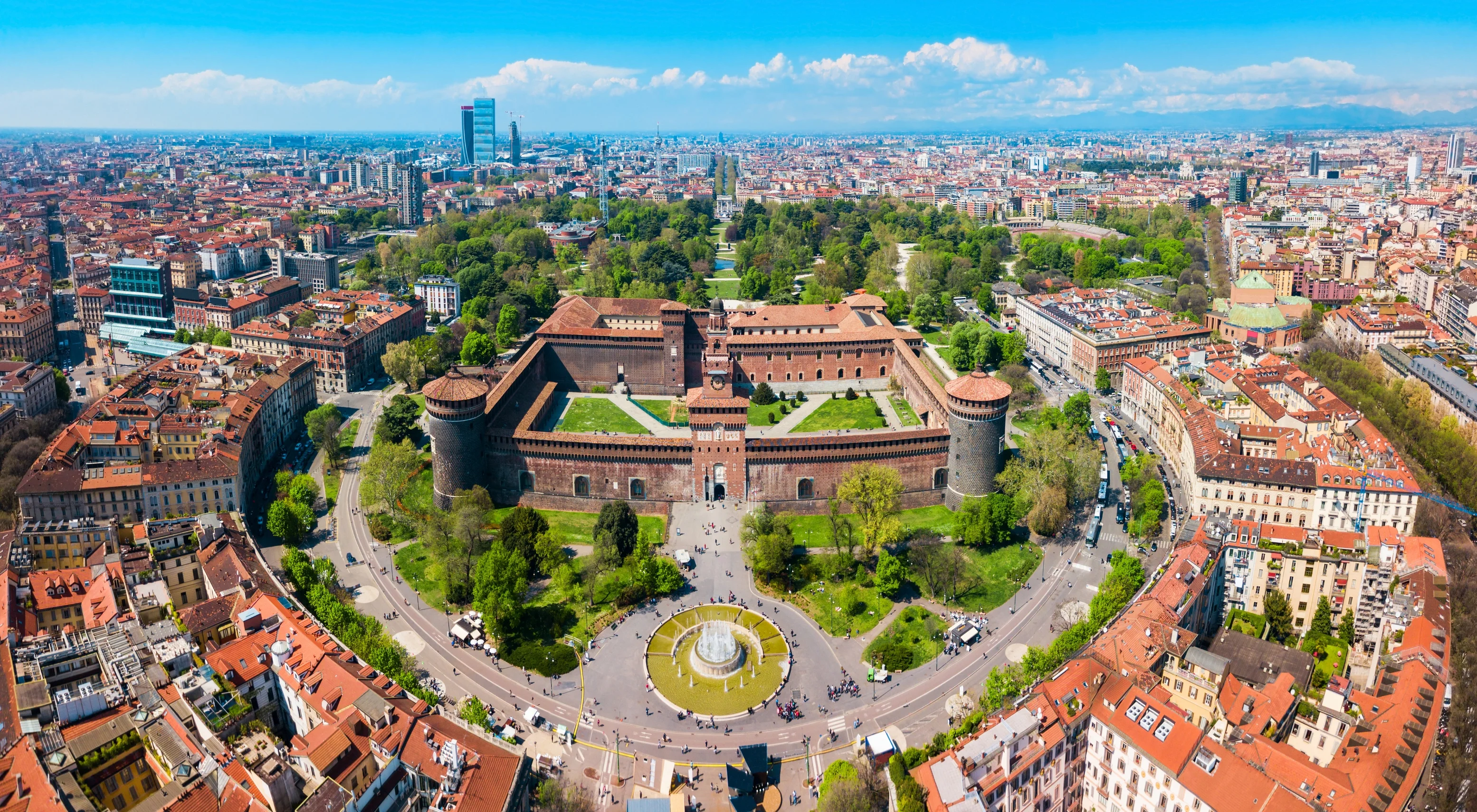
Sforza Castle in Milan

Top 9 most beautiful cities in Lombardy to visit2026 ranking

Discover the most appreciated cities in Lombardy by our members. Feel free to publish your own reviews to take part in this collaborative ranking.

The most beautiful cities in Lombardy

#1 Milan +176 recs

Milan balances its reputation as a global fashion and finance hub with a deep sense of history and authentic local character. Beyond the polished storefronts, you will find a city defined by grand architecture, extensive museum collections, and residential neighborhoods that feel as lived-in as any district in Brooklyn. It is a place that rewards the patient traveler who looks past the initial pace of the city to find its understated elegance.

#2 Varese +41 recs

Skip the hectic pace of Milan. Varese is a garden city where ornate villas overlook the calm of alpine lakes. From the UNESCO-listed sacred trail and the Palazzo Estense to quiet lakeside cycling paths, it offers a refined, lesser-known side of Italy. It is a straightforward, refreshing stop for travelers who want to balance history and the outdoors.

Must-sees

#3 Como +26 recs

Como serves as the main gateway to Italy's most famous lake. It is a city defined by Roman history and a long-standing silk industry, where open-air piazzas sit right on the water. Beyond the historic center, it acts as the primary hub for catching ferries to the picturesque villages lining the shore, or taking the funicular up for a view of the deep blue lake set against the green peaks of the Alps.

Must-see

#4 Sirmione +18 recs

Sirmione sits on a narrow peninsula, putting you right in the middle of Italian history. You can walk the ramparts of a medieval castle surrounded by the turquoise waters of Lake Garda or explore the ruins of an ancient Roman villa. It is a prime spot for those who appreciate historic sites and lake views, with the added bonus of thermal springs and unique white rock beaches for relaxing.

Must-sees

#5 Porlezza +9 recs

Porlezza sits on the Italian shore of Lake Lugano, offering a quiet alternative to the high-traffic spots on the nearby lakes. The pace here is set by mountain hiking trails and the calm lakefront, making it a practical choice for families or anyone looking to disconnect. It is a straightforward, authentic destination right on the border between Italy and Switzerland.

Must-see

#6 San Pellegrino Terme +8 recs

Before it ever appeared in a green glass bottle on a restaurant table, San Pellegrino Terme was a quiet mountain village tucked into the Bergamo Prealps, about forty minutes from Bergamo. Its Belle Époque facades still point to a golden era when wealthy travelers flocked here for the mineral springs, back when the Grand Hotel and the local casino went toe-to-toe with the grandest resort towns in Europe.

Today, the pace is decidedly slow. You will find mountain trails winding up to high alpine pastures and the steady rush of the Brembo river, all far removed from the heavy tourist crowds over at Lake Como.

#7 Bergamo +7 recs

Bergamo is the fourth-largest city in Lombardy, in northern Italy. This charming city is famous for its Città Alta, or its historic center enclosed by Venetian walls. It is an ideal stop for a city break in Italy that offers a nice change of pace from Milan!

Between strolls and local bites

Bergamo draws visitors from all over because it feels almost like stepping back in time. This medieval city features a remarkably well-preserved old town known as the Città Alta. Walking is the best way to take in its unique atmosphere. You can stroll along the Mura walkway, 5 kilometers of defensive walls recognized as a UNESCO World Heritage Site. Catching the sunset from here is a must-do. For an expansive view across the area, you can also head slightly outside the center and tackle the numerous stone steps winding through the Parco dei Colli.

After all those steps, treat yourself to Bergamo's traditional culinary specialties. Polenta is a staple found on every restaurant menu, serving as the base for numerous hearty dishes. Sample some formai de mut (an Alpine cheese), and finish with a traditional dessert like polenta e osei, a sponge cake filled with almond paste and chocolate. Creamy stracciatella gelato was also supposedly invented right here at the La Marianna shop up on Colle Aperto.

A city of art and history

It is impossible to list every historic building in Bergamo. On Piazza Vecchia, check out the white marble Renaissance-style Palazzo Nuovo and the Palazzo della Ragione, the oldest civic building in the city. Climb to the top of the Campanone tower overlooking the square to hear its bell strike 100 times every evening at 10pm, a tradition kept alive for centuries. Four monumental stone gates grant entry into the Città Alta. The Venetian gate of San Giacomo is easily the most striking, with its pale stone contrasting against the adjacent viaduct. Piazza Duomo brings together several religious landmarks including the Bergamo Cathedral, the striking Basilica of Santa Maria Maggiore, and the ornate Colleoni Chapel. Art enthusiasts can round out their trip at the Accademia Carrara, which houses an extensive collection of Italian masters from the 15th through the 19th centuries.

When to go

Bergamo works as a year-round destination, offering rewarding walks and cultural outings in every season. Winters bring cold temperatures typical of northern Italy, so pack a heavy coat if you visit during the colder months.

How to get there

Reaching Bergamo is straightforward. If you are flying, the city is served by its own international airport, Il Caravaggio, located just 5 kilometers away. Bergamo is also situated about 50 kilometers from Milan, making it easy to access by train or car via a 1-hour drive on the A4 and E64 highways.

#8 Stresa +3 recs

Often called the pearl of the Verbano, Stresa sits along the western shore of Lake Maggiore as a truly unique lakeside jewel. Documented as « Strixia » as early as 998, the former fishing and farming village evolved during the Middle Ages with the arrival of the aristocracy into a haven of refinement and elegance. The construction of palaces and their gardens during the 16th and 17th centuries shaped the destiny of a town that continues to draw lovers of exceptional architecture and pristine natural settings.

Timeless villas and parks

The scenery here is captivating from every angle. Right at the entrance to Stresa, Villa Pallavicino immerses visitors in 19th-century romanticism. Built in 1855, this neoclassical estate is the first major landmark you encounter, though its incredible 16-hectare park draws the most praise. Functioning as both a botanical and zoological garden, this hillside terrace overlooking the lake features centuries-old trees, exotic flowers, free-roaming kangaroos and monkeys, splendid aviaries, and the stone remains of a 13th-century fortress wall.

Up on the mountain slopes, the Alpinia botanical garden sits at an altitude of 800 m, hosting a thousand different plant varieties from the Alps, the Caucasus, and Japan. The views from up here are phenomenal. Such sweeping vistas drew literary greats like Stendhal, Dickens, and Lord Byron, though Hemingway captured its essence best in « A Farewell to Arms ». The author frequented the Grand Hotel des Borromean Islands, where a suite now honors his stay. Like the town's other luxury properties, the Art Nouveau landmark is lavish. This architectural style defines much of the area, with the 18th-century Villa Ducale and the 1900 Villa Dell'Orto serving as prime examples.

La dolce vita by the islands

Art and history line the streets, from the town hall housing the Pietro Canonica Museum with its collection of sculptures to the 1790 church of Chiesa dei Santi Ambrogio e Teodulo and its striking ceilings. Piazza Cadorna forms the heart of the village, lined with charming boutiques and narrow, colorful, flower-filled pedestrian lanes. The atmosphere is undeniably picturesque, complete with shady café terraces and restaurants offering local specialties. Expect cold cuts, risotto, goat cheese, and gorgonzola, followed by rich desserts like traditional butter biscuits dusted with sugar known as Margheritine or buckwheat cake called Stinchett.

The lakefront promenade leading down to the boat terminal is a quintessential Stresa experience. Walking beneath towering palm trees with views of the entire Borromean Gulf and historic estates is unmatched. Across the water stands the clifftop hermitage of Santa Caterina del Sasso, dating back to the 12th century, alongside the famous Borromean Islands, where three distinct island villas and gardens are open for exploration.

When to go

The spring bloom in April and May brings vibrant color to Stresa, though spring weather can be unpredictable. Summers are warm and reliably sunny from June through September, which also brings peak crowds. The summer music weeks draw international artists and performers to the area.

Getting there

Driving to Stresa is straightforward via the highway network connecting Milan and nearby Alpine crossings. Regular train service connects Milan to Stresa in about an hour and twenty minutes, with regional rail links making access easy from major European hubs. The closest airport is Milan-Malpensa, located 20 km from Lake Maggiore, with direct shuttle buses and regional connections servicing the lake.

Must-see

#9 Bellagio +2 recs

Perched in northern Italy, Bellagio is often called the most beautiful town in the country, and it is hard to argue with that reputation. Its popularity stems from its prime position on the shores of Lake Como, one of the most sought-after destinations in Italy. A single day here is usually enough to soak in the atmosphere before heading off to explore the rest of the lake.

A village that attracts the elite

Locals know the town by another name, the Pearl of the Lake, because it sits exactly at the junction between the two southern branches of the lake. This strategic location made it a regional power during the Middle Ages. By the 18th and 19th centuries, Bellagio transformed into an exclusive vacation spot. Wealthy figures began snapping up waterfront villas, cementing its status among the European elite. That reputation holds today, as Bellagio remains a playground for deep-pocketed travelers. You will see plenty of high-end villas and luxury hotels, but those on a tighter budget can still enjoy the experience. Simply walking the lakefront, where benches are perfectly positioned to frame the water and sculptures, offers a front-row seat to the scenery.

Pleasant places for a stroll

Bellagio is not a place for checking off a long list of tourist sites. It is a town meant for wandering and staring at the view. The old town is charming, full of steep alleys and stone staircases lined with picturesque facades. Grab a coffee on Salita Serbelloni, a street that winds up from the port into the heart of the village. For gardens, do not miss those at Villa Melzi, laid out by Luigi Canonica and Luigi Villoresi around the house that architect Giocondo Albertolli built between 1808 and 1810. The grounds include a neoclassical palace, a chapel, and an orangery. You can also take a guided tour of the sprawling gardens at Villa Serbelloni, which feature grottoes, statues, and fountains on a site that dates back to the time of Pliny the Younger. Finally, visit the lakeside church of San Giovanni and the Basilica of San Giacomo, which houses several medieval artworks.

When to go

Spring is arguably the best time to visit, when the flowers bloom and give the town a soft, romantic feel. Summer is equally pleasant and great for watersports, but be prepared for heavy crowds.

How to get there

From North America the gateway is Milan Malpensa, the closest airport with direct transatlantic flights. Most visitors then reach Bellagio by starting in the city of Como, which is less than an hour from Milan by train or car. If you decide to drive, keep in mind that the lakeside roads are very narrow and prone to gridlock during the summer. A better alternative is to hop on a ferry. Three companies serve the towns around Lake Como, with regular schedules that ramp up during the summer season.

Latest reviews

Right on the lake

A lovely little town sitting right on the edge of its lake, Como is well worth a stop. My favorite part was definitely the gorgeous cathedral. I took my time admiring its remarkable facade and unique…

564

Economic capital

For me Milan is an economic and international metropolis. That might appeal to shopping fanatics and city vibes. I am going to pass, even though you have to give it credit with its fashion boutiques,…

493

A pretty medieval town

For my part, I really liked my visit to the city of Bergamo. It is true that the center is smaller than in Rome for example, but there is a great sense of ease to life there. The medieval alleys, the…

150

A vibrant city

If you like energy and big cities, then you should really like Milan. It is a very dynamic city where there is always something to do or see. Culture is very present there, as are fashion and architec…

103

Very pretty city

I really liked my stay in the city of Varese. It is a very pretty Italian city on a human scale. The center is lively and vibrant, especially on nice days. You eat well there and there are fewer crowd…

86

Rankings by travellers, for travellers

Our rankings are powered by thousands of reviews from travelers like you, not the arbitrary pick of a single editor. Every positive review you publish raises the destination’s score.

1 positive review = +1 reco

Your voice matters!

Have you travelled and discovered amazing places? Share your experience and help the community rank the most beautiful destinations! Sign up for free to post reviews and make your voice heard.