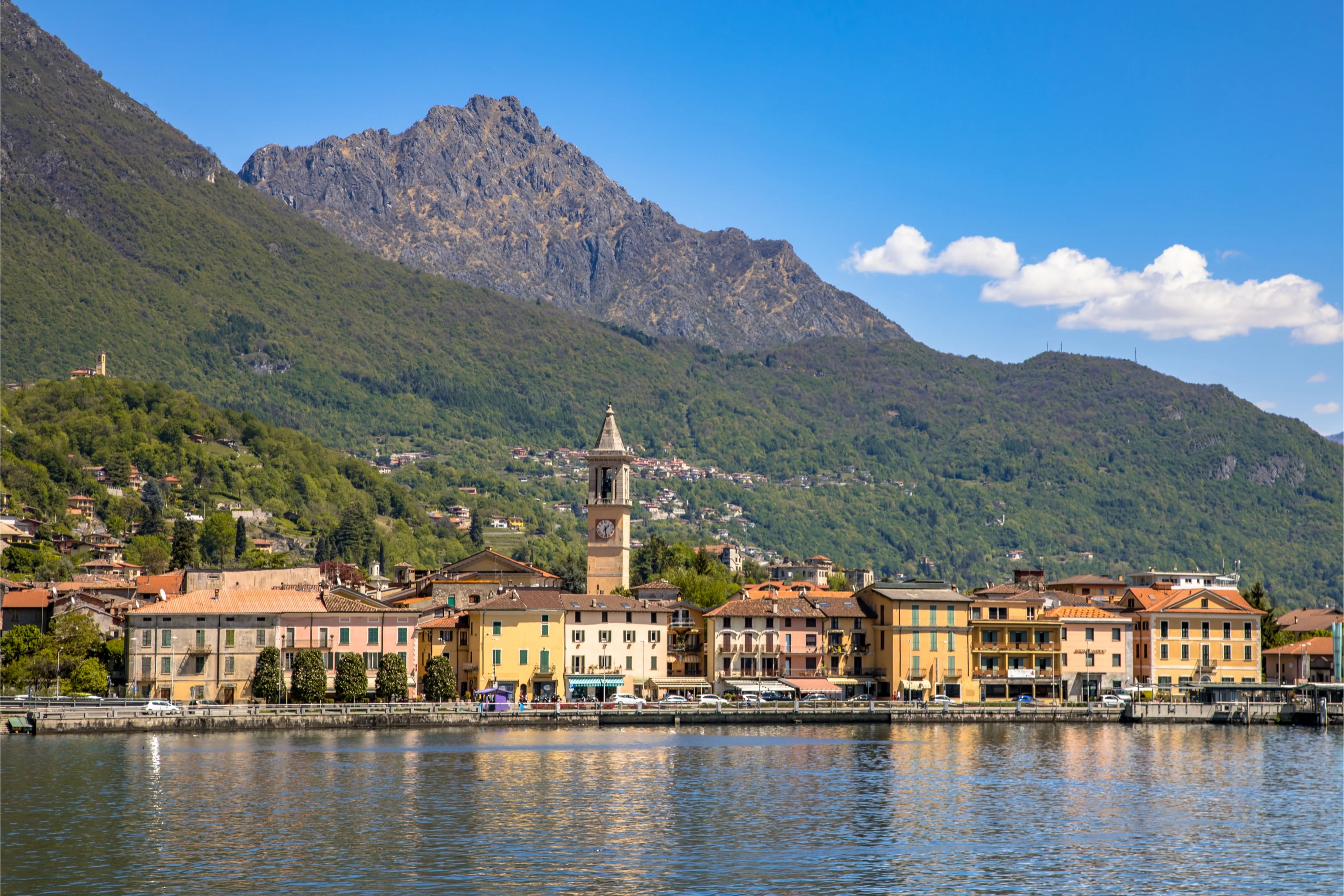
Often called the pearl of the Verbano, Stresa sits on the western shore of Lake Maggiore as a truly one-of-a-kind destination. A treat for the eyes and the senses, records mention “Strixia” as early as 998, though it took the Middle Ages and the arrival of the aristocracy to transform this small farming and fishing village into a hub of refinement and elegance. The construction of palaces and their gardens during the 16th and 17th centuries sealed the fate of a town that attracts fans of exceptional architecture as well as travelers drawn to an environment so polished it feels surreal.
Timeless villas and parks
The setting is enchanting, offering postcard views at every turn. Right at the entrance to Stresa, the Villa Pallavicino pulls visitors into 19th-century romanticism. Built in 1855, this neoclassical noble residence is the first landmark you spot, but its incredible 16-hectare park draws the most acclaim. Part natural woodland, this balcony overlooking the lake overflows with century-old trees and exotic flowers. Functioning as both a botanical garden and a wildlife park, it is home to free-roaming kangaroos and monkeys, stunning aviaries, and the ruins of a 13th-century fortress wall.
Farther up the mountainside, a thousand plant species await at Alpinia, a botanical garden sitting at an altitude of 800 m that allows alpine, Caucasian, and Japanese flora to thrive. The views from up here are phenomenal. That exact scenery captivated literary greats like Stendhal, Dickens, and Lord Byron, though Hemingway captured its essence best in his novel A Farewell to Arms. The author frequented the Grand Hotel des Borromean Islands, where a suite now bears his name in his honor. Like the town's other high-end properties, the Art Nouveau building is lavish, a design theme echoed in the 18th-century Villa Ducale and the 19th-century Villa Dell'Orto.
La dolce vita on the lake
Culture is everywhere here, and the Town Hall houses the Pietro Canonica Museum showcasing the artist's sculptures. The 1790 church of Chiesa dei Santi Ambrogio e Teodulo stands out for its ornate ceilings. Piazza Cadorna serves as the heart of town, lined with charming boutiques and narrow, colorful, flower-draped pedestrian alleys that feel suspended in time. The atmosphere is picturesque, shaded café terraces boast immense charm, and restaurants abound alongside local culinary specialties. Cured meats, risotto, goat cheeses, gorgonzola, and decadent desserts like pralines, Margheritine (butter cookies topped with sugar), or buckwheat cake known as Stinchett fill local menus.
The lakefront promenade leading to the ferry terminal acts as Stresa's signature experience. As the Borromean Gulf opens up before you, walking beneath towering palm trees surrounded by grand estates defines pure relaxation. Across the water sits the hermitage of Santa Caterina del Sasso, clinging to a sheer cliffside since the 12th century, alongside the famous Borromean Islands offering unforgettable boat excursions. Three of these islands are open to visitors, each showcasing stunning villas, palaces, and gardens.
When to go
The spring floral bloom in April and May is spectacular in Stresa, even if the weather can prove unpredictable. Summers feature a temperate climate with reliable sunshine from June to September, though crowds peak during these months. The classical music weeks bring international artists to town every summer.
Getting there
Driving is straightforward thanks to highway connections, whether you are coming via Milan or other regional hubs. Bus lines connect Stresa to major European cities. By train, high-speed rail links get you close, and the Stresa railway station sits about an hour and twenty minutes from Milan. The closest airport is Milan-Malpensa Airport, located 20 km from Lake Maggiore, with direct bus and shuttle lines running to the lake.