Marrakech 9

Top 7 most beautiful cities in Morocco to visit2026 ranking

Photo : Sebastien Poncelet

Discover our members' favourite cities in Morocco. Feel free to publish your own reviews to take part in this collaborative ranking.

Favourite cities in Morocco among our members, approved by the editors

#1 Marrakech +67 recs

Marrakech is an assault on the senses. In the narrow alleys of the medina, the scent of cumin mingles with tanned leather as the call to prayer echoes from the Koutoubia. The red city offers labyrinthine souks, secret riads with tile-covered patios, and tanjia slow-cooked in hammam ashes. It is an intense, occasionally disorienting experience that stays with you.

Must-sees

#2 Rabat +17 recs

Morocco's capital sits right on the Atlantic coast, offering a side of the country that feels remarkably lived-in and authentic. Founded in the 12th century, this imperial city has moved past its museum-piece status to become a functional, thriving hub where you can get a real sense of daily Moroccan life.

At the heart of Moroccan history

The Kasbah des Oudayas is a UNESCO World Heritage site and Rabat's most essential stop. Walking through this former military fortification is a direct line into the country's political and cultural past. You can wander the narrow, whitewashed alleys and enjoy the surprising quiet of the kasbah, which sits just steps away from the Plage de Rabat. We also recommend the Musée de l'histoire des civilisations, which lays out the history of Morocco from prehistoric times through the contemporary Islamic era.

About two kilometers from the city center, you will find the nécropole de Chellah. Built on the ruins of an ancient Roman city, this site is atmospheric and layered with history. Look for the stork nests perched atop the crumbling tombs and take in the expansive view over the le fleuve Bouregreg. It is a peaceful, poetic spot rather than a somber one, and it is best visited at sunset when the light hits the ruins just right.

Life at the Moroccan pace

If you want to shop, head to the local souk de Rabat. It is far less crowded than the markets in Fès or Marrakech, allowing for a much more relaxed experience. You will find the best leather goods along the Rue des Consuls. If you feel like getting lost, duck into the side alleys to hunt for the best pastillas (savory meat and vegetable pies), traditional tajine, or, for those with a sweet tooth, chebakias (orange blossom, anise, and almond pastries), briwates (almond-filled triangles), and other regional confections.

To decompress after the noise of the market, head to the le jardin d'essais botaniques. Created in 1914, these gardens are the perfect place to embrace the local philosophy that those in a hurry are already dead. While the greenery is a great place to walk, we suggest skipping the swimming at the local beaches, as the sea is often rough and unfortunately prone to litter.

When to go

Rabat has an oceanic climate where temperatures rarely climb above 86°F (30°C), making it a comfortable year-round destination. To minimize the chance of rain and maximize the sunshine, plan your trip between May and October.

Getting there

There are numerous direct flights from Paris to Rabat, with prices ranging from 80 EUR (about $87) out of Paris-Beauvais to 200 EUR (about $217) from Orly or CDG.

Must-sees

#3 Fez +12 recs

Fez holds its own against Marrakech, its more famous Moroccan sibling. This imperial city boasts a history stretching back over 1,200 years, and lately, it has cemented its reputation as a premier destination in the Maghreb.

The medina, a world apart

The heart of Fez is its sprawling medina, a UNESCO World Heritage site since 1981. It is the largest in North Africa, a labyrinth of more than 9,000 narrow alleys. While it sounds counterintuitive, getting lost in the medina, known as Fes-el-Bali, is the best way to see it. You enter through one of the fourteen sacred gates built in the 12th century that still encircle the old city. Bab-Boujloud is the most impressive, decorated with intricate blue and green tiles. The main commercial arteries, Talaa-Kbira to the north and Tala-Seghira to the south, are packed with food stalls and merchants, creating a sensory overload of noise, scents, and colors. Local cooperatives offer a look at the craft of argan oil production, traditional Moroccan pastries, and weaving. The Bou-Inania madrasa is the medina's architectural crown jewel. It is a masterpiece of carved bronze, painted cedar wood, onyx, marble, and tile. The Merinid Tombs are also worth the trek, if only for the sweeping view of the medina at sunset.

Mosques, festivals, and tanneries

The new city, Fes-el-Jedid, holds its own collection of significant landmarks. Karaouine is both the world's oldest university and a vital mosque. It is massive, capable of holding 20,000 worshippers. Since entry is restricted to Muslims, non-practitioners can only admire it from the outside. The Batha Museum, housed in a 19th-century summer palace, displays a fine collection of Moroccan art and crafts, including sculptures, Berber textiles, and musical instruments. Its Andalusian-style garden hosts the Festival of World Sacred Music every year. It is one of the largest festivals of its kind, drawing musicians from across the globe, alongside literary debates, film screenings, and exhibits. The Nejjarine Museum of Wooden Arts and Crafts is another essential stop.

The tanneries offer a truly unique experience. Near Place as-Seffarine, the Chouara Tanneries produce leather known for its durability. If you arrive in the morning, you can watch artisans working in the massive vats filled with natural dyes.

When to go

Fez enjoys mild weather year round, but spring and autumn are the most comfortable times to visit. Summer heat can be intense, often reaching temperatures that feel stifling. June is an excellent time to visit if you want to catch the Festival of World Sacred Music.

Getting there

Flights from Europe are frequent and quick. If you are flying from major hubs, you can often find competitive airfare during the off-season, with tickets sometimes starting as low as 40 EUR (about $44).

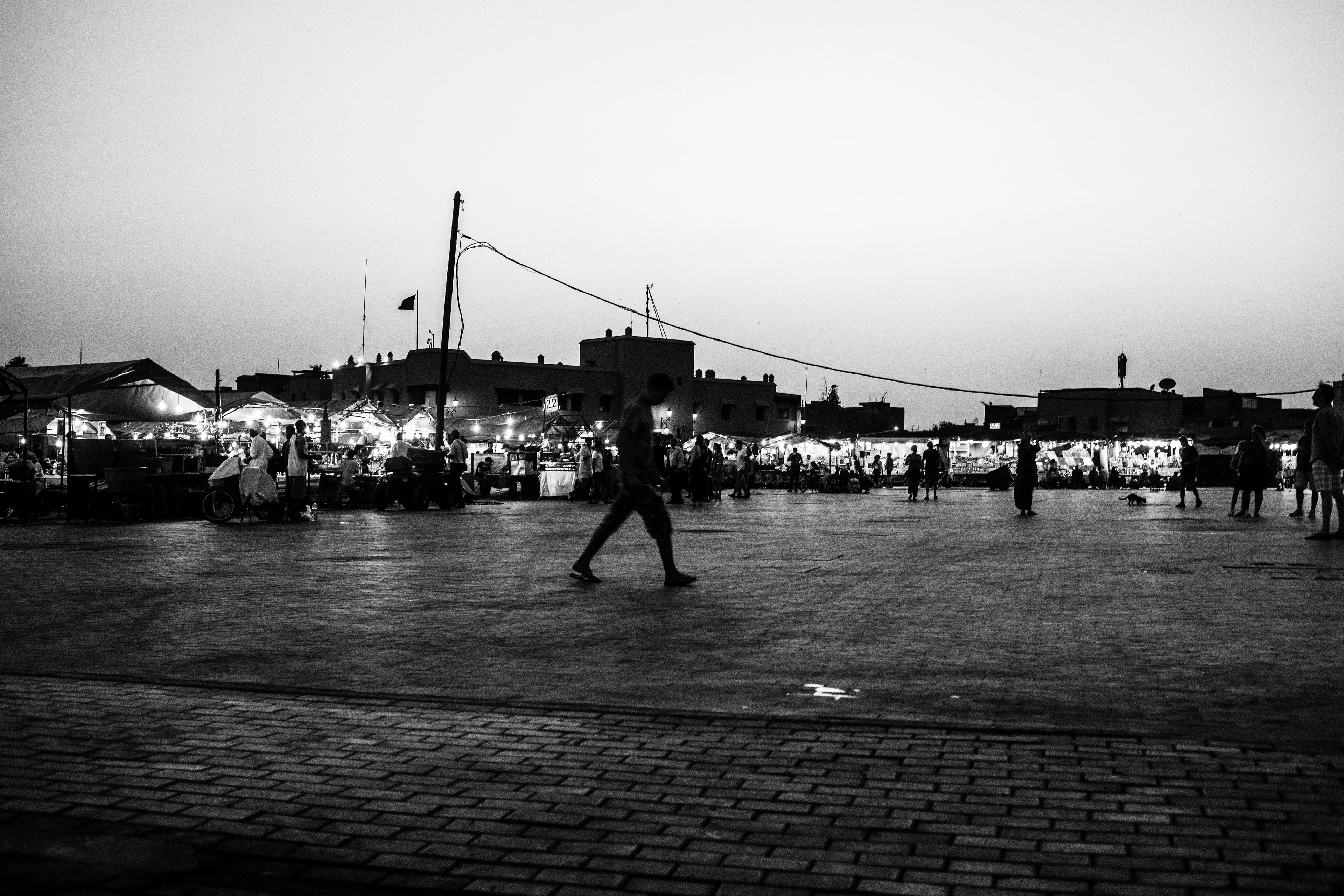
#4 Casablanca +3 recs

Casablanca is Morocco's largest city, blending high-rise modernity with deep historical roots. You can spend your morning at the Hassan II Mosque, which features one of the tallest minarets in the world, before wandering the traditional alleys of the medina. The city also showcases a striking collection of Art Deco architecture from the colonial era, while the Aïn Diab waterfront offers a coastal scene for relaxing that feels similar to a Pacific beach town.

#5 Agadir +2 recs

Agadir is a modern Atlantic city defined by its year-round mild weather and wide sandy beaches, offering a relaxed vibe that feels like a laid-back Southern California coastal town. You can dive into local culture at the bustling souk or the active fishing port, then head up to the Kasbah for a panoramic view of the bay. It is a straightforward spot for travelers who want comfortable amenities and local food without the intensity of a traditional historic medina.

#6 Essaouira +1 rec

Tempered by trade winds and the low hum of guembri strings, Essaouira offers an artistic escape on the Moroccan Atlantic coast. Its white and blue medina, where salty air mixes with the scent of cedarwood, is built for aimless wandering, far removed from the intensity of the imperial cities. It is a destination for those seeking a slower pace, where the rhythm of the ocean and a local creative scene provide a grounded, quiet experience.

#7 Tangier -2 recs

Among the many highlights of Morocco, Tangier is a primary draw. Perched on a hillside at the northern tip of the country, this former Phoenician port has served as a critical link between Europe and the Middle East for centuries, evolving into a major cosmopolitan hub.

Alleys, markets, and palaces

Tangier is defined by its medina, a maze of narrow, shaded alleys where you can wander for hours, led by the scents drifting from local stalls. You will inevitably find yourself at the Grand Socco, one of the main gateways to the medina. This expansive plaza hosts a lively market year-round. It is the perfect spot to pick up fresh fruit and take a break by the palm-shaded fountain.

Next, head toward the Grande Mosquée, a traditional Alaouite structure built on the site of a former Roman temple. The place de la France offers a clear vantage point over the city. Once you have navigated every corner of the medina, explore the Kasbah quarter for its traditional craft shops and bustling cafes. The palace towers over the neighborhood, its 13th-century ramparts visible from a distance. It houses the Kasbah Museum, which provides a detailed look at the country's history and Moroccan arts.

Ocean, caves, and gardens

The city's natural sites are equally impressive. Follow the coastal road toward Talâa Cherif for views of the Atlantic Ocean. The grottes d'Hercule, located 15 kilometers (about 9 miles) from the city center, are famous for their beauty. Legend has it that Hercules rested here, and those looking to follow suit can head to the municipal beach. This stretch of sand is popular with local families swimming and relaxing in the adjacent Corniche gardens.

Do not miss the parc Perdicaris, which spans 67 hectares (about 165 acres). This botanical garden features a wide range of flora, including laurels, acacias, and pines, and serves as a refuge for migratory birds. On the way to the park, you will pass the Cap Spartel lighthouse, an iconic fixture of the Tangier peninsula.

When to go

Tangier is a year-round destination thanks to its mild climate. From March through December, it is sunny with temperatures typically ranging from 20 to 30 degrees Celsius (68 to 86 degrees Fahrenheit). January and February are cooler, around 15 to 16 degrees Celsius (59 to 61 degrees Fahrenheit), but the weather remains dry.

How to get there

A round-trip flight from Paris to Tangier costs about 150 euros (around $165) for a 2-hour and 35-minute non-stop trip. If you are coming from Spain, Tangier is 45 minutes by boat from Ceuta across the Strait of Gibraltar. If you are already traveling within Morocco, you can take an internal flight from Marrakech or rent a car for the 5-hour and 30-minute drive.

Must-see

Latest reviews

At the gateway to the mountains

Gateway to the national park and the Toubkal mountain. Imlil was my base for heading out to discover the highest mountain in Morocco. I loved its location, you feel far from everything and at the same…

181 0

A vibrant and endearing city

Marrakech remains the tourism capital of Morocco, and the city is highly sought after these days. Granted, the red city is developing very quickly, but it is more welcoming than ever and will definite…

157 0

Colors, food, and warmth

Marrakech is an incredible city, full of color and life. Jemaa el-Fna square is the number 1 recommendation on Avygeo, and I totally agree. It is a must-see, especially in the evening with its street…

25 0

A maze of streets

Fez is an incredible city, an absolute must-visit during a trip to Morocco. You get woken up by the sound of prayer, because there are mosques on every street corner. The streets are very narrow, a re…

23 0

The vibrant heart of Morocco

In my opinion, Marrakech is the most interesting city in Morocco, along with Fes. Besides the big souk and the Jemaa el-Fna square, where you can do some shopping and try local specialties, I really e…

23 0

Rankings by travellers, for travellers

Our rankings are powered by thousands of reviews from travelers like you, not the arbitrary pick of a single editor. Every positive review you publish raises the destination’s score.

1 positive review = +1 reco

Your voice matters!

Have you travelled and discovered amazing places? Share your experience and help the community rank the most beautiful destinations! Sign up for free to post reviews and make your voice heard.