Visiting Cappadocia
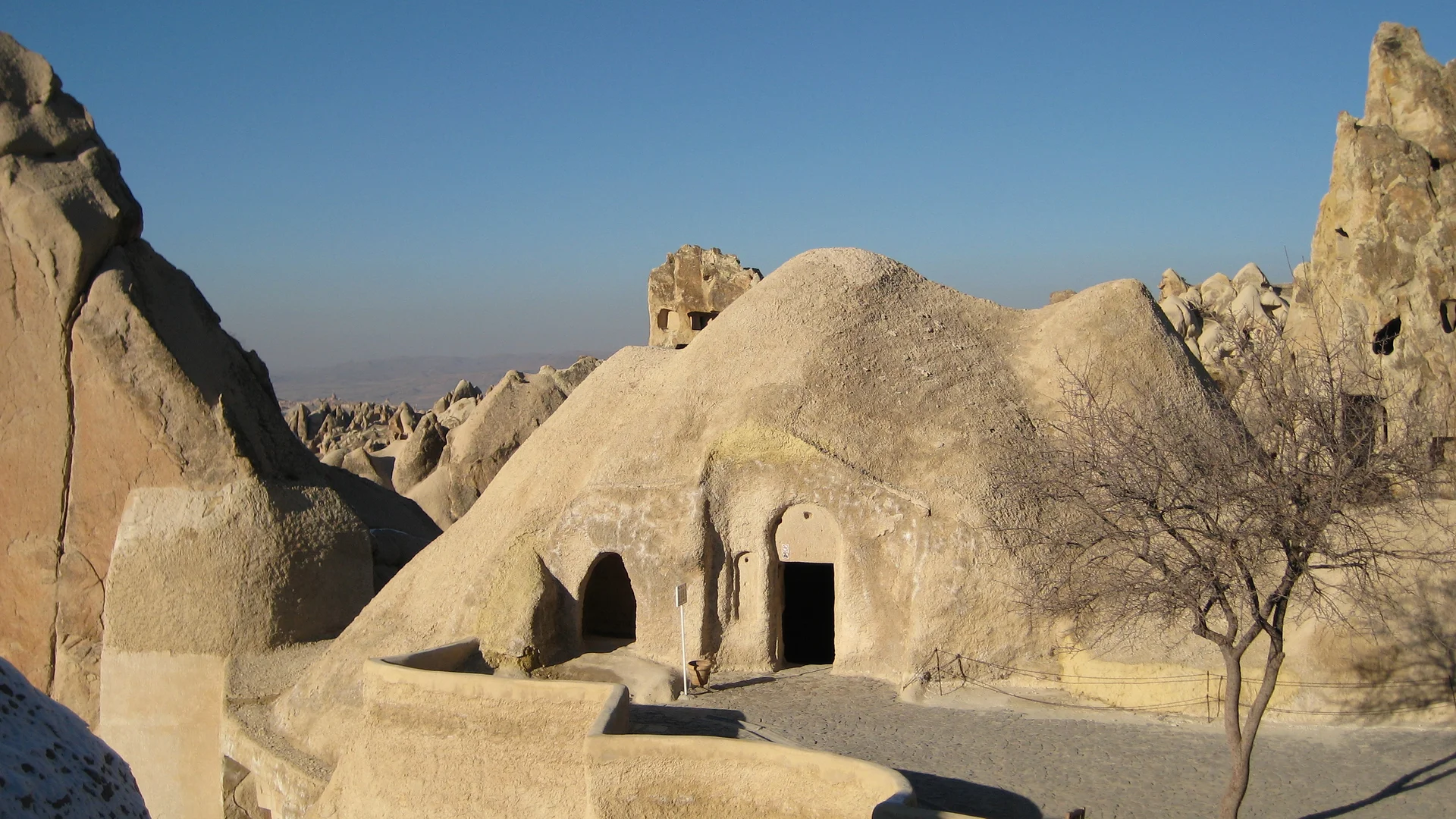
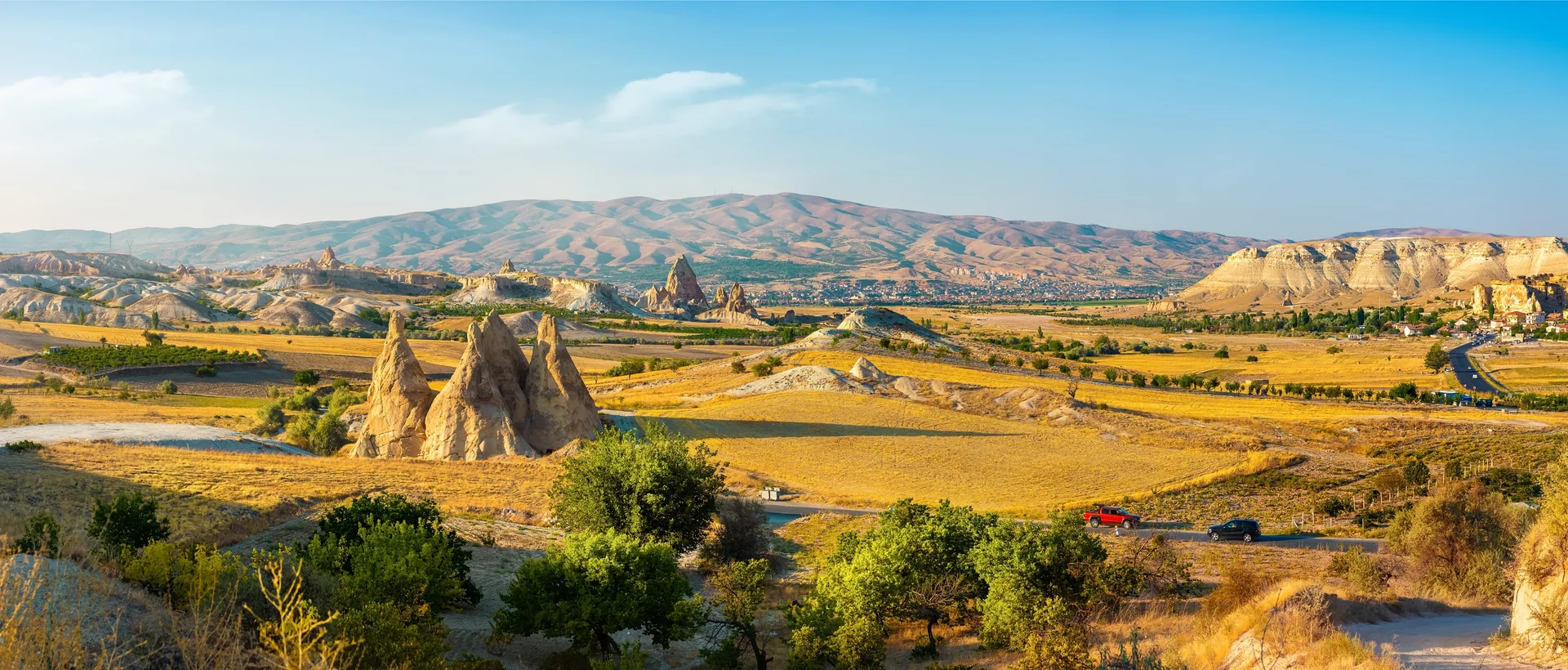
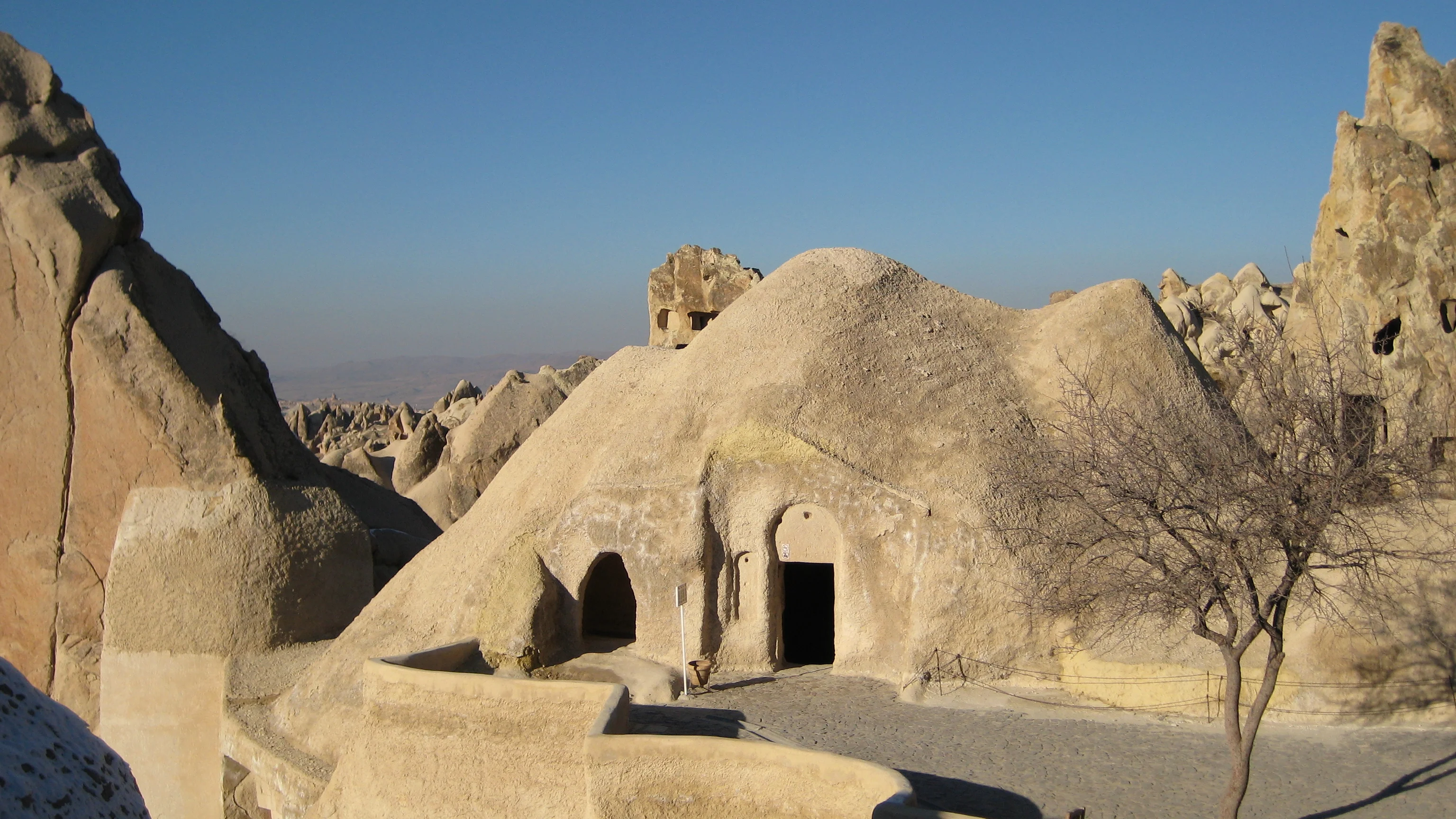
A high plateau in the middle of Anatolia, buried in ash by three volcanoes. Erosion has cut ochre and pink valleys into it, and thousands of fairy chimneys topped with a cap of basalt. The stone is so soft that people dug into it by hand: houses, dovecotes, painted Byzantine churches, and even underground towns several storeys deep.
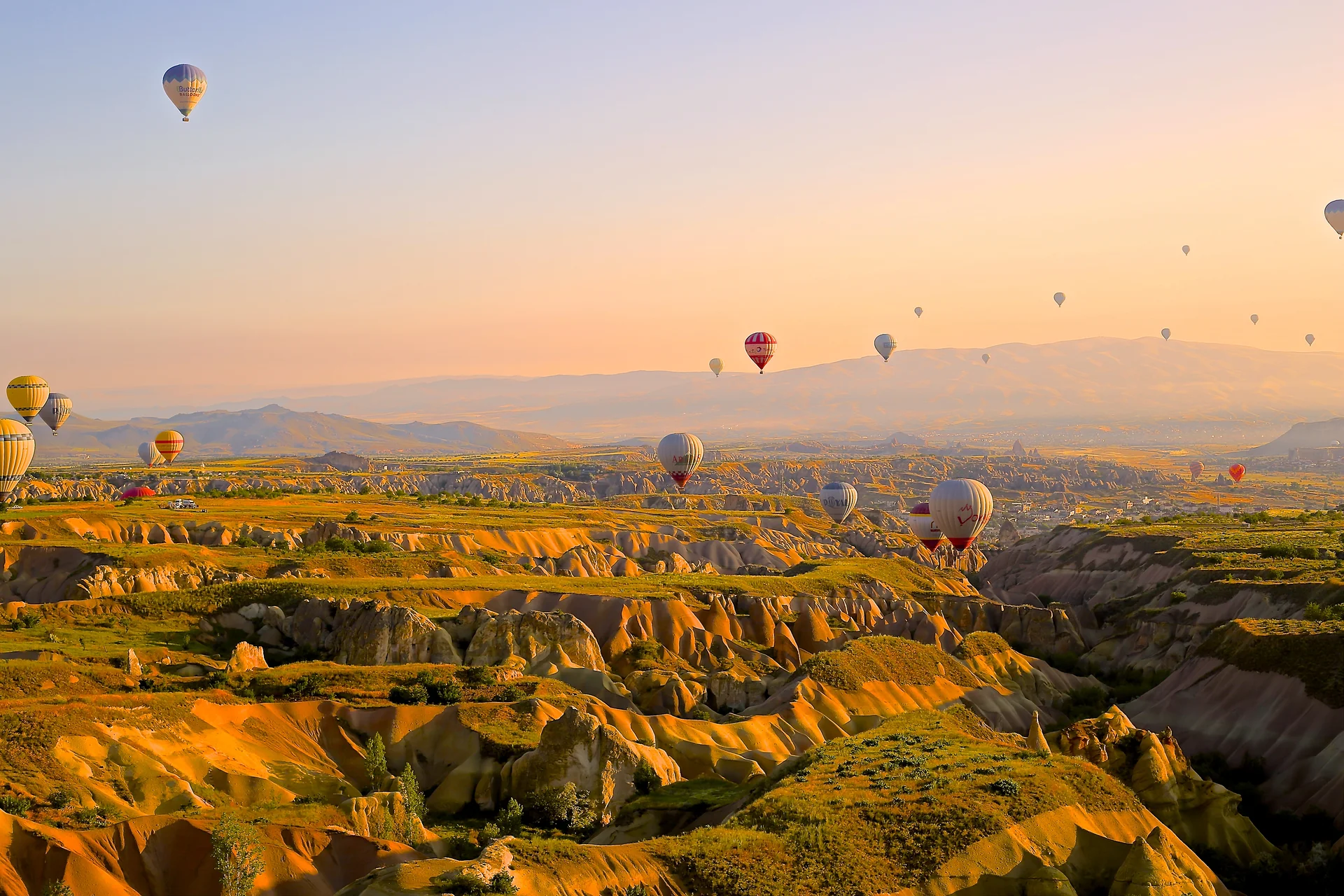
You come to walk these valleys at the hour when the rock turns red, and to watch the sky fill with balloons at sunrise. You sleep in the rock here too: a cave room is part of the trip.
You will love it if
- You like walking: every valley can be done on foot, in two or three hours
- You want to see Byzantine frescoes in their church, not in a museum
- You are ready to get up before dawn for a show that lasts only an hour
Give it a miss if
- You are after the sea: the nearest coast is five hours' drive away
- Crowds wear you down: around Göreme, the viewpoints are packed at sunset
- You were counting on summer for hiking: in July, the valleys have almost no shade
The must-sees
-
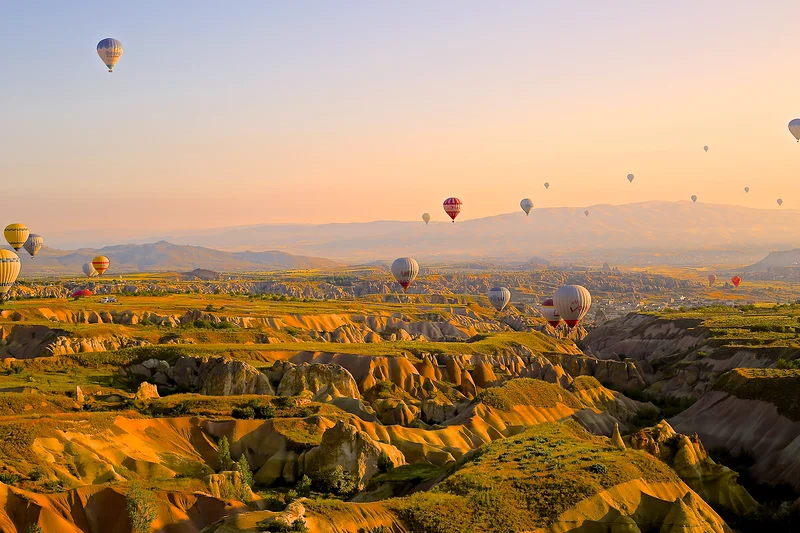
1 A hot-air balloon flight at sunrise +1 rec
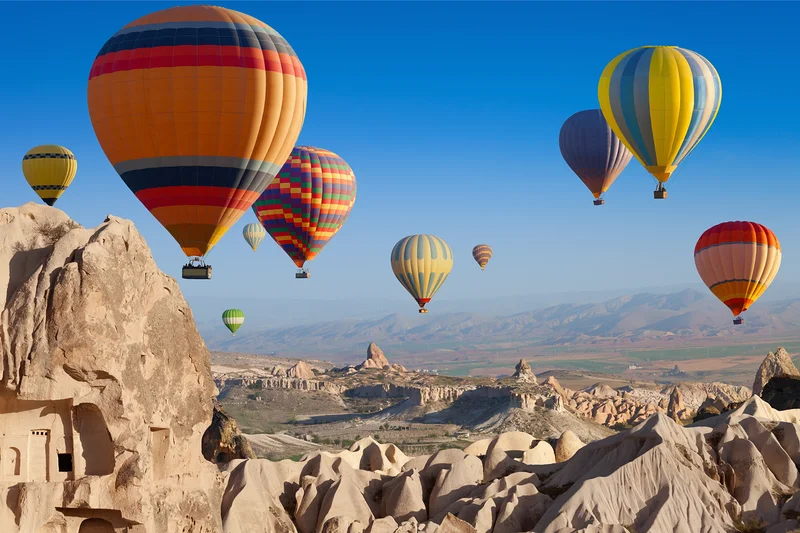
Take-off is at dawn, after a hotel pick-up around 4 or 5 am depending on the season. The flight lasts about an hour, over the valleys of Göreme. Expect anything from €120 in winter to over €300 in spring and autumn, depending on the size of the basket. Book it for your first morning: wind often cancels flights, and you will still have days left to try again.
-
2 The Ihlara Valley Hike
A green canyon 14 kilometres long, cut by the Melendiz river, an hour and a half south of Göreme. Painted churches open into its cliffs. Go down the 360 or so steps of the main entrance, then follow the river for four kilometres to Belisırma, where you have lunch by the water. Selime Monastery closes the valley to the north.
-
Eight levels dug into the tuff, down to 85 metres below the surface, where thousands of people could live sheltered from raids. You move through it bent double, between millstone doors and air shafts. Allow an hour, and bring a jumper: it is cool all year round. If you are claustrophobic, Kaymaklı, closer and shallower, will be easier to bear.
-
4 The Rose and Red valleys at sunset
Two neighbouring valleys starting from Çavuşin, where the rock shifts from white to pink and then to dark red late in the day. The trails cross vineyards, dovecotes and carved churches that nobody guards. Set off two hours before sunset, and walk down rather than up: the last viewpoint is at the top, above the Red Valley.
-
5 Cappadocia under snow December to February
Fairy chimneys dusted white, gentle room rates and almost empty valleys. It often freezes at night, and the snow stays for several days. Balloon flights are cancelled more often than in spring: stay at least three nights if you want to try yours. The roads stay open, but some trails turn slippery.
The classic trap
Seeing Cappadocia on two minibus tours, the "red" one in the north and the "green" one in the south, without ever walking through a valley. You will have ticked off sites and missed what makes the region. Keep at least half a day on foot, between Uçhisar and Göreme through Pigeon Valley, or in the Rose Valley.
Our itineraries in Cappadocia
| Length | Itinerary | What you see |
|---|---|---|
| 2 days | Göreme › Uçhisar › Çavuşin | Balloons, museum, valleys |
| 4 days | Göreme › Avanos › Ürgüp › Derinkuyu › Ihlara | Pottery, vineyards, underground, canyon |
| 1 week | Göreme › Ürgüp › Mustafapaşa › Soğanlı › Ihlara › Güzelyurt | The whole region, on foot |
Base yourself in the centre, between Göreme, Uçhisar and Ürgüp: the whole north can be visited in day trips, less than half an hour's drive away. Keep a full day for the south, Derinkuyu then Ihlara, or spend a night in Güzelyurt to walk the canyon early in the morning.
When to visit Cappadocia
| Appeal | Season | Temperatures | Balloon flights | Crowds and prices |
|---|---|---|---|---|
| WinterDec. to Feb. | -6 to 6 °C | Often cancelled | Low | |
| SpringMar. to May | 2 to 22 °C | Frequent | High | |
| SummerJun. to Aug. | 13 to 31 °C | Daily | High | |
| AutumnSep. to Nov. | 2 to 26 °C | Frequent | Medium |
Our advice
Aim for May, or late September and October: the days are mild for walking, and the sky stays calm for flying. In summer, walk at dawn and late in the day, never at noon. Avoid the big Turkish religious holidays: Turkish families then fill the rooms and the roads.
Getting to Cappadocia
-
By plane, via Istanbul The fastest
Two airports serve the region: Nevşehir-Kapadokya, 40 minutes from Göreme, and Kayseri, just over an hour away and better connected. Domestic flights leave from both Istanbul airports. Most hotels arrange a shuttle on arrival.
-
By night bus The cheapest
Sleeper buses link Istanbul to Göreme and Nevşehir in ten to eleven hours, and Ankara in four and a half. Turkish coach companies are comfortable, with tea served on board. You arrive early in the morning, often before your room is ready.
-
By car from Ankara The most freedom
Three hours of motorway and wide roads across the plateau, via Aksaray or Kırşehir. Renting in Ankara or at Kayseri airport leaves you free to reach Ihlara and Soğanlı.
Fly if you are staying less than a week: the night bus costs you a day. The bus makes sense if you are combining Cappadocia with Istanbul or the coast, and sleeping on board.
Getting around Cappadocia
For the north, you can do without a car: minibuses link Nevşehir, Göreme, Avanos and Ürgüp throughout the day, and the valleys are done on foot. For Ihlara, Soğanlı or the southern villages, rent a car, or take the "green" tour just once.
Good to know
Balloon flights are decided the evening before, sometimes that very morning, depending on the wind. Do not plan anything fixed for the day after a cancelled flight: the agency will offer to take you up the next dawn. And if you are driving, do not park on the ridges at sunrise: baskets sometimes land by the roadside.
What to eat in Cappadocia
- Testi kebabı: meat and vegetables cooked for hours in a sealed clay jar, broken open at the table.
- Mantı: tiny meat dumplings topped with garlic yoghurt and chilli butter.
- Gözleme: a thin rolled flatbread cooked on a griddle, filled with spinach, cheese or potato.
- Cappadocian wines: the white emir, the local grape, and reds from öküzgözü or kalecik karası, aged in rock-cut cellars.
- Pastırma: the dried, spiced beef of Kayseri, to take home with its cousin sucuk.
- Kahvaltı: Turkish breakfast, with cheeses, olives, honey, jams and eggs, served on hotel terraces.
Order your testi kebabı the day before in small restaurants: the jar takes a long time, and places that serve it at any hour are reheating it. In Ürgüp, taste the wines in the town's cellars, and in Avanos, have lunch by the Kızılırmak.
Where to stay in Cappadocia
| Area | What for | Good to know |
|---|---|---|
| Göreme | Balloons, museum, valleys on foot | The most central, the busiest |
| Uçhisar | Views over the whole region | Quieter, more upmarket |
| Ürgüp and Mustafapaşa | Restaurants, cellars, Greek houses | A real town, 15 minutes away |
| Avanos | Pottery, river, gentle prices | Fewer fairy chimneys |
| Güzelyurt | Ihlara Valley, silence | Far from the rest: one night is enough |
How much does a trip in Cappadocia cost?
| Trip | Length | Budget per person |
|---|---|---|
| Budget (guesthouse, minibus, simple restaurants, no balloon) | 3 days | €150 to €300 |
| Comfort (cave hotel, one tour, one balloon flight) | 3 days | €550 to €950 |
| Luxury (boutique hotel, car, small-basket flight) | 3 days | €1,300 to €2,500 |
- The balloon flight: this is the item that will tip your budget, from €120 in winter to over €300 in high season, more in a small basket.
- The season: in April, May, September and October, you will pay noticeably more for your room than in winter.
- Paid sites: the Göreme museum costs €20, and the Dark Church is paid separately; the underground cities and Ihlara each have their own ticket.
- Tours: the "red" and "green" tours include transport, guide and lunch, and will cost you less than a car if you travel alone.
- Hiking: the valleys around Göreme are free, and you can easily spend a whole day in them.
Traditions and way of life in Cappadocia
From the 4th century onwards, around Basil of Caesarea, monks turned these valleys into a land of monasteries and painted churches. Until 1924, Orthodox Christians still lived here, alongside Muslim villages; the population exchange between Greece and Turkey made them leave. In Mustafapaşa, once Sinasos, their carved stone houses are still standing.
Near Avanos, the Saruhan caravanserai hosts whirling dervish ceremonies, the sema. Attend it as you would a prayer, not a show: nobody applauds, and you take photos only when it is allowed.