

Syracuse, the city that outshone Athens
More than twenty-seven centuries ago, a colony established by Corinthian sailors on a limestone islet grew to become, according to ancient historians, larger and more powerful than Athens itself.
Today, that same peninsula smells of fresh morning market fish and espresso from baroque café terraces. Syracuse is not some preserved museum piece: it is lived in, eaten in, and entirely walkable in under an hour.
Is this destination for you?
Do you like history you can actually reach out and touch, without staged reenactments? Are you looking for a human-scale city where you can walk from a Greek temple to a pistachio gelato without changing streets? Syracuse checks every box. Ortigia, its island heart, begs to be explored by wandering without a strict itinerary through narrow alleys and sunlit piazzas.
On the other hand, if you are looking for intense nightlife or expansive resort-style beaches right next to downtown, look elsewhere: the best beaches are a fifteen-to-thirty-minute drive away, and the atmosphere stays resolutely quiet, almost provincial, once night falls.
Best suited for:
- Archaeology and ancient history enthusiasts
- Fans of car-free urban walks
- Couples and travelers seeking baroque charm
- Food lovers drawn to Sicilian street food
Not recommended for:
- Those wanting high-energy nightlife
- Travelers looking for large, immediate beaches
- Anyone who strictly avoids summer tourist crowds
Reasonable pricing compared to the rest of Italy
Sicily remains generally more affordable than northern Italy, though prices jump noticeably in July and August. Right on Ortigia, expect to pay a bit more than on the mainland: you pay for the charm of the historic center.
| Expense | Range |
|---|---|
| Night in basic lodging (B&B room) | $39 to $61* |
| Night in comfortable lodging (3-to-4-star hotel in Ortigia) | $99 to $165* |
| Quick bite (market tagliere or panino) | $6.60 to $11* |
| Restaurant meal | $22 to $39* |
| Neapolis archaeological park admission | $11 to $18* |
Estimated rates subject to change
Practical realities on the ground
Ortigia is entirely pedestrianized in its historic core, making it easy on the legs but occasionally tricky for cars: parking is billed around the clock, with rates running around $22* for a full day. You are better off parking on the outskirts and walking in.
The city remains easy to navigate for solo or female travelers: the overall vibe is calm and family-oriented, and English is spoken well enough in tourist shops. Watch out for site opening hours, which change often and are not always clearly posted on-site.
Ortigia, the island that holds the whole city
Connected to the mainland by two bridges, Ortigia packs in most of what makes Syracuse famous. You cross onto it via the Umbertino Bridge, and the first architectural gut-punch hits fast.
The Temple of Apollo and Piazza del Duomo
Just past the bridge stand the ruins of the Temple of Apollo, Sicily's oldest Doric temple, built in the 6th century BC. It served successively as a church, a mosque, and even a military barracks before being excavated in the 20th century.
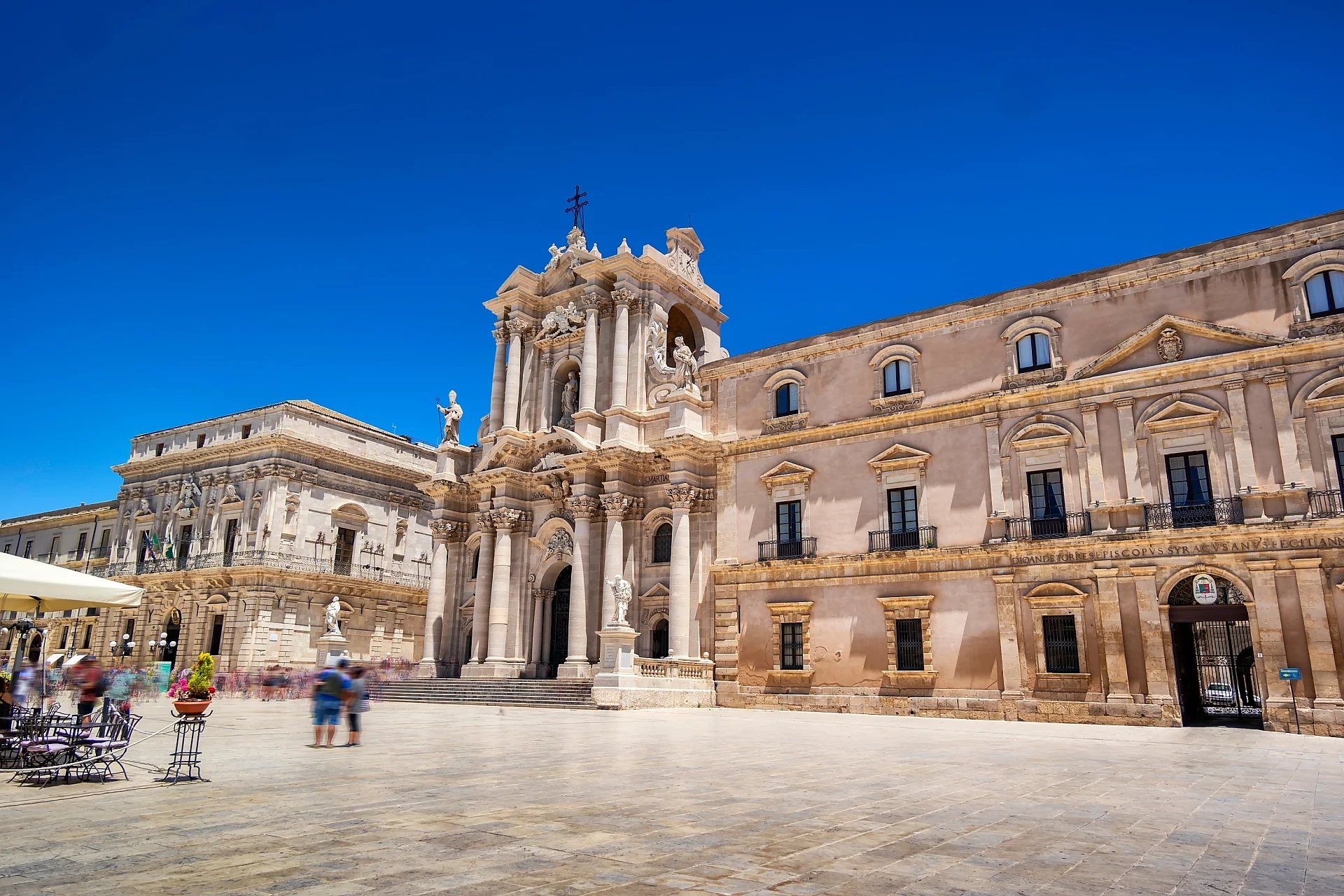
Keep walking to the Piazza del Duomo, where the cathedral literally absorbs the Doric columns of an ancient temple of Athena right into its baroque façade. It is one of the few places in Europe where you can read two thousand five hundred years of layered architecture on a single wall.
Arethusa Spring and the waterfront
The Arethusa Spring, fed by a freshwater source just a few yards from the sea, has fueled a legend since antiquity of a nymph transformed into a running stream. A long path loops around the Ortigia coastline, offering unmatched sunsets over the fortress of the Maniace Castle at the southern tip of the island.
Friendly tip: the Ortigia market, on via Emanuele de Benedictis, opens early and closes around 2:00 PM, closed on Sundays. Show up before 9:00 AM to watch the fresh fish arrive and dodge the crowds. This is also where you will find Caseificio Borderi, famous for its over-the-top loaded sandwiches, even if it means waiting in line.
Neapolis, in the footsteps of Greeks and Romans
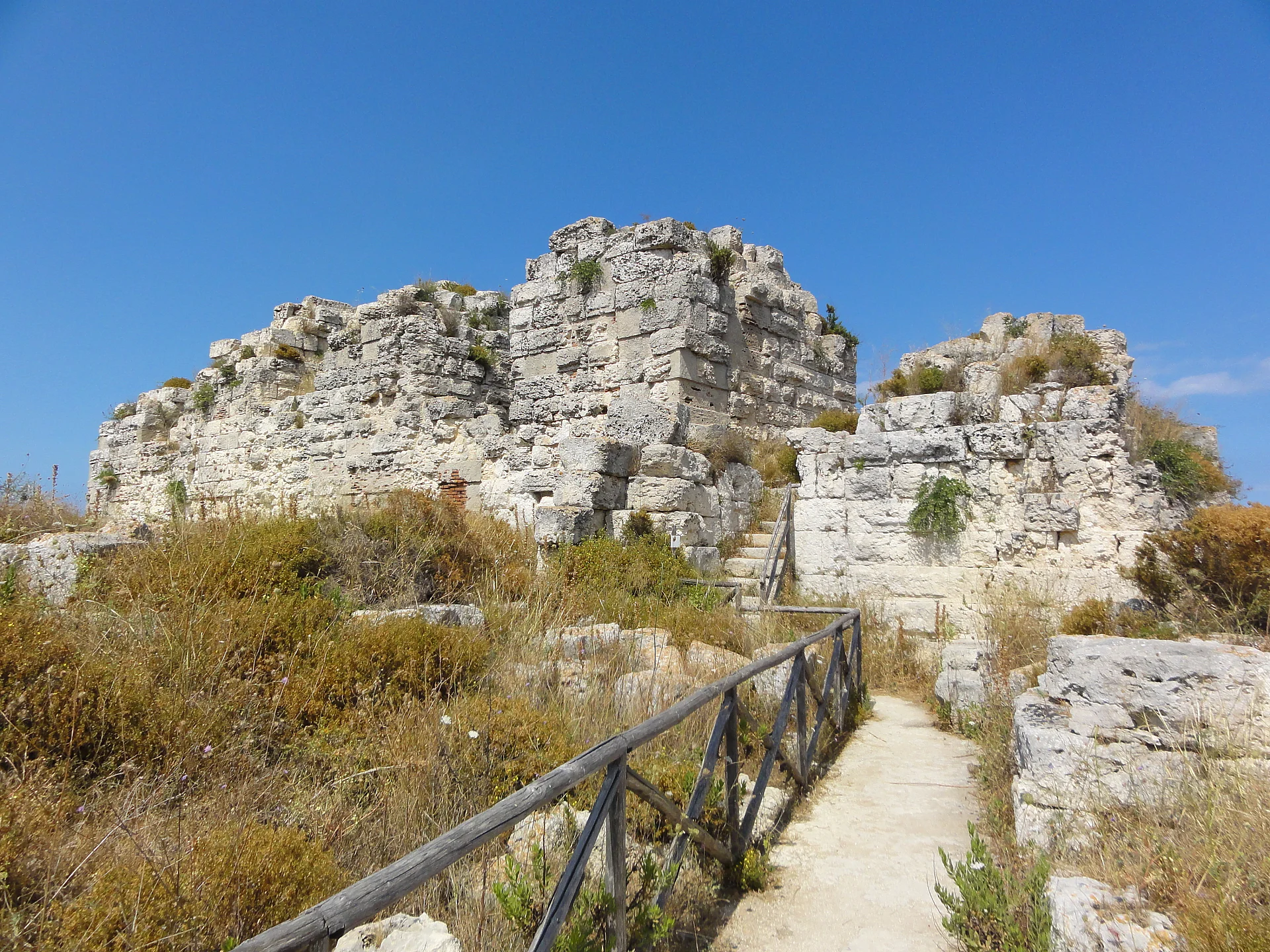
Across the water, the modern city hides one of Sicily's most complete archaeological complexes in the Neapolis district. The Greek theater, carved straight out of the rock in the 5th century BC, once held up to fifteen thousand spectators and is still used today: every year, a Greek tragedy festival brings ancient plays back to life outdoors.
Nearby, the imposing Roman amphitheater ranks among the largest in Italy. But the famous Ear of Dionysius is what draws the most curiosity: this artificial cave, 20 meters high and 65 meters deep, gets its name from the legend that the tyrant Dionysius used its freakish acoustics to spy on his prisoners. Test it out yourself by whispering against the wall.
Close by, the Paolo Orsi Regional Archaeological Museum houses one of Europe's richest collections of ancient Sicily, making it the ideal follow-up after touring the park.
Day trips around Syracuse
Syracuse also serves as a great base camp for exploring southeastern Sicily. About forty kilometers away, Noto is considered the capital of Sicilian baroque, rebuilt after the 1693 earthquake using golden limestone. Farther out, Ragusa Ibla and Modica round out the Val di Noto baroque trail.
For swimming, head south: the beaches of Fontane Bianche, Calamosche, and Ognina remain among the nicest in the area. Hiking fans can push on to the Cassibile gorge, a nature reserve known for its natural swimming pools, though summer crowds mean you will need patience and an early start.
Where to eat and drink in Syracuse
Sicilian street food finds its ultimate playground in Ortigia. The morning market is the best jumping-off point: grab a quick bite of local cured meats and cheeses on a wooden board, including cacio siracusano, a signature regional cheese.
For a sit-down lunch, the small trattorias around Piazza Archimede usually offer the best value, far away from the heavily touristed and pricey terraces on Piazza del Duomo.
How to get to Syracuse
The closest airport is Catania Fontanarossa, about an hour away by car, served by numerous direct flights from major European cities. From North American hubs, you will typically connect through a major European gateway like Rome or Frankfurt. You can also reach Sicily by ferry from mainland Italy, particularly from Genoa, Civitavecchia, or Naples, before renting a car or taking a bus down to Syracuse.
Trains also connect Catania to Syracuse, though the ride takes significantly longer than driving. Intercity buses, run by several local companies, are a reliable and budget-friendly option for getting between major Sicilian cities.
Getting around Syracuse
On Ortigia, everything is done on foot: the island is barely a kilometer long, and car traffic in the historic core is heavily restricted. Electric shuttles and bike rentals are available if your legs get tired.
To reach outlying beaches or archaeological sites, local buses cover most destinations, including a fifteen-minute ride to Fontane Bianche straight from the train station. If you have a car, keep in mind that parking on Ortigia is billable around the clock: you are better off parking on the modern city side and walking across the bridge.
When to go?
Spring and early fall offer the best balance of pleasant weather and manageable crowds. Summer brings heavier tourism and scorching heat, especially in July and August, while winter stays mild but quiet, with shorter hours at certain sites.

Syracuse, famous because of the song, is truly magnificent. There is exceptional light all year round. The city is lively but without the tourist crowds. You can really breathe and take your time exploring it. There are some beautiful walks to take that offer a superb panorama.