
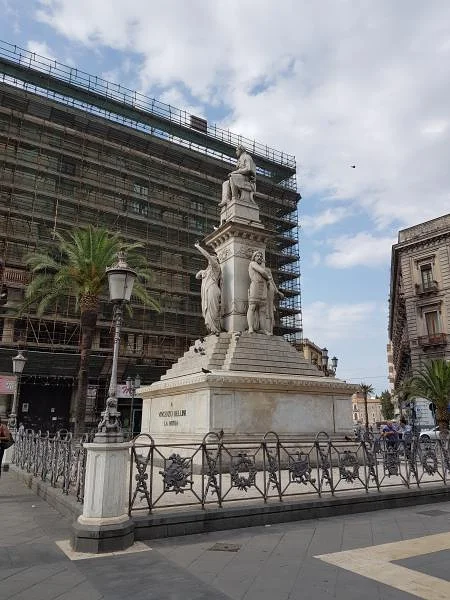
Catania, the dark city at the foot of Mount Etna
Lava stone is everywhere here, coating baroque facades, sidewalks, and even the paving stones of the main square. Catania wears its eruption scars like badges of honor, turning past disasters into raw architectural elements. Mount Etna looms less than 30 kilometres away, and the city's stubborn, blackened character is entirely forged from its neighbor's ongoing rumblings.
Is this destination for you?
Catania appeals to travelers looking for an unfiltered Sicilian city, far from the polished resort veneer of Taormina or Syracuse. The fish market shouting at dawn, streets smelling of frying oil and jasmine, and an active volcano in the background create a raw edge that isn't for everyone.
If you prefer a sanitized postcard setting, complete quiet, and pristine streets, Catania might throw you off. It's loud, occasionally rough around the edges, and the traffic is famously chaotic.
Great for:
- Fans of baroque architecture and UNESCO heritage
- Travelers curious about authentic, non-touristy Sicilian food
- Hikers wanting to combine city exploring with an Etna climb
- Budget-conscious travelers looking for a base to explore eastern Sicily
Not ideal for:
- Travelers seeking absolute quiet and spotless streets
- Anyone wanting to avoid aggressive Sicilian driving and heavy traffic
- Classic beach vacations (nearby beaches are okay, but not world-class)
A reasonable budget compared to the rest of Italy
Catania remains one of the most affordable cities in the country, sitting well below the price points of Rome or Florence.
| Expense | Range |
|---|---|
| Hostel bed or basic hotel night | 25 to 45 € |
| Comfortable hotel night | 80 to 130 € |
| Quick bite (arancino, granita) | 3 to 8 € |
| Sit-down restaurant meal | 15 to 30 € |
| Daily transport and minor activities | 10 to 20 € |
Estimated rates subject to change
Practical realities to know before you go
Catania's driving reputation is well earned. Red lights are treated as loose suggestions, scooters dart through every gap, and parking is a contact sport. You are much better off walking or taking transit in the center rather than renting a car just for the city.
The climate is Mediterranean, hot and dry in the summer (often topping 30°C in July and August), and mild the rest of the year. Language barriers exist outside major tourist zones, and English is fairly limited among shopkeepers and taxi drivers.
Exploring Catania's neighborhoods
The baroque center around Piazza del Duomo
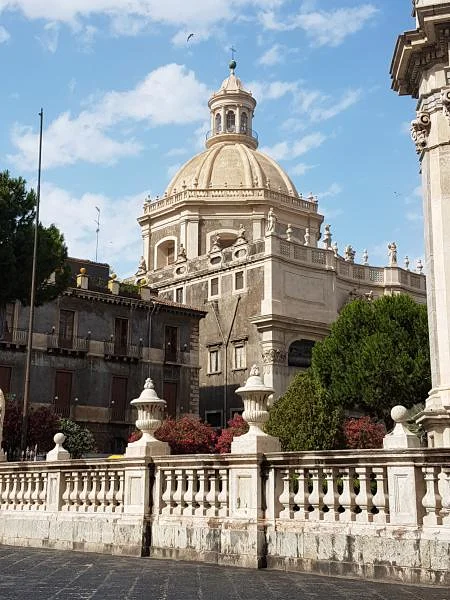
Everything radiates out from Piazza del Duomo, anchored by the elephant fountain carved from black lava rock, which has been the city emblem since the 18th century. The Cathedral of Saint Agatha anchors the square, rebuilt after the devastating 1693 earthquake that leveled much of the settlement.
Just behind it, Via Etnea cuts straight across town. It's the main commercial spine, lined with cafes where locals grab a quick espresso standing up, the way it's done across Sicily.
La Pescheria, the market that doesn't fake it
Every morning except Sunday, the Pescheria sets up stalls near the Amenano fountain. Fishmongers shouting out prices, the sharp scent of the sea, and glistening octopuses piled on ice make this more of a live performance than a simple grocery run.
Friendly tip: get there before 9am to see the market in full swing, right before the heat and tour groups roll in.
Roman ruins, hidden in plain sight
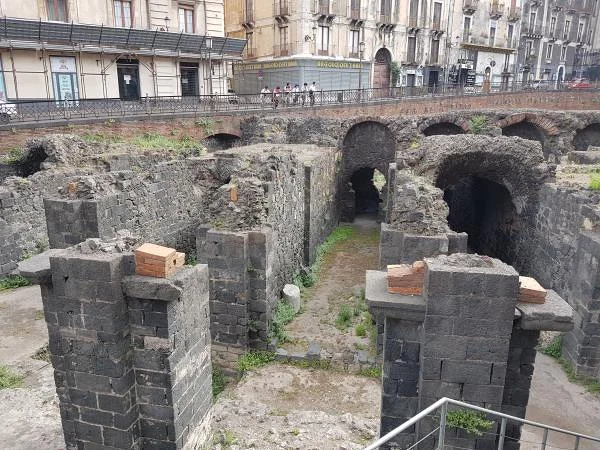
The Roman theater, right in the middle of downtown, catches visitors off guard with its tucked-away entrance down an unassuming alley. Built over an older Greek theater, it served as a convenient stone quarry for surrounding medieval construction.
Monte Po and working-class districts
Less photogenic, the neighborhoods around Via Plebiscito show a grittier side of Catania with laundry hanging from windows, tightly parked scooters, and kids kicking soccer balls between cars. This is where the city tells its story without any filter.
Where to eat and drink in Catania
The local arancino is eaten standing up at all hours, stuffed with meat or butter depending on local preference. Almond or pistachio granita paired with a fresh brioche in the morning is a local institution you need to try before 10am, when Sicilians traditionally wrap up morning sweets.
For savory fare, pasta alla Norma topped with fried eggplant, tomatoes, and salted ricotta sums up regional cooking. You'll find it in nearly every central trattoria, often for under 10 euros.
Where to stay in Catania and nearby
The historic center around Via Crociferi and the Duomo packs in most of the accommodations, letting you reach everything on foot. The San Berillo district, currently undergoing revitalization, offers lower rates but calls for basic street smarts after dark.
If you want to combine city life with beach access, towns like Giardini Naxos or Acireale sit about thirty minutes away and offer a resort-focused alternative.
How to get to Catania
Catania-Fontanarossa Airport (CTA) is one of southern Italy's busiest hubs, with direct flights from major European cities, especially during summer. The trip into downtown takes only about fifteen minutes.
How to get around Catania
The historic center is completely walkable, with distances between major sights rarely exceeding a 20-minute stroll. City bus lines fill the gaps if you're heading out to outlying neighborhoods or the train station.
For trips up Mount Etna or excursions to Taormina, booking an organized tour or renting a car is your best bet, as public transit options in those directions run infrequently.
When to go to Catania
Spring (April to May) and fall (September to October) deliver the ideal weather combination with mild warmth and thinner crowds. July and August bring intense heat and heavy tourist traffic, particularly around the Duomo and the coast.
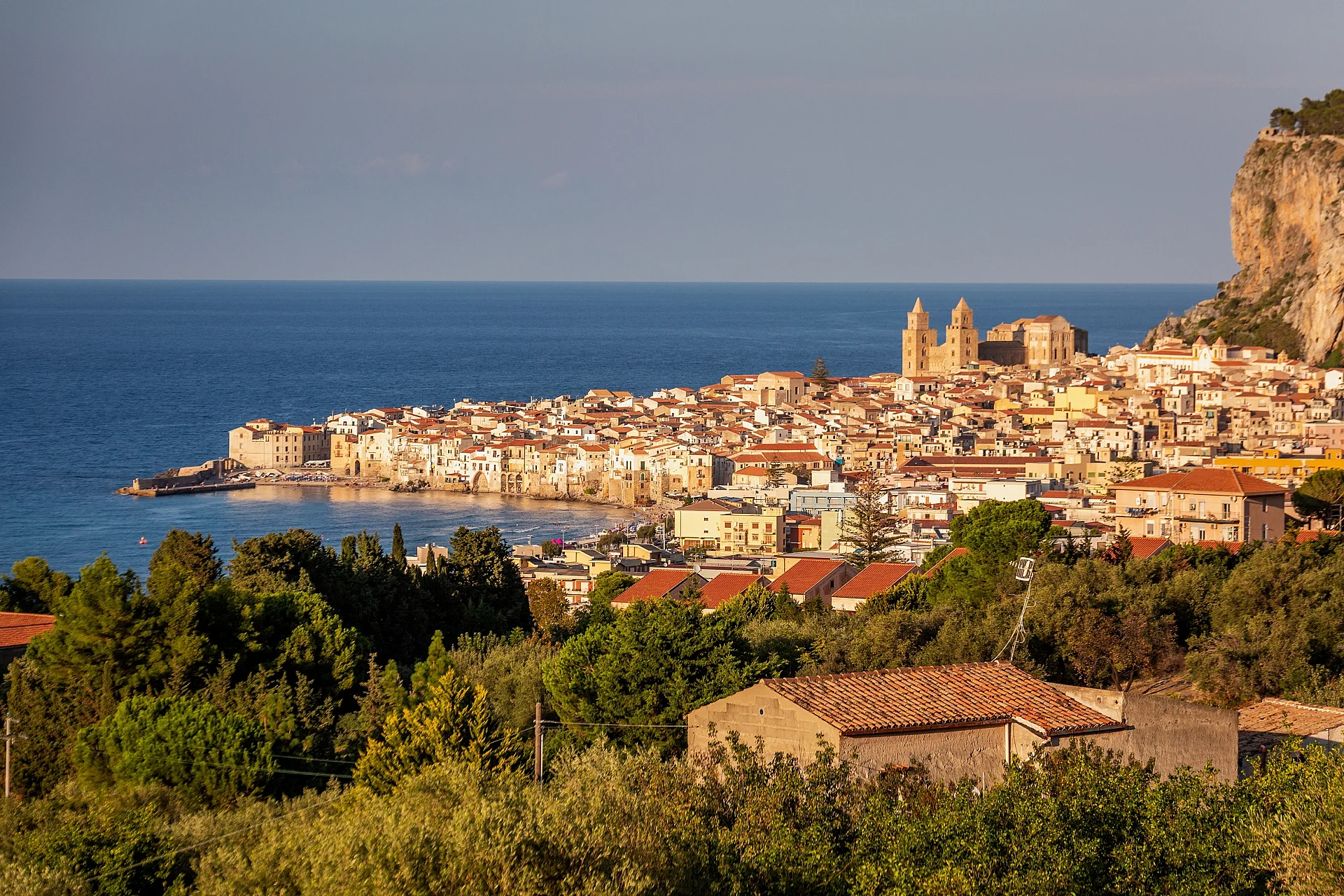
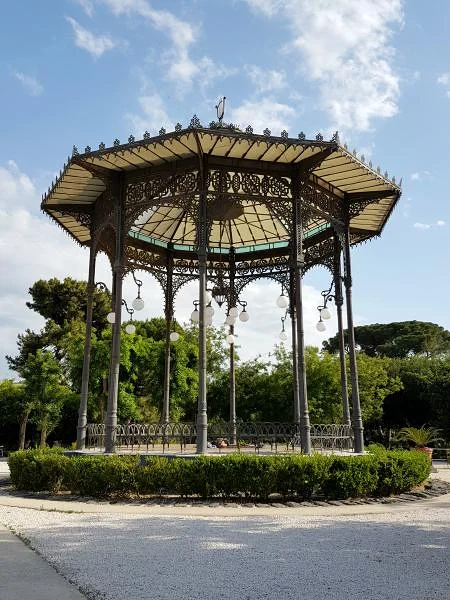
I really loved my stay in the city of Catania. I found the atmosphere very pleasant, with a certain easygoing vibe. The city is lively without being too crowded. There are a lot of things to do and visit. I recommend staying at least 3 or 4 days.