Visiting Bova, the Calabrian Balcony Where Ancient Greece Still Whispers
Have you ever felt the wind tell you a story centuries old? In Bova, that is not just an impression. The wind sweeping through the steep alleyways seems to carry fragments of forgotten words, echoes of a Greek language that refuses to fade away.
Even before your eyes catch the sparkling Ionian Sea down below or the distant silhouette of Mount Etna, this breath laden with memory grabs you. It acts as the true welcoming committee for this village suspended in time.
Bova: Is this Aspromonte jewel right for you?
Let us be direct. If your idea of a vacation in Italy boils down to a beach, spritz, and nightlife trilogy, you can probably skip this stop. Bova is a destination that takes effort and speaks to contemplative souls.
It is the ideal retreat for history buffs who love to scratch beneath the surface of a place, for hikers who do not fear steep elevation changes, and for travelers searching for a raw, almost untamed authenticity. Visiting Bova means accepting to slow down, to get lost in a maze of stone and silence, far from the rush of the modern world.
Practically speaking, a trip here almost always requires renting a car. The isolation is part of the charm, but it comes with a logistical price. Your wallet, on the other hand, will thank you: Bova is an enclave of simplicity where you can eat and sleep for much less than on the coast. This is a destination for those who prefer the depth of a conversation with a local artisan over the smooth perfection of a five-star resort.
A deep dive into the Grecanico heritage
The beating heart of Bova is its unique culture, that of Bovesia, an enclave where people speak Grecanico, a dialect inherited directly from the colonists of Magna Graecia. This identity is everywhere, from the bilingual street signs in Italian and Grecanico to the faces of the elders who look like they stepped right off an ancient amphora.
The best entry point to understand this world is the Museo della Lingua Greco-Calabra "Gerhard Rohlfs". More than a museum, it is an act of cultural resistance, a vibrant space documenting this fascinating language through everyday objects, farming tools, and poignant personal stories.
Friendly tip: do not stop at the museum. Push open the doors of the small craft workshops. You might find artisans working with wood or fabric, ready to exchange a few words. Even without speaking the language, a smile and genuine interest will open unexpected doors into this living culture.
The call of Aspromonte and its dizzying views
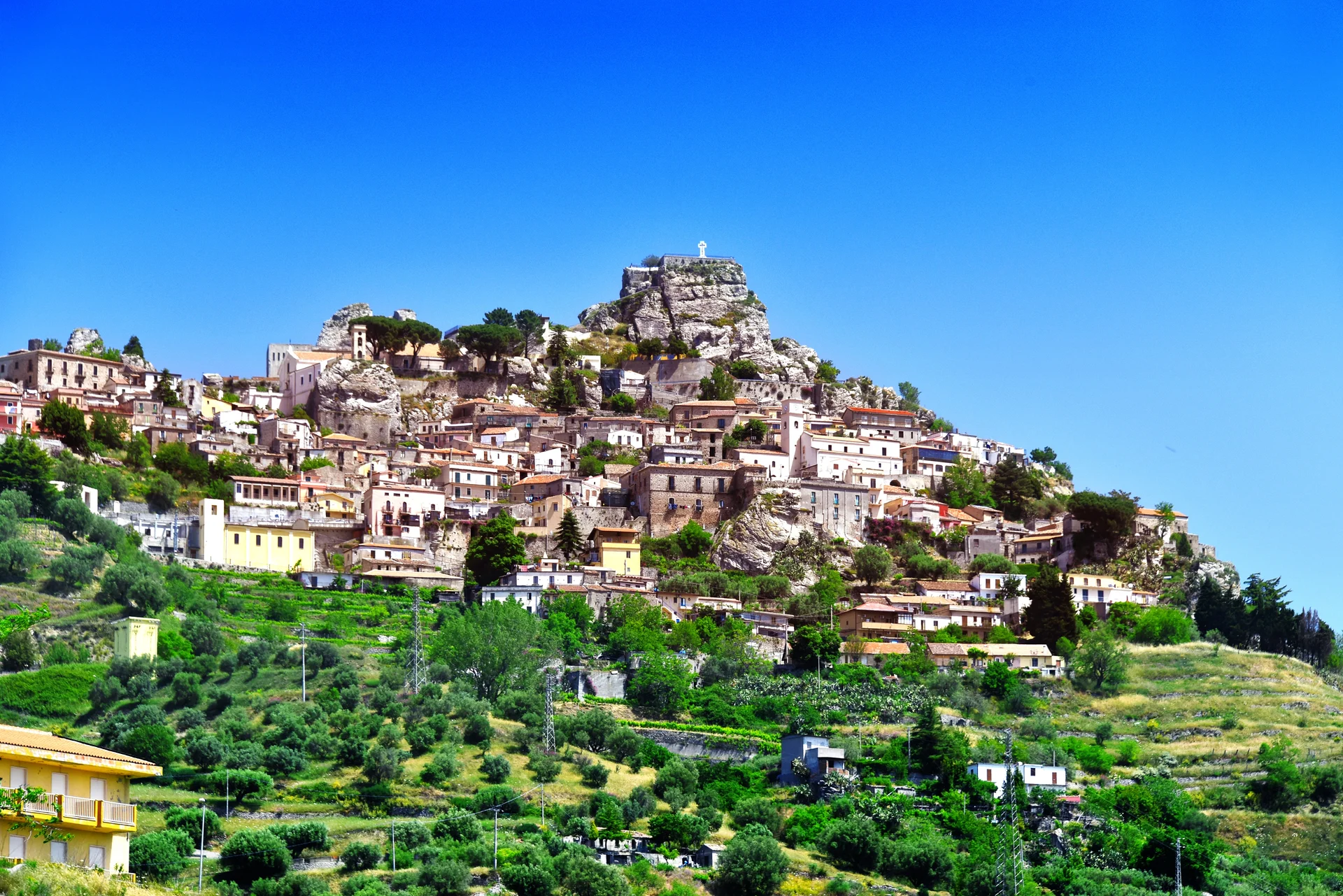
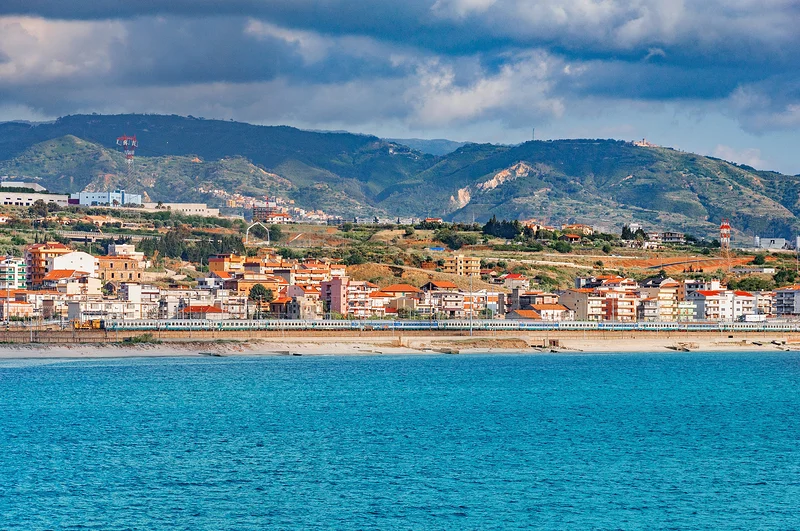
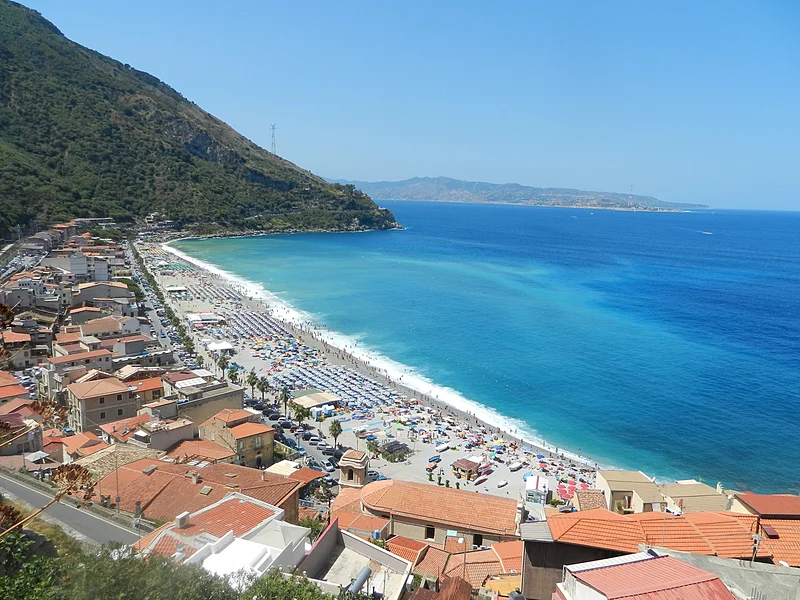
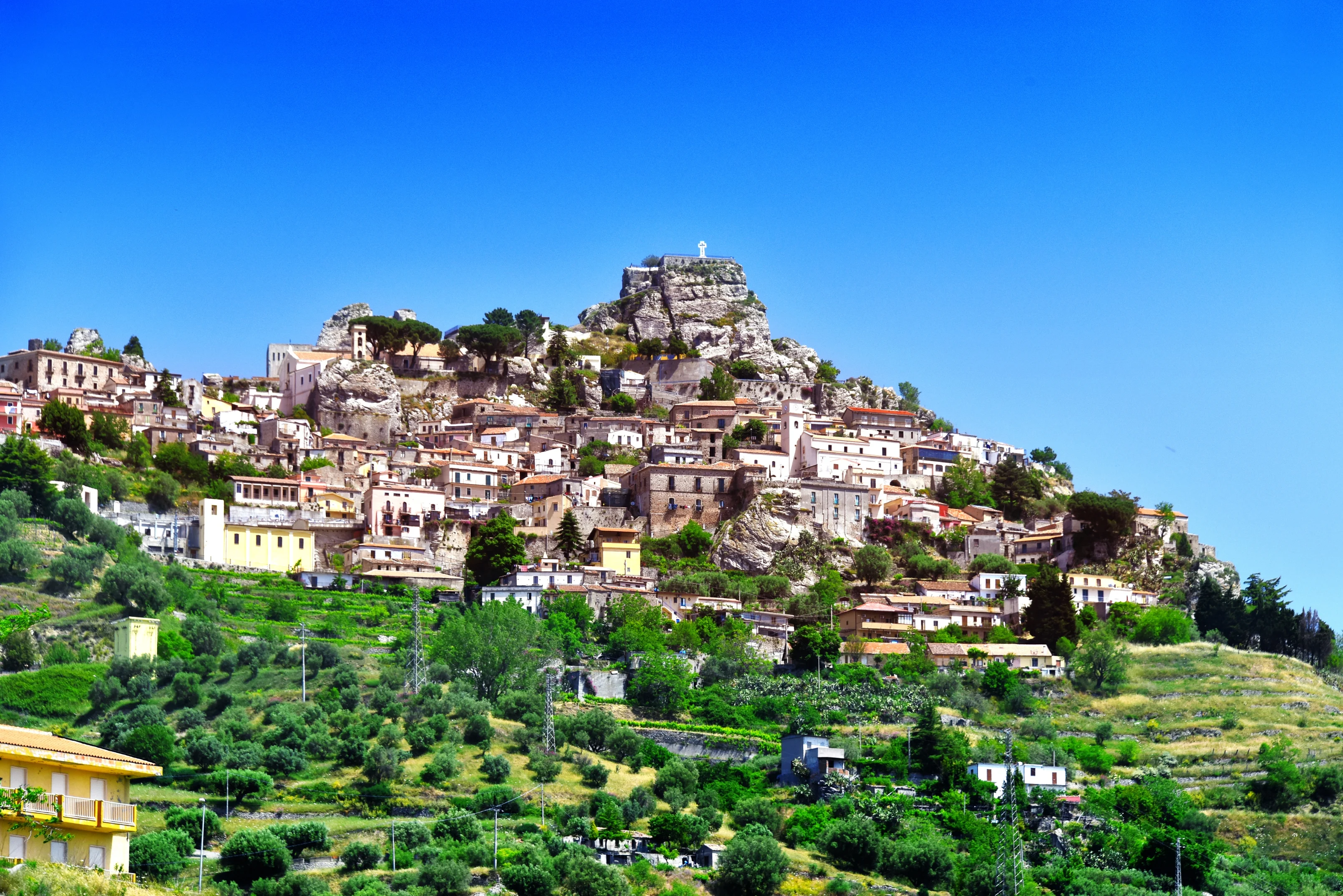
Bova is not just a village, it is an eagle's nest perched at an altitude of 900 meters in the heart of the Parco Nazionale dell'Aspromonte. The show never stops. Every alleyway, every small square, is a promise of a panoramic view. Your gaze drops toward Bova Marina and the Ionian coast, and on a clear day, the magic happens: the majestic profile of Mount Etna appears on the horizon, smoking peacefully above Sicily.
For walking enthusiasts, several trails start right from the village. The most famous is the Sentiero dell'Inglese (the Englishman's Path), which follows in the footsteps of the artist and writer Edward Lear. It offers spectacular views but requires sturdy shoes and solid endurance.
Friendly tip: the best viewpoint, and the easiest to reach, sits at the ruins of the Norman castle crowning the village. Head up there late in the day. The setting sun sets the sea on fire, and the only sound is the call of birds of prey. It is a moment of pure grace.
Wandering through a labyrinth of stone and faith
One of the best things to do in Bova is simply to wander without a fixed plan. You have to accept getting lost. The village is a tangle of vaulted passageways, steep staircases, and stone houses that seem to lean against each other for support. Around a corner, you will stumble upon a flower-filled courtyard, an old fountain, or a carved doorway.
The central hub is Piazza Municipio, but the real fun starts when you walk away from it. Do not miss the Concattedrale della Madonna della Presentazione, where a simple exterior hides lovely surprises. Keep an eye out for the curious sculpture of a steam locomotive in a small square, a surreal tribute to the residents who had to leave their mountain home to find work elsewhere.
Friendly tip: look up. The roofs of Bova are covered in traditional curved clay tiles and topped with unusually shaped chimneys designed to withstand the fierce Aspromonte winds. It is a detail that speaks volumes about the ingenuity and resilience of the locals facing their environment.
Where to eat and drink in Bova?
The food here matches the landscape: rustic, hearty, and unpretentious. Forget long menus and let yourself be guided by the daily specials. This is your chance to taste authentic flavors rooted in mountain ingredients.
Look for lestopitta, a type of fried flatbread made from flour and water, delicious plain or stuffed. Cheese is king here, featuring the excellent pecorino dell'Aspromonte, often served with local honey. And of course, you are in Calabria: the spicy sausage known as 'nduja is never far away, alongside hearty homemade pasta dishes topped with robust sauces usually made from goat or pork meat.
Where to stay in Bova and the surrounding area?
Lodging options in Bova are intimate and full of character. You will mainly find Bed & Breakfasts set up in restored historic homes in the old town, offering total immersion. It is the ideal way to live at the village pace. Another interesting option is the albergo diffuso, a scattered hotel concept where guest rooms are spread across different historic buildings.
For an experience closer to nature, check out the agriturismi in the surrounding countryside, often located in converted farmhouses right in the heart of Aspromonte. They are perfect if you are looking for absolute quiet and farm-to-table meals.
How to get to and around Bova?
A car is your best ally, to the point of being practically essential. The closest airport is Reggio Calabria (REG). From there, expect about an hour's drive. Trains can take you as far as the Bova Marina station on the coast, but you will then need to catch an infrequent bus or a taxi to tackle the 9 km of winding switchback roads climbing up to the village.
Once you arrive, Bova is strictly explored on foot. Park your car in the designated lots at the entrance of the village and get your calves ready: here, everything either goes up or down!