Visiting Crete
Crete is the largest Greek island and the most independent: two hundred and fifty kilometres from east to west, a mountain range rising to two thousand four hundred metres in the middle, and a history that starts a thousand years before Athens. You will not cross it end to end in a week.
Heraklion keeps the Minoans, Chania the Venetians, and Omalos, a shepherds' village at a thousand metres, opens the door to the gorge.
You will love it if
- Archaeology interests you: this is where Europe begins
- You walk: the white massif is a hiking ground in its own right
- You come in May, June or September, before and after the heat
Look elsewhere if
- You want to see it all in a week: the island is 250 kilometres long
- You come in July or August: 35 °C, and the gorge becomes an ordeal
- You are counting on public transport: buses link the towns, not the coves
The must-sees
-
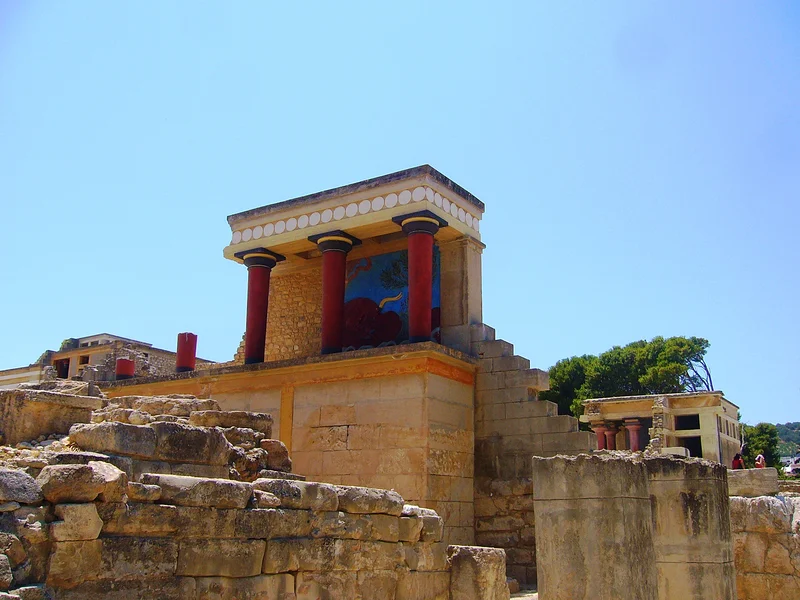
1 The palace of Knossos +10 recs
The largest Minoan palace, occupied for seven centuries in the Bronze Age, with its multi-level staircases and reconstructed red columns. Arthur Evans's restorations are disputed: you visit the palace as much as the idea people had of it in 1900.
-
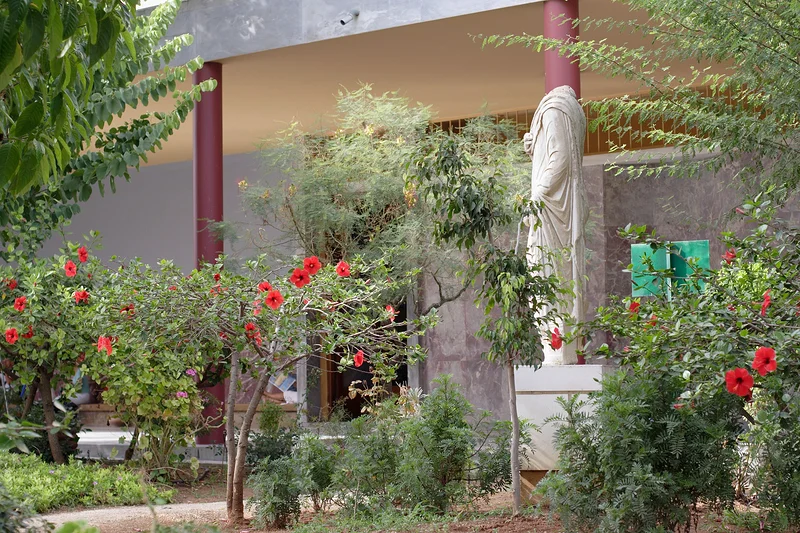
2 The archaeological museum of Heraklion +8 recs
Five and a half thousand years across twenty-seven rooms, and the pieces Knossos cannot show: the snake goddesses, the palace frescoes, and the Phaistos disc, a clay wafer covered in symbols nobody has ever deciphered.
-
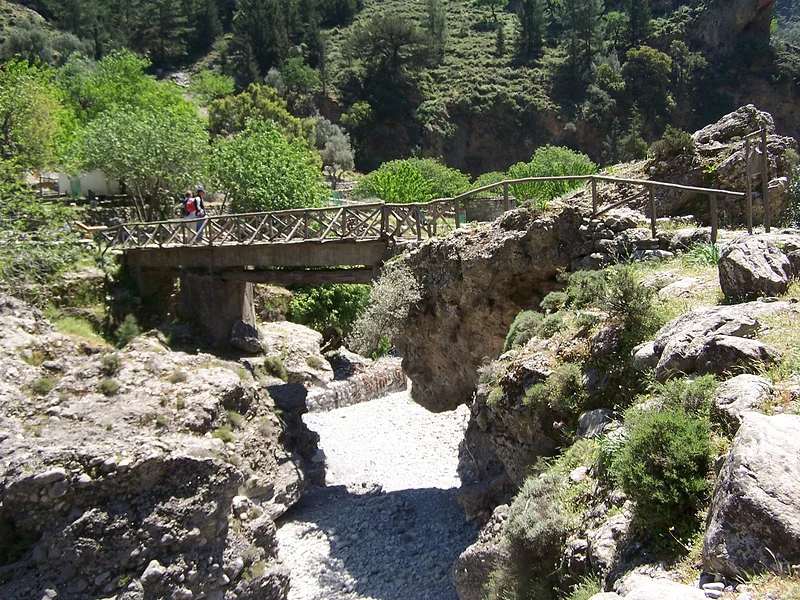
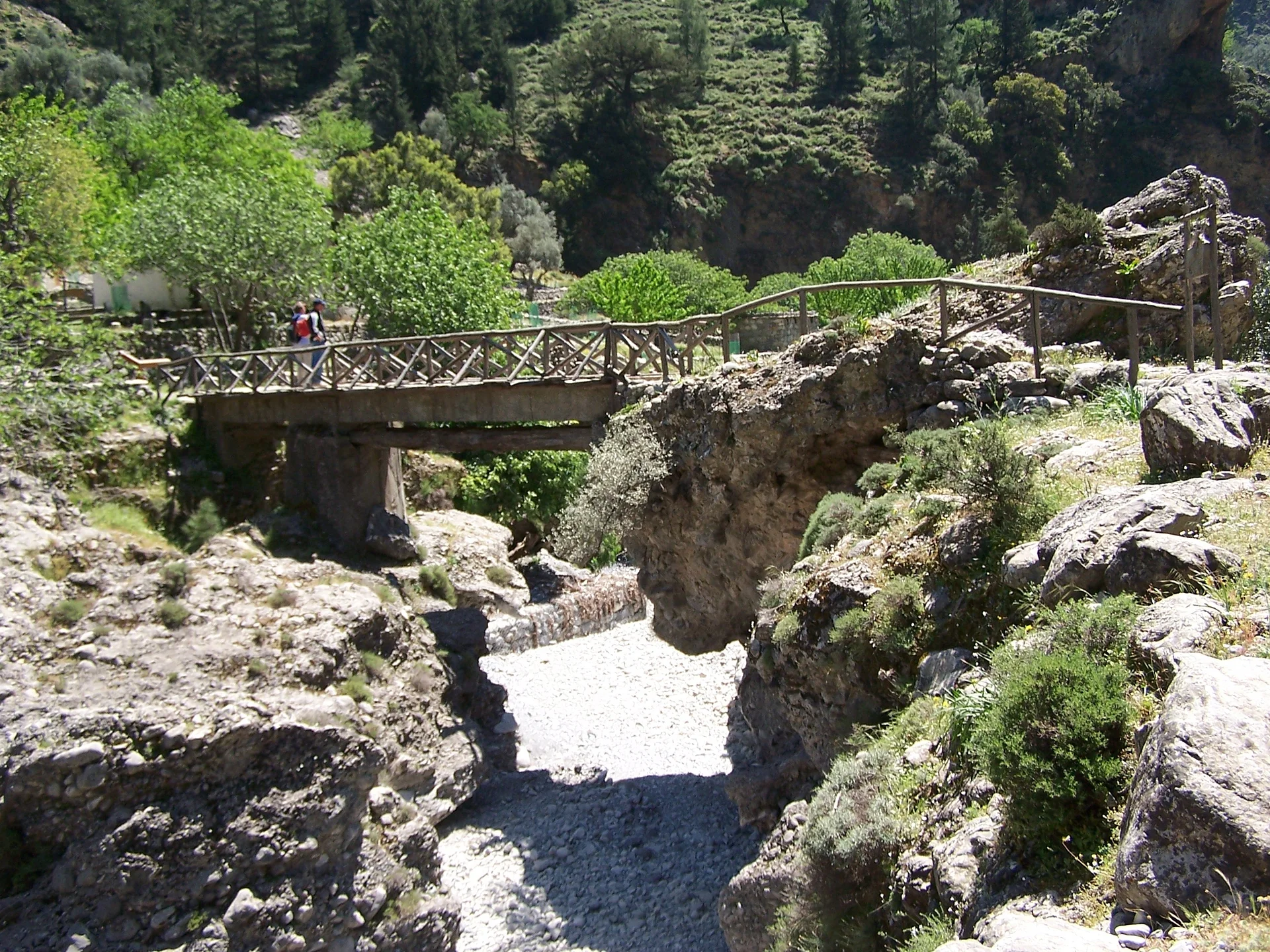
3 The Samaria gorge +3 recs
Sixteen kilometres of descent between two walls, from the plateau of Omalos down to the Libyan Sea. Five to seven hours of walking, one way only, and the Gates narrow to three metres under three hundred metres of cliff.
-
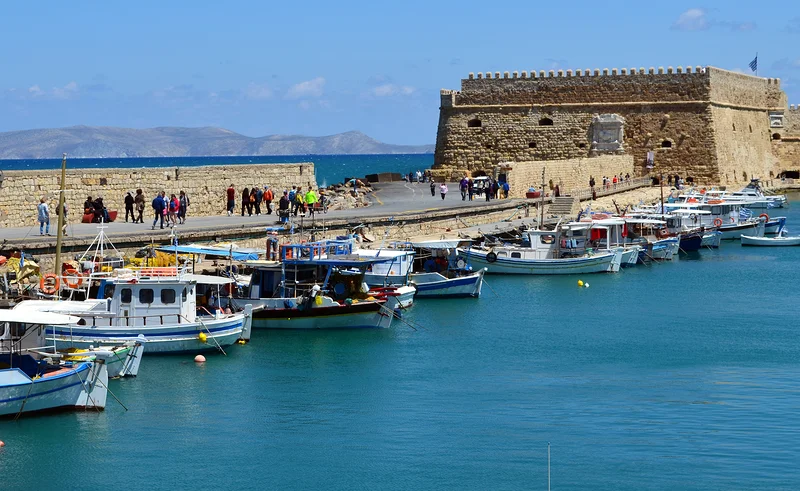
4 The Venetian harbour of Heraklion +11 recs
The island's largest port and its beating heart: the ferries from Athens arrive here, those for the Cyclades and the Dodecanese leave from here. The Koules fortress, built by Venice in the 16th century, still guards the entrance.
-
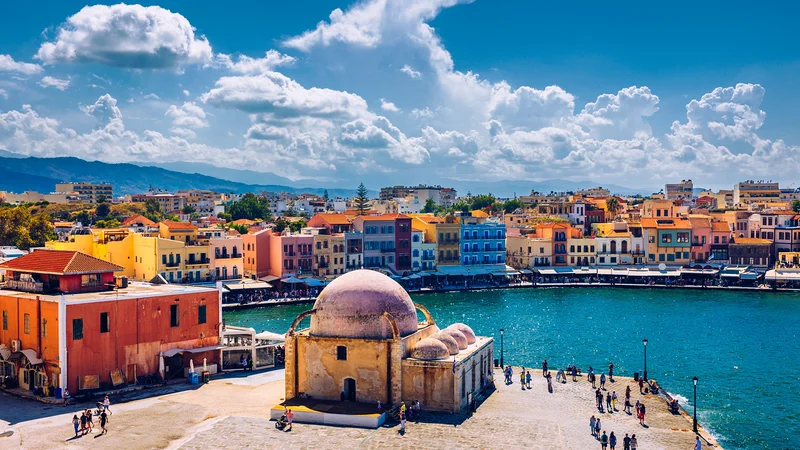
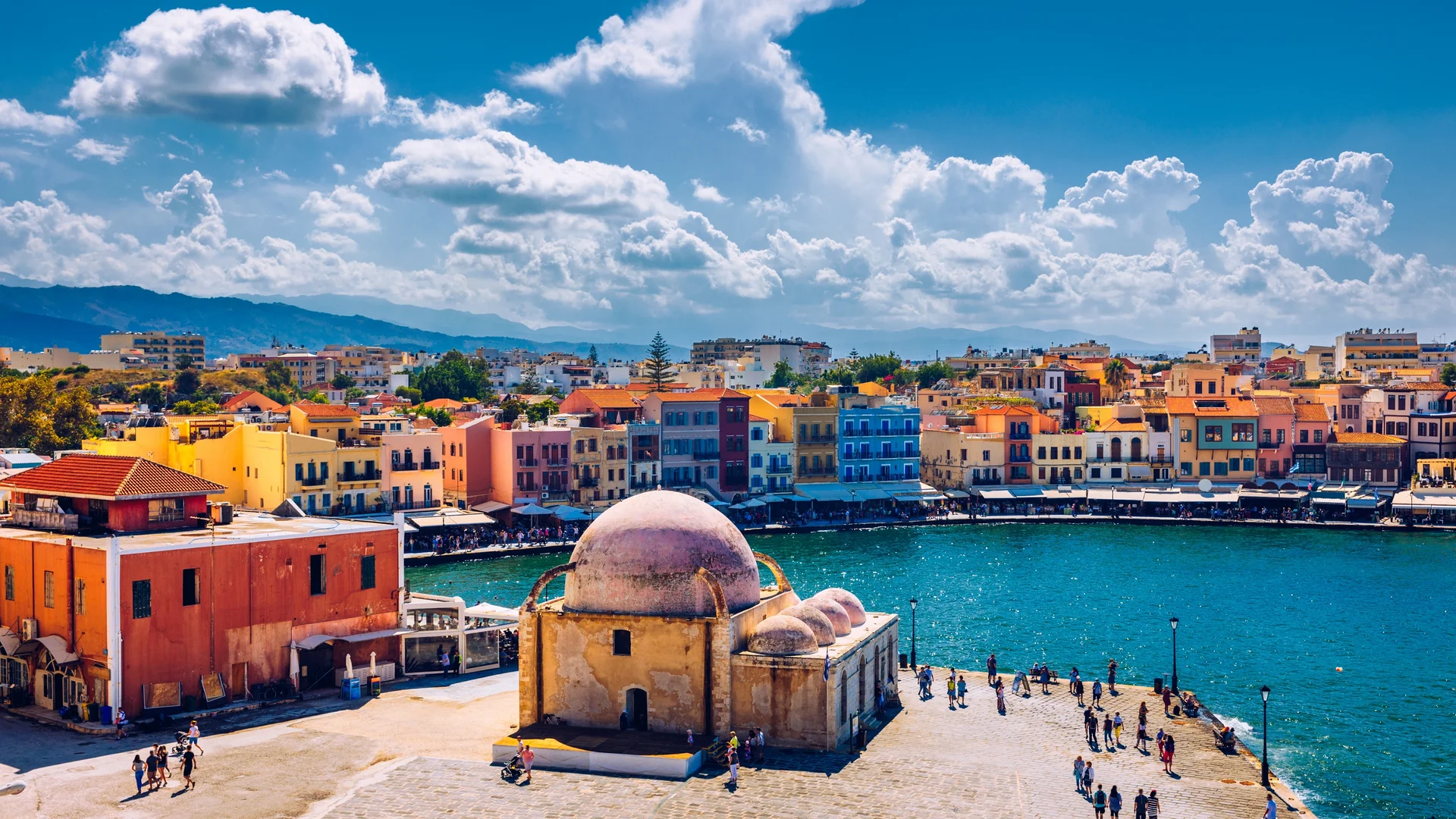
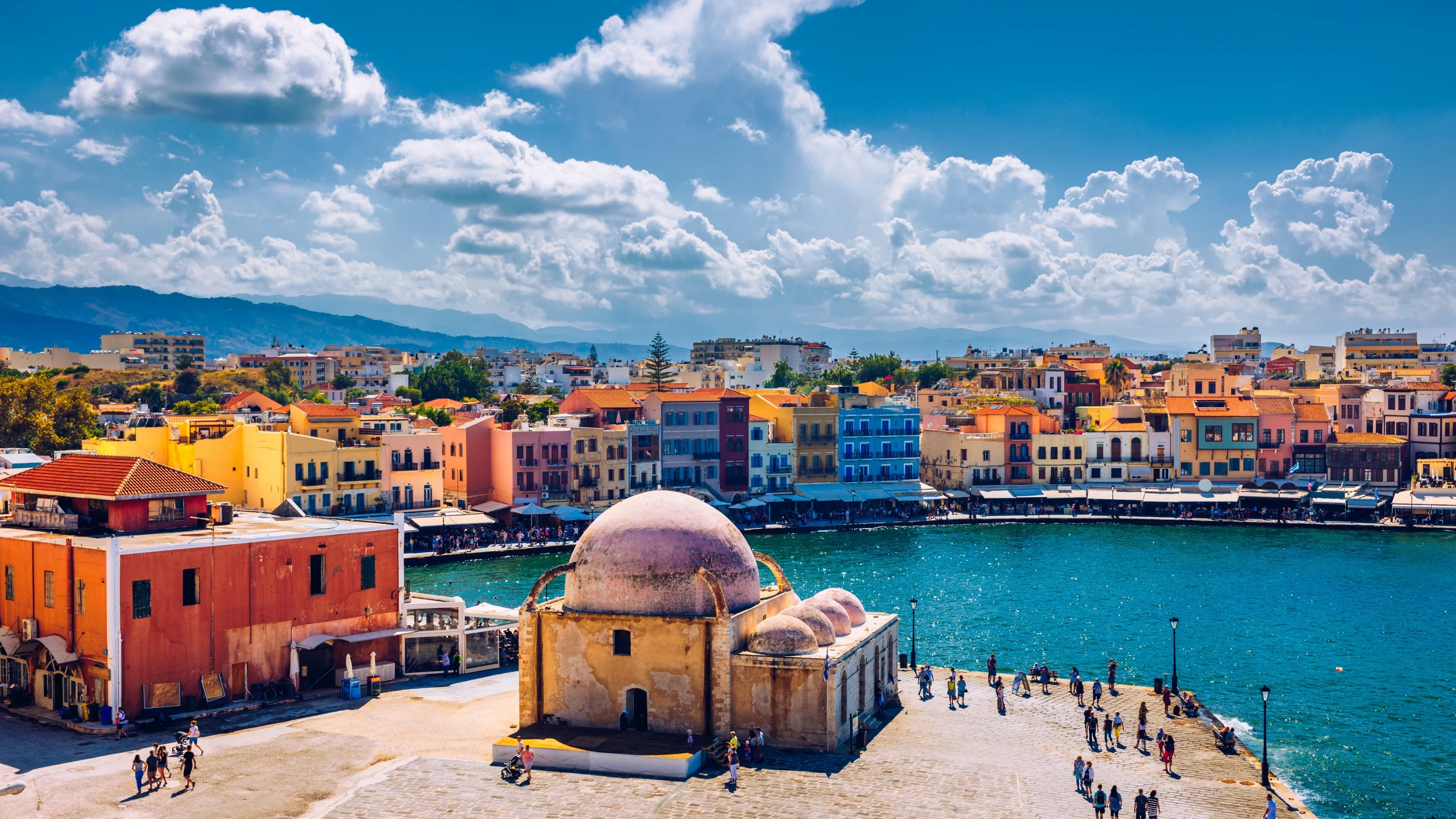
5 Chania +6 recs
The pink Venetian lighthouse at the end of the jetty, the Ottoman lanes behind the arsenal, and the laouto you hear in the evening. It is the most beautiful town on the island, and you cross it entirely on foot.
The classic mistake
Do not walk the Samaria gorge as a there-and-back. The descent runs one way only and ends at Agia Roumeli, on the south coast, from where you leave by boat and then by bus: count on the whole day, and buy your return ticket before you set off down. The park also closes from November to April, without exception.
Our itineraries in Crete
| Length | Route | What you see |
|---|---|---|
| 3 days | Heraklion | Knossos, the museum, the harbour |
| 1 week | Heraklion › Chania | The Minoans and the Venetians, two hours apart |
| 10 days | Chania › Omalos › the south coast | The gorge, the mountains, the Libyan Sea |
The northern road links Heraklion to Chania in two hours, and it is the only fast road on the island. Everything that leaves it, you pay for in hairpins.
The south coast is reachable by only four or five roads that cross the mountains, and some villages can be reached by boat alone. That is what has kept them as they are.
When to visit Crete
| Rating | Season | Weather | Crowds and prices |
|---|---|---|---|
| May, June and September | 23 to 29 °C, sea at 22 | Moderate, the gorge is walkable | |
| April and October | 18 to 24 °C, cool in the mountains | Light, Samaria opens in May | |
| July and August | 30 to 36 °C, meltemi wind | Saturated, prices doubled | |
| November to March | 14 to 18 °C, snow on the peaks | Deserted, the towns live on, the gorge closes |
Our advice
The Samaria park only opens from May to October, and the exact date depends on the flow of the torrent: it is announced a fortnight ahead, no more. If the gorge is the reason for your trip, book nothing until the opening is published.
Getting to Crete
-
1 By plane The quickest
easyJet and Ryanair fly from London, Manchester and Dublin to Heraklion and Chania from April to October, in about four hours. Out of season the island is reached through Athens, which adds two hours and a connection.
-
2 By boat From Athens
the overnight ferries from Piraeus reach Heraklion or Chania at first light, nine hours of crossing, with cabins and cars on board. It is the way to string Athens and Crete together without flying again.
-
3 By car On the island
necessary as soon as you leave the two towns. Mountain roads are narrow and distances deceptive: reckon on an average of forty kilometres an hour once you are off the northern road.
The harbour of Heraklion is also the gateway to the Cyclades and the Dodecanese: Santorini is two hours away by fast boat, which lets you add an island without going back through the mainland.
Getting around Crete
What to eat in Crete
- Dakos: a hard barley rusk soaked with grated tomato, olive oil and mizithra, a fresh ewe's cheese. The opening dish of every taverna, and the plate that sums up Cretan cooking.
- Kalitsounia: small parcels filled with fresh cheese or wild herbs, savoury or sweetened with honey depending on the region. Baked or fried, and never both in the same village.
- Olive oil: Crete produces a third of all Greek output, from trees that are sometimes a thousand years old. The cooperatives sell it by the litre, and the difference with supermarket oil shows on plain bread.
- Boiled snails: chochlioi, gathered after rain, simmered with vinegar and rosemary. A Lenten dish that became a feast dish.
- Lamb with stamnagathi: kid or lamb with a bitter wild chicory picked in the mountains, bound with lemon and egg. The mountain on a plate.
- Raki: tsikoudia, a pomace spirit distilled in November, served ice cold and offered at the end of every meal. You do not order it, you accept it.
- Thyme honey: harvested on the plateaus at a thousand metres, almost bitter, and the only accompaniment allowed for ewe's milk yoghurt.
The village taverna serves what was cooked that morning, and you sometimes read the menu in the kitchen, pot by pot. That is the custom, not a favour: ask to see, it is normal here.
Where to stay in Crete
| Area | What it is for | Worth knowing |
|---|---|---|
| Chania, old town | Venetian harbour, lanes, restaurants | The finest base, expensive in August |
| Heraklion, centre | Museum, Knossos, ferries | A working city, less pretty, less costly |
| Omalos | Starting the gorge at dawn | Three inns, a thousand metres, cool nights |
| The south coast | Libyan Sea, isolated villages | A few rooms, reached over the mountains |
| Around Heraklion airport | Early flights, last night | Practical and dull: one night, not two |
Sleeping at Omalos the night before the gorge changes your day: you set off at seven, ahead of the coaches from Chania, and you walk the first kilometres in shade and silence.
The restored stone houses of the mountain villages cost half what the seaside charges and give you a Crete the resorts never show.
How much does a trip in Crete cost?
| Style | Length | Budget per person |
|---|---|---|
| Tight (simple rooms, buses, tavernas) | 7 days | 350 to 500 € |
| Comfortable (hotel, car, restaurants) | 7 days | 800 to 1,200 € |
| High (character house, guide, boat) | 7 days | 2,000 to 3,000 € |
- The combined ticket for Knossos and the archaeological museum: both sites share one entry, valid for three days, and they complete each other exactly.
- Village tavernas: fifteen to twenty euros for a full meal with the raki on the house, against twice that on the harbours.
- May and September: the same room costs half what it does in August, with a sea at 22 °C and the gorge open.
- The bus between towns: a few euros for Heraklion to Chania, faster than the car once parking is counted, and comfortable.
- Oil from the cooperative: bought by the litre from the producer, it costs a third of a delicatessen price and you carry it home in a can.
Traditions and way of life in Crete
The Minoan civilisation is the first in Europe: multi-storey palaces, running water, writing, and all of it fifteen hundred years before the Parthenon. Its script, Linear A, is still undeciphered, and the Phaistos disc remains the most looked-at and least understood object in the museum.
Crete was Venetian for four centuries and Ottoman for two, and only joined Greece in 1913. That is where the lighthouse of Chania comes from, the minarets above the lanes, and an island identity Cretans name before the Greek one.
Two useful habits. The raki at the end of the meal is offered and hard to refuse: one glass is enough, and you will be more polite leaving it full than turning it down.
And in the gorge, water is taken from the marked springs, not from the torrent, and closed shoes are not advice: the bed is rolling pebbles for sixteen kilometres, and the wardens turn sandals away at the entrance.