
Visiting Chania, the Venetian Jewel of Crete
The pink of the Venetian lighthouse contrasts with the deep blue of the sea, while the evening air carries the scent of bougainvillea and the distant sound of a laouto. You do not just discover Chania, you surrender to it. How can a single port concentrate the history of the entire Mediterranean, from the Venetians to the Ottomans, and distill it into a maze of alleys where every stone has a story to tell?
Chania: A Dream for Romantics and Food Lovers
This city is a no-brainer for history buffs, aesthetes, and foodies. If you dream of candlelit dinners on a millennia-old harbor, getting lost in floral alleys, and tasting some of the best food in Greece, you have found your eden. This destination is best savored on foot, taking the time to wander and soak in its unique atmosphere.
However, if you avoid crowds at all costs, the harbor front in July and August might feel a bit like a theme park. Chania is a popular destination, and its historic core gets very busy. Additionally, to explore the beaches and spectacular natural sites that make western Crete famous, renting a car is practically essential.
The Venetian Old Harbor: A Living Postcard
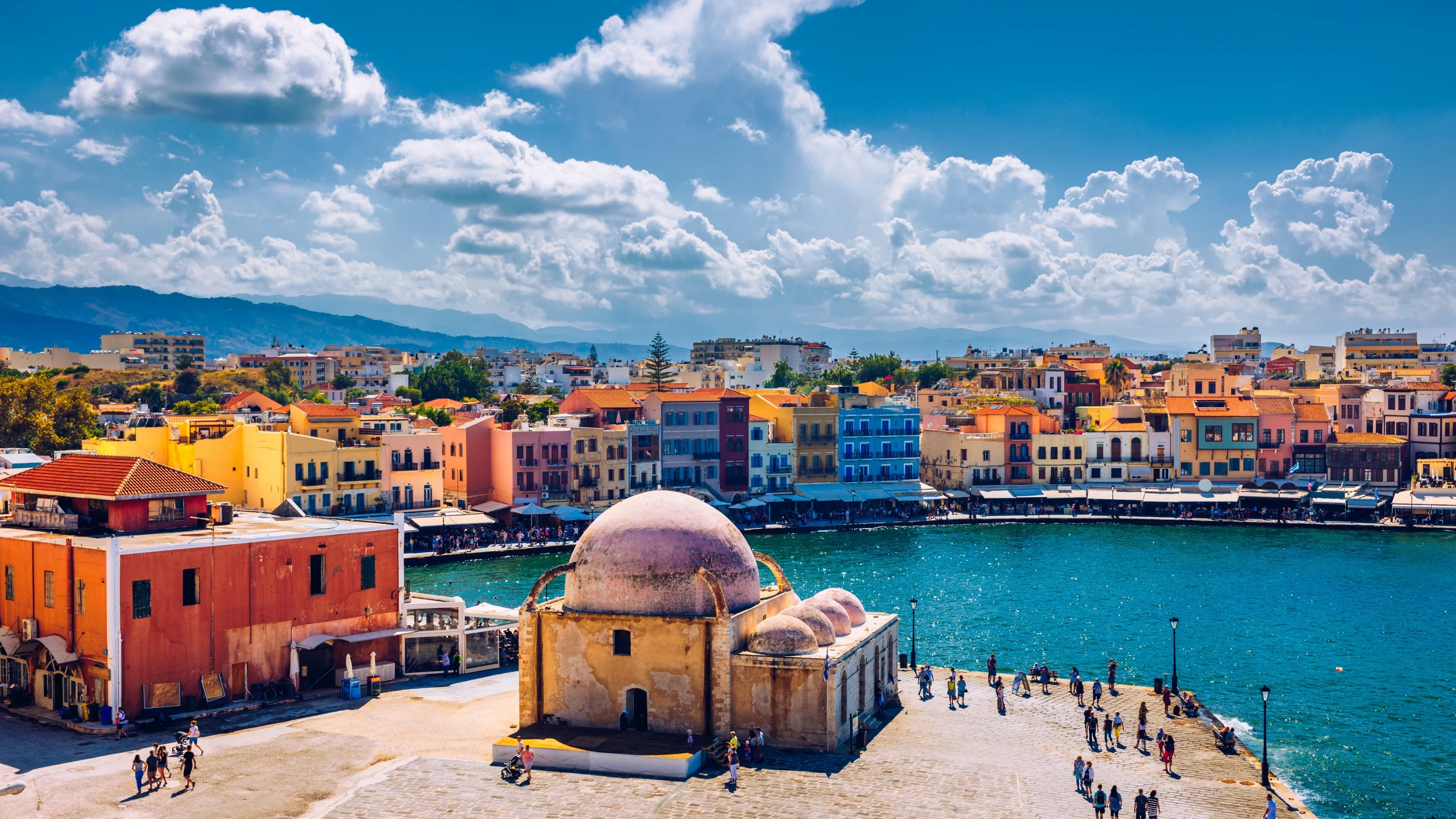
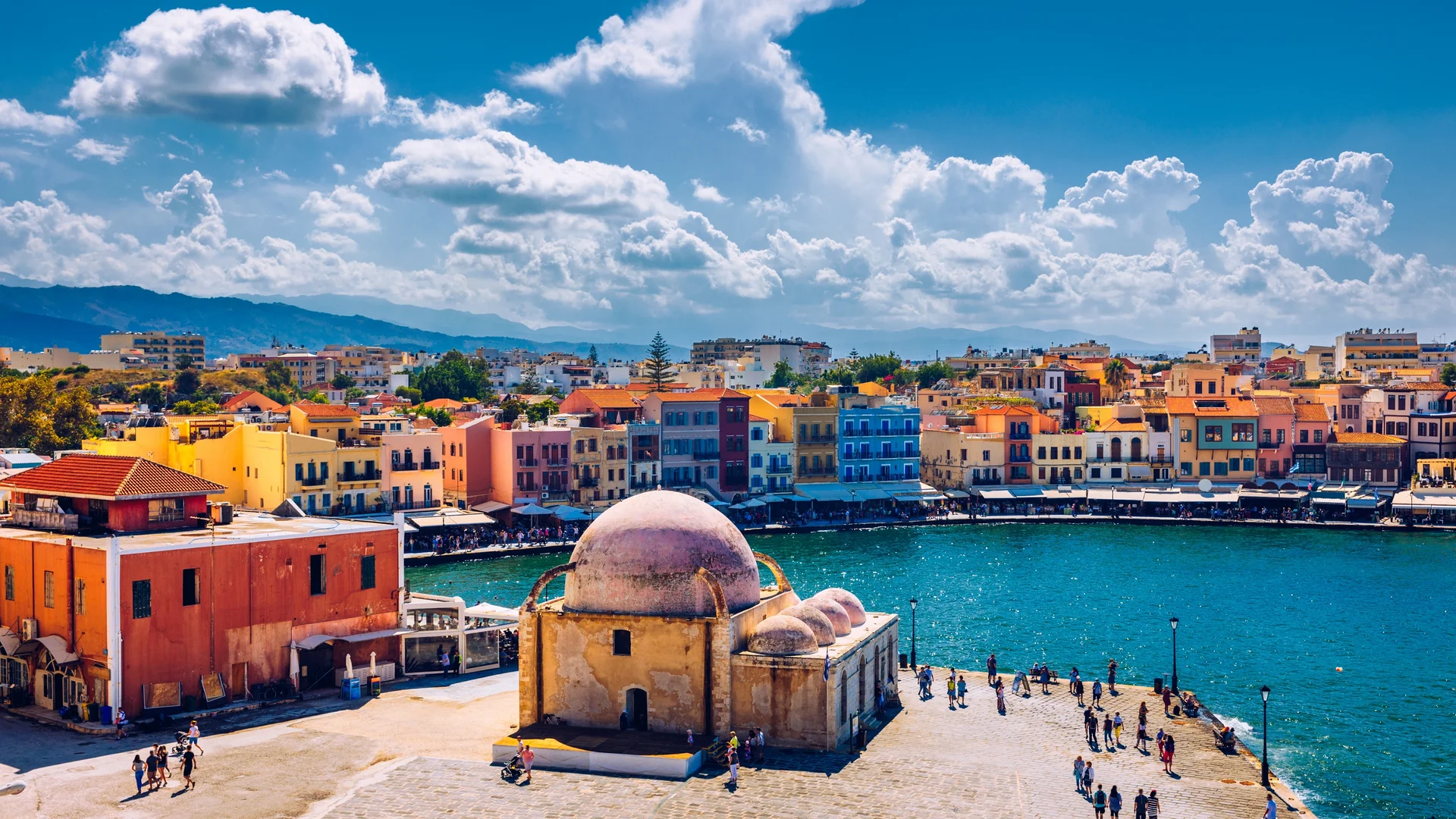
The harbor is the city's open-air theater, a perfect half-circle where colorful Venetian facades mirror themselves in the water. On one side, the Egyptian lighthouse, reachable via a long jetty, offers sweeping views, especially at sunset. On the other, the curious silhouette of the Janissary Mosque recalls the island's Ottoman past.
The old Venetian shipyards, with their massive stone arches, punctuate the promenade and now host exhibition spaces. The harbor buzzes with constant energy, from the return of fishing boats in the morning to the lively taverns at night. It is the social and visual heart of the city, a permanent show.
Friendly tip: The harbor is magical for a sunset drink, but for dinner, head into the alleys just behind it. You will find more authentic taverns, often family-run, with much better food and fairer prices.
The Old Town Labyrinth: Getting Lost to Find More
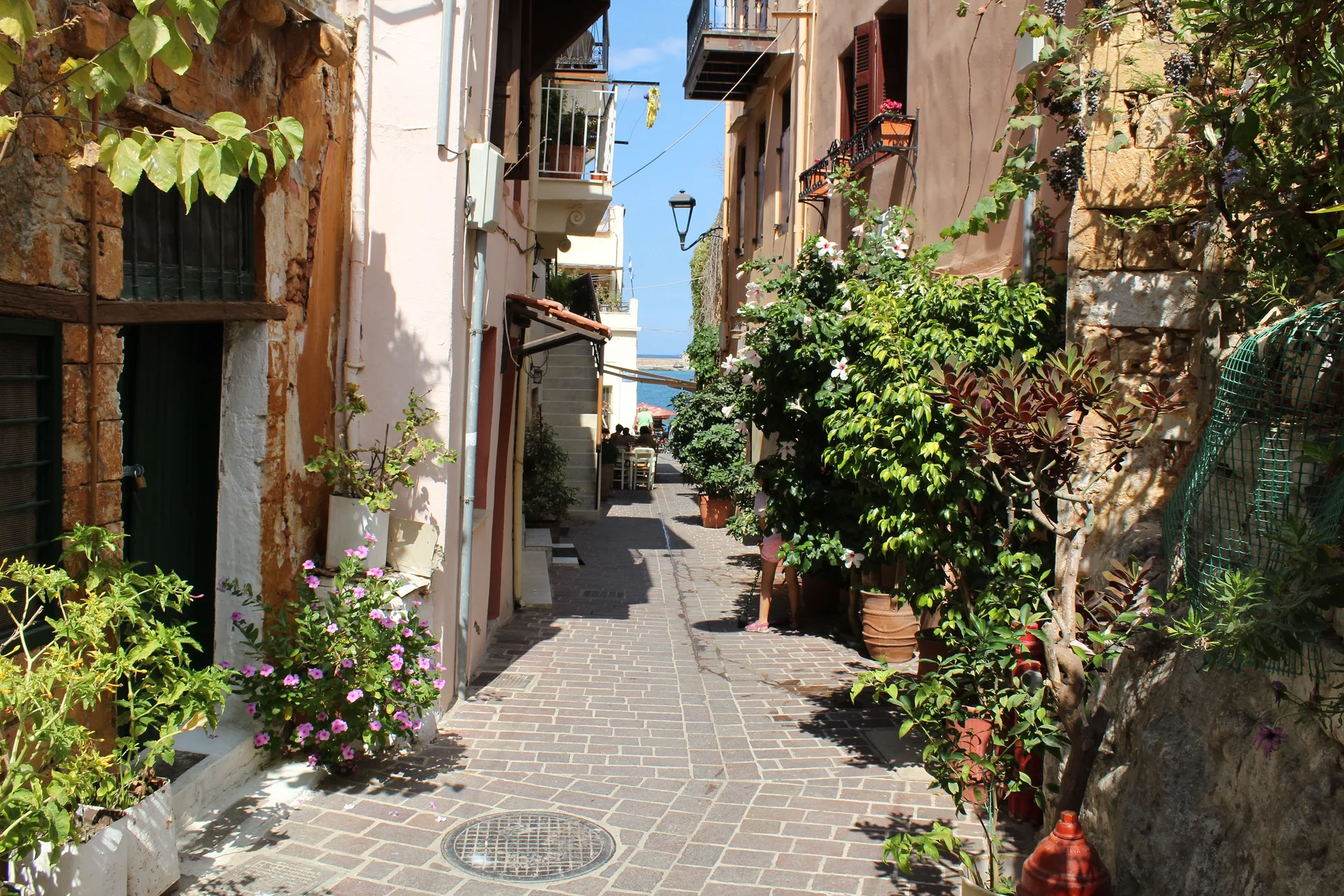
The real treasure hides behind the photogenic harbor facade. The old town is a tangle of narrow streets, a labyrinth where every turn reveals a secret courtyard, an Ottoman fountain, or a Byzantine chapel. You can still make out the distinct former quarters: Kastelli, the oldest on the hill, Evraiki, the former Jewish quarter, and Splantzia, the Turkish quarter, centered around a large square and a church that preserves a minaret.
Get lost on Skridlof Street, known as leather street, where artisans still craft and sell sandals and bags. Stop by the covered municipal market (Dimotiki Agora), a cross-shaped structure of old stone where you will find the best of Crete: olive oil, local cheeses like graviera, thyme honey, and mountain herbs.
Beyond the Ramparts: Dream Beaches and Mythic Gorges
Chania is the ideal base for exploring the natural wonders of western Crete. Some of the most famous beaches in Greece are within road trip distance. Get ready for landscapes that demand a pause.
The Paradise Lagoons
Among the must-see excursions, two spots fight for the top spot. The Balos lagoon, with its turquoise water and white sand, reachable by a dirt road or boat, looks like another planet. Elafonissi beach, famous for its pink-tinted sand, is another marvel, though very crowded in summer.
The Samaria Gorge
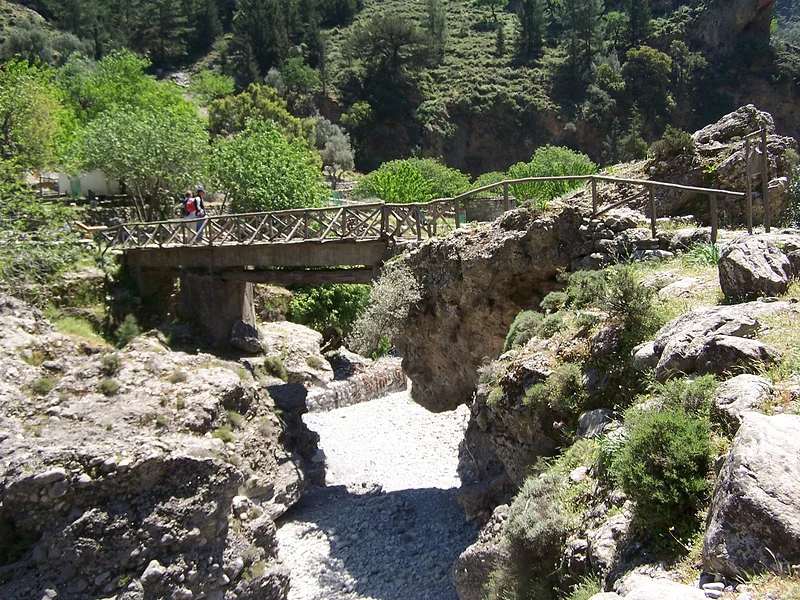
For hiking fans, descending the Samaria Gorge is a legendary experience. This national park protects a 10-mile long canyon, one of the longest in Europe. It is a demanding yet spectacular day of walking through wild, protected nature.
Friendly tip: For Balos and Elafonissi, head out very early in the morning before 9 AM or stay late in the afternoon after 5 PM to dodge the midday crowds and enjoy the magic of the place.
Where to Eat and Drink in Chania?
Cretan cuisine is a delight, considered one of the healthiest in the world. Be sure to try dakos, a barley rusk topped with fresh tomato, mizithra cheese, and olive oil. Do not miss kalitsounia, small pastries filled with cheese or wild greens. Everything is elevated by local olive oil of exceptional quality. Meals often end with a small complimentary glass of raki on the house.
Where to Stay in and Around Chania?
Sleeping in a boutique hotel or a renovated apartment in the old town makes for an unmatched romantic experience. Keep in mind that it can get loud in the summer, and car access inside is impossible. For more convenience and quiet, the neighborhoods just outside the ancient walls offer good alternatives. If you want a beach vacation, coastal towns west of the city like Agia Marina work well, though they lack the authenticity of the center.
How to Get to and Around Chania?
Chania International Airport (CHQ) connects well with many carriers, including low-cost airlines, during the summer season. Frequent buses run from the airport to downtown. You can also fly into Heraklion and take a bus to the city, which takes about 2 hours and 30 minutes.
Explore the old town exclusively on foot. To venture out into the region, a car rental provides the most flexibility and comes recommended. The KTEL bus network offers a solid option for anyone who prefers not to drive, connecting the city to the main sights.
When to go?
Late spring (May to June) and early fall (September) offer the ideal window. The weather is gorgeous, the sea is warm, nature is lush, and the crowds thin out. Summer brings high heat and heavy crowds, especially in August. Winter brings mild temperatures with plenty of rain, and many tourism-focused businesses and restaurants close their doors.
A port city in Crete that has its own little charm, and a heritage inherited from different civilizations. There are some interesting walks and visits to do. You eat well there too, for prices that stay reasonable :)