Naxos, the island that doesn't need to try
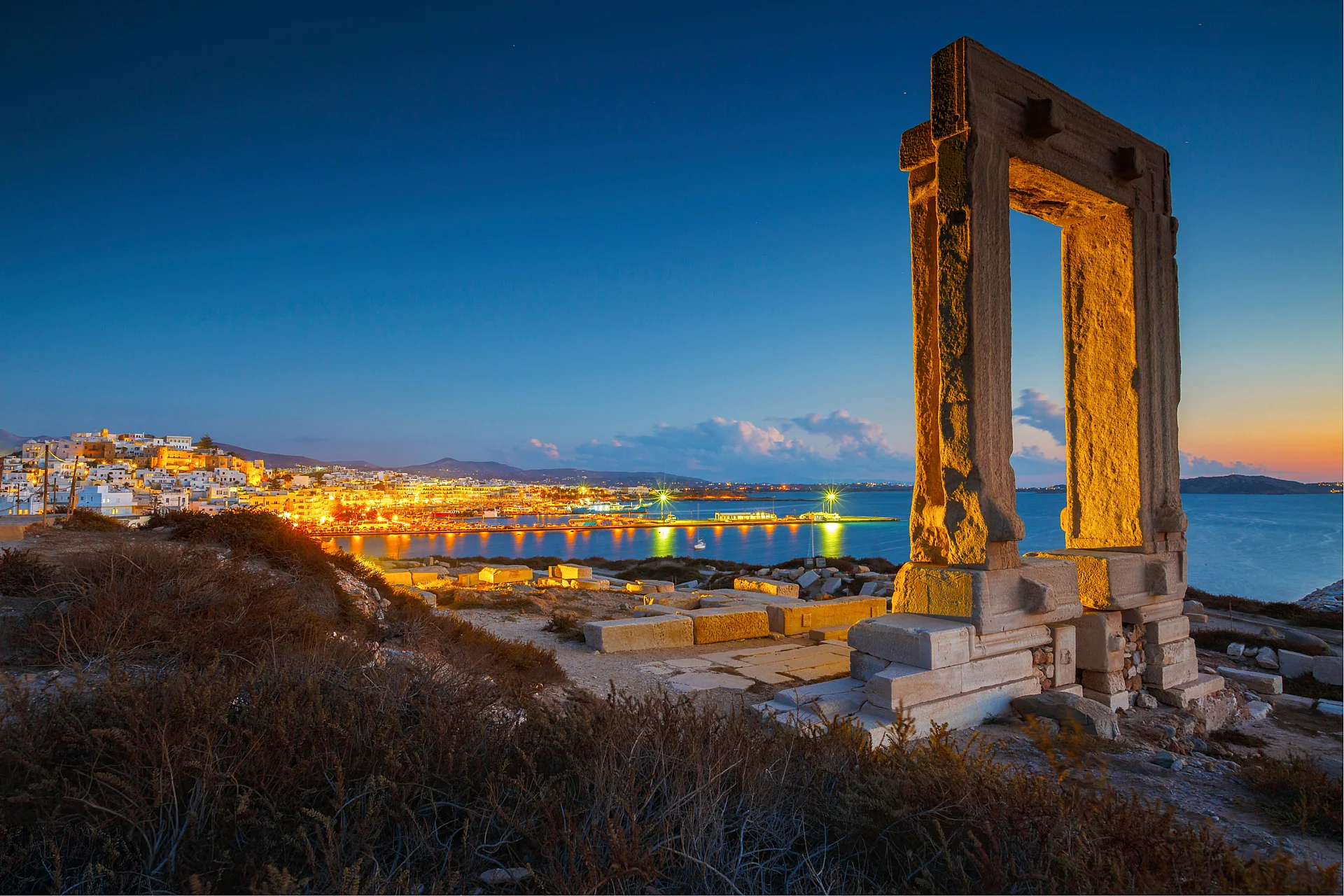
There is one detail that tells you everything: the antique marble columns standing by the Chora port aren't even the island's main draw. The Portara, a 6-meter-high marble doorway framing the sunset, is simply the remnant of a temple left unfinished 2,500 years ago.
Naxos has so many mountains, villages, and beaches that it can afford to leave its most spectacular monument as an unfinished ruin without making a big deal out of it.
Is this destination right for you?
Naxos appeals to anyone looking for a Greek island that refuses to play the role of a filtered postcard. Here, the mountainous interior hides marble villages clinging to slopes, olive groves, and the highest peak in the Cyclades, Mount Zas (1,004 m). This island takes some effort to get to know, and it rewards travelers who rent a car and venture beyond Chora.
It will hold less appeal for anyone chasing the nonstop energy of Mykonos or the polished visual perfection of Santorini. Naxos remains largely agricultural and grounded, with local life keeping its own rhythm even during peak tourist season.
Best suited for:
- Families looking for wide, shallow sandy beaches
- Hiking enthusiasts and travelers wanting authentic Greek mountain villages
- Travelers using a single base to explore multiple Cyclades islands
- Kitesurfing and windsurfing enthusiasts
Not recommended for:
- Anyone looking for Mykonos-level nightlife
- Travelers who want to see everything without renting a vehicle
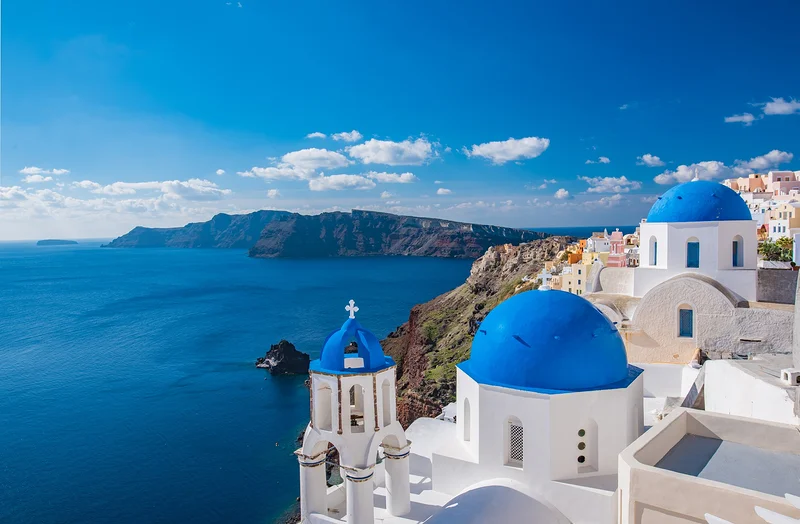
- Those searching for the ultra-photogenic whitewashed architecture of Santorini
A gentler budget than its famous neighbors
| Expense | Range |
|---|---|
| Night in a guesthouse or simple studio | 35 to 55 € |
| Night in a comfortable hotel in Chora | 80 to 150 € |
| Quick bite (souvlaki, gyros) | 4 to 7 € |
| Restaurant meal with a glass of wine | 18 to 30 € |
| Car rental per day | 30 to 50 € |
Estimated rates subject to change
Practical realities on the ground
The island experiences a sharp seasonal shift: July and bring dense crowds to the southern beaches, while the mountainous interior stays quiet nearly year-round. Mountain roads are winding but well-maintained, easily handled by a standard rental car.
English is widely spoken in coastal tourist areas, but much less so in remote inland villages like Apiranthos or Koronos, where knowing a few words of Greek goes a long way.
Chora, the capital between sea and history
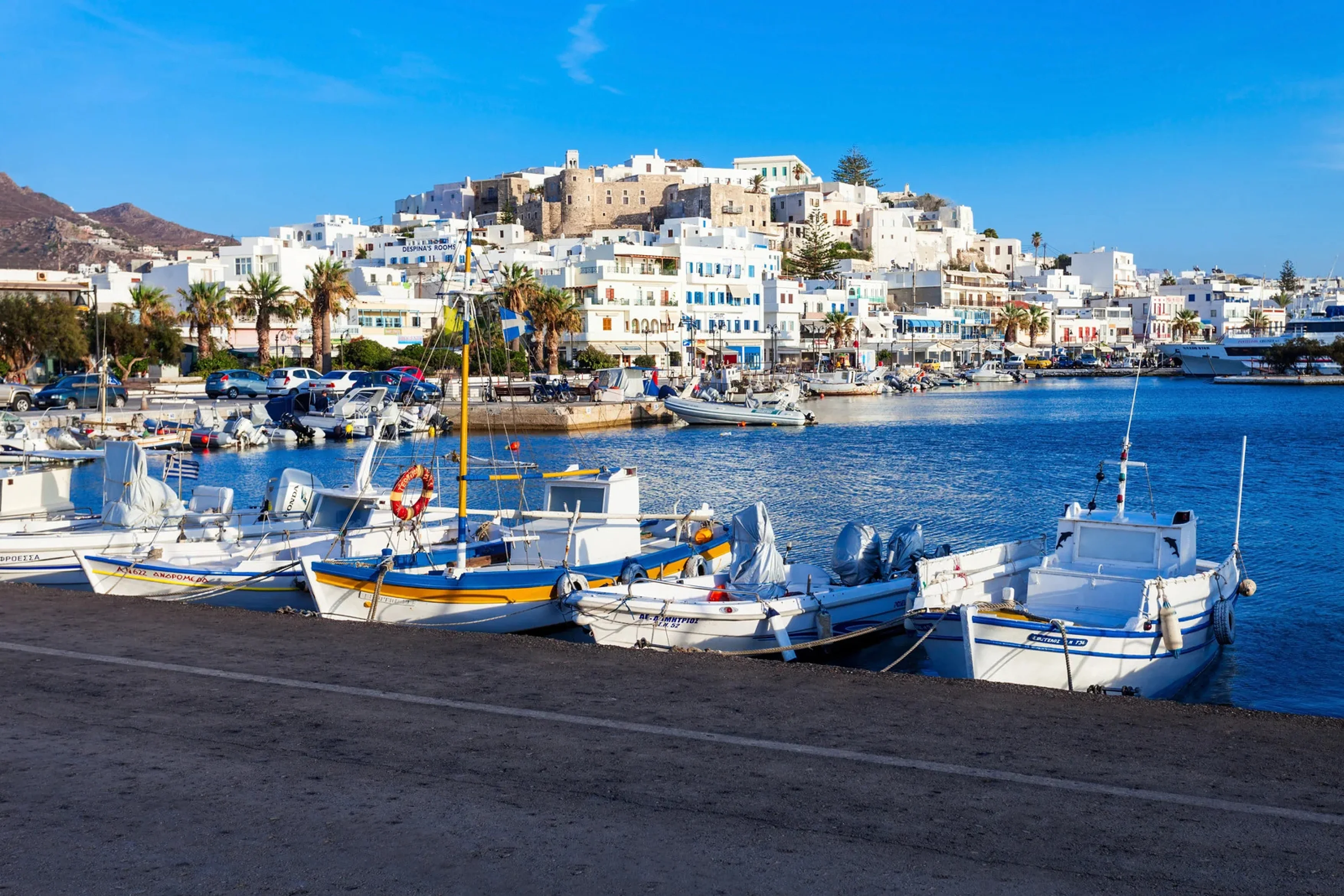
The main town has to be explored on foot, since the alleys of the Kastro (the medieval Venetian quarter) climb in a maze that cars can't navigate. You can still spot the coats of arms of Venetian Catholic families carved into stone lintels.
The Portara and the port
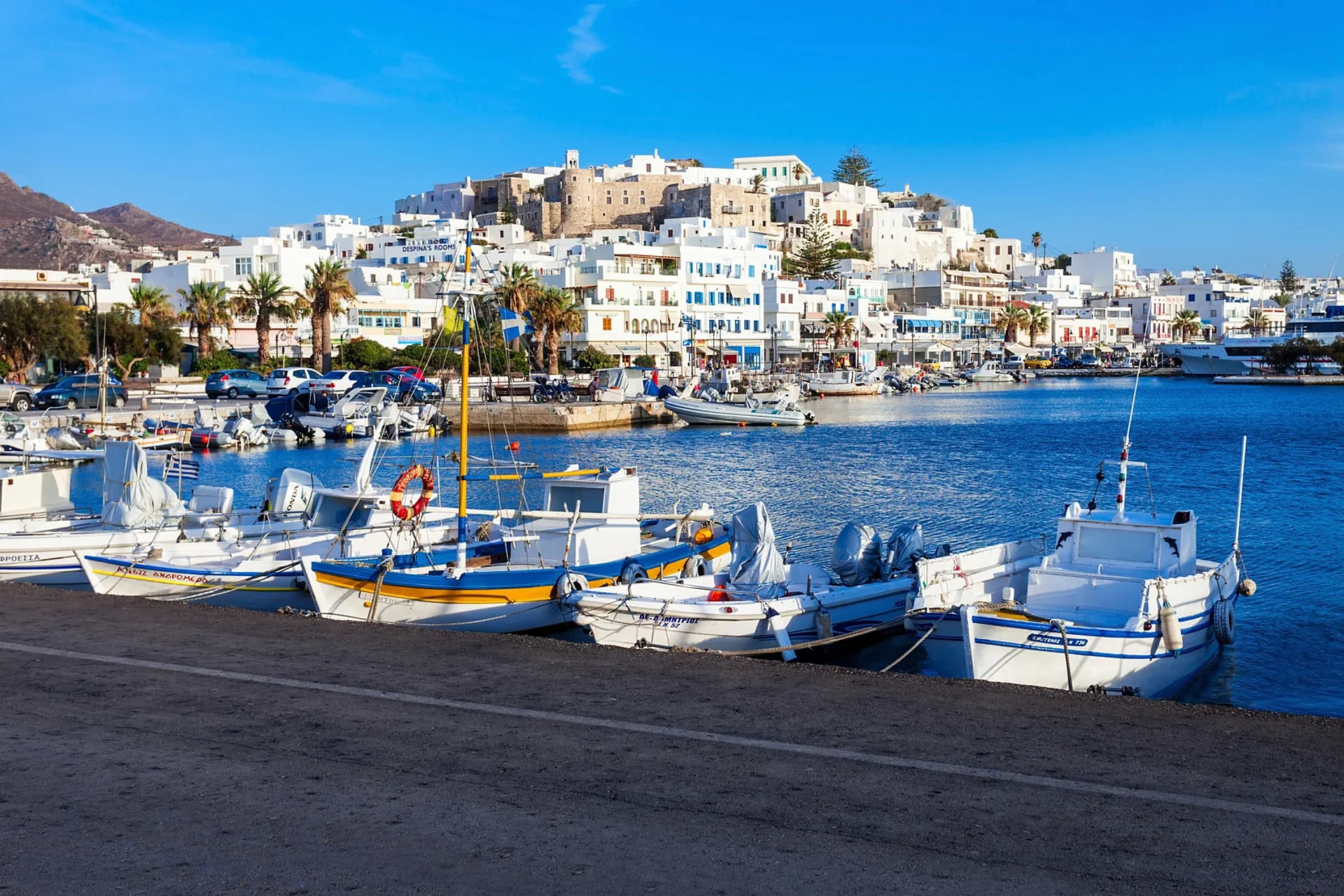
The Portara is open to visit anytime for free, but sunset is the absolute must-see moment when the light streams right through the marble opening. The harbor comes alive at night with fish tavernas lined up right against the water.
Friendly tip: arrive at the Portara a good hour before sunset to grab a spot on the rocks, as the best viewing areas fill up fast in the summer.
Beaches, from the local Riviera to wild coves
Agios Prokopios and Agia Anna
These neighboring beaches, about a ten-minute drive from Chora, feature fine sand and shallow water that works well for families. This is also the island's most developed zone for beach bars and lounger rentals.
Plaka
Further south, Plaka stretches for miles, edged by dunes and tamarisk trees. It draws a quieter, slightly younger crowd, with a few low-key clothing-optional spots at the far end.
Mikri Vigla
A well-known spot for windsurfing and kitesurfing thanks to steady winds (the famous summer meltemi), this beach split into two bays appeals to riders and those looking for a slightly less crowded scene.
The interior, the true face of the island
This is where Naxos truly sets itself apart from the rest of the Cyclades. The road climbing up to Chalki, the former capital, cuts through valleys of ancient olive trees and cypress. The village preserves handsome neoclassical mansions and a kitron distillery, where the local citrus liqueur is made, open for visits.
Higher up, Apiranthos is built almost entirely from marble and slate, featuring cobblestone alleys where you can still sense the Cretan roots of its founders. The villages of Filoti and Koronos serve as trailheads for hiking Mount Zas, home to a cave where local mythology says Zeus was born.
Where to eat and drink in Naxos
The island is famous for its Naxos cheese, particularly PDO graviera, produced in mountain dairies and served fried or grated over dishes. Inland tavernas in Apiranthos or Chalki frequently serve local braised goat, a hearty contrast to the coastal seafood.
To drink, kitron, a citrus liqueur that comes in yellow or green depending on the distillation strength, is the definitive local specialty to bring home or sip on-site, ideally as a digestif after a fish dinner at the Chora port.
Where to stay in and around Naxos
Chora remains the logical choice for a first-time visit: within walking distance of everything, lively at night, with views of the Portara if you stay up near the Kastro. Families generally prefer staying near Agios Prokopios or Agia Anna, just a short drive from the capital with the beach right outside your door.
For a more rural experience, guesthouses in Chalki or Filoti put you right in the middle of the mountains, far from the coastal bustle.
Getting to Naxos
Naxos Airport receives direct flights from Athens during high season, taking about 35 minutes. Most travelers arrive by ferry from the port of Piraeus, taking 3 to 5 hours depending on whether you take a conventional or high-speed vessel, or from other Cyclades islands like Paros, Mykonos, or Santorini in 30 minutes to 2 hours.
Getting around Naxos
In Chora, everything is done on foot since the Kastro alleys are closed to traffic anyway. A network of KTEL buses connects the capital to major beaches and inland villages, though schedules drop off significantly outside the summer season.
To really explore the island, especially the mountain villages and secluded southern beaches, car rental is the most practical choice. Mountain roads, while narrow in places, are paved and safe.
When to visit Naxos
May, June, and September offer the best balance of warm weather, comfortable swimming, and manageable crowds. July and August guarantee sunshine, but also crowded beaches and peak lodging prices. Winter sees almost all tourist businesses close down, and the island returns to its quiet agricultural rhythm.