Eglise Anastase de Santorin

What to do in the Cyclades: top 9 highlights in 2026

The ferry pulls into port in the early morning, the meltemi snaps at the flags, and up on the cliff the white houses wait for the sun. The rankings below are built by travellers like you.

Our members' favourite places in the Cyclades

Ranked on recommendations from travellers who went there

#1 Santorini +40 recs

Santorini was born from a volcanic catastrophe, resulting in white-washed villages clinging to ochre cliffs above a deep blue caldera. The sunsets here are legendary, the vines grow in unique baskets across volcanic rock, and the local cherry tomatoes have a flavor profile you will not find anywhere else. It is a rugged, dramatic landscape that feels like the edge of the world, only with a much better view.

#2 Milos +12 recs

Milos feels like a sci-fi set with its eroded white rock formations, red sand beaches warmed by volcanic activity, and fishing villages where colorful doors open directly onto the water. This island, where the Venus de Milo was unearthed, remains far quieter than Santorini or Mykonos. Days here are spent exploring sea caves by boat, swimming in hidden coves, and watching the sunset over the Aegean from the ruins of a Venetian kastro.

#3 Paros +1 rec

Among the Cyclades archipelago, Paros stands out as the third-largest island and the most centrally located. This Aegean Sea gem features picturesque villages tucked against beaches or climbing mountain slopes. The setting mixes small charming ports, traditional architecture, and a deep cultural and archaeological heritage. Paros draws plenty of travelers looking for a warm, scenic getaway, and its famous white marble once built ancient Greece's most celebrated statues.

Postcard Villages

With Parikia acting as its bright capital, Paros sets the tone right away. Ferries dock in its port, and the old town delivers classic Cycladic charm through cobblestone alleys where whitewashed, flower-draped houses lead to landmarks like the 1260 Venetian Kastro, the ruins of the Temple of Athena, and the fourth-century Panaghia Ekatontapiliani basilica. History is everywhere here, from the Byzantine Museum to the Ancient Necropolis holding eighth-century BC tombs and sarcophagi. The Archaeological Museum houses fascinating local finds. Head 10 km away for the upscale coastal vibe of Naoussa, a former fishing village turned hotspot. Its streets share the same distinct architecture, and the nearby Kolymbithres beach consists of secluded coves framed by massive boulders.

Ruins, Nature, and Exceptional Beaches

Tucked against Mount Aghion Pandon, the small village of Lefkes prioritizes authenticity. Terraced whitewashed houses rise under a pine canopy near hilltop windmills, while the tavern- and shop-lined main street keeps old washhouses and local traditions alive. The Agia Triada cathedral stands out with its twin bell towers, and the surrounding area offers some of the best hiking trails on the island. The Paros Park paths at the northern tip of the island cover 80 hectares of coastal views and a rocky promontory topped by a stunning lighthouse at 60m. The Butterfly Valley is another major draw, where dense vegetation serves as a habitat for Jersey tiger moths in an idyllic setting for nature lovers. The island boasts diverse beaches, with Golden Beach ranking as a prime spot for windsurfing alongside Santa Maria. Over in Monastiri, you will find plenty of restaurants, while local farms produce citrus fruits and wines alongside culinary specialties like gouna (sun-dried mackerel), local cheeses, capers, and figs. A quick boat trip to neighboring Antiparos lets you explore its famous stalactite cave and quieter stretches of sand.

When to Go

Average temperatures hover between 14°C and 28°C, making April through October the prime window for a visit, with peak crowds arriving in July and August. The island logs 3,000 hours of sunshine per year.

Getting There

Located 10 km from the capital, the local airport handles domestic flights connecting through Athens. Travelers from North America reach it the same way, after a transatlantic leg to Europe. Alternatively, regular ferry crossings run from the ports of Piraeus, Rafina, and Lavrio.

#4 Mykonos -1 rec

Mention Mykonos anywhere in the world and heads turn. Known globally for legendary nightlife and all-night parties, it is easily the most famous of the Cyclades. Set against the Aegean Sea, July and August turn the island into an open-air stage running 24/7 on DJ sets and festivals. Yet parties are far from its only draw, as a stroll through the main town quickly proves. Locally called Chora, Mykonos is a quintessential Greek town with winding lanes, striking architecture, and distinct neighborhoods. Tourism drives the local economy, and the island welcomes far more visitors each year than it has residents.

The Romance of the Old Port

Wandering through the maze of narrow streets, Manto Square is hard to miss. Named after a heroine of the Greek War of Independence, the square features a marble bust in her honor. It sits right in the center of the old port, now reserved for smaller boats, where the waterfront makes for an enchanting walk. Just a few steps away, la Petite Venise stands as the town's most iconic neighborhood. Also known as Alefkandra, it delivers the postcard view of the island with its romantic bay and original 18th-century houses built right over the edge of the water. Numerous bars and restaurants line the water, setting the scene for a taste of local food. Star of the pre-dinner hour, kopanisti is a local cheese often served with mostra, a type of rusk topped with tomatoes. Louza, cured pork tenderloin, fresh seafood, rafiolia sweet or savory pastries, and honey pie round out the local specialties. From the outdoor terraces, one landmark dominates the view: the brilliant white Kato Mili with their thatched roofs perched on a hill. These seven 16th-century windmills have become a symbol of the island and are well worth a visit. Closer to the center, the Musée maritime Aegean traces the maritime history of the Aegean Sea and features a lighthouse in its garden.

Cycladic Architecture

On the way to the old town, the rich Musée archéologique houses artifacts excavated from Rhenia, including tombs, sculptures, and pottery. In the Quartier Kastro, you will find the classic architecture that built the reputation of Mykonos. Whitewashed houses feature colorful doors and shutters, often painted blue, while blooming bougainvillea spills over the alleys. The soul of the Cyclades is everywhere here. The oldest and most famous church in town follows the same palette against the blue of the sky and sea, with the stark white Panagia Paraportiani lighting up the neighborhood. Resembling a sculpture more than a traditional church, its asymmetrical shape is entirely unique. Beaches are a major draw on Mykonos with fine sand and clear water. The closest one to town is Megali Ammos, which can get crowded, leading some travelers to head for Mirsini Beach instead.

When to Go

Weather conditions are ideal from May to October. In the off-season, strong winds can make it rough, and the water is too cold for swimming. July and August bring peak crowds and nonstop parties, so skip those months if you prefer a quiet getaway.

Getting There

Ferries run to Mykonos from Athens, departing from the Port of Piraeus or the closer port of Rafina. Located 4 km from the town center, the local airport handles seasonal flights from several European cities.

Our members' favourite things to do in the Cyclades

Ranked on recommendations from travellers who did them

#1 Akrotiri Archaeological Site (Santorini) +19 recs 5/5

The Akrotiri Archaeological Site in southern Santorini offers a rare look at the Minoan civilization, buried by a volcanic eruption over 3,500 years ago. Explore preserved paved streets, multi-story buildings, and intricate frescoes. Housed under a modern structure, the site is open year-round for a direct view into this ancient city.

See the guide See deals-7%AVYGEO7

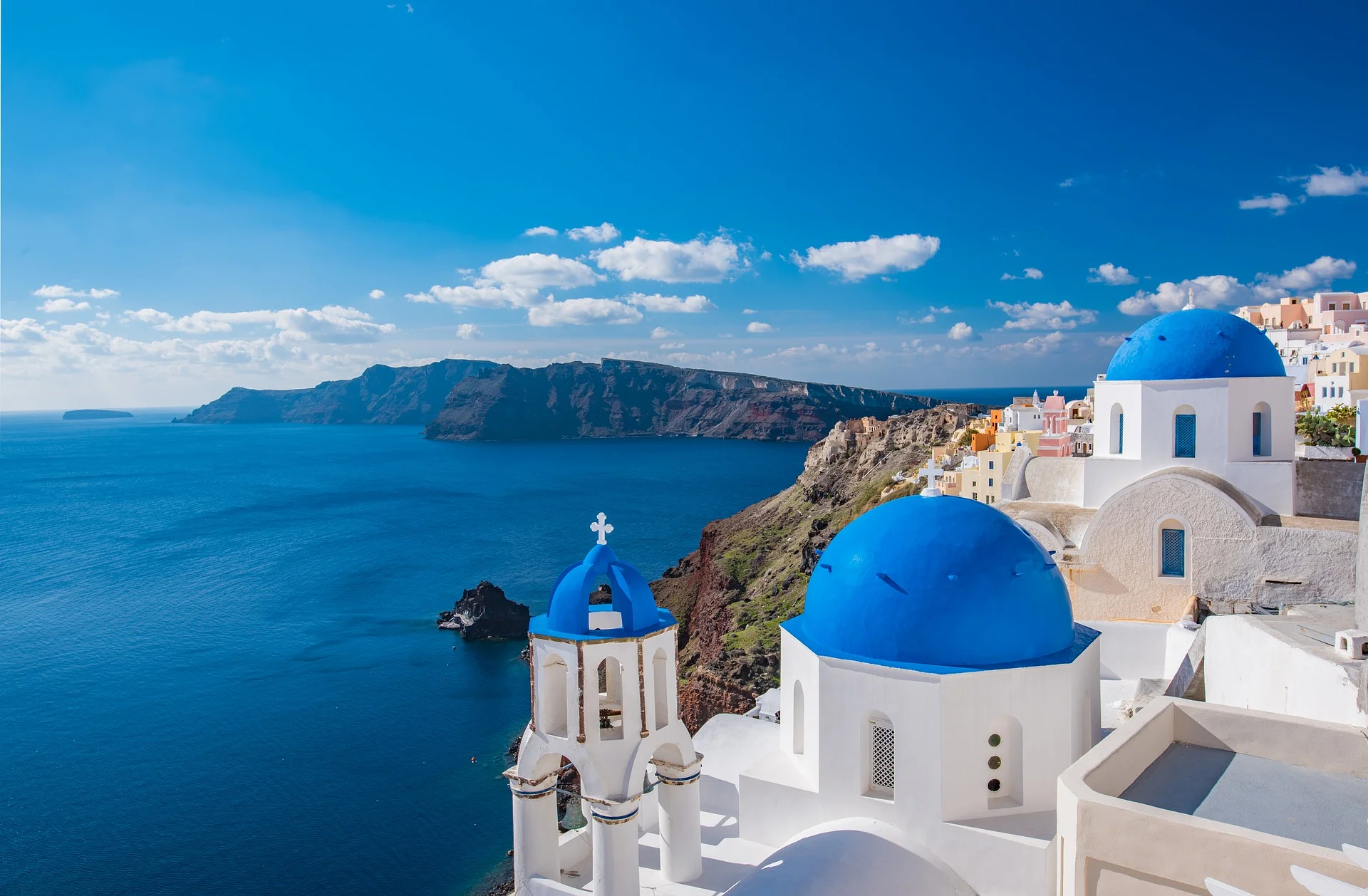
#2 Anastasis Church (Santorini) +11 recs 3.8/5

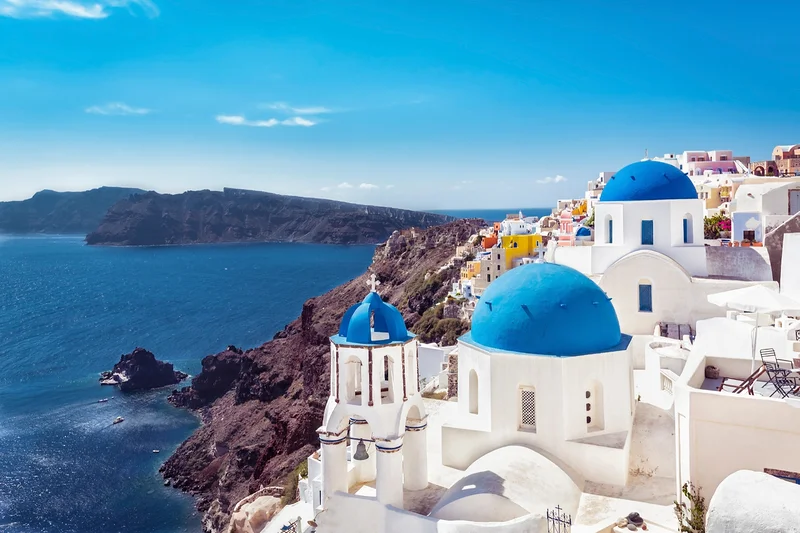
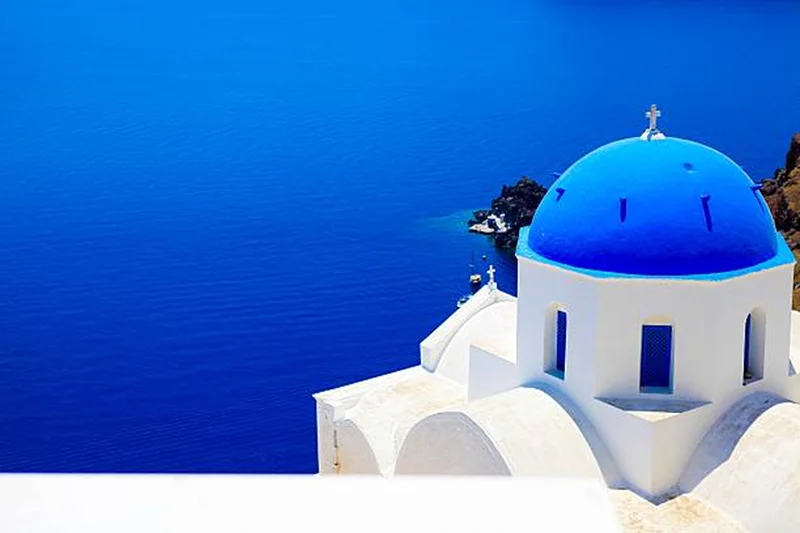
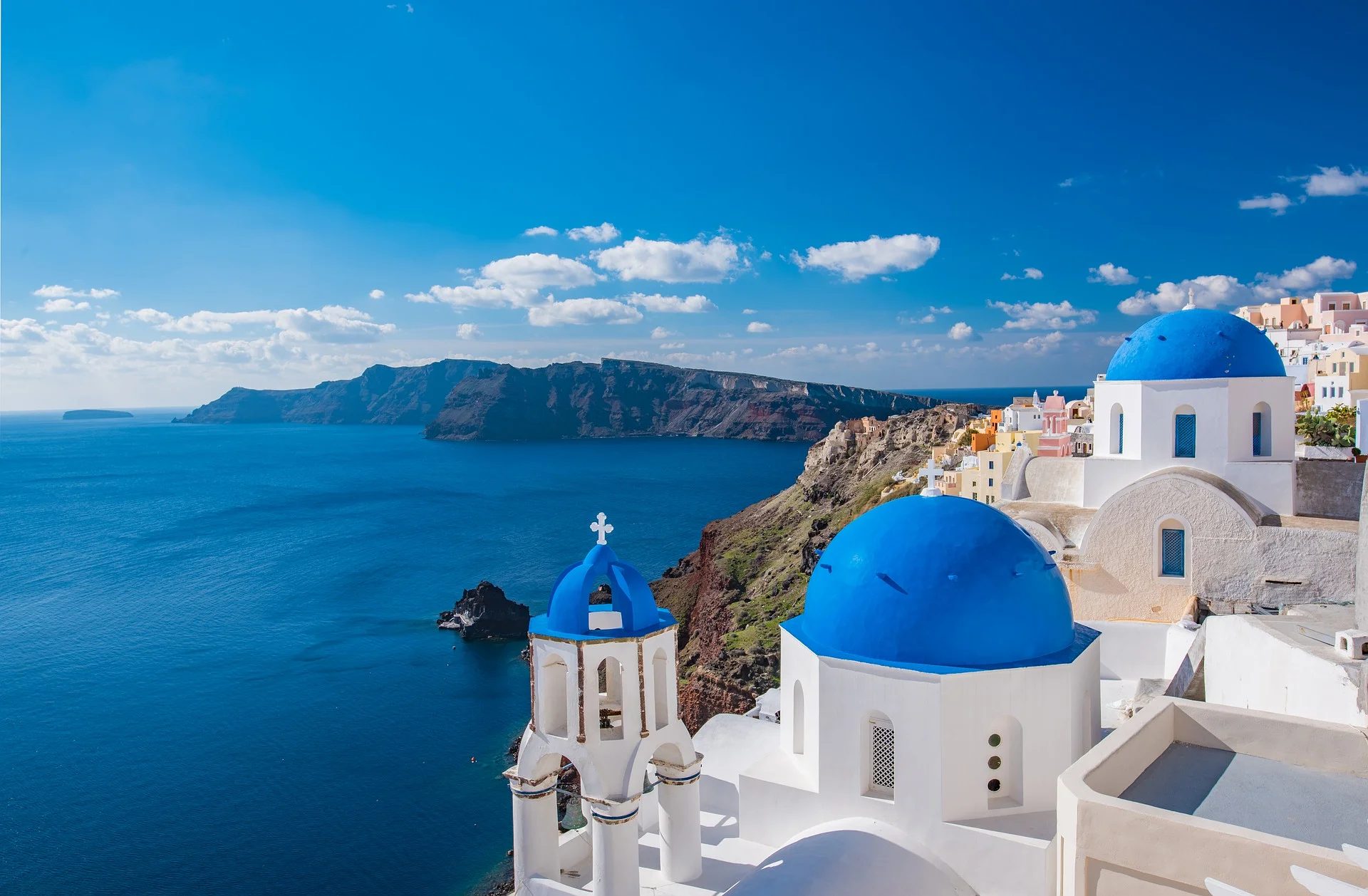
Known for volcanic soil and iconic scenery, Santorini perfects classic Cycladic architecture. Religious sites here stand out with dazzling white walls and deep blue accents. The Anastasis Church in Imerovigli distinguishes itself among the 550 island shrines with its unique domed spires. Perched 330m above the Aegean, it offers a prime architectural and panoramic experience.

#3 Firiplaka Beach (Milos)

Firiplaka Beach, on the island of Milos in Greece, is known for striking multicolored cliffs, white sand, and turquoise water. It is a prime spot for snorkeling and kayaking, featuring beach umbrellas and a small cafe. It is a perfect mix of natural beauty and adventure for those seeking a quiet escape.

#4 Elia Beach (Mykonos) -3 recs 2/5

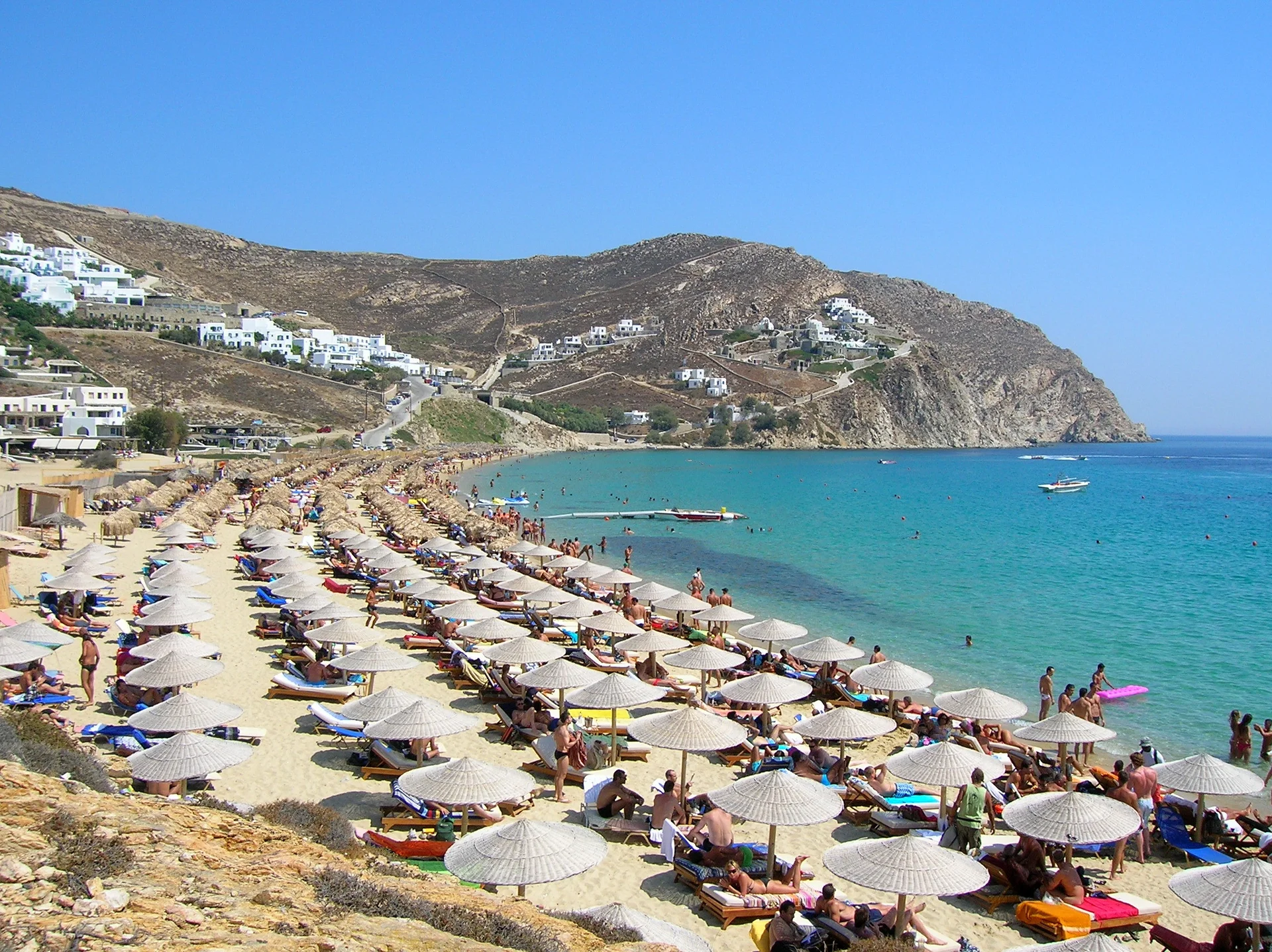
Amidst the high energy of Mykonos, an island defined by its festive nightlife, Elia Beach offers a quiet sanctuary. Located about 6 miles from town, this expansive stretch of soft sand is framed by hills and cliffs. It remains one of the most scenic bays in Greece, featuring full amenities along the Aegean Sea, with separate gay-friendly and naturist sections beside the main family beach.

See the guide See deals

#5 Athinios Port (Santorini) -17 recs 2.3/5

While Santorini has an international airport, many travelers arrive by ferry from Athens or other Cycladic islands. Expect crowds at Athinios Port during peak season. Nearly 12 million passengers pass through here annually. The volcanic scenery and Aegean Sea views make the 8.5 km trip to Fira worthwhile. Only cruise ships use the old port.

See the guide See deals

Map of the Cyclades

Visiting the Cyclades

Twenty-four islands of dry rock, cube-shaped whitewashed houses and blue-domed chapels, scattered between Athens and Crete. Each has its own character: Santorini and its caldera, Mykonos and its nights, Naxos and its mountain villages, Milos and its white rocks.

The whole pleasure lies in hopping from one to the next by boat, in a few hours. You don't visit the Cyclades, you choose which ones, and that choice makes the trip.

You'll love it if

  • You want to change island every three or four days
  • Coves, white villages and harbour tavernas are all you need
  • You're going in June or September

Look elsewhere if

  • Wind and rough crossings make you seasick
  • You're after forests and greenery
  • You can only travel in August, when it's at its priciest and most crowded

The must-sees

  1. 1 Delos, the sacred island From Mykonos

    Half an hour by boat from Mykonos, the whole island is an archaeological site: the sanctuary of Apollo, the Terrace of the Lions, houses with mosaic floors. Nobody sleeps there, and swimming is forbidden. The site opens every day, with a €20 ticket. Take the first boat of the morning and bring water and a hat: there's almost no shade.

  2. 2 Sarakiniko and Kleftiko, on Milos Volcanic coast

    On the north of Milos, the rock at Sarakiniko is so white and so smooth you'd think you were on the Moon, with turquoise water at the bottom of the gullies. In the south-west, the cliffs and sea caves of Kleftiko, an old pirate hideout, are best seen by boat from Adamas. Come to Sarakiniko early in the morning, before the heat builds on the white rock.

  3. 3 The Portara and Mount Zas, on Naxos Naxos

    At the harbour entrance, the Portara is the doorway of a temple of Apollo begun in 530 BC and never finished: four marble blocks six metres tall, facing the sunset. Inland, Mount Zas, the highest point in the Cyclades at just over 1,000 metres, is climbed from the village of Filoti. The unfinished kouroi, lying in the quarries, round off the day.

  4. 4 The path from Fira to Oia At daybreak

    A little over ten kilometres along the caldera of Santorini, from village to village, above a deep blue sea. Allow three to five hours, with hardly any shade. Set off at dawn, and reach Oia before the crowd that climbs to the castle every evening for the sunset.

  5. 5 15 August on Tinos 15 August

    Tinos, in the north of the archipelago, keeps the icon of the Panagia Evangelistria, found in 1823. On 15 August, the feast of the Dormition, pilgrims from all over Greece climb to the church, some on their knees. It is also the island of marble, whose craft is on UNESCO's heritage list. If you're aiming for that day, book boat and room months in advance.

The classic mistake

Trying to do six islands in a week. Every change of island costs you half a day between check-out, waiting at the port and the crossing. Aim for two or three islands a week, and keep a spare night before your flight home: the meltemi sometimes cancels the boats.

Our itineraries in the Cyclades

Our itineraries by length of stay
LengthItineraryWhat you see
1 weekParos › Naxos › SantoriniVillages, beaches, caldera
10 daysMilos › Sifnos › Folegandros › SantoriniThe Western Cyclades
2 weeksMykonos › Naxos › Small Cyclades › Amorgos › SantoriniFrom the liveliest to the wildest

Follow the ferry routes rather than the map: islands on the same route are an hour or two apart, while two islands that look like neighbours on the map may have no direct link. Paros and Naxos, in the centre, are the best hubs. Finish on an island with an airport, Santorini or Mykonos, for the way home.

When to visit the Cyclades

When to go, season by season
RatingSeasonWind and seaCrowds and prices
SpringApril and MayCool sea, flowersLow
Early summerJuneWarm enough to swim, little windMedium
High summerJuly and Aug.Meltemi, rough seaHigh
Late summerSept. and Oct.Warmest seaMedium

Our advice

Aim for June or September: the sea is warm enough to swim, the wind is calmer and the ports are less packed. From November to March, most hotels and tavernas close, and boats between the islands become scarce.

Getting to the Cyclades

  1. Direct flights, in season The fastest

    In season, direct flights link the UK and many European cities to Santorini and Mykonos. From further afield, you'll change in Athens or at a European hub. Naxos, Paros and Milos only have domestic flights from Athens.

  2. Fly to Athens, then take the ferry Every island

    Athens airport is served all year from across Europe and beyond. From there, ferries leave Piraeus for Paros, Naxos, Santorini and the west of the archipelago, and Rafina for Mykonos, Tinos and Andros. Allow two and a half to seven hours at sea depending on the boat and the island.

  3. By ferry from island to island To combine islands

    Once you're in the archipelago, boats link the islands to one another. The small Express Skopelitis ferry serves Naxos, Amorgos and the Small Cyclades all year round.

Book July and August ferries as soon as your dates are set, especially around 15 August. Fast boats cost more and pitch harder in strong wind; the big ferries are slower but steadier, and they carry cars.

Getting around the Cyclades

On the larger islands, local buses cover the essentials: on Santorini, every route starts from Fira, and on Naxos they climb to the mountain villages in summer. For coves at the end of dirt tracks, rent a scooter or a small car. Taxis are scarce on Santorini and Mykonos, with long waits in summer.

Good to know

Quads are for hire everywhere, and accidents are frequent on narrow, sandy roads. Only rent one with the right licence and a helmet, and ask to see the insurance: a reform tightening rental conditions was announced in 2026.

What to eat in the Cyclades

  • Santorini fava: a creamy purée of yellow split peas grown in volcanic soil, served warm with olive oil, onions and capers.
  • Santorini wine: dry whites from assyrtiko vines trained low into basket shapes, and vinsanto, a sweet wine made from sun-dried grapes.
  • Kopanisti: a salty, peppery Cycladic cheese to spread on barley bread. The one from Mykonos is the best known.
  • Naxos cheeses: graviera, a hard cheese, and arseniko, from sheep's and goat's milk, both protected.
  • Naxos kitron: a liqueur distilled from citron leaves, green, yellow or clear, served after dinner.
  • Sifnos revithada: chickpeas cooked all Saturday night in a clay pot in a wood oven, for Sunday lunch.

On Santorini and Mykonos, a taverna costs noticeably more than on Naxos or Paros for the same plate. Eat where the fishermen eat, at the harbour, and ask for the catch of the day: you pay by weight, so have it weighed in front of you.

Where to stay in the Cyclades

Where to base yourself
IslandWhat it's forGood to know
SantoriniCaldera, sunsets, AkrotiriThe most expensive, very busy
MykonosParties, beaches, DelosVery high prices in summer
NaxosSandy beaches, villages, hikingBig island, ideal for families
Paros and AntiparosVillages, sailing, ferry hubA good balance of buzz and calm
Milos and KimolosVolcanic coast, covesA car or a boat comes in handy
Small Cyclades and AmorgosPeace, coves, hikingFew boats off season
Sifnos, Folegandros, IosHiking, food, parties on IosSmaller islands, fewer connections

Read the full guide: where to stay in the Cyclades

How much does a trip in the Cyclades cost?

Indicative budget per person, excluding travel to the region
TripLengthBudget per person
Budget (studios, slow ferries, tavernas)10 days700 to 1,000 €
Comfort (hotel with pool, fast ferries, scooter hire)10 days1,400 to 2,200 €
Luxury (caldera suite, private boat, renowned tables)10 days3,500 to 6,000 €
  • Which islands: you'll pay far more on Santorini and Mykonos than on Naxos, Paros or Milos, for the room as for the meal.
  • The month: if you can, avoid July and August, which push up rooms and ferries; June and September are gentler.
  • Ferries: €43 to €77 a trip between Piraeus and Naxos depending on the boat, more on a fast one.
  • The tourist tax: €2 to €15 per room per night from April to October depending on the hotel category, much less in winter.
  • Sites: Delos and Akrotiri cost €20 each, other sites and museums less.

Traditions and way of life in the Cyclades

In summer, every village celebrates its patron saint with a panigyri: a mass, then a big open-air meal, with music and dancing until dawn. The most popular fall around 15 August. Easter remains the great feast of the year: in 2027, Orthodox Easter falls on 2 May.

Each island has its craft: marble on Tinos, pottery on Sifnos, birthplace of Nikolaos Tselementes, whose name in Greek has come to mean a cookbook.

Local etiquette

To enter a monastery or a church, cover your shoulders and legs: long trousers or a long skirt, arms covered. At the Hozoviotissa monastery on Amorgos, you're sometimes lent a shawl at the entrance, but it's better to arrive dressed for it.
Top photos posted by members

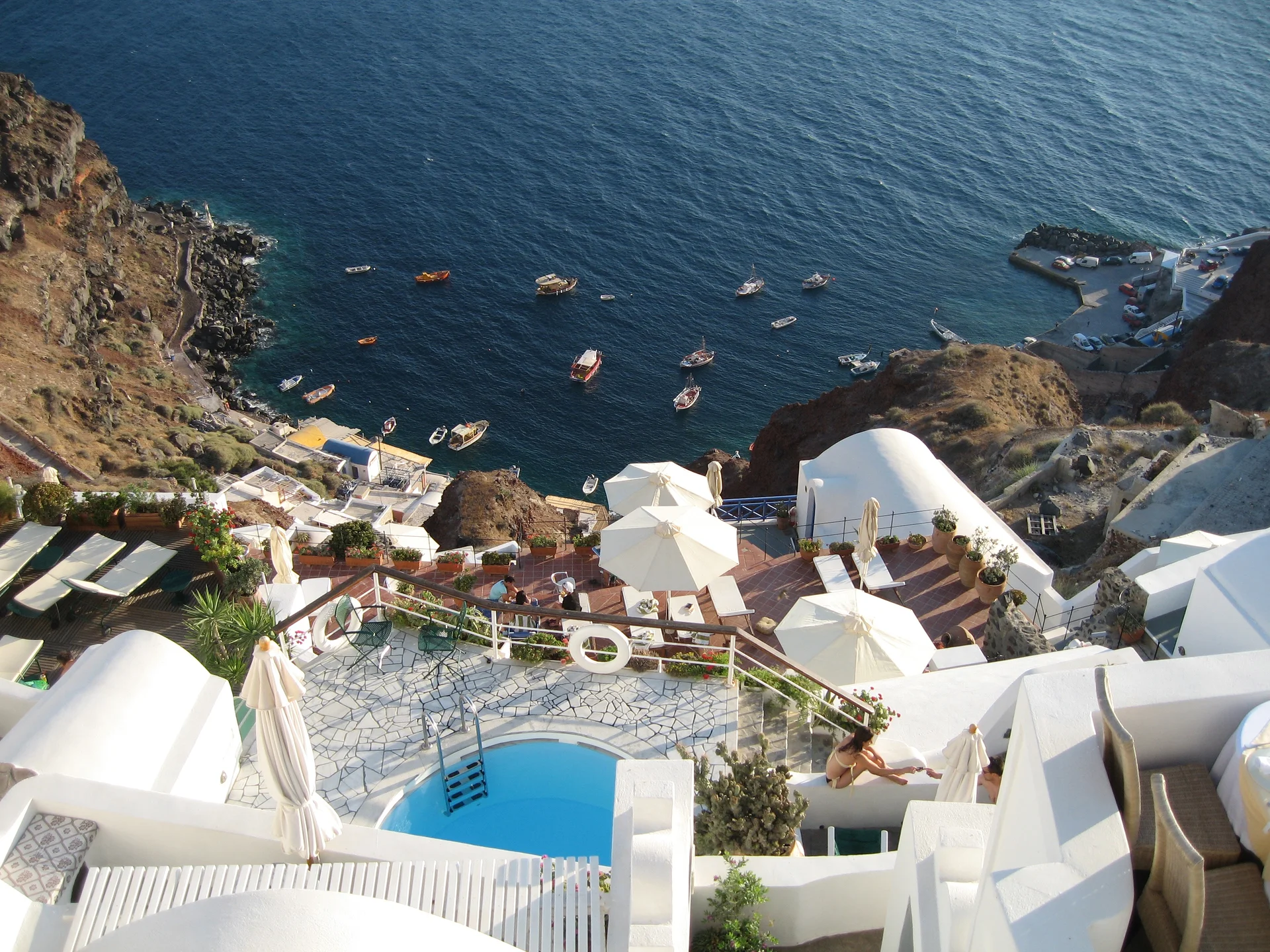
Port de Santorin
Eglise Anastase de Santorin
Plage d'Elia à Mykonos

Articles posted by members

Traveler reviews

Lunar landscapes and paradise beaches

Visiting the island of Milos is a really good alternative to the Cycladic islands that are overrun by tourists, like Santorini. Between the port of Adamas, the island's capital Plaka, or even Pollonia…

187

Crowded and disorganized spot

It is a mandatory stop during a trip to the Greek islands, but I have a bad memory of it. Ferries and tourists everywhere. Very few signs to help find your way. I wanted to take a taxi to reach my hot…

88

Impressive ruins

This very well-preserved site offers a true immersion into the history of Cycladic civilization. It is entirely covered, which gave me the impression of strolling through a museum city. I had booked…

114

Really very pretty

I found everything I expected in Santorini. So, I wasn't disappointed, except for the number of tourists there. The blue dome of the church and its white walls are truly magnificent, facing the sea. T…

34

Between beaches and hiking

Sifnos is a real sanctuary for hiking in the Cyclades. Many trails crisscross the island, often with a pretty beach as a reward for a well-deserved swim! The small capital of Apollonia is magnificent,…

20