
Where to stay in Ho Chi Minh City: the 5 neighborhoods to know in 2026
In Ho Chi Minh City, the neighbourhoods carry numbers, and each number answers a question. District 1 to do everything on foot, from the Opera House to Ben Thanh market, crossing avenues where the scooters never stop; District 3 to sleep in a tree-lined street ten minutes from District 1; District 5 for Cholon, its pagodas with their spirals of incense and its wholesale market; the east bank for the river, the cafés of Thao Dien and the metro that opened at the end of 2024.
A dorm bed comes to $11*, rarely more than $23*; a well-rated three-star asks $57*, up to $101*; the 4- and 5-stars of the centre run from $113 to $230*, and the Park Hyatt opens its doors from $250*. Five neighbourhoods, their places, fifteen hotels whose listings have been checked, plus the three member reviews of the city, each quoted where it helps you choose.
I was also stunned by the endless flow of motorbikes in Ho Chi Minh City. You really have to hold on tight!
Compare hotel prices in Ho Chi Minh City
In a hurry? Find the best accommodation deals in 3 clicks.
Compare live deals from Booking, Expedia, Agoda and other partners.
At a glance: our picks by traveller type
Pick the profile that suits you to head straight to the recommended neighborhood.
The neighborhood map in Ho Chi Minh City
Get your bearings on the neighborhoods and must-see sights before choosing where to drop your bags. Click a name to jump to its description.
Dong Khoi, the Opera House and the river District 1, north-east: Dong Khoi, Nguyen Hue, Opera House, Notre-Dame, Central Post Office, Bach Dang quay
for a first visit and colonial Saigon on foot
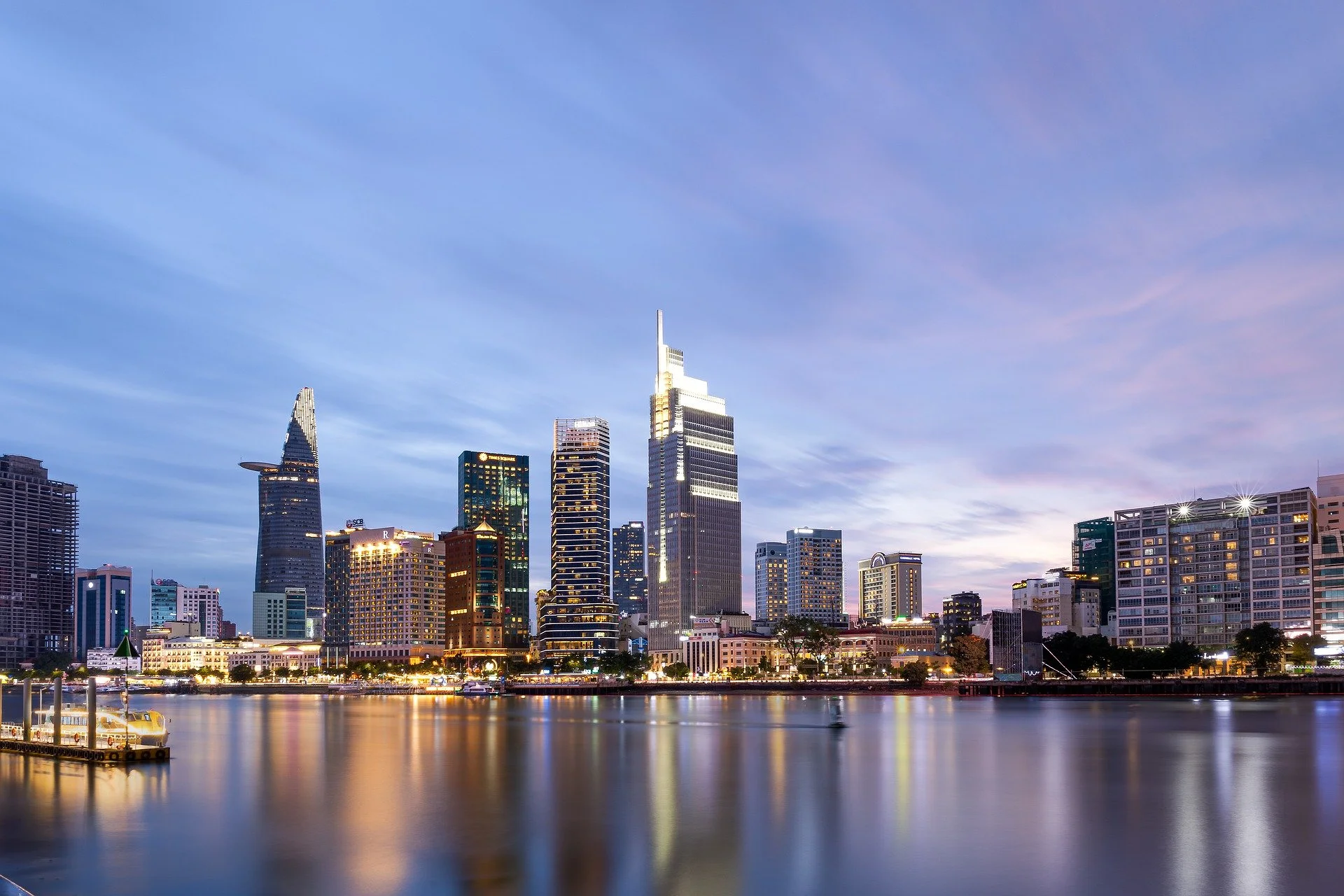
This is the Saigon the French drew: Dong Khoi street runs down from the cathedral and the Central Post Office to the river, the Opera House closes Lam Son square, and in the evening City Hall lights up the pedestrian esplanade of Nguyen Hue, where families walk their children until eleven. The grand hotels have been here for a century, the shopping malls for ten years, and the Bitexco tower watches it all from its helipad. You walk everywhere, but every avenue is crossed at a slow pace, hand raised, through the flow of scooters. The downside: this is the most expensive district in the city, and the streets empty after midnight.
Where to stay in this neighborhood
Park Hyatt Saigon Luxury
On Lam Son square, facing the Opera House: a colonial-style palace built in 2005, a pool in the courtyard, a spa, and Dong Khoi street starting at the corner.
Liberty Central Saigon Citypoint Mid-range
At 59 Pasteur street, between Nguyen Hue and the market: modern rooms, a rooftop pool, and more than twelve hundred reviews that rate the location very high.
Au Lac Legend Hotel Budget
Five minutes from the cathedral and Nguyen Hue: a small hotel with a rooftop pool, afternoon tea served at the bar, and nearly three thousand reviews that rate it very well.
Pros
- The Opera House, the cathedral, the Post Office and Nguyen Hue on foot
- The widest choice of hotels, and the Opera House station on line 1
Cons
- The most expensive district in the city
- Streets that empty after midnight, apart from the rooftop bars
Ben Thanh, Pham Ngu Lao and Bui Vien District 1, south-west: Ben Thanh market, 23 September Park, Bui Vien, Pham Ngu Lao
for the market when you wake up, the hostels and the street of bars
Ben Thanh market opens at six and closes at six, then the food stalls take back the pavement outside. On the other side of 23 September Park, Pham Ngu Lao and Bui Vien have been the backpackers' quarter for thirty years: hostels, bus agencies for the Delta and Mui Ne, massages, and a street that goes pedestrian at weekends, where the bars turn up the sound until two. Ben Thanh station is the terminus of line 1, and the airport bus stops at the park. The downside: Bui Vien does not sleep, and neither do the rooms that face it; one street further, you hear nothing.
We did our last souvenir shopping at the huge Ben Thanh Market, where you will have no shortage of options.
Where to stay in this neighborhood
Silverland Yen Hotel Luxury
On Thu Khoa Huan street, six minutes from the market: a four-star whose staff more than two thousand reviews mention first, a rooftop pool, and the night market at the end of the street.
Cochin Zen Hotel Mid-range
At number 46 of the same street: three Japanese baths on the eleventh floor, a rooftop bar, and compact rooms two steps from Ben Thanh. Nearly eighteen hundred reviews.
The Common Room Budget
On Bui Vien itself: a hostel that serves a communal dinner every evening, dorms and rooms, a shared kitchen, and one of the best scores in the city. Over-eighteens only.
Pros
- The market on foot, the terminus of line 1 and the airport bus
- The best-rated hostels in the city, and the buses for the Delta
Cons
- Bui Vien: sound until two in the morning, Thursday to Sunday
- Touts, and market prices to be negotiated
District 3 and Da Kao Districts 3 and northern 1: War Remnants Museum, Reunification Palace, Jade Emperor Pagoda, botanical garden
for sleeping quietly ten minutes from the centre, museums and pagodas on foot
North-west of the centre, District 3 keeps the villas and tree-lined streets of the French era: cafés in courtyards, ochre houses, and the War Remnants Museum, which takes a morning and leaves you silent. The Reunification Palace and its park are on the edge, the Xa Loi and Vinh Nghiem pagodas further into the streets. To the east, Da Kao slopes down towards the canal: the Jade Emperor Pagoda, its turtles and its smoke, then the botanical garden and the History Museum. The hotels are cheaper than in District 1, ten minutes' walk from the cathedral. The downside: no metro, and the evening is spent in District 1, by taxi or on foot along the avenues.
This visit didn't leave us indifferent, and it seems essential when visiting southern Vietnam.
Where to stay in this neighborhood
Hotel des Arts Saigon Luxury
At 76 Nguyen Thi Minh Khai, five minutes from the War Remnants Museum: a rooftop pool that looks over the city, three restaurants, a spa, and a 1930s Indochina décor.
Sofitel Saigon Plaza Mid-range
At 17 Le Duan boulevard, in Da Kao, between the Palace and the botanical garden: a five-star business hotel with prices often gentler than those of Dong Khoi, a pool and a club on the top floor.
M Village Living Tu Xuong Budget
On Tu Xuong street, a street of villas in District 3: rooms in a house with a garden, a shared kitchen, and one of the best scores in the neighbourhood on some fifty reviews.
Pros
- The War Remnants Museum and the Palace on foot
- Quiet streets and hotels cheaper than in District 1
Cons
- No metro station: the centre is reached on foot or by taxi
- Few restaurants open late: the evening is spent in District 1
Cholon, District 5 Districts 5, 6 and 10: Thien Hau pagoda, Binh Tay market, An Dong, Ho Thi Ky flower market
for the pagodas, the wholesale market and Chinese cooking
Cholon, "the big market", is the Chinese city that Saigon absorbed: the Thien Hau pagoda and its hanging spirals of incense, the Cha Tam church, the Binh Tay market where wholesalers load scooters with sacks of rice and racks of dried fish, and streets of traditional pharmacies that smell of roots. On the edge of District 10, the Ho Thi Ky flower market works at night and the food street next door in the evening. You sleep here for the morning soups and the pagodas empty at seven. The downside: six kilometres from District 1, by bus or taxi, and almost no restaurant open past ten at night.
Where to stay in this neighborhood
Hotel Equatorial Ho Chi Minh City Luxury
At 242 Tran Binh Trong, where districts 1, 3, 5 and 10 meet: four restaurants, a pool with a swim-up bar, and a free shuttle to the centre.
Windsor Plaza Hotel Mid-range
Twenty-five storeys on An Duong Vuong, against the An Dong market: a rooftop pool, a renowned Cantonese restaurant, and Cholon on foot below.
T Zone Hostel Budget
In a quiet lane off Tran Hung Dao: capsule beds with lockers, a host whom nearly nine hundred reviews thank, and the Ho Thi Ky flower market on foot.
Pros
- The pagodas at opening time, before the groups arrive from District 1
- The cheapest hotels and soups in the city
Cons
- Six kilometres from the centre, with no metro
- The neighbourhood goes to bed early, apart from the flower market
Thao Dien and the east bank District 2 and Binh Thanh: Thao Dien, Landmark 81, Van Thanh park, the Saigon River
for the river, the expat cafés and a 461-metre tower
Across the Saigon River, Thao Dien is the village where the foreigners live: villas behind walls, cafés with gardens, bakeries, international schools, and quays where the river flows wide and brown. Opposite, in Binh Thanh, Landmark 81 rises 461 metres above a new park, with an observation deck at the top. Metro line 1, opened at the end of 2024, stops at Thao Dien and at Van Thanh park and puts the centre a quarter of an hour away, which has changed everything for those who want to sleep somewhere green. The downside: no pagoda or museum on foot, and a neighbourhood life made for its residents more than for a three-day stay.
Where to stay in this neighborhood
Mia Saigon Luxury
On the water's edge in An Phu: a boutique hotel with an Indochina décor, a pool that looks at the river, a garden, and not a sound of a scooter. The shuttle reaches the centre by boat or by car.
Vinpearl Landmark 81 Mid-range
In the Landmark 81 tower, in Binh Thanh: rooms from the forty-seventh to the seventy-sixth floor, a pool, a spa, and the whole city under the window.
Common Inn Thao Dien Budget
Street 38, in the heart of Thao Dien: simple, clean rooms at dorm prices, a staff that two hundred and fifty reviews praise, and the cafés of the neighbourhood at the end of the street.
Pros
- The river, the cafés and the calm, a quarter of an hour from the centre by metro
- Pools, gardens and rooms larger than in the centre
Cons
- Nothing to visit on the spot: you sleep here, you do not sightsee here
- The last metro leaves in the evening, then it is the taxi
Our tips for booking the right place
- Crossing an avenue: The scooters do not stop, they go around: you cross at a steady pace, without running or stepping back, one hand raised, and the flow divides. Traffic lights and pedestrian crossings count for little. On Nguyen Hue and in the market you walk easy; everywhere else, that is the rule.
- The metro, the bus, the apps: Line 1 links Ben Thanh to the Opera House, Thao Dien and Suoi Tien, with a ticket bought at the machine. Bus 109 does the airport from 23 September Park for a few tens of thousands of dong. For the rest, the taxi and motorbike-taxi apps work everywhere and show the price before the ride: it is the only way not to haggle.
- The season and Tet: From December to April it is dry and hot; from May to November, a downpour falls almost every late afternoon for an hour, then the streets dry. At Tet, late January or February, the city empties, Nguyen Hue is covered in flowers, and many restaurants close for a week: book the hotel long ahead, the Vietnamese all travel at the same time.
- Cash and small notes: Cards work in hotels and shopping malls, not on the pavements or in the markets: keep ten-thousand and twenty-thousand dong notes for the soups, the iced coffees and the buses. The cash machines in District 1 cap withdrawals: several small withdrawals cost more than one.
- A hotel near Tan Son Nhat airport for anything other than a dawn flight: District 1 is seven kilometres away, but forty minutes at rush hour.
- A room on Bui Vien itself if you sleep before two: the bars' speakers answer each other from one pavement to the other until closing time.
- The hotel towers of Phu My Hung, in District 7, for a first stay: a planned district of shopping malls and residences, half an hour by taxi from everything that is old.
FAQ: where to stay in Ho Chi Minh City
Which neighbourhood should I stay in for a first time in Ho Chi Minh City?
Where to stay cheaply in Ho Chi Minh City?
Do you have to stay in District 1?
Is Ho Chi Minh City safe for a traveller?
How do you reach the centre from the airport?
How much does a night in Ho Chi Minh City cost?
 Keep exploring
Things to do in Ho Chi Minh City
Keep exploring
Things to do in Ho Chi Minh City
Comments (0)
No comments yet. Be the first!