
Ixmiquilpan, where jaguar warriors keep watch inside a church
In the mid-sixteenth century, Otomí artists painted jaguar warriors and Aztec eagles on the walls of a Catholic church. Not saints: fighters in feathered armor, dragons, and centaurs tangled with acanthus vines.
The Augustinian friars let it happen. Someone eventually whitewashed the frescoes, and they slept under plaster until they were rediscovered in the 1950s.
A destination for travelers who want to venture off the beaten path
If you have seen photos on social media of turquoise pools clinging to a cliffside in Mexico, those are likely the Grutas de Tolantongo, and this city is your gateway to get there. But reducing it to just a transit point misses the point entirely. The town and its surroundings form a region rich in hot springs, pre-Hispanic history, and the culture of the Hñähñu, the Otomí people of the Mezquital Valley.
This corner of Mexico appeals to those looking to ditch the tourist trail: no resorts, no international crowds, and rock-bottom prices. Anyone looking for high-end amenities or English menus will likely find things challenging. English is practically nonexistent, and cell service is spotty around the natural sites.
Rock-bottom pricing
Expect 400 to 850 pesos a night for a decent hotel, or $22 to $50*. A hearty meal at a local fonda runs 80 to 150 pesos, roughly $4.40 to $8.20*. Admission to the Grutas de Tolantongo costs 230 pesos per day, about $13*.
The warrior frescoes of San Miguel Arcángel
The Templo y Ex-Convento de San Miguel Arcángel, built between 1550 and 1560 by the Augustinians, looks like a crenellated fortress from the outside. Step inside, and everything changes.
Frescoes towering over two meters high depict warriors armed with macahuitl, those obsidian-bladed swords, battling fantastical creatures amid a tangle of acanthus vines. How did indigenous artists manage to paint this inside a Catholic church? The debate is still ongoing.
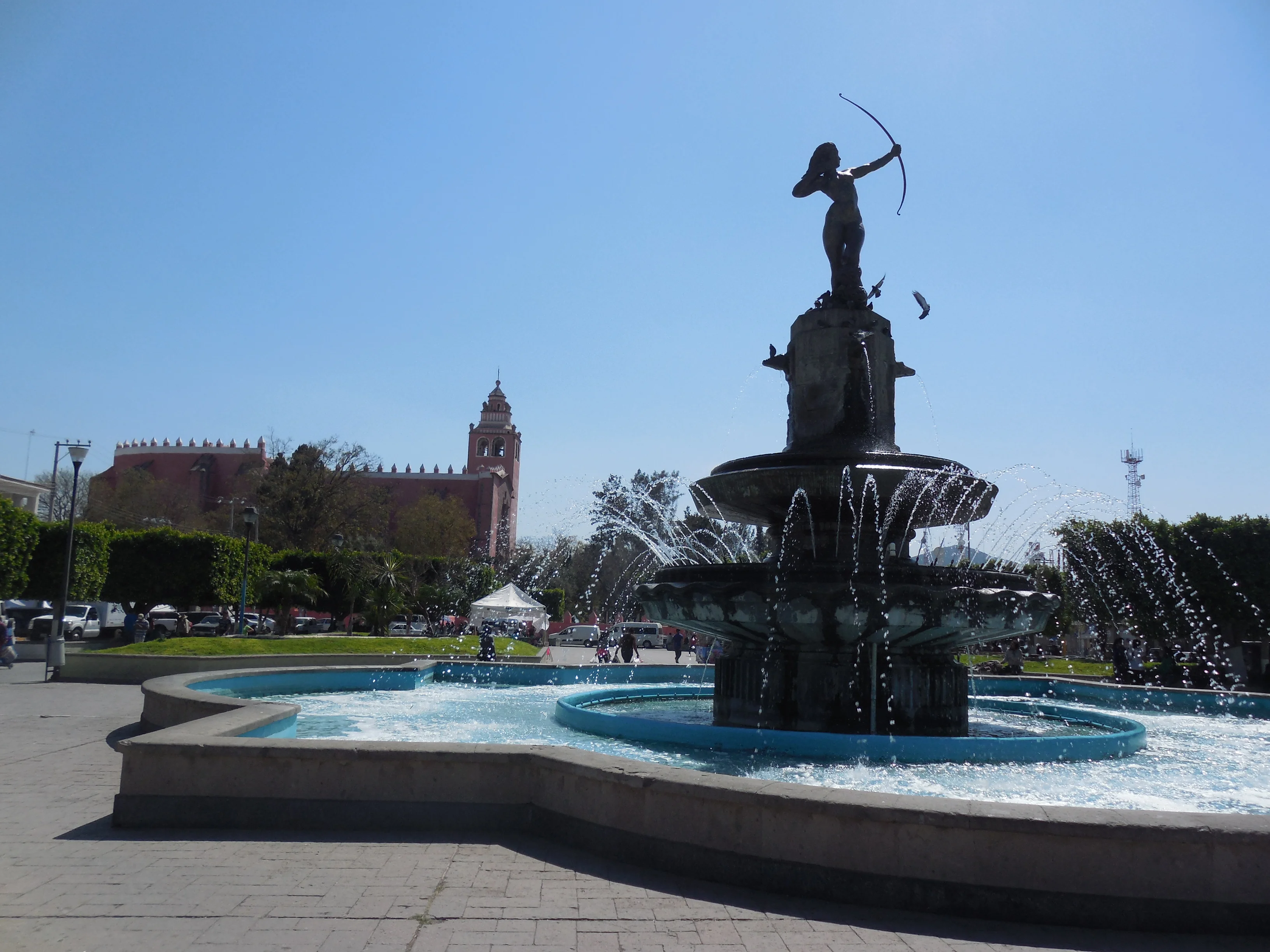
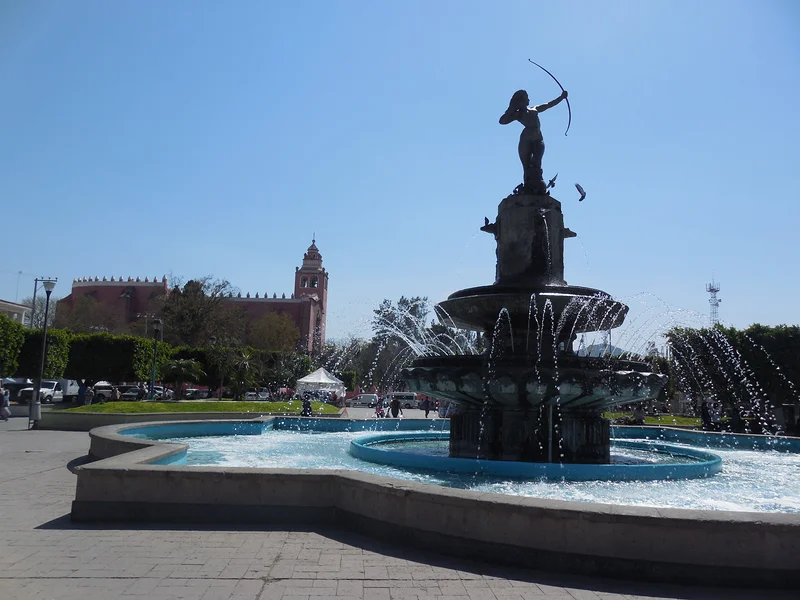
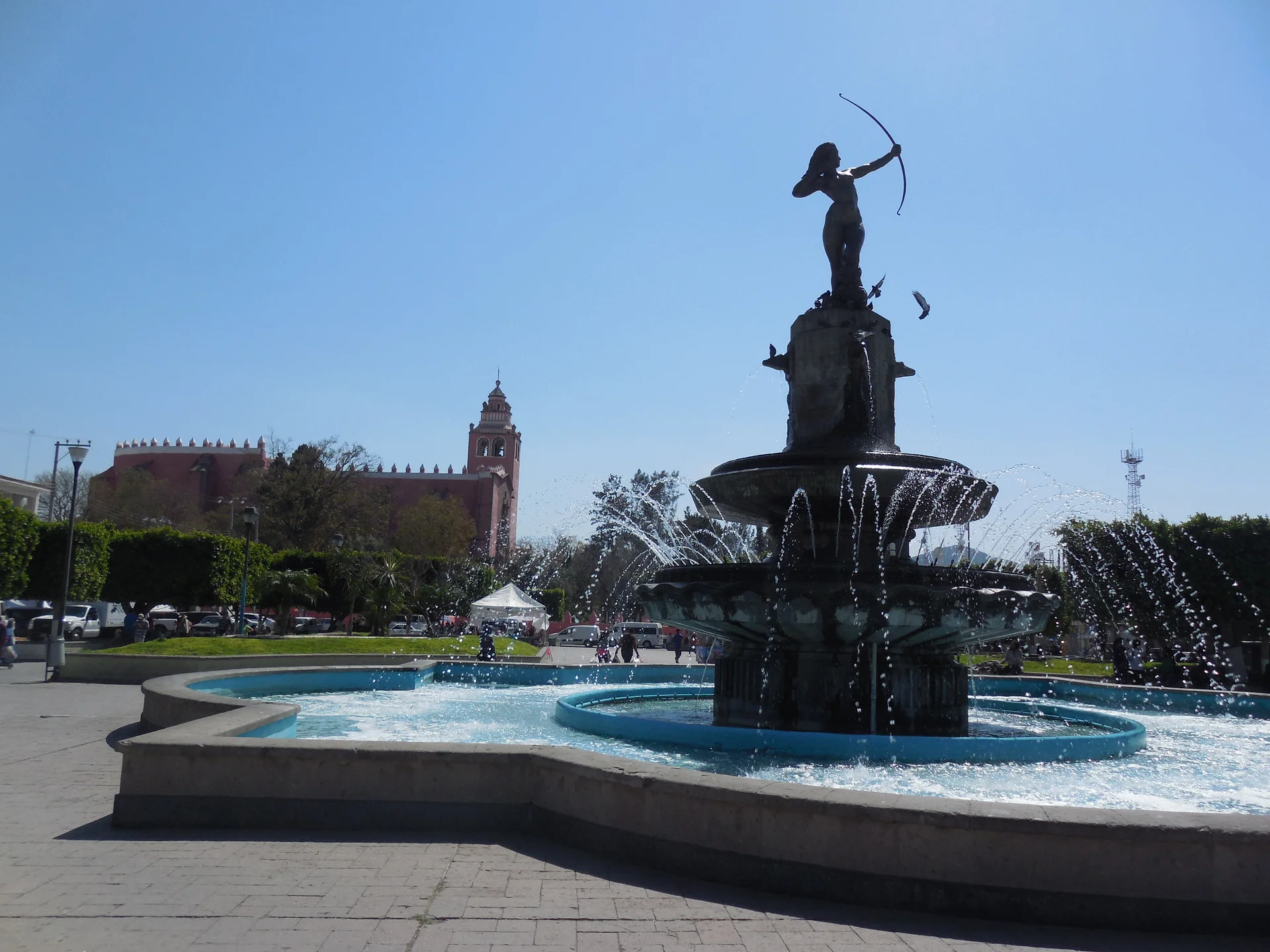
On Plaza Juárez, a 7-meter bronze sculpture catches the eye: the original Diana Cazadora, which once stood on the Paseo de la Reforma in Mexico City. Damaged in 1968, it was acquired by the regent of Mexico City, who was a native of the town, and installed here. The one currently on Reforma is a copy.
Friendly tip: check out the sculpted crests on the facade before walking in. They feature eagles and jaguars with zero Christian symbols, hinting at what awaits inside.
Grutas de Tolantongo: the canyon's thermal pools
About 45 minutes away by road, the Grutas de Tolantongo are the most spectacular natural site in the region. Turquoise thermal pools, terraced into the canyon walls, look down on a warm emerald-colored river. A cave where a gushing waterfall emerges completes the scene.
Let's be honest: on weekends, the place gets flooded with families from Mexico City and takes on a waterpark vibe. During the week, everything changes. You can have the pozas almost to yourself, with nothing in front of you but the canyon.
Friendly tip: cash is king at the Grutas, including for the hotel. There are no ATMs on-site. Bring plenty of cash in pesos.
Underground caves and a community park
Caving enthusiasts will love the Grutas de Xoxafi, a 250-million-year-old cave network. Three options are available: an illuminated 600-meter walkway, an adventure tunnel featuring an 80-meter rappel, and an extreme route with an underground zipline. The rock formations display leopard-skin patterns created by iron oxide.
Managed by the Hñähñu community, the Parque EcoAlberto offers ziplines, kayaking on the río Tula, and suspension bridges. Its most unique attraction is the Caminata Nocturna, a three-hour night hike simulating an undocumented border crossing into the United States, designed to raise awareness about the dangers of the emigration that has depopulated parts of the region.
Where to eat and drink in Ixmiquilpan?
The local specialty is barbacoa de borrego: lamb slow-cooked in a pit dug into the earth, served fresh at dawn in the markets. Gorditas de maíz, small corn cakes stuffed with chicharrón or black beans, are the other regional classic.
As for drinks, pulque is right at home here: a fermented, viscous, and tangy beverage extracted from maguey sap. Mercado Morelos features dirt-cheap street food stalls, and the La Herradura restaurant, located behind city hall, serves hearty regional dishes.
Where to stay in and around Ixmiquilpan?
Downtown features a few simple hotels like the Apartahotel Villa del Sol, which is well-reviewed and reasonably priced. For a nature immersion, the Grutas de Tolantongo has a collection of hotels at the bottom of the canyon, but rooms are basic with no Wi-Fi or television.
Another option is the Parque EcoAlberto, which offers cabins right by the canyon, while forested areas like Puerto Dexthi offer cabins for 500 pesos a night under skies free of light pollution.
How to get to and around Ixmiquilpan?
From Mexico City, an Ovnibus or Flecha Roja bus departs from the Terminal del Norte, platforms 7 or 8. The trip takes 2h to 3h and costs around 350 pesos, under $19*. By car, it is a 2h30 drive via the México-Pachuca highway, then follow signs for Actopan.
To arrive from Europe, fly into Mexico City and then catch a bus or rent a car.
Once you arrive, getting around relies on colectivos. For Tolantongo, a microbus departs from the San Antonio parking lot near Mercado Morelos every four hours for 70 pesos. Note that the final stretch of road winds through dizzying switchbacks.
When to go?
The dry season, running from November to April, is ideal. Avoid September, the rainiest month, when mountain roads become challenging. Weekends and especially Holy Week turn the sites into ant hills, so aim for mid-week.
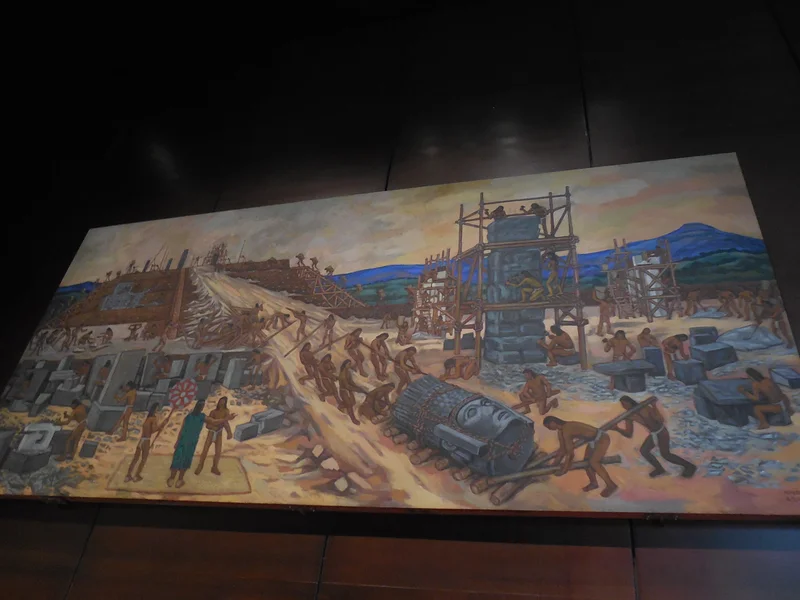
Not far from the capital, Ixmiquilpan is located in the state of Hidalgo, which is relatively little visited by international tourists. Nevertheless, it is in this state that you can discover the Otomí culture and its traditions. Ixmiquilpan is full of monuments with architecture that is a mix of Catholicism and allegories to nature, specifically Otomí paintings.