Visiting Zanzibar
Unguja, the main island, runs eighty-five kilometers from north to south. On the west side, Zanzibar City and its old coral-stone quarter, Stone Town, look across to the mainland. On the east side, a reef runs the whole length of the coast, and the tide redraws the scenery twice a day: first a lagoon you swim in, then a sandy flat you walk across.
A morning in the lanes where cloves and enslaved people were once sold, an afternoon barefoot on white sand an hour's drive away. That is what Zanzibar has and the other Indian Ocean islands do not. Coming off a safari on the mainland? You are doing it in the right order.
You'll love it if
- You want an old town and a beach in the same trip
- You are finishing a safari and need somewhere to drop your bag
- Snorkeling or kitesurfing matter more to you than a pool
Give it a miss if
- You want to swim at any hour right in front of your east-coast hotel
- Covering shoulders and knees away from the beach bothers you
- You are hoping for an empty beach in the north in August
The must-sees
-
1 Stone Town +4 recs
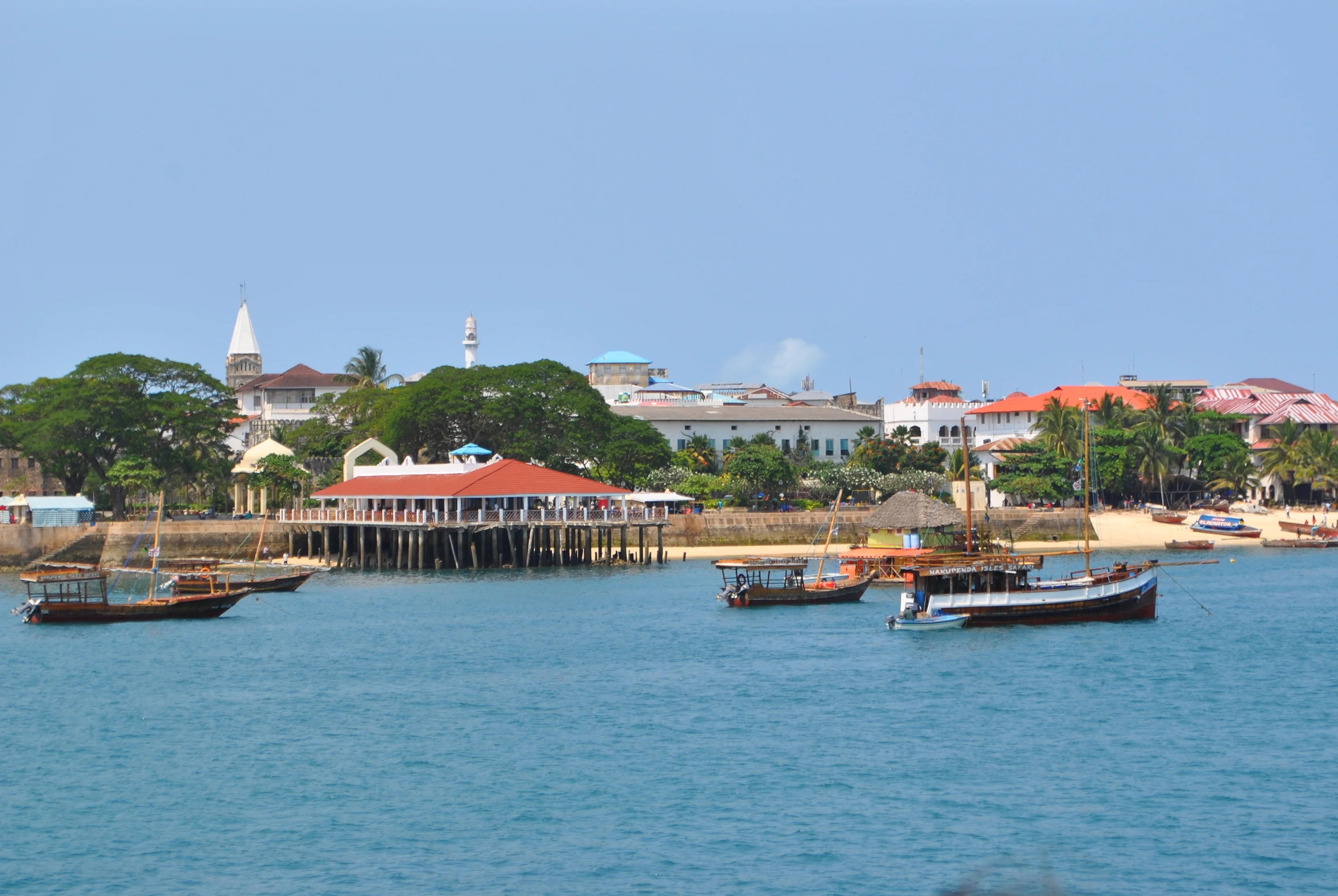
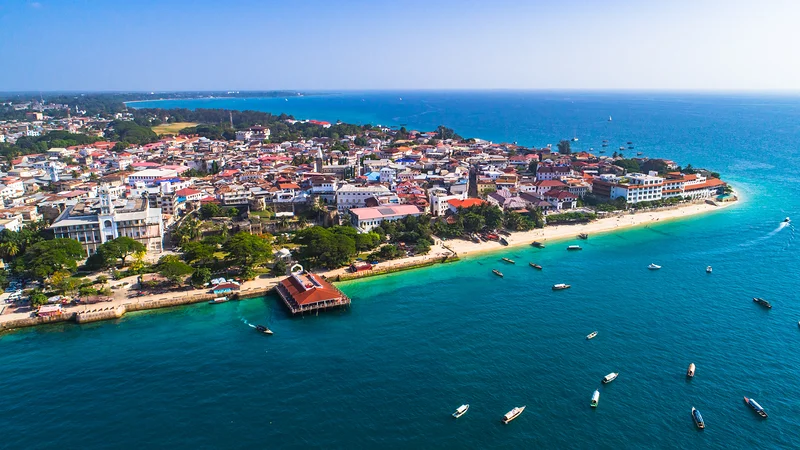
One square kilometer of coral-stone houses, carved doors studded with brass, and lanes too narrow for a car. Go in early, when the deliveries come through and the shops open, or late in the afternoon: at midday the heat sits there without a breath of air. The former slave market and its memorial, on the site of the Anglican cathedral, can be visited with a guide for five dollars, from eight in the morning to six in the evening. End at the Forodhani Gardens, when the grills of the night market light up facing the sea.
-
2 Mnemba Atoll Snorkeling
Off Matemwe, on the northeast coast, a ring of coral surrounds a small private island where you cannot land. You come for the water around it: parrotfish, green turtles, and often dolphins along the way. Boats leave Matemwe in the morning, when the sea is at its calmest, and the trip takes half a day. Bring your own mask if you have one: the one on the boat has usually seen a lot of use.
-
3 The spice tour Half day
Cloves made the sultans rich, and Pemba still grows most of them. On Unguja, the plantations you can visit lie in the hills northeast of Zanzibar City. A guide will have you scratch cinnamon bark, split a nutmeg open in its red lacy coat, chew a stalk of lemongrass. Book the day before in Stone Town, go in the morning, and allow three to four hours.
-
4 Kitesurfing in Paje June to September
The Paje lagoon, closed off by the reef, is shallow and the wind is steady: it is a place where people learn. Two winds take turns, the kusi from June to September, the stronger of the two, and the kaskazi from December to February. The schools line the beach and rent gear by the day. Even without a board, come at low tide: the village women walk out to the seaweed plots planted on the reef flat.
-
5 Mwaka Kogwa in Makunduchi July
The Shirazi New Year is celebrated every July in Makunduchi, in the southeast of the island. The men fight with banana stems to settle the year's quarrels, the women sing, and then a straw hut is burned to open the year ahead. Visitors are welcome as long as they stay at the edge of the circle. The date changes from one year to the next: ask in Stone Town a few weeks ahead.
Our itineraries in Zanzibar
| Length | Route | What you see |
|---|---|---|
| Long weekend (4 days) | Zanzibar City › Nungwi | Old town, northern beach |
| 1 week | Zanzibar City › Jozani Forest › Paje › Kendwa | Town, forest, two coasts |
| 10 days | Zanzibar City › Kizimkazi › Jambiani › Matemwe › Nungwi | Around the island |
Every arrival goes through Zanzibar City, by air or by sea. Start there: two nights are enough, and it gives the beaches their meaning. After that, one or two bases on the coast, no more. Allow an hour to an hour and a half by road to either coast, and the excursions leave from there. Coming from a safari? Flip it: the beach first, to unwind, and the town last, close to the airport.
When to visit Zanzibar
| Interest | Season | Temperatures | Sea | Crowds and Prices |
|---|---|---|---|---|
| Hot seasonDec. to Feb. | 25 to 33 °C | 28 to 29 °C | High | |
| Long rainsMar. to May | 24 to 31 °C | 27 to 29 °C | Low | |
| Dry seasonJune to Oct. | 21 to 29 °C | 25 to 27 °C | Intermediate | |
| Short rainsNov. | 23 to 31 °C | 27 to 28 °C | Low |
Our tip
Aim for June, September or October: the dry season has settled in, the wind cools the nights, and prices stay below those of July and August. Between Christmas and New Year the island is fully booked and rates are at their peak: book months ahead, or come at another time. In April and May, be aware that some east-coast hotels close.
Getting to Zanzibar
-
By plane, with one stop From the UK and beyond
Abeid Amani Karume airport is about ten kilometers from Zanzibar City. From London there is no year-round direct flight: plan on one stop, in the Gulf, in Istanbul, in Addis Ababa or in Nairobi. From North America it takes at least one stop too, through the same hubs. You apply for the Tanzanian visa online, before you leave.
-
By light aircraft, after a safari The most direct
Domestic flights link the island with Arusha, Kilimanjaro, Dar es Salaam and the airstrips of the big northern parks. Luggage is limited to around fifteen kilos, in a soft bag: leave the hard-shell suitcase behind.
-
By ferry from Dar es Salaam The cheapest
Fast ferries make the crossing in two hours, several times a day, and dock at the foot of Stone Town. Foreigners pay for their ticket in dollars: buy it at the ferry company's counter, never from the touts on the quay.
Coming just for the island: fly with one stop, all the way to Zanzibar airport. Finishing a safari: take the domestic flight from Arusha or from a park, which saves you going back through Dar es Salaam. The ferry only makes sense if you are already there, but arriving by sea over the rooftops of Stone Town is still the finest way in.
Getting around Zanzibar
You do not need a car here. Taxis and private drivers handle most journeys, and the dala-dala, pickup trucks fitted with benches, leave the Darajani terminal for every coast for a handful of shillings. Allow an hour to Paje, a little more to Nungwi.
Renting is possible, but traffic drives on the left, a local permit is required on top of your own license, and police checks are frequent on the road.
Good to know
Agree on the fare for every ride before you get in: taxis have no meters. For a long journey, first ask your hotel what it charges for a transfer, and use that as your benchmark when you negotiate.
What to eat in Zanzibar
- Zanzibar pizza: a thin dough folded into a square around minced meat, onion and egg, or a sweet version with banana, cooked on a griddle in front of you. In the evening, at the Forodhani Gardens.
- Urojo: "Zanzibar mix", a tangy yellow broth with mango and turmeric, loaded with fritters, potatoes, skewers and crisps. A Zanzibar City specialty, eaten standing up.
- Pilau and biryani: rice scented with cloves, cardamom and cinnamon, an Omani and Indian legacy. The small eateries of Stone Town serve it at lunchtime.
- Pweza wa nazi: octopus simmered in coconut milk. On the east coast, fishers catch it on foot on the reef at low tide.
- Mishkaki: marinated beef skewers grilled over charcoal. Everywhere, from nightfall.
- Kahawa: very strong black coffee, poured from a copper pot into tiny cups by the vendors in the lanes. People drink it sitting on the stone benches outside the houses.
- Sugarcane juice: pressed on the spot, sharpened with lime and ginger.
At the Forodhani Gardens, ask the price before you choose your skewers: nothing is marked. Outside hotels and restaurants geared to visitors, alcohol is not served. During Ramadan, the small eateries of Stone Town close by day and reopen at sunset.
Where to stay in Zanzibar
| Area | Good for | Worth knowing |
|---|---|---|
| Zanzibar City (Stone Town) | Lanes, history, night market | Two nights are enough, and no cars |
| Nungwi / Kendwa | Swimming, sunsets | Little bother from the tide, the liveliest coast |
| Matemwe / Kiwengwa | Reef, Mnemba Atoll, big resorts | The sea goes out a long way |
| Paje / Jambiani | Kitesurfing, villages, tight budgets | Swimming at high tide only |
| Pemba | Diving, empty islets | Light aircraft or ferry from Unguja |
How much does a trip in Zanzibar cost?
| Style | Length | Budget per person |
|---|---|---|
| Budget (guesthouse, dala-dala, street food) | 7 days | €400 to €650 |
| Comfortable (beach hotel, taxis, two or three excursions) | 7 days | €1,000 to €1,600 |
| High-end (resort, private transfers, boat trips) | 7 days | €2,500 to €4,500 |
- Timing: the festive season, then July and August, are the most expensive weeks. Come in April or May and you pay the lowest rates.
- Paperwork: the e-visa costs 50 dollars for UK and most European passports, 100 dollars for US passports, and Zanzibar also requires its own travel insurance. You pay for both online, before you leave.
- Excursions: they are paid in dollars and negotiated. A group trip costs you a good deal less than a private boat.
- Transfers: the taxi from the airport to the northern or eastern beaches is a budget line in itself. Shared, or by dala-dala, it shrinks.
- Meals: full board at a resort weighs heavily. Village eateries are paid in shillings, for a fraction of the price.
- Cash: bring recent dollar bills, because your older notes are likely to be refused. ATMs are found mostly in Zanzibar City.
Traditions and way of life in Zanzibar
People speak Swahili, and three words change the welcome you get: jambo to say hello, asante to say thank you, and pole pole, "slowly", which you will hear ten times a day. The island is almost entirely Muslim: away from the beach, cover your shoulders and knees, in town and in the villages alike.
In the evening in Stone Town, you may hear taarab, an orchestral music born at the sultans' court, where violin and qanun accompany poems sung in Swahili. The carved doors told the rank of the house, and a few workshops still make them.
Ask before you photograph anyone, especially women and elders: a gesture toward the camera is enough, and a refusal is respected. During Ramadan, avoid eating and drinking in the street during the day.