
Visiting Jozani Forest, the kingdom of the Zanzibar red colobus
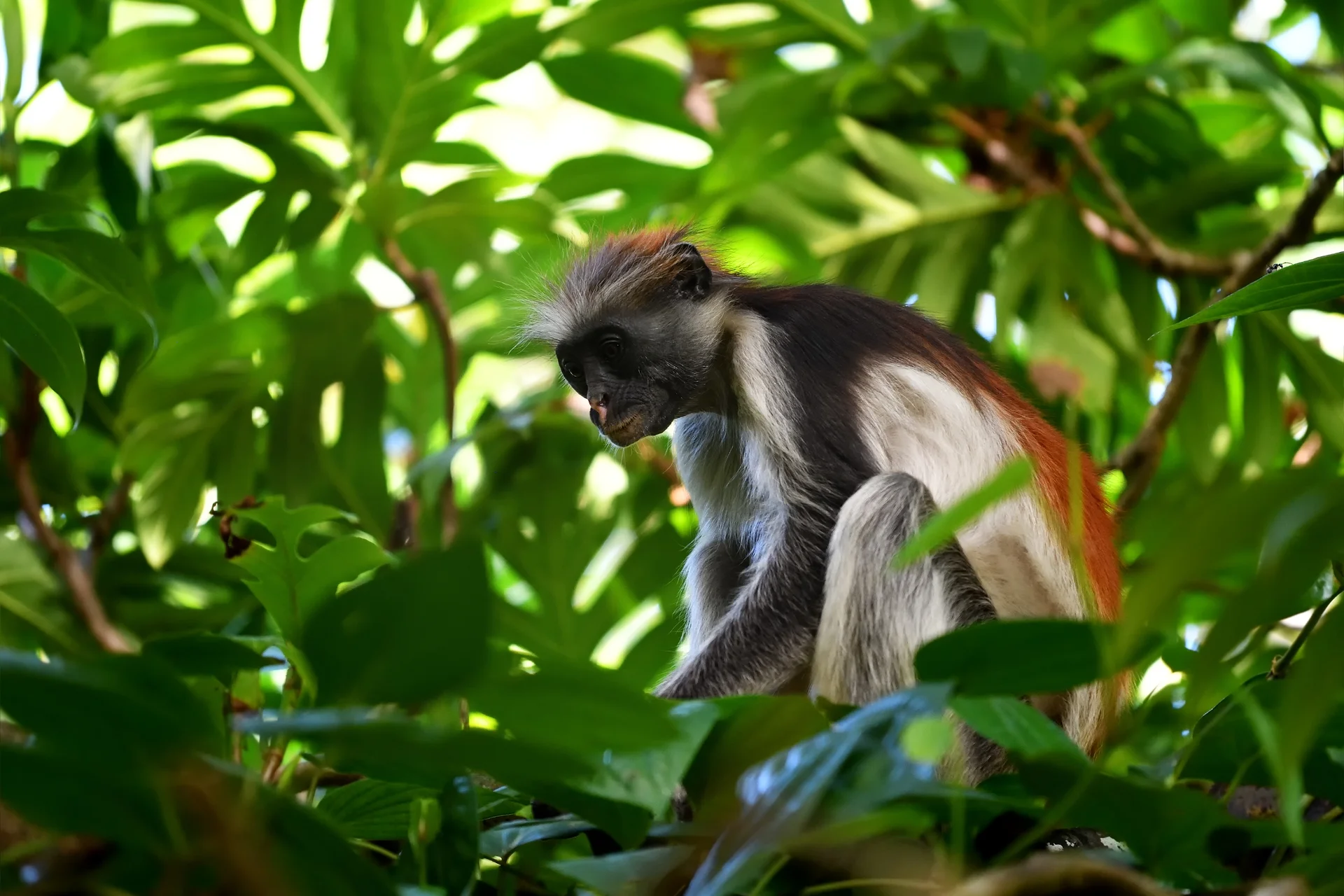
The rustle of the leaves isn't coming from the wind. A bit higher up, a branch dips under the weight of an agile silhouette: a red colobus monkey watches you with quiet curiosity. You aren't in a zoo, but inside the island's last surviving fragment of primary forest, a thriving ecosystem where humans are simply quiet guests.
Why is this sanctuary unique?
Jozani Forest is not just a park. It is a living botanical ark, the last refuge of the native woodland that once covered a vast stretch of Zanzibar. Protected within the Parc National de Jozani Chwaka Bay, it represents a vital conservation effort on an island facing heavy human pressure.
Its international renown comes largely from its most famous residents: the Zanzibar red colobus (Piliocolobus kirkii), a monkey species found nowhere else on the planet. Visiting Jozani offers a rare and precious encounter, a face-to-face meeting with an emblem of threatened biodiversity.
Meeting the red colobus, the icon of the forest
The main attraction, to be honest, is them. And the experience lives up to expectations. Used to human presence, the colobus monkeys are not particularly shy. They go about their routines of feeding, playing, and grooming each other just feet away from visitors, putting on a fascinating natural show.
Your mandatory guide, included with your entrance ticket, helps you spot them and shares insights into their social behavior. You will learn to recognize their distinctive reddish fur, black backs, and white bellies, and you might notice one of their unique physical traits: they have only four fingers, their thumbs having evolved away entirely. It is a gentle, respectful observation experience with no cages or barriers.
From a humid forest to the mangroves: A dual immersion
A trip to Jozani unfolds in two parts, revealing two radically different faces of nature on the island.
The canopy trail
The first part of the walk follows a well-maintained path beneath a dense canopy. The air is heavy and humid, thick with the scents of damp earth and vegetation. Towering African mahogany trees and giant palms form a natural cathedral where sunlight struggles to break through. Your guide will point out other wildlife, such as the more elusive blue monkey, or explain the traditional medicinal uses of certain plants.
The mangrove boardwalk
After a short drive, the atmosphere shifts completely. You step into a fascinating mangrove swamp via a sturdy wooden boardwalk winding above the brackish water. The ground is a tangle of mangrove roots where thousands of tiny crabs scurry through the mud. It is an open-air biology lesson on the importance of this ecosystem, which serves as a natural barrier against erosion and a nursery for marine species.
Opening hours
| Monday | 07:30-17:00 |
|---|---|
| Tuesday | 07:30-17:00 |
| Wednesday | 07:30-17:00 |
| Thursday | 07:30-17:00 |
| Friday | 07:30-17:00 |
| Saturday | 07:30-17:00 |
| Sunday | 07:30-17:00 |
*Information subject to change

I loved my visit to Jozani Forest, a real pocket of preserved nature in Zanzibar. You can see the famous red colobus monkeys there, which are pretty easy to spot thanks to the local guide. The walk through the mangrove is also really pretty, with a wooden boardwalk that lets you explore without getting wet. Make sure to wear comfortable shoes and bring bug spray, especially in the late afternoon when there are more insects. It is a quiet and authentic outing, perfect for getting away from the beach for a bit. I highly recommend it if you love nature.