
Hello everyone,
I’d love to share my trip to Japan with my partner, which kicked off with three days exploring Kyoto.
Why Japan, and why Kyoto?
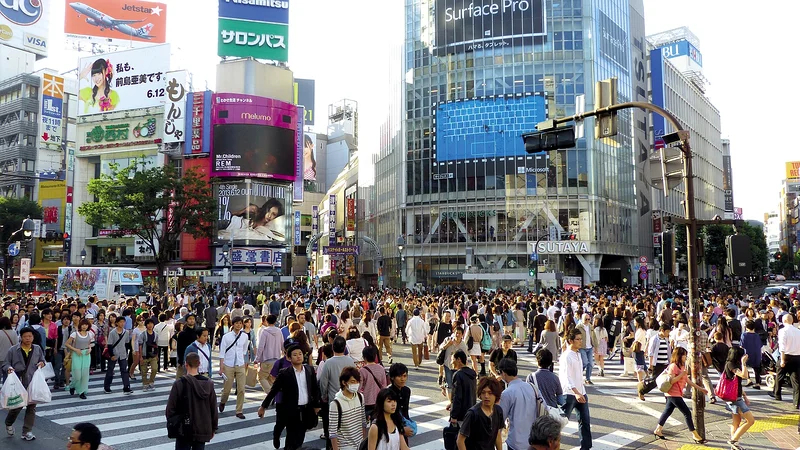
Even though I haven't lived there (the observant among you might have guessed from my username...), the time came when I really wanted to learn more about the country where my family roots began. Full of clichés, I wondered if what I’d find would match what we usually see: cities teeming with people, neon signs everywhere, cramped spaces, a blend of tradition and modernity, and so on.
The 2011 Fukushima nuclear disaster unfortunately cast a shadow over Japan, but I hope that after reading my article, you’ll feel inspired to visit the Land of the Rising Sun yourself.
I started my trip in Kyoto because I absolutely had to see the city that served as the Japanese imperial capital for over 1,000 years, before Tokyo took over in 1868.

How to get to Kyoto
The smartest route I found in terms of time and cost was to book a flight from Paris to Kansai (an international airport located on an artificial island off the coast of Osaka). Expect to pay at least €500 for a round trip, with about 14 hours of travel time each way including a layover. Here is a link to compare flight prices to Osaka.
Once I finally touched down on Japanese soil, I was relieved to stretch my legs and hoped to get to the hotel quickly. Alas, it took me two and a half hours aboard the Limousine Bus No. 8 to reach Kyoto Station. You can buy your tickets on-site at automated kiosks. After that, it was a taxi ride (another 20 minutes!) to get to our hotel.
My tips for accommodation
I highly recommend doing what I did and choosing a Ryokan, a traditional Japanese-style inn. Even the most modern ones preserve the materials and architecture of the past. Upon arriving by taxi, with the address scribbled on a piece of paper, I checked in at the front desk.
I wasn't disappointed: I took off my shoes and put on the slippers provided by the okamisan, the manager of the inn. I was completely won over because I found everything I had hoped for: rooms with sliding paper walls (the famous shoji you see everywhere, including in manga), a low table for tea, no chairs, rice-straw tatami mats on the floor, a futon that was surprisingly comfortable, and a slightly low ceiling... In short, it had everything I came to Japan to find for a truly immersive experience!
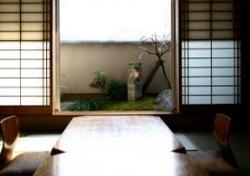 Ryokans will give you a real sense of connecting with Japanese culture: people move around quietly, and everything is designed to encourage discretion. It’s up to you to be mindful of the customs and avoid any faux pas. For example, be aware that the establishment's baths are open to both men and women... just not at the same times! Everything is charming and peaceful. You’ll be expected (or rather, you should know, as they won't explicitly tell you) not to linger in bed in the morning, which might be confusing for us fans of sleeping in. Don't worry, though: to reward you for getting up, you’ll get to recharge with the traditional breakfasts served. In addition to breakfast, dinner is also included in the price.
To get around inside this type of accommodation, besides your slippers, you’ll likely have a cotton kimono with blue and white patterns at your disposal, known as a yukata.
Heads up: you’ll likely pay on the day of arrival, and very often, they will ask for cash... so plan ahead. For info, it cost us €100 per night for two people, which is about average there. You can find cheaper, but you risk being disappointed as you might end up in a smaller space with more basic comfort: these are often family-run inns (minshuku), which are a bit less glamorous. And to easily find accommodation in Kyoto, look here.
Visiting Kyoto
Day 1
After a short night's sleep, where fatigue easily overcame the jet lag, we went out for a walk in the city and were surprised to see stunning buildings standing right next to old, dilapidated shacks that looked like they were falling apart. The city is very lively, noisy, and you have to watch out for people and vehicles coming from every direction.
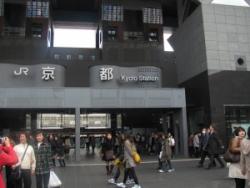
For your information, if you need information while you're there, head to Kyoto Station: it’s the main train station, featuring 11 floors of shopping galleries and restaurants that serve incredible Ramen for cheap: 800 yen (less than €7) for a large bowl of soup with noodles, meat, and half an egg... Excellent, and it perfectly satisfies a big appetite. By the end of my stay, I was even able to slurp them down while hot without burning myself, making a ridiculous amount of noise! I was quite proud of myself!! But beyond the restaurants, the most important tip is that the tourist information office is on the 9th floor, right in front of the elevator. The staff there spoke excellent English and answered all our questions with precision.
When leaving the station, on your left, you’ll see the Kyoto Central Post Office: there’s an ATM there that accepts Visa and Mastercard, which isn't as common as you'd think... take advantage of it!
But we didn't just come to enjoy the perks of a mercantile society: we also fed our souls by visiting, for example, the Chishaku-in Temple. The temples and gardens are truly zen: koi carp (as big as the ones you find at Truffaut in France :)) were swimming peacefully in the ponds, and the gardens really made you want to meditate... Even the cemetery was soothing, which is saying something, as they usually make me a bit anxious back in France!
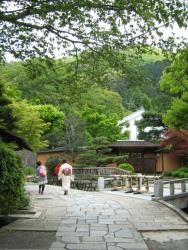
Make sure to enjoy the walks on offer, especially the route called "The Philosopher's Path" (Tetsugaku no Michi), which is a beautiful stroll along the mountainside of Kyoto (take the subway to Sanjo). It’s magnificent to do at dusk to admire the city's colors. You walk along a canal lined with cherry trees: the ideal place for meditation. It’s said to be named after a Kyoto University professor, Nishida Kitaro, who meditated there every day.
Also, go see Nijo-Jo, which is the palace of the first Shogun. You tour the 5 buildings that make up the fortified palace... barefoot! Yes, you’ll have to get used to that: it’s often the case in historical sites. Put your shoes back on and head out to the surrounding garden: you can't help but be moved by the beauty and calm that radiate from these enchanting grounds.
 We also made a detour to the Kyoto International Manga Museum. Now, be careful: this isn't a museum where you’ll find billions of goodies and merchandise for sale. It’s more of a real museum that explores Japan's traditional culture, covering the basics of drawing and what would eventually become manga. There is an open-access library where you’ll find thousands of books... though they are in Japanese. There is, however, a shop where you can treat yourself. The museum is recent (opened in 2000) and marks a turning point: once considered by some (including the Japanese themselves at times) as a product of subculture, manga has gained recognition through this museum.
It preserves works that are usually produced on low-quality paper in magazines, and so on. In fact, the government realized that the new generation was being courted by the whole world and wanted to "protect" this cultural specificity to pass it on to future generations.
The museum also tracks works from Western countries to draw parallels. There is also a timeline from 1947 to 2001.
After visiting this museum, we headed back toward the south and the center of the city. If you’re still walking around at nightfall, you can't miss the Kyoto Tower. Built near the central station, this panoramic observation tower is 131m high. You’ll see it during the day, but at night, it’s illuminated and will serve as a landmark.
Day 2
We went to see the Kyoto-Gosho Imperial Palace, which was the main residence of the Emperor of Japan until the 19th century. In perfect condition, you can visit the gardens and all the buildings; you just need to check the opening hours and days, which seem to fluctuate (or maybe I didn't quite understand what the girls at the information desk explained to me...).
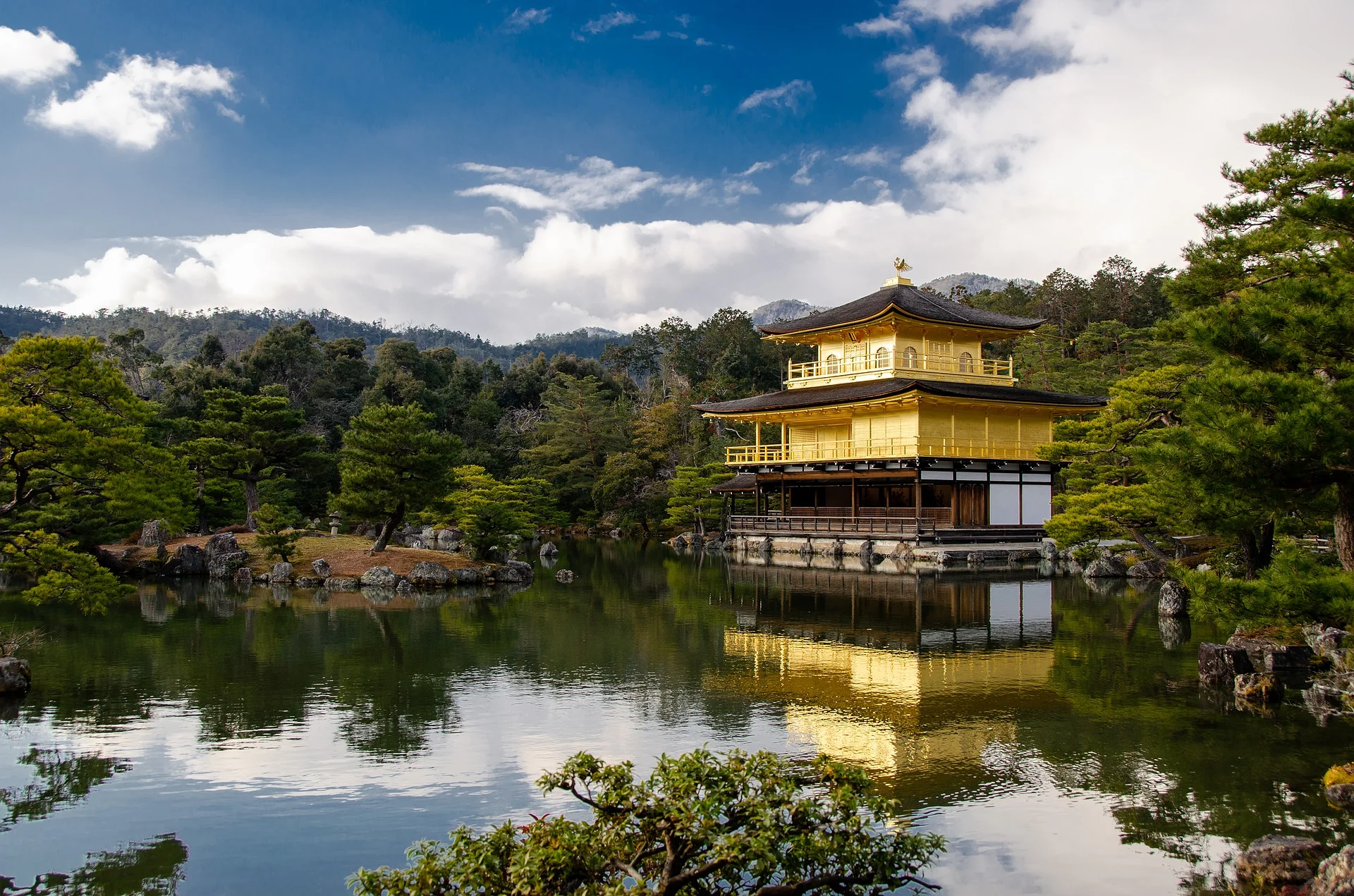
In the northern district, Takagamine, you’ll find the famous Zen temple Kinkaku-ji, the Golden Pavilion, an iconic monument of traditional Japan. Built in 1397 and then rebuilt in 1955 after a fire, it has been on the UNESCO World Heritage list since 1994. Covered in gold (except for the ground floor), it contains Buddha's relics. You can visit the temple and its garden by following a marked path.

This district is very rich, as you can also see the Jôshô-ji temple, the Shôden-ji temple and its perfect sand garden, the superb Zen garden Ryôan-ji, etc. We didn't have time to visit them all, but we at least tried to see what these places looked like from the outside.
The city of Kyoto has the advantage of having preserved all these traces of its grandeur in perfectly maintained buildings. The example of the northern district is therefore not unique.
Day 3
Finally, before continuing our trip across the Japanese archipelago, we absolutely wanted to see the Gion district: it’s the most famous neighborhood in Kyoto, reputed to be the heart and soul of the city, nothing less!!
It’s in Gion that two prestigious festivals take place every year, which you’ll likely hear about: the Gosan Okuribi in August and the Gion Matsuri in July. Everyone participates and enjoys these festive moments that help remember the highlights of Kyoto's life (the fight against the plague, for example). There are floats, flute players, merchants, and the streets are blocked off to car traffic.
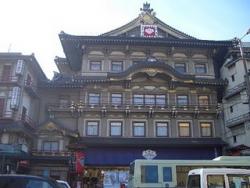 This district is home to the Shijo Bridge, Maruyama Park, the Chion-in, Kennin-ji, Shôren-in, and Yasaka-jinja temples, and Kabuki theaters like the Minami-za... But this part of the city is also very famous for the renowned Geisha. Well, we’re still looking for them. I imagine their work is quite discreet.
Back to Kabuki: I invite you to go enjoy it if you can. The Minami-za is considered the cradle of this art. Kabuki is traditional Japanese theater where actors wear heavy makeup, and the stage and sets move. The Kansai region is currently the spearhead of the revival of this art. In the Pontocho district, you can even find a statue of Okuni, considered the essential female figure of Kabuki.
In conclusion
As you’ve likely gathered, the city of Kyoto is a true open-air museum where you’ll find plenty to fill your stay without any difficulty. The change of scenery is incredible and hits you the moment you step off the plane.
I was truly won over by this discovery and I invite you to do the same. Know one thing, though: it won't be easy to make friends with the Japanese people you meet. They won't stop to chat with you, even if they aren't mean or unpleasant. The only solution seems to be getting introduced to people through expats living there; otherwise, it’s a bit difficult to make contact. On that note: hello to Philippe, Haiko, and the kids!
See you soon, I hope.

Comments (4)