
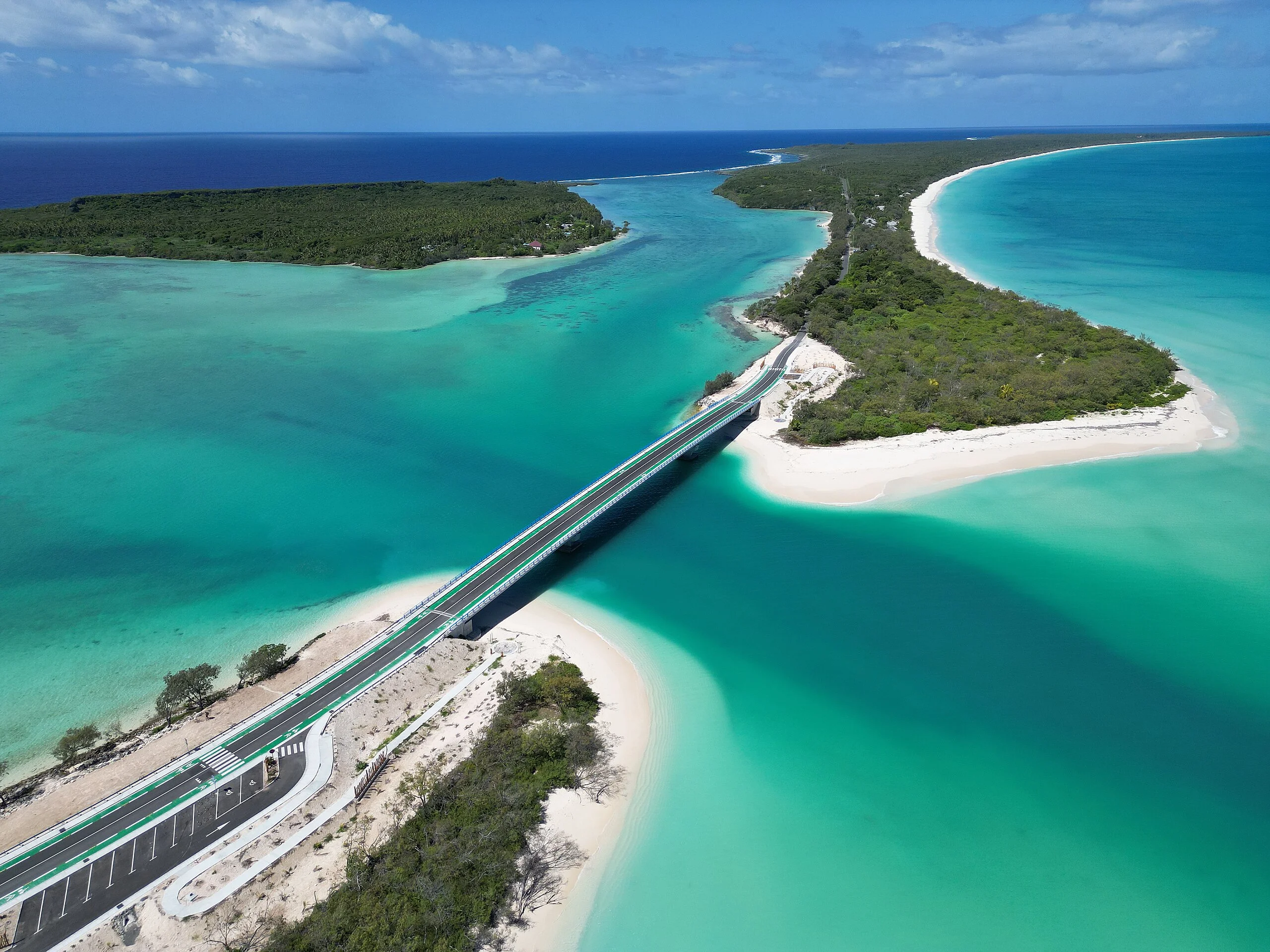
A 25 km lagoon
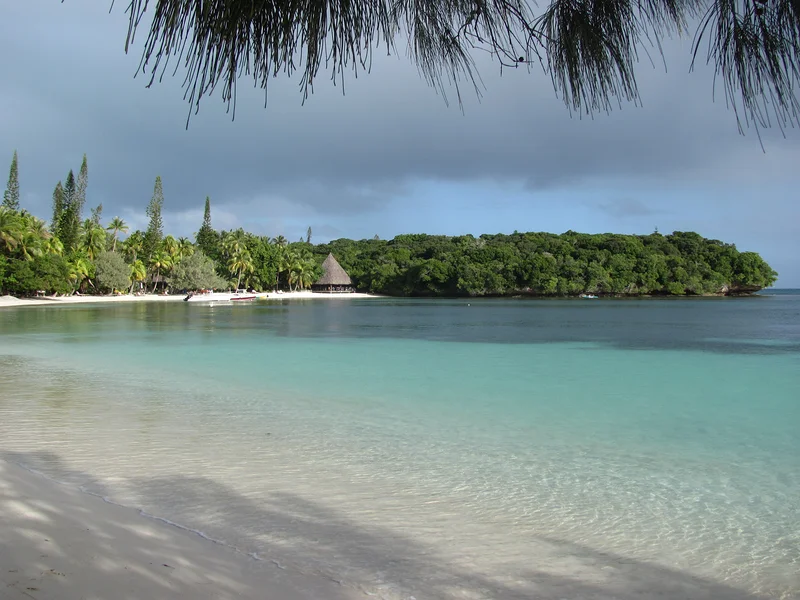
Ouvéa is a long, crescent-shaped atoll located about 100 kilometers east of Grande Terre, the main island of New Caledonia. Dubbed "the island closest to Paradise" by Japanese writer Katsura Morimura, Ouvéa is best known for its immense 25-kilometer lagoon. It’s a stunning expanse of white sand meeting the turquoise waters of the Coral Sea. Since 2008, this beach has been a UNESCO World Heritage site.

Camping in a stunning setting
Because it is part of a protected nature reserve, swimming is prohibited in the waters of this vast lagoon. However, around the Mouli Bridge, you’ll find smaller beaches where you can swim to your heart's content while taking in an extraordinary view of the lagoon: shades of blue and turquoise in the sea, contrasted by the white sand and lush green vegetation. The bridge connects Lekiny, the main atoll of Ouvéa, to Mouli, a small island to the south. It’s a real joy to watch the sea from this bridge. Plenty of marine life will pass right before your eyes: blue trevally, mullet, stingrays, leopard rays, sea turtles...
We set up camp just a few steps from this heavenly spot at Camping Lékine, located in the bay of the same name.


A land preserved from mass tourism
Ouvéa belongs to the Laai Customary Area. As I understand it, this organization allows the local Kanak tribes to defend their culture and environment. This commitment to organizing and preserving their heritage is paying off, as it has kept an exceptional natural environment completely intact.
This is despite the financial windfall that the development of a mass tourism industry would surely bring. Even with a 25-kilometer paradise beach, Ouvéa has only one hotel! Aside from that and the campsite where we pitched our tent, your only other options are a few traditional huts for rent in the tribal villages. In that same spirit, Australian cruise lines are eager to pay to include Ouvéa on their itineraries, but they are consistently turned away by local authorities.


The Lékiny Cliffs
This desire to preserve natural and cultural heritage shows in other ways, too. For instance, there are "sacred" territories that can only be visited under certain conditions. In the case of the Lékiny Cliffs in the south of Ouvéa, you must be accompanied by a local guide to be authorized to visit them.
It was relatively easy for us to find one, since the manager of our campsite, Félix, is a guide himself :)
The shape of these limestone cliffs is quite unique. They are fairly flat, topped with vegetation, and carved along their length by a trench that leads to caves in certain spots. This trench was formed by sea erosion during a time when sea levels were higher.
At low tide, you can walk along the thin strip of sand that runs beneath the cliffs. You can climb to a higher level using a small wooden ladder. Deep inside one cave, a chapel has been set up in memory of the Ouvéans who took refuge there during the deadly hurricane of 1953. The most courageous and agile visitors can scramble through the cave to reach the coral reef on the other side. We preferred to turn back :)
To wrap up the excursion, we treated ourselves to a refreshing, relaxing break in the crystal-clear waters bordering the cliffs. We even managed to get close to a white-tip reef shark, which stayed perfectly still in its corner!




Comments (1)