
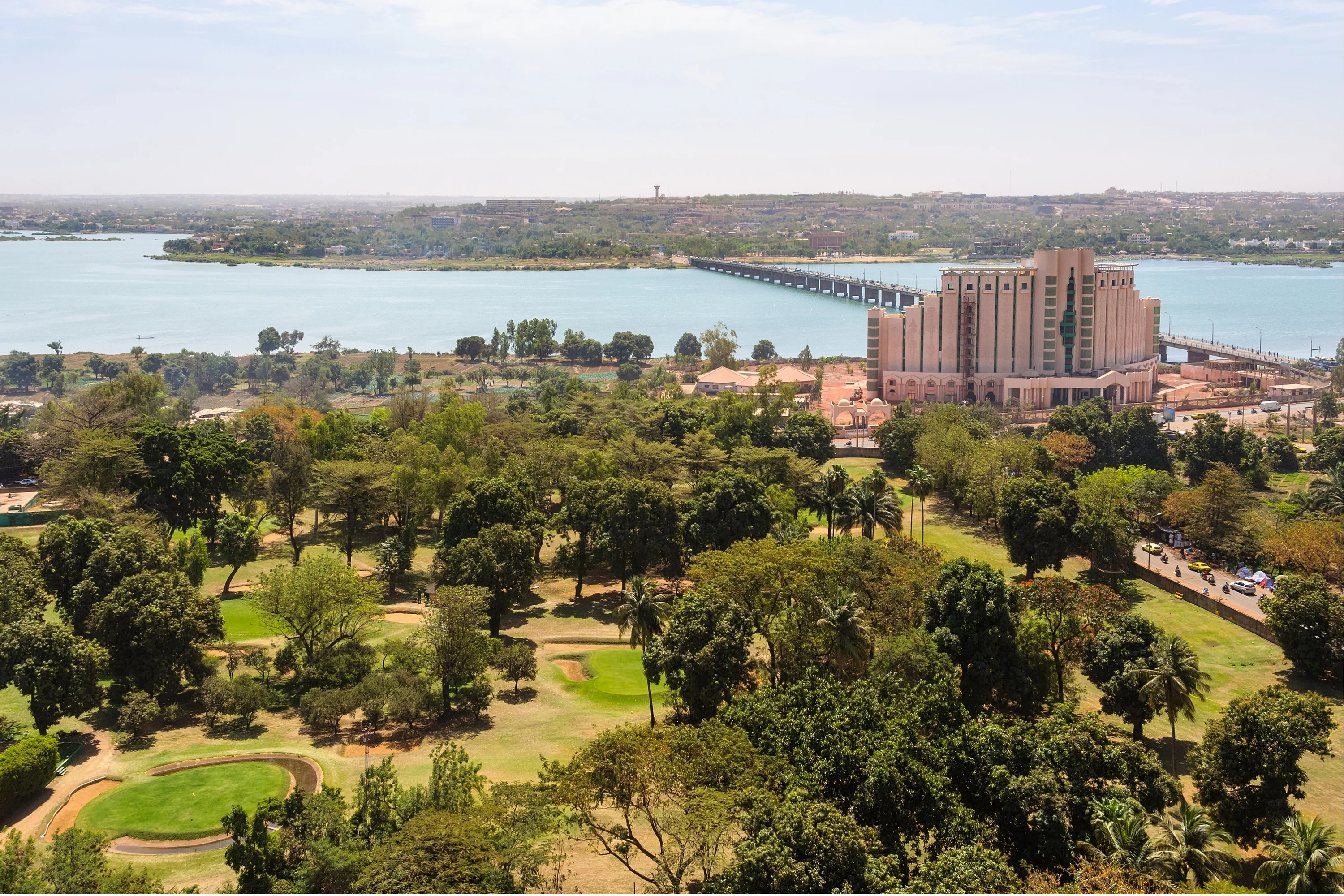
As part of my job, I had the opportunity to go on a mission to Mali, specifically to Bamako, the country's capital.
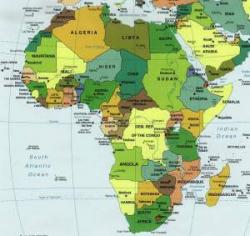
It was my first time stepping foot on African soil.
I stayed for three weeks, spanning from late September to early October.
While three weeks isn't nearly enough to truly know a country, it gave me enough time to get a glimpse of the culture.
I’d like to share a bit of that experience with you and provide some keys to help you prepare for your stay, whether it’s for business or leisure (for which you must absolutely check the "safety" section).
These tips aren't exhaustive, but I hope they help you make the most of your trip.
INTRODUCTION TO MALI:
Location, geography, and more:
The Republic of Mali is located in West Africa.
Mali shares land borders with Mauritania and Algeria to the north, Niger to the east, Burkina Faso and Côte d’Ivoire to the south, Guinea to the southwest, and finally, Senegal to the west. Mali has no maritime borders. The population is estimated at just over fifteen million.
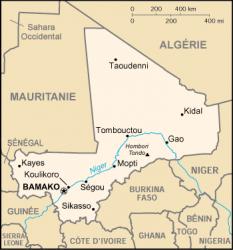
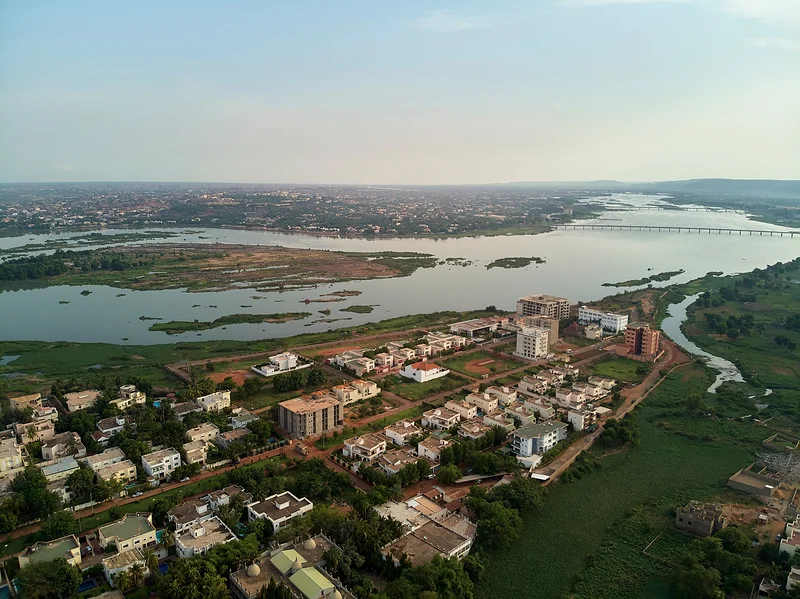
Bamako, the country's capital, is located in the south.
A little under two million people live there. The majority of the workforce is employed in the primary sector.
Some of the most well-known cities, besides Bamako, include: Sikasso, Mopti, Ségou, Gao, Timbuktu…
The official language is French, but Bambara (also the name of the majority ethnic group) is a national language. It is spoken just as much, if not more, than French and is shared with other neighboring countries, particularly for commercial trade.
The vast majority of the country is practicing Muslim.
The currency is the CFA franc. Currently, €1 = 655.9 CFA. In Bamako, you can exchange money. For your information, there were no ATMs at the airport. However, you can find them in hotels and some shopping centers, though not all bank brands are represented.
There is a time difference of minus two hours in the summer and, logically, minus one hour in the winter.
Flight time (with several airlines, including Air-France) is just under six hours with standard carriers. Some flights, which are inevitably cheaper, take about ten hours.
The climate is desert-like in the north (approaching the Sahel and the Sahara) and tropical in the south. Rains can be particularly heavy in the south during the summer, from June through September. Visiting in the winter is recommended to avoid the worst of the heat. For my part, the end of September saw a few rainy spells interspersed with beautiful clearings, while the beginning of October was sunny with temperatures ranging between 23 and 34 degrees Celsius, it remains quite manageable as long as you aren't forced to stay out in the sun.
A few more or less official sites that can help you prepare for your trip:
http://www.malitourisme.com/
History:
Starting as a succession of five empires, Mali was colonized by France and was known as French Sudan. It was part of French West Africa. Colonization began in 1881, starting with various ethnic groups and then spreading through agreements and battles. One of the French architects of this was Colonel Faidherbe. On April 4, 1959, Senegal allied with French Sudan to form the Mali Federation, which gained independence on June 20, 1960. Two months later, Senegal withdrew from the Mali Federation and proclaimed its own independence. On September 22, 1960, Sudan in turn proclaimed its independence but kept the name Mali.
Mali is rich in discoveries, particularly prehistoric ones.
Théodore Monod, a French naturalist scholar, was also a great explorer of the region, notably through his research and studies in the Saharan zone.
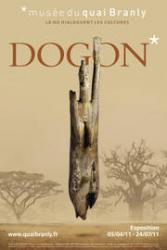
Today, the Dogon people and their culture have shed new light on Mali by sharing a part of their culture with the entire world.
There is currently an exhibition dedicated to them at the Quai Branly Museum in Paris.
Several 20th-century writers have shared their impressions of this country, and today, photographers have created beautiful photo books that you will have no trouble finding in bookstores.
Griots are still very much present and remain part of the country's cultural life: they tell stories that reflect the country's history and still sing during assemblies.
Vaccination, health:
For those traveling alone, meaning outside of a professional framework where your employer will likely arrange specific insurance, the Ministry of Foreign Affairs recommends taking out insurance that covers medical expenses and repatriation.
Otherwise, you will need to take treatments and/or be up to date on vaccines such as malaria, yellow fever, diphtheria-tetanus-polio, and perhaps typhoid, hepatitis A and B, and meningitis. Personally, I didn't get the typhoid and hepatitis shots; it's up to you to decide based on your doctor's advice.
Of course, to avoid "tourista" (traveler's diarrhea) and cholera, it is strongly advised not to drink tap water. You will notice in villages that some purification methods have been out of service for a long time, despite the efforts of the government and various NGOs or private companies. In Bamako, even in my hotel, I avoided drinking the tap water: I brushed my teeth with bottled water and drank liters and liters of sparkling American sodas... And of course, no ice cubes!
In the same vein, it is advised not to swim in streams, rivers, or lakes: the risk is schistosomiasis, a deadly disease that is just as much of a concern as malaria.
Safety:
Mali has unfortunately experienced dramatic episodes, and today, French interests and citizens are specifically targeted by the leaders of Islamist terrorist organizations (such as the grenade explosion in front of the French Embassy in Mali in January 2011). The Sahel-Saharan zone is particularly sensitive right now. Some neighboring countries are also weakened by this threat, and incursions into Malian territory by armed groups are frequent.
Before you go, you must check the Ministry of Foreign Affairs website to ensure travel is possible: http://www.diplomatie.gouv.fr/fr/conseils-aux-voyageurs_909/pays_12191/mali_12287/index.html
During my visit, my work kept me in the capital, so I had no reason to wander far. Plus, the people I was working for provided me with an escort. At the time of writing, and based on information from the Ministry of Foreign Affairs website, Bamako remains one of the safe areas in Mali.
Stay:
I didn't want to feel like I was living in a bubble among expatriates, even though the ones I met were charming. I wanted to try, as best I could, to get out of the hotel, my workplace, and my colleagues' residences. Unfortunately, the insecurity didn't allow me to travel further into the country, especially toward the north, where several cities and sites seemed worth the detour. It must be said that as a "toubab" (white European), I’m not exactly discreet in the local landscape...
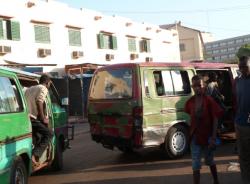
I still managed to get a quick pulse of the city. It stretches twenty-two kilometers from east to west and twelve kilometers from north to south. All the country's ethnic groups meet there, most people hoping to find work.
The traffic is impressive, as is the pollution... You see all kinds of vehicles: 4x4s, beat-up trucks, two-wheelers, old crowded cars (including quite a few old Peugeot 404s!! Tough, aren't they...?) with axles crying for mercy, and motorcycle taxis (or "taxini") that are growing in popularity... In short, it's better to know where you're going, especially since some intersections aren't at all suited to the flow of traffic. Fortunately, even if there’s a lot of honking, you’ll always find someone who lets you pass. On the roads, and especially at every stop, hordes of children and young adults rush to the windshield to clean it in exchange for a few coins.
If you have to take the road (what they call "the asphalt"), be patient. The roads are long and driving is a sport. You come across some simply incredible things: trucks or buses are stormed by passengers who cling on wherever they can. One of my Malian colleagues told me, laughing, that sometimes passengers fall asleep and tumble onto the road! If they didn't get too hurt, which was already lucky, they also had to avoid getting run over...
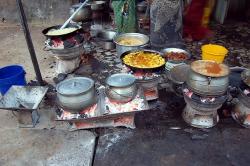
And if hunger strikes while you're in the car, stop by the side of the road, even in Bamako itself. You'll find food cooked in huge pans or pots placed on stoves or wood fires. From 5:30 PM, when people get off work, women gather and set up their mobile kitchens along the roads and in the streets. You stop, order, pay, and leave with something to eat!
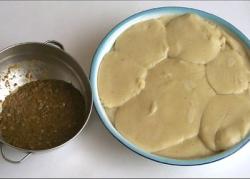
Speaking of which, one of the dishes you'll find quite easily, and which is also the staple for the majority of Malians, is "to." It’s a thick cereal porridge. The base can be millet or corn. You eat it by hand, never with a knife! Otherwise, you bring the "evil eye" to the village and risk causing a drought! Don't worry, if by misfortune you commit this faux pas, you can always make amends. To do so, you'll just need to perform animal sacrifices...
Aside from the "to" (a large dough made from millet and/or flour served with a green sauce) and the hotel buffet (yes, I know, not very "authentic," but hey, I had no choice...), I very often ate rice, especially when I was invited to the homes of the Malians I worked with.
The people were truly welcoming and went above and beyond when they hosted me. It was almost embarrassing, but it really seemed to give them pleasure.
So, sitting in a circle around the dishes, everyone digs in once the head of the family invites us to. Above all, no mistakes: having no cutlery available, you will eat with your hand. But not just any hand: the right one, and only the right one, too bad for lefties! Indeed, as in Arab countries, the left hand is considered impure; it’s used for cleaning oneself after using the toilet. So, naturally, it has no business in a communal dish!!
The difficulty then lies in trying to knead what you've grabbed into a ball compact enough to bring to your mouth without spilling it all over your shirt...
I freely admit that at the beginning, I ate very little compared to what I started with in my hand... After a while, it becomes almost a matter of survival! I eventually found the holy grail of balance between a ball that's too hard and a shapeless mass that falls onto your clothes. I had almost become a pro...
Once the meal is finished, don't forget to say "abarika" to the people who prepared the meal as well as to the head of the family. They will all be thanked, as custom and courtesy dictate.
Finally, in the streets and markets, I invite you to taste the watermelons: they are "scorching", I can't find any other word for them.
Bursting with water and sunshine, they have a sweet taste that makes you completely addicted... And besides, they aren't too expensive.
And if you take advantage of the markets, you can find extraordinary products, including for gentlemen (and ladies) who wish to resolve sexual difficulties, asthma, malaria, toothaches, etc...
In conclusion, even though I am well aware that I only scratched the surface of Malian culture, what I was offered to see reinforced my image of a welcoming people, despite the poverty that affects more than half of the population.
If the future allows, I would love to be able to return and see a little more, especially the northern zone.

Comments (0)
No comments yet. Be the first!