
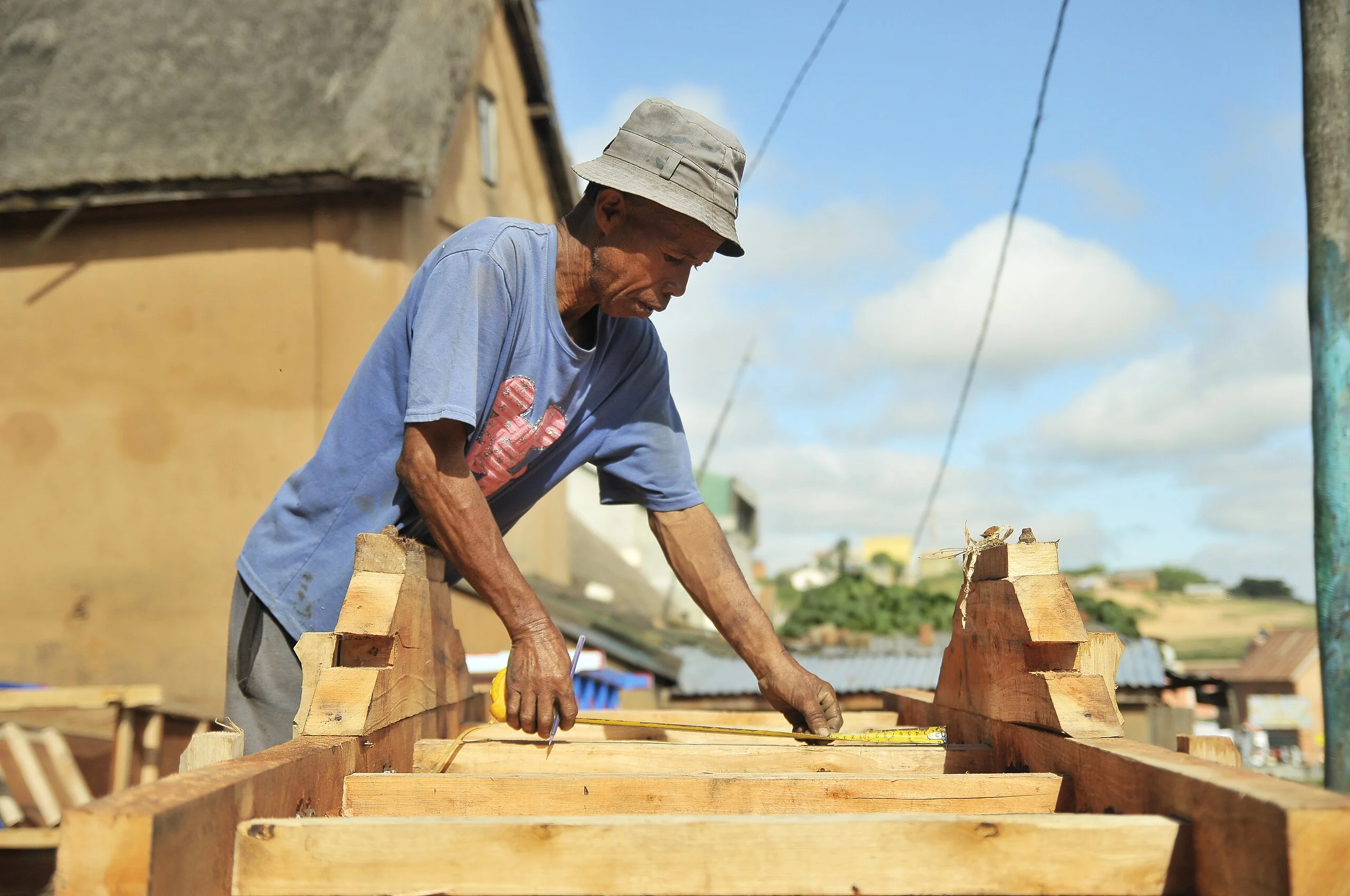
Talatan’i Volonondry, a landmark of Malagasy history
 Located about 25 kilometers north of Antananarivo is the small commune of Talatan’i Volonondry. The local Mandiavato people are farmers, and you’ll see rice paddies and the people working them everywhere you look. It’s clear that the local population has no intention of leaving this way of life behind; in fact, local production isn't even enough to meet the community's needs yet.
Talatan’i Volonondry is also home to two major historical sites: the sacred hill of Ambohimanga to the west and Aambohidroandriana to the south. Ambohitrabiby is one of the 12 sacred hills of Imerina, the heartland of the Mandiavato people, and it once served as the capital of King Ralambo’s kingdom. While visiting, I learned the history of the site: legend has it that King Ralambo was the first to introduce zebu meat into the Malagasy diet. That’s why the word "omby," meaning zebu, is inscribed on a standing stone at the southern exit of Ambohitrabiby.
The Malagasy have a unique way of preparing beef. The technique involves preserving the meat in its own fat inside earthenware pots. A large quantity of meat is cooked over low heat for an entire week without interruption, allowing the water and fat to render out. After a week, it’s left to cool. It can then be stored for a full year, right up until the next Fandroana festival, when it’s reheated and served.
In the past, you could only eat beef after the royal bathing ceremony, but that’s no longer the case today.
Care for a taste of Koba?
Talatan’i Volonondry also hosts the largest farmers' market north of Antananarivo.
It’s a massive, bustling place where you have to watch your step. Beyond the stalls dedicated to butchers and a few small grocers, vendors set their goods out directly on the ground in long, colorful rows. You’ll find tomatoes, leafy greens (brèdes), green beans, onions, and more, all local produce sold at very attractive prices. You can also find artisanal tools like angady (spades), scissors, and rakes. The Talata market is alive with a vibrant mix of colors and the loud, energetic voices of the traders. It feels like a festival.
Have you heard of the "koba" from Talatan’i Volonondry? I have to admit, it’s a real treat and something you absolutely shouldn't miss when passing through. At the market, you’ll see vendors selling this snack, which is made from wheat flour, peanuts, and sugar (some add a touch of honey). While you can find it in the capital, the local version is special. The ingredients are wrapped in banana leaves and "longozy" leaves to protect them from moisture, then steamed over a wood fire for two days and two nights. Each batch produces 10 to 13 kobas. This trade supports many families; in this small commune alone, there are 8 artisans dedicated to making it. The makers will tell you that families from the capital often drive out here on weekends just to enjoy the koba. Many events centered on Malagasy culture even choose to serve koba instead of traditional cakes.
Other products have also built the reputation of the Talata market, such as their sausages. They’re made with a mix of potatoes and meat, personally, I really liked them!
Artisanal silk weaving
Talatan’i Volonondry is also known for its silk production.
Madagascar’s silk was once reserved for dressing kings and queens. It’s a noble material that the Malagasy still wear during various ceremonies today. The stoles and scarves are incredibly elegant, and the makers offer unique pieces that vary based on their manual weaving techniques. Whether left in a natural tone or dyed with a touch of color, the result is always stunning. Silk holds an important place in Malagasy culture, and the use of rot-proof silk shrouds is seen as a sign of respect and nobility during funeral rites. The production of "lamba landy" is a traditional craft that requires a complex, multi-step process. Ambalavao is the main center for this production.
My time in Talatan’i Volonondry taught me so much about the "Great Island": the history of Ralambo and his kingdom, the local products, and most of all, the people of the commune. You won't be able to resist the charm of the sausage or koba vendors; they have their own clever, personal techniques for convincing passersby to try their goods.
Talatan’i Volonondry is easy to reach. If you want to stop by and discover its treasures, I suggest taking your time. You can visit the artisans and see how they prepare the koba. Keep in mind that it stays fresh for days if you want to bring some home with you.
Madagascar is a massive island; two trips weren't enough for me to see it all. Every journey is just an invitation to come back...

Comments (0)
No comments yet. Be the first!